

What size bike for 56 inch child
A 56-inch child should compare 20-inch and 24-inch bikes. Both height ranges include 56 inches, so inseam, reach, brake control and confidence must decide the fit.
Why two wheel sizes may fit
Under the XBikes starting points, a 20-inch bike suits rider heights of 48–60 inches (122–152 cm), while a 24-inch bike suits 54–64 inches (137–163 cm). A child who is 56 inches tall falls within both ranges.
That overlap does not mean the sizes are interchangeable. Wheel size is only a starting point, and frame shapes can place the seat, handlebar and top tube differently. Age should not settle the choice either: XBikes lists 20-inch bikes for ages 7–12 and 24-inch bikes for ages 10–14, but measured fit and control take priority.
Measure before comparing bikes
Measure the child without shoes, standing straight against a wall. Record total height from the floor to the top of the head. Then measure inseam from the floor to the crotch, using a firmly held book to represent where the saddle area meets the rider.
Bring both measurements when shopping. Height identifies 20-inch and 24-inch bikes as candidates, while inseam helps assess stand-over clearance and whether the child can start and stop comfortably. Because no inseam standard was supplied for these wheel sizes, compare the measurement directly with each bicycle and follow its exact product manual.
Try 20-inch and 24-inch bikes in person
Have the child try each candidate rather than buying an oversized bicycle for future growth. With the child straddling the bike, confirm there is comfortable clearance over the top tube. On the saddle, check that the child can begin, stop and put a foot down without panic or an awkward lean.
Next, ask the child to hold the grips in a normal riding position. Their arms should not be locked or excessively stretched, and steering should feel controlled. If the bike has hand brakes, the child must be able to reach and operate them reliably while maintaining grip and balance. Follow the exact manual for adjustments; use a qualified bicycle mechanic when fit, assembly or adjustment is uncertain.
How confidence changes the decision
A confident rider may handle a correctly fitted 24-inch bike well, but height alone does not prove that it is suitable. A child still learning to start, steer or stop may have better control on a correctly fitted 20-inch model. Conversely, a 20-inch bike should be rejected if the child looks cramped, cannot obtain an appropriate riding position or has outgrown its adjustment range.
Use this short comparison during the test:
| Check | 20-inch candidate | 24-inch candidate |
|---|---|---|
| Height range | 48–60 in / 122–152 cm | 54–64 in / 137–163 cm |
| Stand-over | Verify on the exact bike | Verify on the exact bike |
| Reach and steering | Must feel controlled | Must feel controlled |
| Brake operation | Must be reliable | Must be reliable |
| Current confidence | Compare during a supervised trial | Compare during a supervised trial |
Where the supplied product is relevant
The Girls' Training Wheel Bike by XJD, 12–20 Inch Wheels – Blue is offered in 12 Inch, 14 Inch, 16 Inch and 20 Inch labels. For a 56-inch child, only its 20 Inch option is within the supplied height starting point; the smaller options end below 56 inches. This product helps you inspect a 20-inch training-wheel-bike option, but no supplied product provides a 24-inch comparison, so you still need to try a suitable 24-inch bike elsewhere before deciding.

Do not infer fit from the product name or wheel label alone. Confirm stand-over, saddle position, reach, steering and brake use on the exact bicycle. For assembly, adjustment limits, compatibility, load limits, maintenance and torque instructions, use the exact product manual or a qualified bicycle mechanic.
Make the final choice
- Measure the child's height and inseam.
- Try a 20-inch and a 24-inch bicycle adjusted within their documented limits.
- Reject either bike if stand-over clearance, reach, steering or brake operation is poor.
- Choose the size the child can control confidently now, rather than a larger bike intended mainly for growth.
Before riding, add a properly fitting bicycle helmet. It should sit level and its straps should be used according to the helmet manufacturer's instructions. For a 56-inch child, the decision is therefore not “always 20” or “always 24”: test both, then select the exact bike that fits the child's body and present riding ability.
Bikes for your next adventure
-
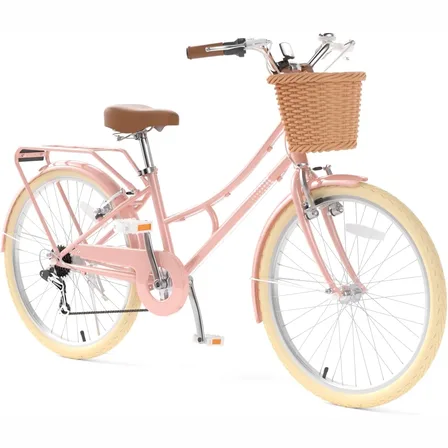
XJD Pink Beach Cruiser for Girls – Rear Rack & V-Brake
The XJD Pink Beach Cruiser for girls is the step-up bike for riders who've outgr…$179.99
$209.99 -
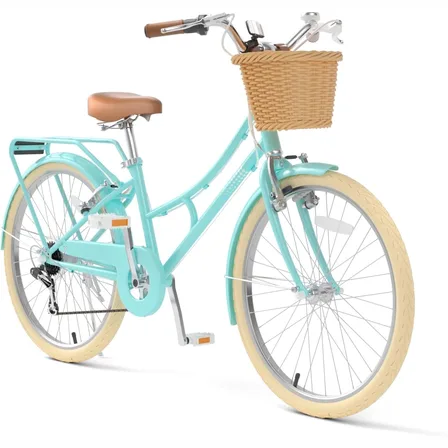
XJD Kids Beach Cruiser Bicycle, Rear Rack & V-Brakes, Mint Green
The XJD Beach Cruiser in Mint Green is a geared, multi-speed cruiser bike for ol…$179.99
$209.99 -

Kids Bike Helmet by XJD for Girls – Pink
The XJD Kids Bike Helmet in Pink is a lightweight multi-sport helmet for girls r…$59.99
$99