

What size bike fro 10 year old
Most 10-year-olds should start by trying a 24-inch bike if they are 54–64 inches (137–163 cm) tall. Try a 20-inch bike at 48–60 inches (122–152 cm), or consider 26 inches above 60 inches (153 cm), then confirm fit in person.
Choose by height, not by the birthday
Age provides only a starting point. In the XBikes sizing standard, a 24-inch wheel corresponds to ages 10–14 and heights of 54–64 inches (137–163 cm). That makes 24 inches the usual first size to check for a 10-year-old, but it is not an automatic answer.
A shorter 10-year-old may fit a 20-inch bike better. The 20-inch starting range is ages 7–12 and heights of 48–60 inches (122–152 cm). A rider over 60 inches (153 cm) may need to compare 26-inch bicycles, which are listed for youth and adults above that height.
The ranges overlap because children with the same height can have different leg length, arm reach and confidence. Never move a child to a larger wheel merely because another child of the same age uses one.
Measure before comparing bikes
Measure the child while they are wearing the shoes normally used for riding. Record total height, then measure the inseam from the floor to the crotch. Height identifies the sensible wheel sizes to try; inseam helps determine whether the child can stand over a particular frame comfortably.
- Measure height: Have the child stand straight against a wall, without stretching or lifting their heels.
- Measure inseam: Place a firm, thin book between the legs to represent the saddle and measure vertically from its top edge to the floor.
- Bring both measurements: Compare them with the bicycle’s exact geometry or sizing information rather than assuming every frame with the same wheel size fits alike.
If the product information does not provide the measurements needed for comparison, consult its exact manual or ask a qualified bicycle mechanic.
What a 10-year-old should try first
| Measured rider height | Starting wheel size | What to do |
|---|---|---|
| 48–54 in (122–137 cm) | 20 inch | Start with 20 inches; do not force a 24-inch fit. |
| 54–60 in (137–152 cm) | 20 or 24 inch | Try both and choose by stand-over, reach and control. |
| 60–64 in (153–163 cm) | 24 or 26 inch | Compare both carefully; wheel size alone does not settle fit. |
At exactly 60 inches or 153 cm, the published starting ranges meet. Treat that point as a reason to compare actual bicycles, not as proof that either size will fit.
Use this quick fit check
Have the child try the fully assembled bicycle in a safe, level area with adult supervision. The American Academy of Pediatrics advises trying the bicycle, checking stand-over and control, and avoiding an oversized bike bought for future growth.
- Stand-over: The child should be able to straddle the frame without the bicycle pressing uncomfortably into the body.
- Reach: Seated in a normal riding position, the child should reach the handlebar without excessive stretching, locked arms or leaning awkwardly forward.
- Brake control: The child must be able to reach and operate the brake controls reliably while keeping control of the handlebar.
- Starting and stopping: Ask the child to demonstrate controlled starts, turns and stops. Wobbling, panic or difficulty stopping indicates that the setup or size needs another look.
- Confidence: Choose the bicycle the child can control now. A technically possible fit is not useful if the rider feels intimidated by it.
Adjustments and assembly must follow the exact product manual. If correct adjustment, compatibility or assembly is uncertain, use a qualified bicycle mechanic rather than improvising.
How the supplied 24-inch option fits this decision
The catalog includes the 24-Inch Purple XJD Beach Cruiser Bike with U-Brake, categorized as a beach cruiser bike. Its stated 24-inch size makes it directly relevant as a comparison for a 10-year-old measuring 54–64 inches (137–163 cm). It is not automatically suitable merely because the rider is 10.
This particular catalog option helps answer the size question by giving families a real 24-inch bicycle to compare against the child’s measurements, reach, brake control and confidence. Its catalog listing alone does not establish individual fit.
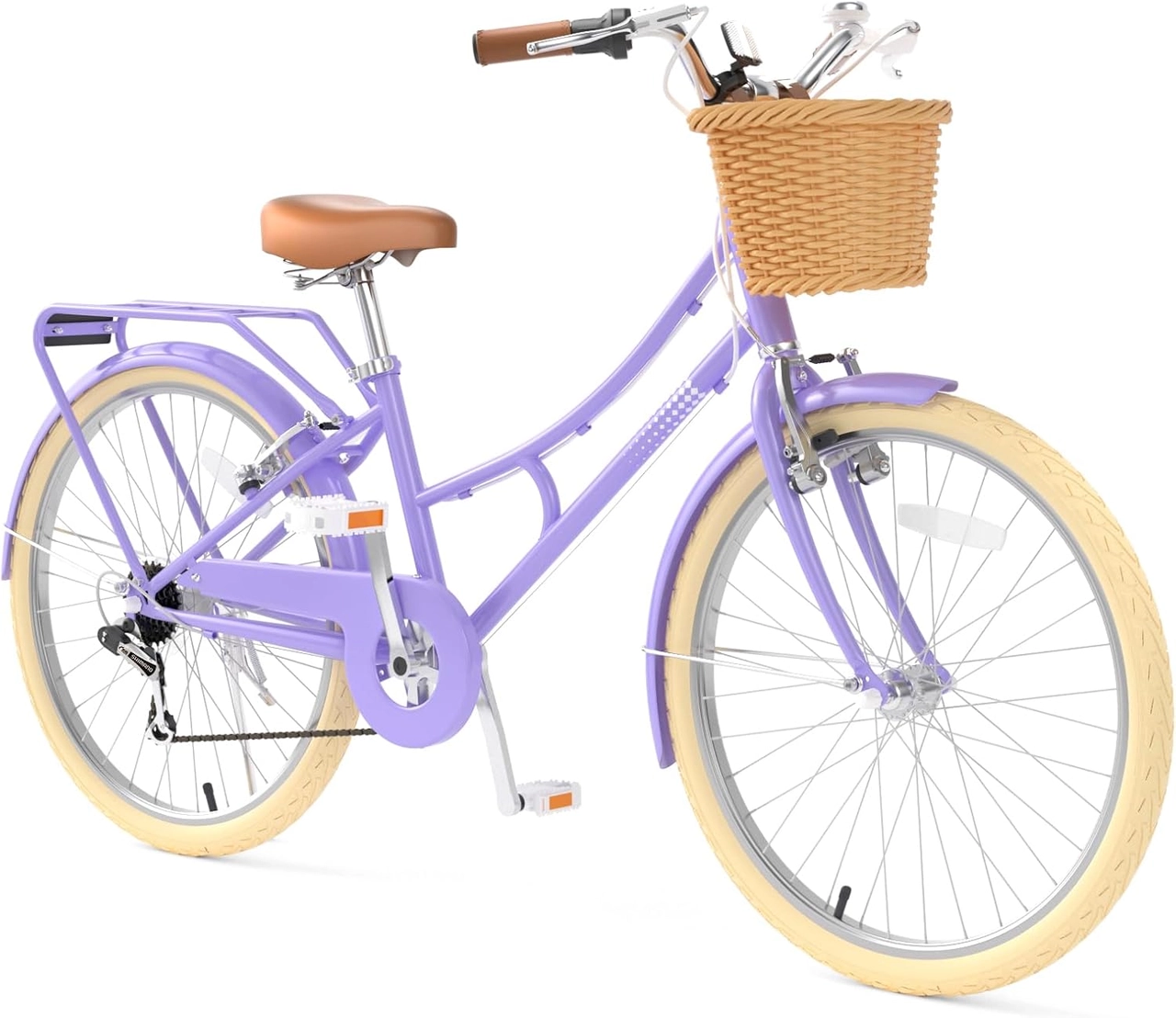
Use the exact product manual for assembly, maintenance, adjustments, load limits and any details not supplied here. If the child cannot stand over it comfortably, reach its controls or stop confidently, do not treat it as a substitute for a better-fitting 20-inch or 26-inch option.
Make the final choice
Begin with 24 inches for a 10-year-old who is 54–64 inches tall, but compare 20 inches within its 48–60-inch range and 26 inches above 60 inches when the measurement calls for it. Select only after the child passes the stand-over, reach, braking and control checks.
Before riding, add a properly fitting bicycle helmet. U.S. Consumer Product Safety Commission guidance says the helmet should sit level and its straps should be used according to the helmet manufacturer’s instructions. The next step is simple: measure the child today, shortlist the matching wheel size or overlapping sizes, and arrange an individual fit check before buying.
Bikes for your next adventure
-

Light Purple XJD Toddler Bike Helmet, Adjustable, Size XS (46–51 cm)
This Light Purple XJD toddler bike helmet is made for the smallest riders — the …$20.39
-

XJD Girls Bike for Kids Ages 3-8, 12/14/16 Inch with Training Wheels – Purple
The XJD Girls Bike in Purple is a training-wheel bicycle for kids ages 3 to 8, f…$149
$169 -

Pink Girls' 12/14/16" Bike by XJD – Basket & Doll Seat
The XJD Pink Girls' Bike with Basket & Doll Seat is made for riders 71–122 cm ta…$75.99
$99.99