

What size bike frame for a 10 year old
Most 10-year-olds should start by trying a 20-inch or 24-inch bike: use 20 inches for heights of 48–60 in (122–152 cm) and 24 inches for 54–64 in (137–163 cm). Measure the child, then confirm stand-over clearance, reach and brake control on the actual bike.
Choose by height, not the birthday
Age ten falls within both XBikes starting ranges: 20-inch bikes cover ages 7–12, while 24-inch bikes cover ages 10–14. The overlap is intentional because children of the same age can differ substantially in height, proportions and confidence.
| Wheel size | XBikes age starting point | Rider-height starting point |
|---|---|---|
| 20 Inch | Ages 7–12 | 48–60 in / 122–152 cm |
| 24 Inch | Ages 10–14 | 54–64 in / 137–163 cm |
| 26 Inch | Youth and adults | Over 60 in / 153 cm |
If the child is under 54 inches (137 cm), begin with a 20-inch model. From 54 to 60 inches (137–152 cm), compare both 20-inch and 24-inch bikes in person. At 60 inches (153 cm) or taller, include a 26-inch bike in the fit check. These are wheel-size starting points, not frame guarantees; geometry can differ between bicycles.
Measure height and inseam
- Height: Have the child stand barefoot against a wall, looking straight ahead. Measure from the floor to the top of the head.
- Inseam: With feet slightly apart, place a firm book upright between the legs to represent the saddle contact point. Measure from the floor to the book’s top edge.
- Record both: Use height to select the first wheel-size range. Keep the inseam available when checking stand-over clearance and saddle adjustment on a specific model.
Do not convert inseam into a frame size using an invented formula. The supplied standard does not provide frame dimensions, and a wheel label alone cannot establish whether a particular frame fits.
Perform the fit check on the actual bike
Have the child try the bicycle, following the American Academy of Pediatrics guidance not to buy an oversized bike merely for future growth. The rider should be able to straddle the frame with usable clearance rather than being pressed against it.
- Reach: The child should hold the handlebar without stretching, locking the elbows or leaning awkwardly.
- Brake control: From the normal riding position, the child must comfortably reach and operate the brake controls fitted to that bicycle.
- Start and stop: Ask the child to mount, steer, stop and dismount in a controlled way in a suitable supervised area.
- Confidence: A technically possible fit is not enough if the rider feels unable to control the bicycle.
If either candidate makes standing over, steering or braking difficult, reject that fit. Never treat a larger wheel as something the child will simply grow into.
How the supplied catalog options help
The catalog provides practical 20-inch and 24-inch comparison points for the two sizes most likely to suit a 10-year-old. Their labels narrow what to try, but the child’s measurements and hands-on control decide which option is relevant.
 Girls' Training Wheel Bike by XJD with Basket – Purple
Available in 14 Inch, 16 Inch and 20 Inch labels; its 20 Inch option is the relevant comparison for a 10-year-old within the 48–60 in rider-height starting range.
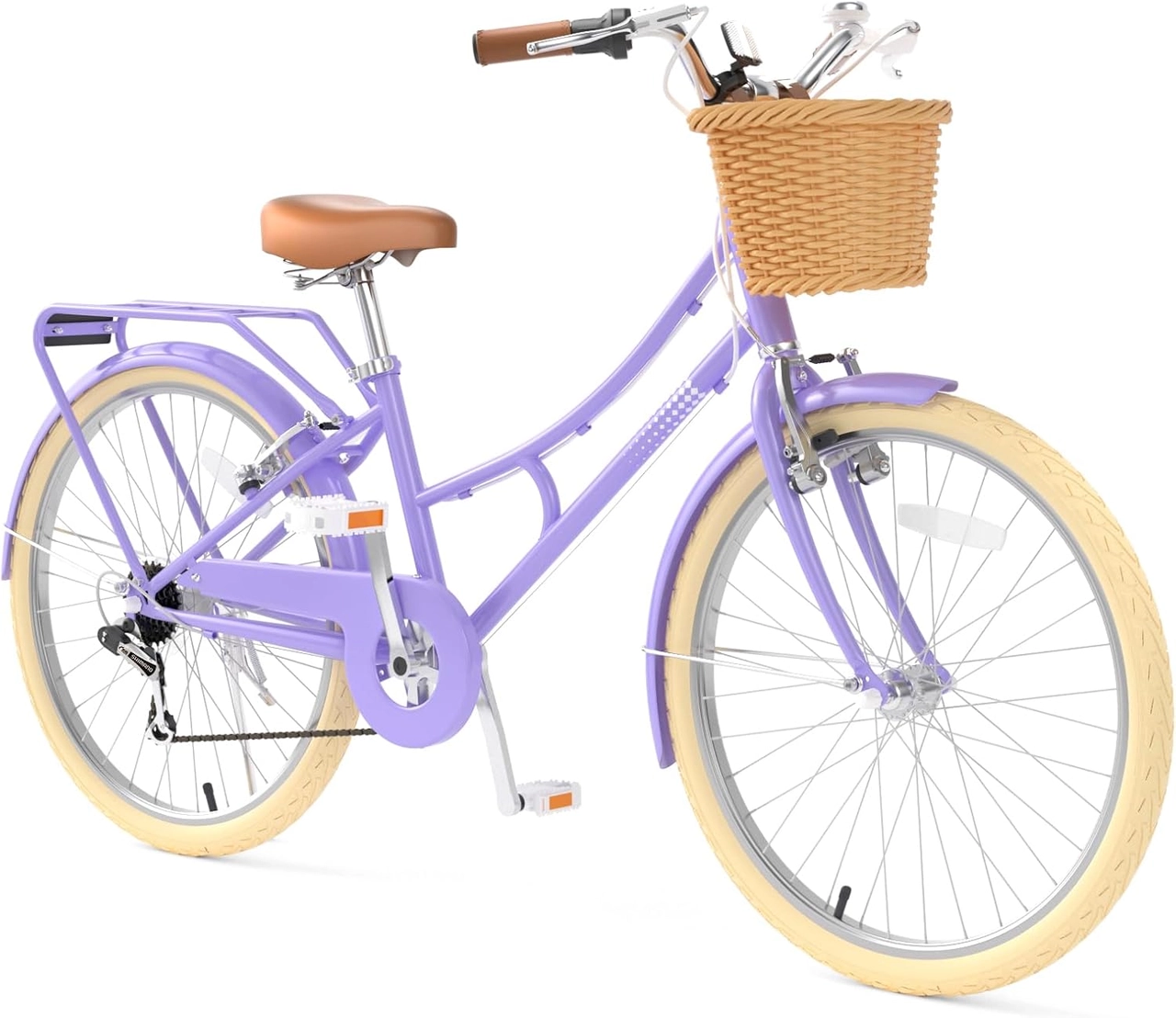 24-Inch Purple XJD Beach Cruiser Bike with U-Brake
A 24-inch comparison option for riders in the 54–64 in starting height range. Its Default SKU label provides no further sizing information, so an individual fit check remains necessary.
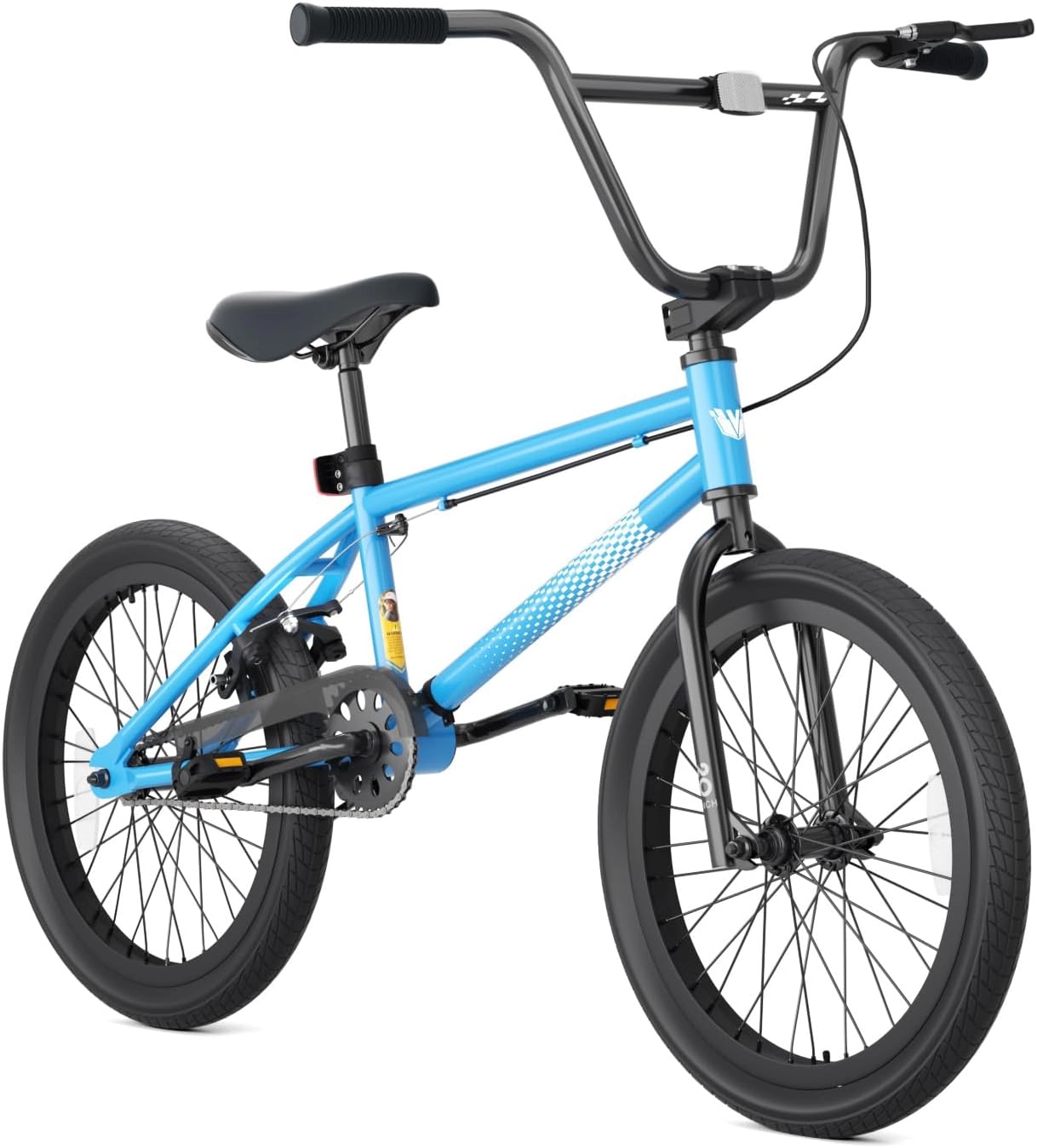 Blue XJD Freestyle BMX Bike, 20-Inch – No Pegs
A 20-inch comparison option corresponding to the 48–60 in rider-height starting range. The Default SKU label does not confirm stand-over clearance, reach, brake control or individual fit.
Girls' Training Wheel Bike by XJD with Basket – Purple offers 14 Inch, 16 Inch and 20 Inch SKU labels. For this question, only its 20 Inch option matches the common 48–60 in (122–152 cm) starting range; the smaller labels should not be treated as equivalent.
24-Inch Purple XJD Beach Cruiser Bike with U-Brake is a 24-inch comparison point for a child measuring 54–64 in (137–163 cm). Its Default SKU label supplies no additional size choice, so verify the complete fit on that exact bicycle.
Blue XJD Freestyle BMX Bike, 20-Inch – No Pegs is another 20-inch comparison point for the 48–60 in (122–152 cm) height range. Its Default SKU label does not establish frame fit, reach or suitability for an individual rider.
Complete the safety and setup checks
A properly fitting bicycle helmet is part of every ride. Following U.S. Consumer Product Safety Commission guidance, make sure the helmet fits properly, sits level on the child’s head and has its straps adjusted according to the helmet manufacturer’s instructions.
Before riding, follow the exact bicycle manual for assembly, adjustments, maintenance, compatibility and any load or torque requirements. If the instructions are missing, unclear or beyond your experience, use a qualified bicycle mechanic rather than guessing.
Make the final size decision
For a 10-year-old, measure first and begin with 20 inches below 54 in (137 cm), compare 20 and 24 inches from 54–60 in (137–152 cm), and include 26 inches above 60 in (153 cm). Choose only the bike the child can straddle, reach, brake, steer, start and stop confidently today.
Bikes for your next adventure
-

Pink Girls' 12/14/16" Bike by XJD – Basket & Doll Seat
The XJD Pink Girls' Bike with Basket & Doll Seat is made for riders 71–122 cm ta…$75.99
$99.99 -

XJD Girls Bike for Kids Ages 3-8, 12/14/16 Inch with Training Wheels – Purple
The XJD Girls Bike in Purple is a training-wheel bicycle for kids ages 3 to 8, f…$149
$169 -
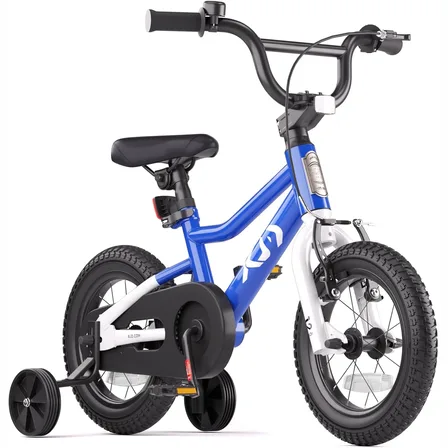
XJD Boys & Girls BMX Bike with Training Wheels, 12/14/16" – Blue
The XJD Boys & Girls BMX Bike in Blue is a first pedal bike for kids roughly age…$99.99
$119.99