

What size bike is best for a 10 year old
For most 10-year-olds, start by comparing a 20-inch and a 24-inch bike. Choose by measured height and actual control: 20-inch suits 48–60 in (122–152 cm), while 24-inch suits 54–64 in (137–163 cm).
The short answer by height
Age ten sits where the two XBikes size ranges overlap. A child measuring 54–60 in (137–152 cm) may fall within both starting ranges, so age and height alone cannot settle the choice. The better size is the one the child can stand over, reach, steer and brake confidently during an individual fit check.
| Measured rider height | Wheel size to try first | What to do next |
|---|---|---|
| 48–53 in (122–136 cm) | 20 Inch | Check stand-over clearance, reach and brake control. |
| 54–60 in (137–152 cm) | Try 20 Inch and 24 Inch | Compare both in person; choose the easier bike to control now. |
| 61–64 in (155–163 cm) | 24 Inch | Confirm comfortable reach and confident starts, stops and turns. |
| Over 60 in (153 cm) | 26 Inch may enter the comparison | Do not move up unless the complete fit and control check succeeds. |
These are starting points, not guarantees. Body proportions, experience and bicycle geometry can make two children of the same height fit differently.
Measure before comparing bikes
Measure the child’s height without shoes, standing upright against a wall. Then measure inseam from the floor to the crotch while the child stands naturally. Record both measurements rather than estimating from clothing size or relying on age.
Use height to identify the likely wheel-size range, then use inseam during the physical stand-over check. A wheel diameter does not reveal every frame dimension, so there is no universal inseam number that guarantees fit across all bikes. Compare the measurements with the exact bicycle’s sizing information and manual.
What a successful fit check looks like
Have the child try the bicycle. The American Academy of Pediatrics guidance supports choosing a bike that fits now instead of buying an oversized one for future growth. During the check, look for all of the following:
- Stand-over: The child can straddle the bicycle with practical clearance and without being pressed against the frame.
- Reach: The handlebars can be held without an awkward stretch, locked elbows or loss of steering control.
- Braking: The child can comfortably reach and operate the brake controls while keeping a secure grip.
- Basic control: Starting, stopping, steering and putting a foot down feel calm and predictable.
- Confidence: The child is not intimidated by the bicycle’s height, length or handling.
If the child must stretch to steer, struggles to reach the brakes, cannot put a foot down reliably or becomes less confident, that bike is too demanding regardless of the age printed on a chart.
How the supplied catalog choice helps
The supplied listing, 26-Inch XJD Beach Cruiser Bike for Girls – Purple, V-Brake, provides useful comparison points because its available SKU labels include 20-inch and 24-inch choices in Mint Green and Pink, plus 26-inch choices in Mint Green, Pink and Purple. For a typical size decision at age ten, compare the 20-inch and 24-inch labels first; the 26-inch options are relevant only once the rider is over 60 in (153 cm) and passes the full fit check.
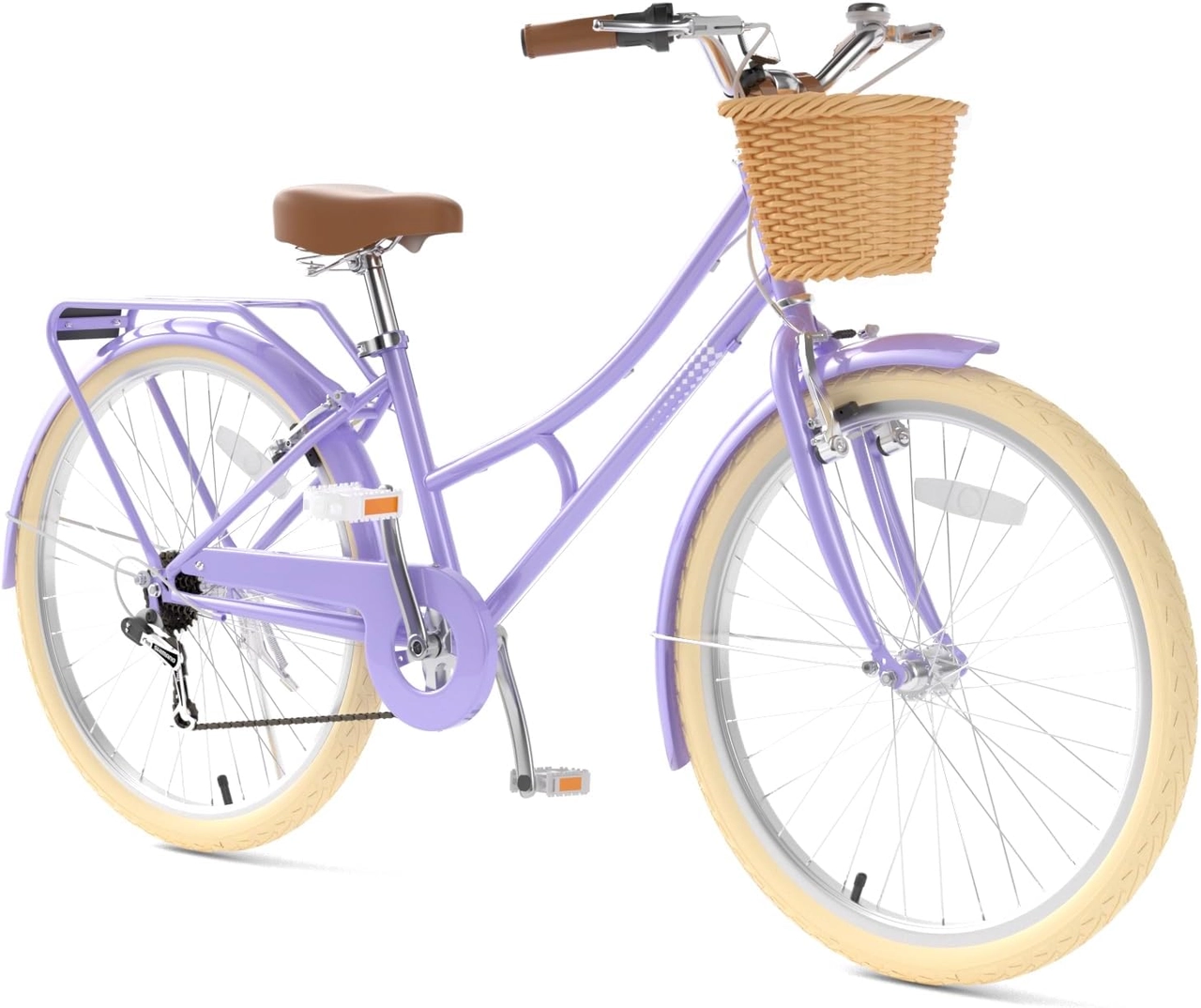
The title of this catalog item identifies a Purple 26-inch configuration with a V-brake, while the supplied SKU labels show the other listed size and color combinations. Select by the exact SKU label rather than assuming every color is offered in every wheel size: Purple is supplied only as a 26-inch label. No listed size should be treated as interchangeable with another.
Do not size up just for growth
A larger bicycle may last longer in theory, but it can make mounting, stopping, steering and brake operation harder today. In the 54–60 in overlap, a 24-inch bike is not automatically the better purchase. If the child controls the 20-inch bike clearly better, choose the present fit rather than anticipated growth.
Likewise, crossing 60 in does not automatically make a 26-inch bike suitable. Reach, inseam, brake access and current confidence still decide whether it works. If neither available size permits comfortable control, do not force a choice; seek another frame configuration and repeat the fit check.
Final checks before riding
- Confirm the chosen wheel size and exact SKU label.
- Repeat stand-over, reach, braking and low-speed control checks with the bicycle adjusted for the child.
- Follow the exact product manual for assembly, adjustment, maintenance, compatibility and load limits; use a qualified bicycle mechanic when needed.
- Fit a bicycle helmet properly. It should sit level, with straps used according to the helmet manufacturer’s instructions, consistent with U.S. Consumer Product Safety Commission guidance.
For a 10-year-old, measure height and inseam today, shortlist 20-inch or 24-inch from the ranges above, and choose only after the child demonstrates comfortable stand-over, reach, braking and control.
Bikes for your next adventure
-

Flower Pink XJD Girls Bike with Doll Seat & Basket
The XJD Flower Pink girls' bike is made for riders 71–122 cm tall (roughly ages …$69.99
-

XJD Girls Bike for Kids Ages 3-8, 12/14/16 Inch with Training Wheels – Purple
The XJD Girls Bike in Purple is a training-wheel bicycle for kids ages 3 to 8, f…$149
$169 -

Pink Girls' 12/14/16" Bike by XJD – Basket & Doll Seat
The XJD Pink Girls' Bike with Basket & Doll Seat is made for riders 71–122 cm ta…$75.99
$99.99