

What size bike to get my toddler
Measure your toddler’s standing height and inseam, compare height—not age alone—with the wheel-size chart, then check the bike in person. Choose the smallest suitable size they can stand over, reach, steer and brake confidently; never buy an oversized bike for growth.
Start with two measurements
Measure your child while they are wearing the shoes they will normally ride in. For standing height, have them stand upright against a wall and measure from the floor to the top of the head.
For inseam, place a thin book firmly between the legs to represent the saddle area, keeping it level. Measure from the floor to the top edge of the book. Inseam helps you judge stand-over clearance and whether your child can put their feet down comfortably, but the supplied XBikes chart uses standing height as its numerical starting point.
Write down both measurements rather than estimating from clothing size or birthday. Toddlers of the same age can have substantially different proportions, reach and confidence.
Compare height with the XBikes starting points
| Wheel size | Starting age | Rider height |
|---|---|---|
| 12 Inch | 3–4 | 34–40 in / 86–102 cm |
| 14 Inch | 3–6 | 37–45 in / 94–114 cm |
| 16 Inch | 4–7 | 40–48 in / 102–122 cm |
| 18 Inch | 5–9 | 43–52 in / 109–132 cm |
| 20 Inch | 7–12 | 48–60 in / 122–152 cm |
| 24 Inch | 10–14 | 54–64 in / 137–163 cm |
| 26 Inch | Youth and adults | Over 60 in / 153 cm |
For many toddlers, the comparison begins with 12 Inch or 14 Inch wheels, but the measured height decides where to start. The ranges overlap because wheel diameter alone cannot confirm fit. If your child falls into two rows, try both sizes and judge control rather than automatically choosing the larger one.
Do the fit check before deciding
Have your child try the exact bicycle with close adult supervision. The American Academy of Pediatrics guidance emphasizes trying the bicycle, checking stand-over and control, and avoiding an oversized purchase made merely for future growth.
- Stand-over: Your child should be able to straddle the bike without the frame preventing stable contact with the ground.
- Starting and stopping: They should be able to get on, start and stop without the bike pulling them off balance.
- Reach and steering: With hands on the controls, they should steer without stretching, locking their arms or leaning excessively.
- Brake control: They must be able to reach and operate the bicycle’s braking controls. Do not assume that fitting the height range proves adequate hand reach or strength.
- Confidence: Look for calm, deliberate control. Fear, repeated tipping or difficulty turning suggests that the fit or setup needs reconsideration.
When these catalog options are relevant
The supplied products are useful comparison points when your toddler’s measured height and individual fit check indicate a 12 Inch, 14 Inch or 16 Inch bicycle, and when you specifically want a model categorized as a training-wheel bike. The product titles distinguish their colors and included features, while the supplied SKU labels let you compare the same three wheel sizes.
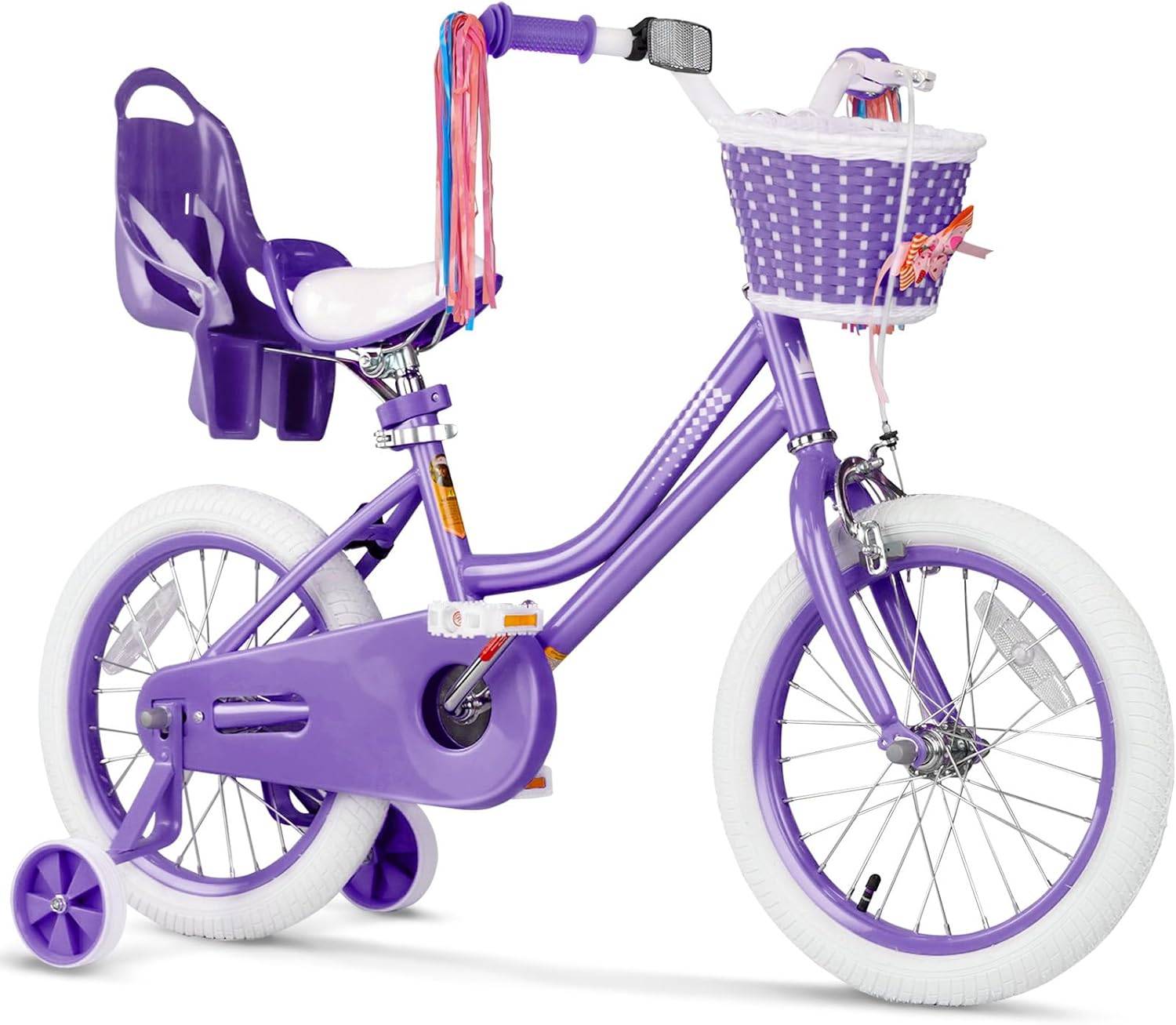 XJD Girls Bike for Kids Ages 3-8, 12/14/16 Inch with Training Wheels – Purple
Relevant when a measured fit points to 12 Inch, 14 Inch or 16 Inch and training wheels are wanted. The age wording in its exact title is a catalog label, not individual fit evidence.
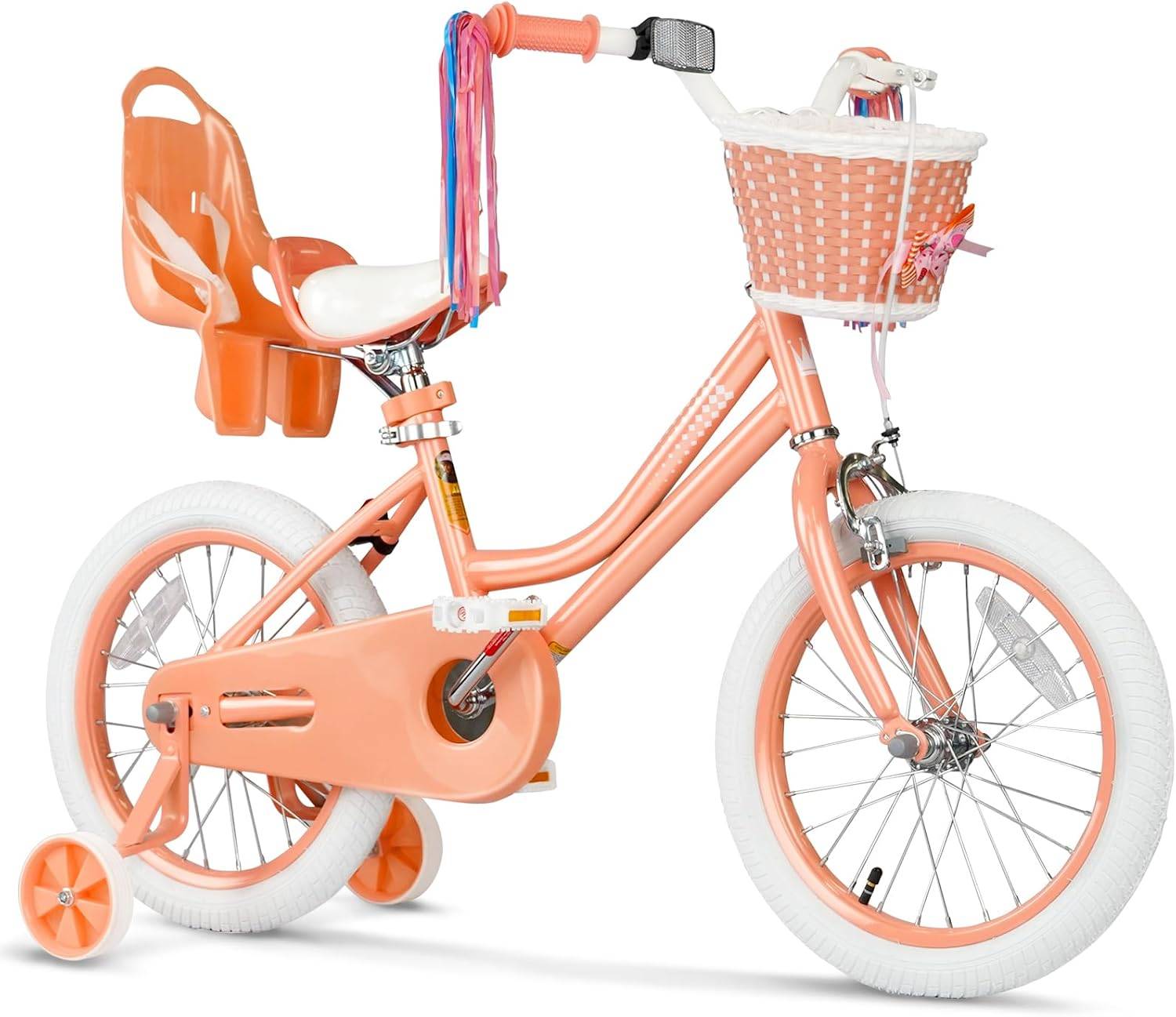 Girls 12/14/16 Inch Kids Bike by XJD with Training Wheels – Peach
A peach training-wheel bike offered with supplied 12 Inch, 14 Inch and 16 Inch SKU labels. Compare the child’s measured height first, then confirm stand-over, reach, braking and confidence on the exact bike.
 XJD Light Purple Girls Bike with Basket, Training Wheels, 12/14/16/20 Inch
Its title mentions a basket and training wheels, while the supplied available SKU labels are 12 Inch, 14 Inch and 16 Inch. Use those labels as comparison points and require an individual fit check.
XJD Girls Bike for Kids Ages 3-8, 12/14/16 Inch with Training Wheels – Purple is listed in Training Wheel Bikes with 12 Inch, 14 Inch and 16 Inch SKU labels. Its “Ages 3-8” wording is a catalog label, not evidence that it fits your child.
Girls 12/14/16 Inch Kids Bike by XJD with Training Wheels – Peach is also categorized as a training-wheel bike and has supplied 12 Inch, 14 Inch and 16 Inch SKU labels. Its relevance therefore depends on the chosen wheel size passing the same personal fit check.
XJD Light Purple Girls Bike with Basket, Training Wheels, 12/14/16/20 Inch has a title that mentions a basket and several wheel sizes. However, the supplied available SKU labels are only 12 Inch, 14 Inch and 16 Inch, so use only those three labels for this comparison and verify the exact selection shown when choosing.
None of these products should be treated as relevant merely because “kids” or an age appears in its title. They are not substitutes if your child needs an 18 Inch or another wheel size after measurement and an individual trial.
Check setup and helmet fit
Confirm that the selected size can be adjusted for the child according to the exact product manual. For assembly, maintenance, compatibility, load limits or torque requirements not stated here, follow that manual or use a qualified bicycle mechanic rather than guessing.
A bicycle helmet is part of every ride, but it also needs its own fit check. U.S. Consumer Product Safety Commission guidance says the helmet should fit properly, sit level and have its straps used according to the helmet manufacturer’s instructions.
Make the size decision
Measure height and inseam today, shortlist the chart size or overlapping sizes, and have your toddler try the exact bike. Buy only when they can stand over it, reach the controls, steer and brake with present confidence. If the larger option compromises any of those checks, choose the smaller suitable size instead of buying room to grow.
Bikes for your next adventure
-

Green XJD Toddler Bike Helmet with Adjustable Fit, XS (46–51 cm)
The XJD toddler bike helmet in Green is built for the youngest riders — the size…$20.39
$23.99 -

Kids Bike Helmet by XJD for Boys & Girls – Black, Blue, Green, Pink, Purple
The XJD Kids Bike Helmet covers a wide 2-to-8-year age range thanks to two head-…$59.99
-

Kids Bike Helmet by XJD for Girls – Pink
The XJD Kids Bike Helmet in Pink is a lightweight multi-sport helmet for girls r…$59.99
$99