

What size bike wheel for 5 year old
For most 5-year-olds, start by comparing 14-inch and 16-inch wheels. Measure your child first: height and actual bike fit matter more than age.
Choose the starting size from measured height
Have the child stand straight without shoes and measure from the floor to the top of the head. Then use the XBikes ranges below as starting points, not as a final fit decision.
| Wheel size | XBikes age starting point | Rider height |
|---|---|---|
| 12 Inch | Ages 3–4 | 34–40 in / 86–102 cm |
| 14 Inch | Ages 3–6 | 37–45 in / 94–114 cm |
| 16 Inch | Ages 4–7 | 40–48 in / 102–122 cm |
| 18 Inch | Ages 5–9 | 43–52 in / 109–132 cm |
| 20 Inch | Ages 7–12 | 48–60 in / 122–152 cm |
A typical size comparison for a 5-year-old therefore begins with 14 Inch or 16 Inch. A child below 40 in / 102 cm may still fall within the 12 Inch height range, while a child at least 43 in / 109 cm also enters the overlapping 18 Inch range. The overlap is intentional: wheel size alone cannot confirm that the frame, controls and riding position fit.
Measure inseam as well as height
Height narrows the options, but inseam helps you judge stand-over clearance. With the child wearing normal riding shoes, place a firm book between the legs as though it were a bicycle saddle. Keep it level, then measure from the floor to the top edge of the book.
Compare that measurement with the stand-over height stated for the exact bicycle or check it during an in-person trial. The child should be able to stand over the bike without being forced onto tiptoes or pressed against the frame. Because no frame dimensions are supplied for the catalog products below, do not infer stand-over clearance from their wheel labels.
Do a hands-on fit check
After height and inseam point to one or two sizes, have the child try each bicycle. This follows HealthyChildren guidance to test the actual bike and avoid buying an oversized model merely for future growth.
- Starting and stopping: Ask the child to get on, set off and stop without the bicycle overwhelming them.
- Reach: Their hands should reach the handlebar naturally without an extreme stretch or locked posture.
- Brake control: Confirm that they can reach and operate the fitted brake controls reliably. Use the exact product manual for adjustment instructions.
- Turning: Check that they can steer in both directions while remaining balanced and in control.
- Confidence: A size that causes hesitation or loss of control is not a good fit simply because its age range includes five.
If two sizes overlap by height, select according to the stronger complete fit: comfortable stand-over, manageable reach, dependable brake operation and confident control. Never treat the larger wheel as automatically preferable.
How the supplied bicycles help with comparison
The two catalog options provide 12 Inch, 14 Inch and 16 Inch comparison points, the sizes most likely to be considered around age five. One also offers 20 Inch, but the XBikes starting range for that size is ages 7–12 and 48–60 in / 122–152 cm, so age five alone does not support choosing it.
The Light Pink XJD Girls' Bicycle with Basket & Training Wheels is listed with 12 Inch, 14 Inch, 16 Inch and 20 Inch SKU labels. The Blue XJD Girls Bike with Training Wheels – 12/14/16 Inch is listed with 12 Inch, 14 Inch and 16 Inch SKU labels. Both are cataloged as Training Wheel Bikes. Their labels let you compare relevant wheel-size options, but they do not establish individual fit, brake reach or stand-over clearance.
 Light Pink XJD Girls' Bicycle with Basket & Training Wheels
Offers 12 Inch, 14 Inch and 16 Inch comparison choices relevant around age five, plus a 20 Inch option for riders whose measured fit supports it. An individual stand-over, reach, brake-control and confidence check is still required.
 Blue XJD Girls Bike with Training Wheels – 12/14/16 Inch
Its listed 12 Inch, 14 Inch and 16 Inch sizes cover the main comparison range for many 5-year-olds. Choose among them by measured height and a hands-on fit check, not the title or age alone.
When these products are not the right match
If measurement and a trial point to 18 Inch, neither supplied product has an 18 Inch SKU label. They are then nearest-size comparison points, not substitutes for an 18 Inch bicycle; a 16 Inch or 20 Inch wheel is not equivalent. Likewise, do not choose the available 20 Inch option for growth if the child cannot comfortably stand over, reach, brake and control it now.
The products may also be irrelevant if a training-wheel bicycle does not suit the child's current confidence or riding needs. The supplied facts do not establish assembly details, adjustment limits, compatibility, load limits or torque settings. Follow the manual for the exact product or ask a qualified bicycle mechanic rather than improvising those details.
Make the final decision
Measure height and inseam, shortlist the matching 14 Inch and 16 Inch options, then have the child try them. Include 12 Inch or 18 Inch only when the measured height supports that comparison. Choose the bike the child can stand over, reach, brake and steer confidently today—not an oversized one intended for later.
Before riding, add a properly fitting bicycle helmet. Following U.S. Consumer Product Safety Commission guidance, position it level and secure its straps according to the helmet manufacturer's instructions.
Bikes for your next adventure
-

Pink Girls' 12/14/16" Bike by XJD – Basket & Doll Seat
The XJD Pink Girls' Bike with Basket & Doll Seat is made for riders 71–122 cm ta…$75.99
$99.99 -

XJD Girls Bike for Kids Ages 3-8, 12/14/16 Inch with Training Wheels – Purple
The XJD Girls Bike in Purple is a training-wheel bicycle for kids ages 3 to 8, f…$149
$169 -
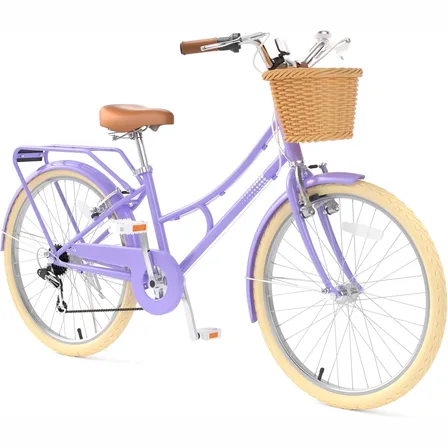
24-Inch Purple XJD Beach Cruiser Bike with U-Brake
The XJD 24-Inch Purple Beach Cruiser is built for girls and young women roughly …$159.99