

What size is a 16 inch bike for
A 16-inch bike is a starting point for children about ages 4–7 and 40–48 inches (102–122 cm) tall. Measure the rider and confirm fit in person; age alone cannot determine the right size.
What “16 inch” tells you
The 16-inch label identifies the bike’s wheel-size class, not the child’s height or the frame dimensions. Bikes with the same wheel label can still differ in saddle position, handlebar reach and overall geometry. That is why the useful answer is a height range followed by an individual fit check.
According to the XBikes starting points, consider a 16-inch bike when the rider is 40–48 inches (102–122 cm) tall. The age range of 4–7 is only a rough reference. A younger or older child may fit depending on body proportions, coordination and confidence.
Measure before choosing
Have the child wear the shoes normally used for riding. Measure standing height on a level floor, with the child upright against a wall. Then measure inseam from the floor to the crotch. Record both measurements rather than estimating from clothing size.
Use standing height to identify the likely wheel-size class. Use inseam to assess stand-over and saddle fit on the actual bicycle. The supplied starting points do not provide a universal inseam range because frame shapes vary, so compare the measured inseam with the manufacturer’s fit information for the exact model.
If the child is outside the 40–48-inch range, compare the adjacent starting points:
| Wheel size | Starting age | Rider height |
|---|---|---|
| 14 Inch | 3–6 | 37–45 in / 94–114 cm |
| 16 Inch | 4–7 | 40–48 in / 102–122 cm |
| 18 Inch | 5–9 | 43–52 in / 109–132 cm |
The overlap is intentional: height narrows the options, while the bike-specific check decides between them.
Check the child on the actual bike
Have the rider try the bicycle rather than choosing one solely for future growth. The child should be able to stand over it with comfortable clearance, get on and off without struggling, and sit in a controlled position. Do not buy an oversized bike merely because the child may grow into it.
Next, watch the rider hold the handlebars and look ahead. The reach should not force an extreme stretch or cramped posture. Confirm that the child can steer through both directions while remaining balanced.
Finally, check brake control on the exact model. The rider must be able to reach and operate the provided controls reliably without losing grip or body position. If stand-over, reach or braking is uncertain, compare another size or ask a qualified bicycle mechanic to assess the fit.
When these XBikes options are relevant
Both supplied catalog options include an available 16 Inch SKU label, so they are relevant when the rider falls near the 16-inch starting range and passes the individual fit checks. They also offer 12 Inch and 14 Inch labels, which can help a shorter rider compare smaller choices without treating them as equivalent sizes.
 XJD Light Purple Girls Bike with Basket, Training Wheels, 12/14/16/20 Inch
Available in a 16 Inch SKU label, this Training Wheel Bike is relevant for riders near the supplied 40–48-inch height range, provided the exact bike passes stand-over, reach, brake-control and confidence checks.
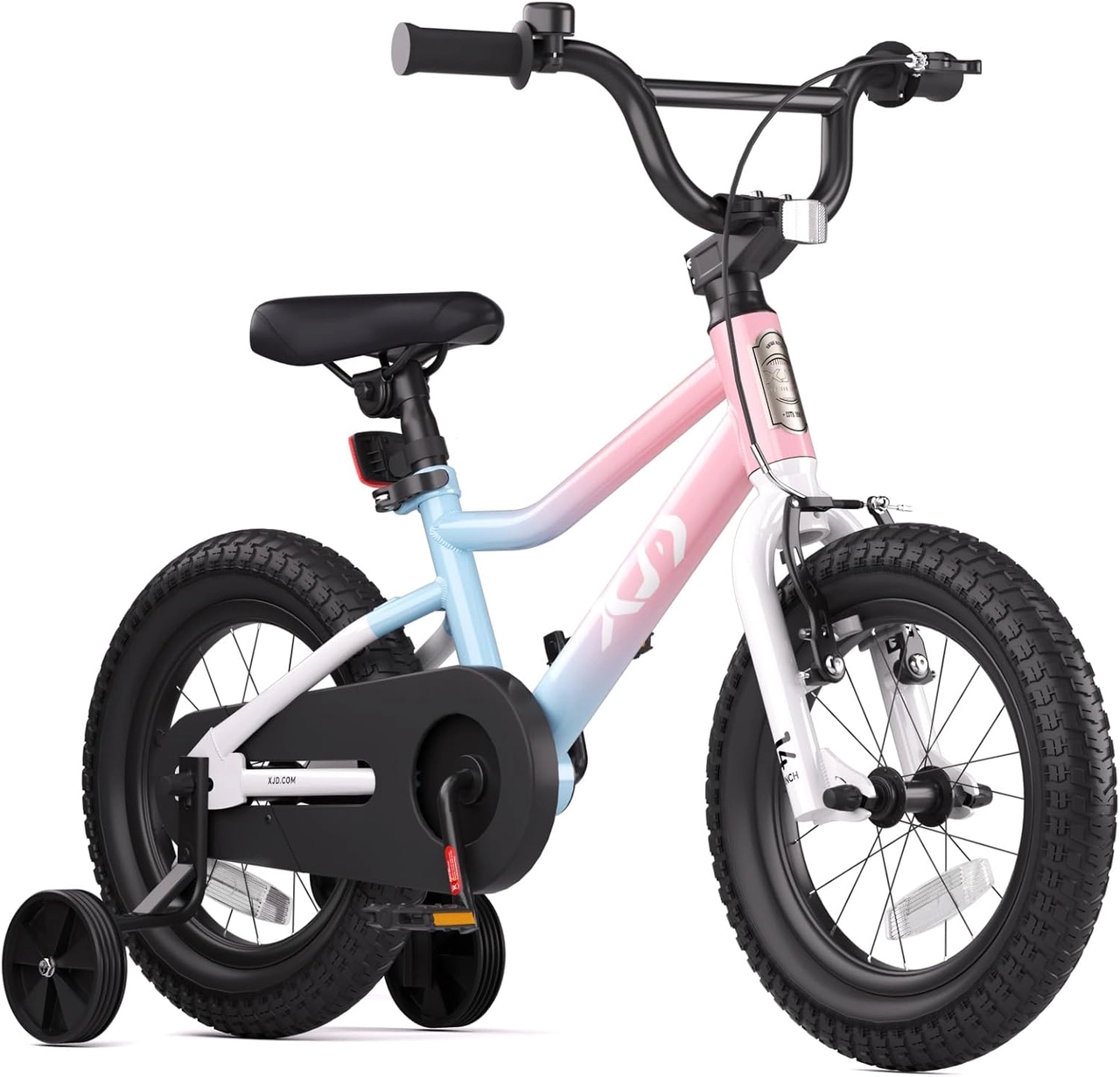 XJD Girls BMX Bike 12/14/16 Inch with Training Wheels – Pink Blue
This Kids’ BMX Bike includes an available 16 Inch SKU label, making it a comparison candidate for riders near 40–48 inches tall; its 12 Inch and 14 Inch labels also support smaller-size comparisons.
The XJD Light Purple Girls Bike with Basket, Training Wheels, 12/14/16/20 Inch is categorized as a Training Wheel Bike. Although “20 Inch” appears in its catalog title, the supplied available SKU labels are 12 Inch, 14 Inch and 16 Inch. Select only from the size labels actually shown as available, then verify the chosen bike against the child’s measurements.
The XJD Girls BMX Bike 12/14/16 Inch with Training Wheels – Pink Blue is categorized as a Kids’ BMX Bike and has supplied available SKU labels of 12 Inch, 14 Inch and 16 Inch. Its 16 Inch option is a comparison candidate, not proof of fit; the same stand-over, reach, brake-control and confidence checks still apply.
Account for confidence and control
A child within the stated height range may still need a different size if control is poor. Current confidence matters: the rider should be able to start, steer, stop and dismount without the bicycle’s dimensions making those actions harder. Training wheels in a product description do not remove the need for correct sizing or competent brake use.
For assembly, adjustment, maintenance, load limits, compatibility and torque, follow the manual for the exact product or use a qualified bicycle mechanic. Do not transfer instructions or measurements from another model.
Make the final 16-inch decision
- Measure standing height and inseam in riding shoes.
- Use 40–48 inches (102–122 cm) as the 16-inch starting height range.
- Have the child try the exact bike and check stand-over, reach, steering, brake operation and confidence.
- Reject a bike that is oversized now, even if it offers room for growth.
- Choose a properly fitting bicycle helmet that sits level and is secured with its straps according to the helmet manufacturer’s instructions.
Choose the 16-inch bike only if the measured rider is in the likely range and can comfortably control that exact bicycle today; otherwise compare the adjacent size that better matches the fit check.
Bikes for your next adventure
-
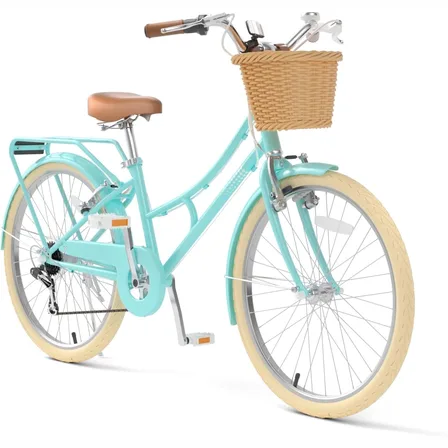
XJD Kids Beach Cruiser Bicycle, Rear Rack & V-Brakes, Mint Green
The XJD Beach Cruiser in Mint Green is a geared, multi-speed cruiser bike for ol…$179.99
$209.99 -

XJD Pink Beach Cruiser for Girls – Rear Rack & V-Brake
The XJD Pink Beach Cruiser for girls is the step-up bike for riders who've outgr…$179.99
$209.99 -

Black XJD Kids Bike for Boys – 12, 14 & 16 Inch Sizes
For a son between roughly 3 and 8 years old, the XJD Kids Bike in Black covers t…$169
$199