

What size of bike does a 9 year old need
Most 9-year-olds should start by trying a 20-inch bike, but height and actual control decide the fit. Measure the child first; do not choose by age alone.
Start with height, then check the individual fit
Have the child stand straight without shoes against a wall. Mark the top of the head and measure from the floor. Compare that number with the XBikes wheel-size starting points below. Height narrows the choice, but it cannot confirm that a particular frame will fit.
| Wheel size | XBikes age starting point | Rider height starting point |
|---|---|---|
| 18 Inch | Ages 5–9 | 43–52 in / 109–132 cm |
| 20 Inch | Ages 7–12 | 48–60 in / 122–152 cm |
| 24 Inch | Ages 10–14 | 54–64 in / 137–163 cm |
For a 9-year-old measuring 48–60 inches, a 20-inch wheel bike is the usual comparison point. A child near the overlap between ranges should try the relevant sizes rather than automatically taking the larger one. An 18-inch bike may remain appropriate for a shorter rider who fits and controls it well. A 24-inch bike should not be selected merely to allow room for growth; its XBikes starting range begins at age 10 and 54 inches.
Measure inseam for stand-over clearance
Height does not show leg length, so measure inseam as well. With shoes off, have the child stand against a wall with feet slightly apart. Place a firm book between the legs, level and raised gently to simulate the saddle, then measure from the floor to the top edge of the book.
Next, have the child stand astride the actual bicycle with both feet flat on the ground. There should be clear space between the child and the top tube. Because frame shapes differ, wheel diameter and inseam alone cannot establish a universal clearance number. If the child cannot stand comfortably over the frame, try a different size or frame.
Check reach, brakes and confidence
During a supervised fit check, ask the child to sit naturally, hold the grips and look ahead. The elbows should not be locked, the body should not be severely stretched, and steering should feel controlled. Confirm that the child can reach and operate the brakes supplied on the particular bicycle without shifting into an unstable position.
Also watch a careful start, straight-line ride, turn and stop in a traffic-free area. The right size lets the rider steer and stop confidently. Difficulty mounting, tense shoulders, poor low-speed control or an inability to use the brakes are reasons to reject that fit, even when the age and height chart appears to match.
How the supplied XBikes option helps
The Light Pink XJD Girls' Bicycle with Basket & Training Wheels is offered in 12 Inch, 14 Inch, 16 Inch and 20 Inch SKU labels. Its 20 Inch option overlaps the standard starting range for many 9-year-olds, while the smaller options provide comparisons for shorter children. Because it is categorized as a training-wheel bike, it is particularly relevant when current riding confidence makes that format part of the parent’s search. Size still requires an individual trial.

This product does not offer an 18 Inch or 24 Inch SKU in the supplied catalog facts. Its smaller sizes are not substitutes for an 18-inch fit, and its 20 Inch option is not equivalent to a 24-inch bike. If measurements and an in-person check point elsewhere, use the required wheel size rather than forcing a fit from the available labels.
Avoid buying a bike to grow into
An oversized bicycle can make mounting, steering and braking harder. Follow the pediatric guidance to let the child try the bike and choose one that can be controlled now. Saddle adjustment may refine a suitable fit, but it cannot correct a frame that is too large or a reach that prevents reliable braking.
For assembly, adjustments, maintenance, compatibility, load limits or torque settings, follow the exact product manual. If instructions are missing or the setup is uncertain, use a qualified bicycle mechanic rather than guessing.
Make the final decision
- Measure standing height and inseam without shoes.
- Use 20 Inch as the first trial for a 9-year-old within the 48–60 in / 122–152 cm height range.
- Compare an overlapping size when the child is near a range boundary.
- Reject any bike with poor stand-over clearance, excessive reach, inaccessible brakes or uncertain control.
- Choose the size the child can ride and stop comfortably today.
Before riding, provide a bicycle helmet that fits properly, sits level and has its straps adjusted according to the helmet manufacturer’s instructions. For this 9-year-old, proceed with the 20-inch trial only if the measurements, stand-over, reach, braking and confidence checks all agree.
Bikes for your next adventure
-

Light Purple XJD Toddler Bike Helmet, Adjustable, Size XS (46–51 cm)
This Light Purple XJD toddler bike helmet is made for the smallest riders — the …$20.39
-

XJD Boys 12/14/16" Training Wheel Bike – Blue
The XJD Boys Bike in Blue is a training wheel bike for riders 71–122 cm tall—rou…$169
$199 -
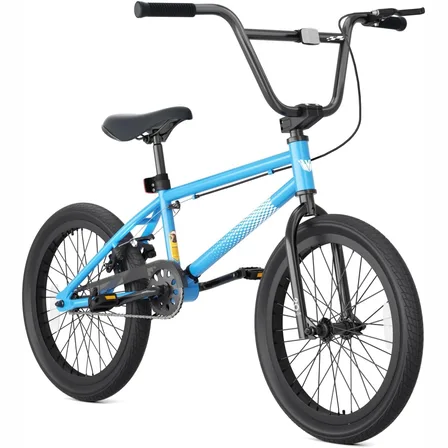
Blue XJD Freestyle BMX Bike, 20-Inch – No Pegs
The XJD 20-Inch Blue Freestyle BMX is an entry-level BMX bike for boys and girls…$189.99