

What size of bike for 11 year old
For an 11-year-old, start with a 20-inch or 24-inch bike: use measured height, then confirm stand-over room, reach and brake control in person.
Choose by height, not birthday
Age narrows the search, but it does not determine fit. Under the XBikes starting points, a 20-inch bike covers rider heights of 48–60 inches (122–152 cm) and ages 7–12. A 24-inch bike covers 54–64 inches (137–163 cm) and ages 10–14. An 11-year-old may therefore fall into either range.
If the rider is 54–60 inches (137–152 cm), both ranges overlap. That does not make the sizes interchangeable. Compare both through an individual fit check, giving priority to comfortable control and the child’s current confidence. If the rider is over 60 inches (153 cm), a 26-inch bike is the XBikes starting point for youth and adults. A shorter rider may need a smaller wheel size rather than being moved up for age.
| Measured rider height | Starting wheel size | What to do |
|---|---|---|
| 48–53 inches (122–136 cm) | 20 Inch | Try the bike and verify all fit checks. |
| 54–60 inches (137–152 cm) | 20 Inch or 24 Inch range | Compare both; choose by control and fit. |
| 61–64 inches (155–163 cm) | 24 Inch | Try the bike and verify all fit checks. |
| Over 60 inches (153 cm) | 26 Inch starting point | Include 26-inch options in the comparison. |
The overlapping figures are intentional starting points, not guarantees. Also note that 153–154 cm sits at the boundary between the published inch and centimetre bands; treat it as a comparison zone and rely on the physical fit check.
Measure before comparing bikes
Measure the child without shoes, standing upright against a wall, for total height. Then measure inseam from the floor to the crotch while the child stands naturally. Keep both measurements available when checking a bicycle’s geometry or consulting its exact product manual.
Wheel size alone does not tell you frame height, saddle range or reach. Two bicycles with the same wheel label can still place the rider differently. The inseam is especially useful when checking whether the child can straddle the bicycle without the frame preventing stable footing.
Run a practical fit check
- Check stand-over: With the child straddling the bike, make sure there is usable room above the top tube and that they can stabilize themselves. Do not accept contact or awkward tiptoeing merely because the bike may last longer.
- Check seated control: Adjust the saddle only within the product’s permitted range. The rider should start, stop and place a foot down without panic or a pronounced lean.
- Check reach: The child should hold the handlebars without stretching, locking the elbows or losing a balanced riding position.
- Check braking: From the normal riding position, the child must comfortably reach and operate the brake controls. Confirm stopping control at low speed in a suitable traffic-free area.
- Check confidence: Turning, starting and stopping should look controlled. If the larger option makes these actions hesitant, it is not the right choice now.
The American Academy of Pediatrics’ guidance supports having the child try the bicycle, checking stand-over and controls, and avoiding an oversized bike bought solely for growth.
How the supplied XBikes options compare
The catalog provides useful 20-inch and 24-inch comparison points for the two principal size ranges at age 11. Girls' Training Wheel Bike by XJD with Basket – Purple is offered with 14 Inch, 16 Inch and 20 Inch SKU labels, so only its 20 Inch option is relevant to this question. Blue XJD Freestyle BMX Bike, 20-Inch – No Pegs is another 20-inch reference. 24-Inch Purple XJD Beach Cruiser Bike with U-Brake provides the 24-inch comparison. Their different catalog categories also let a parent compare the relevant size within training-wheel, BMX and beach-cruiser options without treating category as proof of fit.
 Girls' Training Wheel Bike by XJD with Basket – Purple
Its 20 Inch SKU label falls within the main XBikes starting range for many 11-year-olds. The 14 Inch and 16 Inch choices are smaller comparison options, and individual fit still decides.
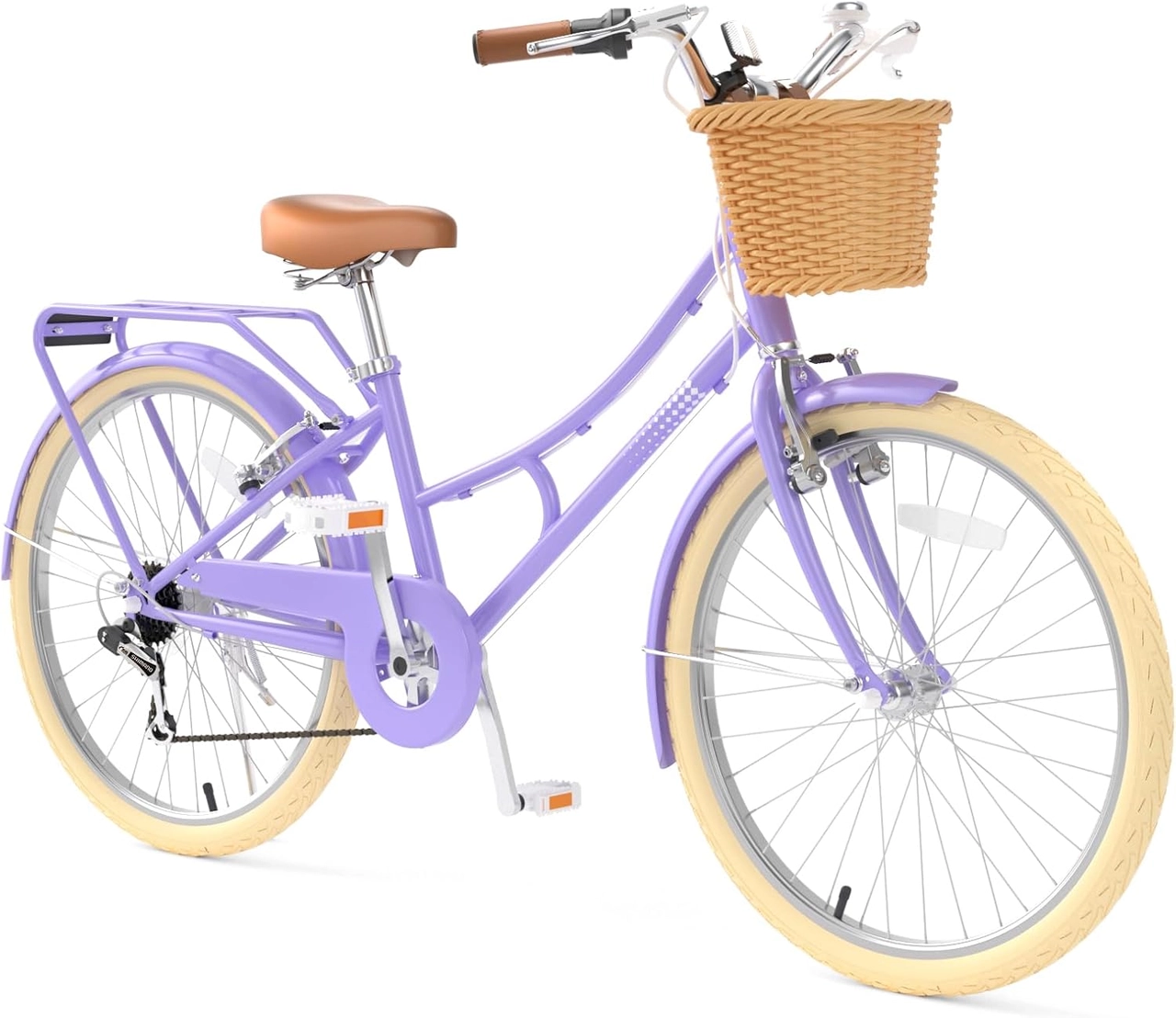 24-Inch Purple XJD Beach Cruiser Bike with U-Brake
This 24-inch beach cruiser is relevant for riders measuring 54–64 inches (137–163 cm), subject to stand-over, reach, brake control and confidence checks.
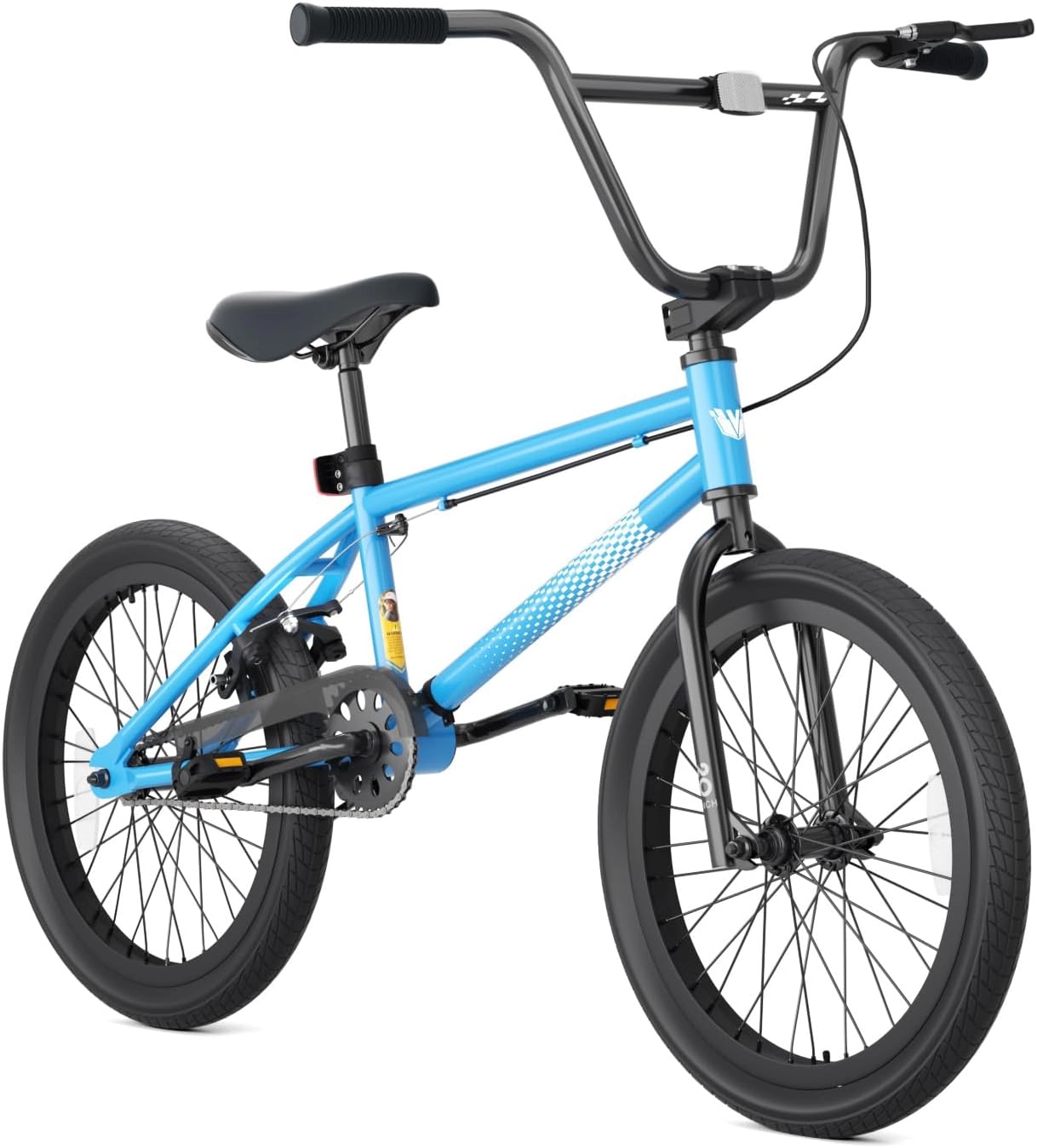 Blue XJD Freestyle BMX Bike, 20-Inch – No Pegs
This 20-inch kids' BMX bike is a catalog comparison for riders measuring 48–60 inches (122–152 cm). Wheel size and age alone do not confirm fit.
These products do not settle the choice from age alone. Compare the exact SKU label where one is offered, have the child try the bicycle, and follow the exact product manual for assembly, adjustment, maintenance, compatibility and any limits not stated here. Use a qualified bicycle mechanic when fit or setup cannot be confirmed confidently.
Do not size up for growth
A bicycle that is too large can make mounting, stopping and steering harder today. Extra future use does not compensate for poor present control. Select the bike the child can manage now; reassess as height, inseam and confidence change.
A properly fitting helmet is part of the next step as well. Following U.S. Consumer Product Safety Commission guidance, choose a bicycle helmet that fits properly, sits level and has straps used according to the helmet manufacturer’s instructions.
Your decision for an 11-year-old
Measure height and inseam first. Start with 20 inches at 48–60 inches tall, 24 inches at 54–64 inches, and include 26 inches when the rider is over 60 inches. In an overlap, choose only after the child demonstrates comfortable stand-over, reach, braking and low-speed control—never choose the larger bike merely for growth.
Bikes for your next adventure
-

Black XJD Toddler Bike Helmet, Adjustable – Kids' Protective Helmet
The XJD Toddler Bike Helmet in black is an adjustable protective helmet for kids…$20.39
-

XJD Girls Bike for Kids Ages 3-8, 12/14/16 Inch with Training Wheels – Purple
The XJD Girls Bike in Purple is a training-wheel bicycle for kids ages 3 to 8, f…$149
$169 -

Pink Girls' 12/14/16" Bike by XJD – Basket & Doll Seat
The XJD Pink Girls' Bike with Basket & Doll Seat is made for riders 71–122 cm ta…$75.99
$99.99