

What to look for in a kids bike
Look for a kids bike that matches the child’s measured height and inseam, allows easy stand-over and steering, and puts both brakes within comfortable reach.
Measure the rider before comparing bikes
Start with the child’s current height and inseam, measured while wearing the shoes they will usually ride in. Height narrows the likely wheel-size range; inseam helps you judge whether the child can stand over the bicycle without the frame obstructing them.
Age is only a starting point. Children of the same age can differ in height, proportions, coordination and confidence, so the rider should try the actual bike whenever possible. Do not choose an oversized bicycle simply to leave room for growth. A bike that is difficult to mount, balance or stop is not a good current fit.
Use wheel size to make a shortlist
Compare the rider’s measured height with these XBikes starting points. If the rider falls near a boundary, try both neighboring sizes and decide by stand-over, reach, brake control and confidence rather than assuming the larger wheel is preferable.
| Wheel size | Age starting point | Rider height |
|---|---|---|
| 12 Inch | 3–4 | 34–40 in / 86–102 cm |
| 14 Inch | 3–6 | 37–45 in / 94–114 cm |
| 16 Inch | 4–7 | 40–48 in / 102–122 cm |
| 18 Inch | 5–9 | 43–52 in / 109–132 cm |
| 20 Inch | 7–12 | 48–60 in / 122–152 cm |
| 24 Inch | 10–14 | 54–64 in / 137–163 cm |
| 26 Inch | Youth and adults | Over 60 in / 153 cm |
Overlapping ranges are intentional starting points, not guarantees. Wheel size alone cannot confirm that the frame shape, seat position, handlebar reach or controls suit a particular child.
Check fit on the actual bicycle
Ask the child to mount, sit and stand over the bike while an adult steadies it. Look for controlled movement rather than a stretched posture or tiptoe struggle. The rider should be able to hold the handlebar naturally, look ahead and turn it in both directions without losing balance or locking their arms.
- Stand-over: The child can straddle the bicycle comfortably and get on and off without the frame getting in the way.
- Reach: The handlebar is accessible without leaning excessively, hunching or fully extending the arms.
- Brake control: The child can reach and operate each provided brake control while keeping a secure grip.
- Confidence: Starting, steering and stopping feel manageable at the child’s present skill level.
If any of these checks fail, compare another size or geometry. A height range should never overrule what you observe during the individual fit check.
Compare the bike with where it will be ridden
Once fit is acceptable, compare the bicycle’s stated category and features with its intended use. Consider the usual riding surface, frequency of use, storage and whether the child can handle the controls without assistance. Confirm any maintenance, assembly, load-limit or compatibility questions in the exact product manual or with a qualified bicycle mechanic; these details should not be guessed from appearance or wheel size.
The supplied catalog option is useful because it provides a concrete 24-inch comparison in the Beach Cruiser Bikes category. The 24-Inch Purple XJD Beach Cruiser Bike with U-Brake is relevant only when a 24-inch starting point and beach-cruiser category match the rider’s needs; its catalog listing does not replace an in-person fit and control check.

Know when the supplied option is relevant
Under the XBikes starting points, a 24-inch bike corresponds to ages 10–14 and heights of 54–64 inches / 137–163 cm. Prioritize measured height over age, then verify inseam, reach, brake operation and confidence on the bicycle itself.
The 24-Inch Purple XJD Beach Cruiser Bike with U-Brake is therefore worth comparing for a rider whose measurement places them in the 24-inch range and whose intended use suits a beach-cruiser-category bicycle. It is not a substitute for a 12-, 14-, 16-, 18-, 20- or 26-inch candidate when the rider’s measurements and fit check indicate one of those sizes. The available SKU label “Default” adds no separate fit information.
Include the helmet and final safety check
A bicycle decision is incomplete without a properly fitting helmet. The helmet should sit level and its straps should be adjusted according to the helmet manufacturer’s instructions. Replace assumptions based on an age label with an actual helmet fit check, just as you would with the bike.
Before riding, follow the bicycle’s exact manual for assembly, adjustment and maintenance, or have a qualified bicycle mechanic inspect it. Then make the final decision in this order: measure height and inseam, shortlist wheel sizes, test stand-over and reach, confirm brake control, and choose only the bike the child can confidently control now.
Bikes for your next adventure
-
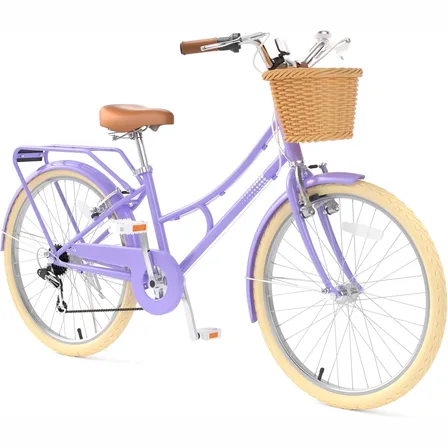
24-Inch Purple XJD Beach Cruiser Bike with U-Brake
The XJD 24-Inch Purple Beach Cruiser is built for girls and young women roughly …$159.99
-

XJD Boys & Girls BMX Bike with Training Wheels, 12/14/16" – Blue
The XJD Boys & Girls BMX Bike in Blue is a first pedal bike for kids roughly age…$99.99
$119.99 -
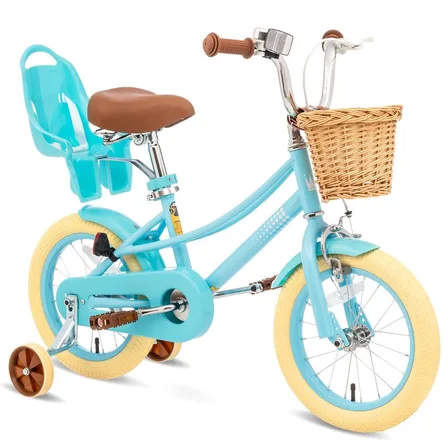
Girls' Training Wheel Bike by XJD, 12–20 Inch Wheels – Blue
This XJD girls' training wheel bike in Blue covers one of the widest fit ranges …$139
$159