

When baby can go in bike seat
A baby can go in a bike seat only when the child meets every requirement in that seat’s manual, can sit upright unsupported, has reliable head and neck control, and can wear a properly fitted bicycle helmet. Age alone is not enough.
Use the seat manual as the first gate
Find the exact make and model of the child seat before planning a ride. Read its minimum and maximum age, weight, and height requirements, along with its mounting and bicycle-compatibility instructions. If the child falls outside any stated limit, do not use the seat.
Do not substitute a general age recommendation for the manufacturer’s rules. Development varies between babies, and different seats may have different limits. If the manual is missing or the seat’s identity is uncertain, obtain the correct manual from the manufacturer or ask a qualified bicycle mechanic to identify the equipment.
What to measure and observe
Record the baby’s current weight and height, then compare both with the seat manual. Next, check abilities that a tape measure cannot capture:
- The child sits upright unsupported without repeatedly slumping.
- Head and neck remain controlled while the child is wearing a helmet.
- The helmet does not push the head forward against the seat.
- The child fits within the harness and foot-rest system exactly as the manual describes.
- Clothing does not interfere with the harness, buckles, or moving bicycle parts.
If head control, posture, or helmet position is doubtful, wait and discuss readiness with the child’s healthcare professional. A short period of unsupported sitting at home does not automatically prove that a baby is ready for road vibration, stops, turns, and a helmet.
Check the adult bicycle and installation
A developmentally ready child still needs a compatible seat and bicycle. Compare the seat manual with the bicycle or rack manual, including permitted mounting points and load limits. Never guess about rack strength, frame compatibility, fastener torque, or required adapters.
Follow the exact installation procedure in the product manual. If any instruction is unclear, or the mount shifts after installation, stop and use a qualified bicycle mechanic. Before each ride, confirm that the seat is secure, the harness closes correctly, feet are contained as designed, and no strap or clothing can reach a wheel.
Helmet fit and the first ride
The U.S. Consumer Product Safety Commission advises that a bicycle helmet should fit properly, sit level, and have its straps adjusted according to the helmet manufacturer’s instructions. Check the fit on the child rather than relying only on the helmet’s labeled size.
For the first check, place the bicycle on level ground while another adult stabilizes it. Seat and secure the child according to the manual, then inspect posture, helmet clearance, harness placement, and foot containment. If all requirements are satisfied, begin with a brief ride in a calm, traffic-free setting. Stop immediately if the child slumps, the helmet shifts, the seat moves, or handling feels unstable.
Why the catalog bike is a later-stage comparison
The supplied product is not a baby bike seat. The Black XJD Kids Bike for Boys – 12, 14 & 16 Inch Sizes is a training-wheel bicycle offered in 12 Inch, 14 Inch, and 16 Inch labels. It becomes relevant only later, when the child is ready to control and ride a bicycle rather than travel as a passenger. These options help clarify that passenger-seat readiness and first-bike fit are separate decisions.

| Available size | XBikes starting point | Individual check still required |
|---|---|---|
| 12 Inch | Ages 3–4; height 34–40 in / 86–102 cm | Height, inseam, reach, brake control, and confidence |
| 14 Inch | Ages 3–6; height 37–45 in / 94–114 cm | Height, inseam, reach, brake control, and confidence |
| 16 Inch | Ages 4–7; height 40–48 in / 102–122 cm | Height, inseam, reach, brake control, and confidence |
These ranges are starting points, not permission to place a baby on a child’s bicycle. When that later stage arrives, have the child try the bicycle. Do not buy an oversized model merely for growth: check stand-over clearance, reach, control, and access to the brakes.
The decision to make today
Use a simple all-or-wait rule: proceed only if the baby meets every limit in the exact seat manual, sits unsupported, maintains head and neck control while helmeted, fits the restraint system, and the seat is correctly installed on a compatible bicycle. If even one condition is unmet or uncertain, the baby should not go in that bike seat yet.
Bikes for your next adventure
-

Flower Pink XJD Girls Bike with Doll Seat & Basket
The XJD Flower Pink girls' bike is made for riders 71–122 cm tall (roughly ages …$69.99
-
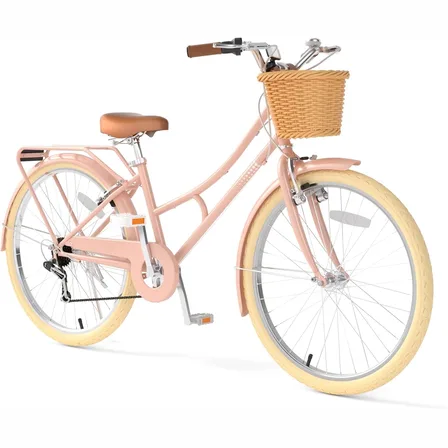
Pink XJD Beach Cruiser Bike, 24"/26", U-Brake
The XJD Pink Beach Cruiser Bike is a single-speed cruiser built for older kids a…$159.99
-
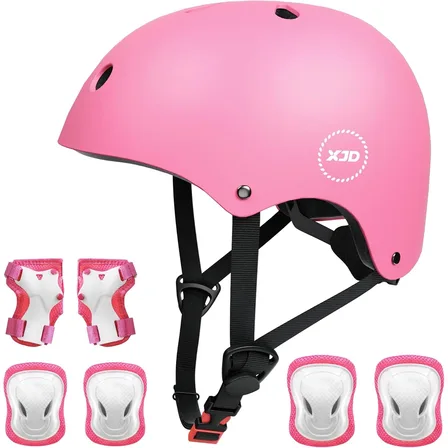
XJD Kids Helmet & Protective Gear Set for Girls, Pink
The XJD Kids Helmet & Protective Gear Set in Pink is a complete safety kit for g…$24.64