

When can i put my baby in a bike seat
Wait until your baby can sit upright unsupported, has strong and steady head and neck control, and meets the child-seat and helmet makers’ requirements—typically not before about 12 months. If any condition is unmet, do not ride with the baby in a bike seat.
Use readiness, not a birthday alone
A first birthday is a useful checkpoint, not automatic clearance. Your child must remain upright while wearing a properly fitted bicycle helmet and while the bicycle moves over ordinary bumps, starts and stops. A baby who slumps, cannot hold the head steady, or cannot tolerate the helmet is not ready.
Premature birth, low muscle tone, developmental differences, or medical conditions may change the timing. Ask the child’s pediatric clinician before riding if any of these apply or if you are uncertain about head and neck control. Also check local passenger laws, which may set a minimum age or other requirements.
What to measure and compare
Do not estimate compatibility from age or appearance. Record your child’s current weight and height, then compare them with the exact minimum and maximum limits in the bike-seat manual. Check the seat’s permitted passenger age, required sitting ability, harness adjustment range, foot-rest position, and helmet-clearance instructions.
- Child: Confirm unsupported sitting, steady head control, current weight and height, secure harness fit, and feet contained by the intended restraints.
- Seat: Read its stated limits, mounting method, required clearances, and restrictions.
- Bicycle: Confirm that its frame, rack if used, and other mounting points are explicitly compatible with that seat.
- Rider: Make sure the adult can mount, balance, steer, brake, and put a foot down while the loaded bicycle is stationary.
Do not invent a mounting method or assume that a seat fits because its clamp appears to close. Follow the exact seat and bicycle manuals. If either manual is missing, unclear, or contradictory, use a qualified bicycle mechanic before carrying a child.
Check the complete setup before riding
Install the seat exactly as its manufacturer directs, including every supplied restraint and retention component. Follow the manual for fasteners, inspection, maintenance, load limits, compatibility, and torque; those details vary and should not be guessed.
- With no child aboard, check that the seat is secure and cannot interfere with steering, wheels, brakes, cables, or the adult rider.
- Hold the bicycle upright while another adult places the child in the seat. Adjust the harness and foot restraints according to the seat manual.
- Check helmet clearance and confirm that clothing, straps, fingers, and feet cannot reach moving parts.
- Practise starting, stopping, turning, and controlled braking in a traffic-free area. The added passenger changes balance and stopping behavior.
Never leave a child in the seat on a parked or unsupported bicycle. If the bicycle feels unstable, braking is difficult, a restraint will not fit correctly, or any attachment loosens, stop and resolve the problem before riding.
Helmet fit is part of readiness
A bicycle helmet must fit the child properly, sit level on the head, and have its straps adjusted according to the helmet manufacturer’s instructions. Do not use an oversized helmet for growth. The helmet must also work with the seat: if the seatback pushes it forward or prevents a level fit, the combination is unsuitable.
Replace or stop using a helmet when its manufacturer says to do so, including after impacts or when damage is found. A helmet does not make an infant with inadequate head and neck control ready for a bike seat.
How the supplied bicycle relates
The supplied catalog option is not a baby seat and does not establish passenger-seat compatibility. The 24-Inch Purple XJD Beach Cruiser Bike with U-Brake is useful only as a comparison with the later stage when a child rides independently. Under XBikes starting points, a 24-inch bicycle corresponds to ages 10–14 and rider heights of 54–64 inches (137–163 cm), subject to an individual fit check. It is therefore not a substitute for a baby-carrying setup.

If considering that bicycle for an older child, have the rider try it rather than buying it oversized for growth. Check measured height, inseam and stand-over clearance, reach, brake control, and current confidence. Its 24-inch wheel label is only a starting point; age alone cannot prove fit.
Your next decision
Ride with your baby only when all four answers are yes: the child can sit unsupported with steady head and neck control, a helmet fits correctly, the child falls within the exact seat limits, and both manuals confirm a secure bicycle-seat combination. Otherwise, wait and recheck development and measurements later—or have a qualified bicycle mechanic assess the setup before the first ride.
Bikes for your next adventure
-

Kids Bike Helmet by XJD for Boys & Girls – Black, Blue, Green, Pink, Purple
The XJD Kids Bike Helmet covers a wide 2-to-8-year age range thanks to two head-…$59.99
-
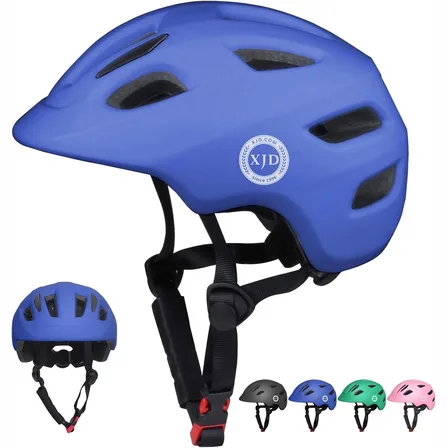
Blue XJD Kids' Bike Helmet, Adjustable Fit – Sizes XS & S
The Blue XJD Kids' Bike Helmet is a lightweight, adjustable helmet for toddlers …$20.39
-

Kids Bike Helmet by XJD for Girls – Pink
The XJD Kids Bike Helmet in Pink is a lightweight multi-sport helmet for girls r…$59.99
$99