

When can kids start riding bikes
Kids can start riding bikes when they fit an available bike, can balance and steer, and can follow simple safety instructions. Age is only a starting point: measure height and inseam, then check stand-over clearance, reach and brake control on the actual bicycle.
Readiness matters more than a birthday
There is no single starting age that works for every child. The XBikes starting points begin with 12-inch bicycles for ages 3–4 and heights of 34–40 inches (86–102 cm), but a child within that range may still need more time. Another child may be physically ready yet lack the confidence to ride independently.
Look for practical signs of readiness. The child should be able to listen and respond to directions, look ahead while moving, steer around a simple obstacle and stop when asked. They should also show interest rather than feeling pressured. Early sessions can focus on sitting, walking the bicycle forward and learning the controls before pedaling.
Measure before choosing a wheel size
Measure the child without shoes, standing straight against a wall. Record total height. For inseam, place a firm, thin book between the legs and raise it gently to simulate a saddle; measure from the floor to the top edge. Inseam helps you assess the actual stand-over and starting position, even though the XBikes chart uses rider height.
| Wheel size | Age starting point | Rider height |
|---|---|---|
| 12 Inch | 3–4 | 34–40 in / 86–102 cm |
| 14 Inch | 3–6 | 37–45 in / 94–114 cm |
| 16 Inch | 4–7 | 40–48 in / 102–122 cm |
| 18 Inch | 5–9 | 43–52 in / 109–132 cm |
| 20 Inch | 7–12 | 48–60 in / 122–152 cm |
| 24 Inch | 10–14 | 54–64 in / 137–163 cm |
| 26 Inch | Youth and adults | Over 60 in / 153 cm |
Overlapping ranges are intentional starting points, not proof of fit. Begin with measured height, compare the plausible sizes, and have the child try the exact bicycle. Do not move up merely because the child is near a birthday or because a larger bike might last longer.
Check the actual bike before riding
With the child standing over the bicycle, confirm that they can stand securely rather than being forced onto tiptoes or against the frame. Seated, they should reach the handlebar without an uncomfortable stretch and turn it without losing balance. Their hands must operate the brake controls reliably from a normal riding position.
Ask the child to walk the bike, start, steer, stop and get off several times in a clear area. Watch for shoulders pulled forward, difficulty turning, missed brake controls or fear caused by the bike’s size. Those are reasons to compare another size or setup, not problems the child should be expected to grow into.
What the supplied 24-inch bike can tell you
The 24-Inch Purple XJD Beach Cruiser Bike with U-Brake is relevant only when a 24-inch starting point is plausible: ages 10–14 and rider height 54–64 inches (137–163 cm), followed by an individual fit check. As a beach cruiser bicycle with a U-brake, it gives families a specific 24-inch catalog option to compare for reach, stand-over and brake operation. It is not a substitute for a smaller first bike when the child’s measurements or control indicate 12, 14, 16, 18 or 20 inches.
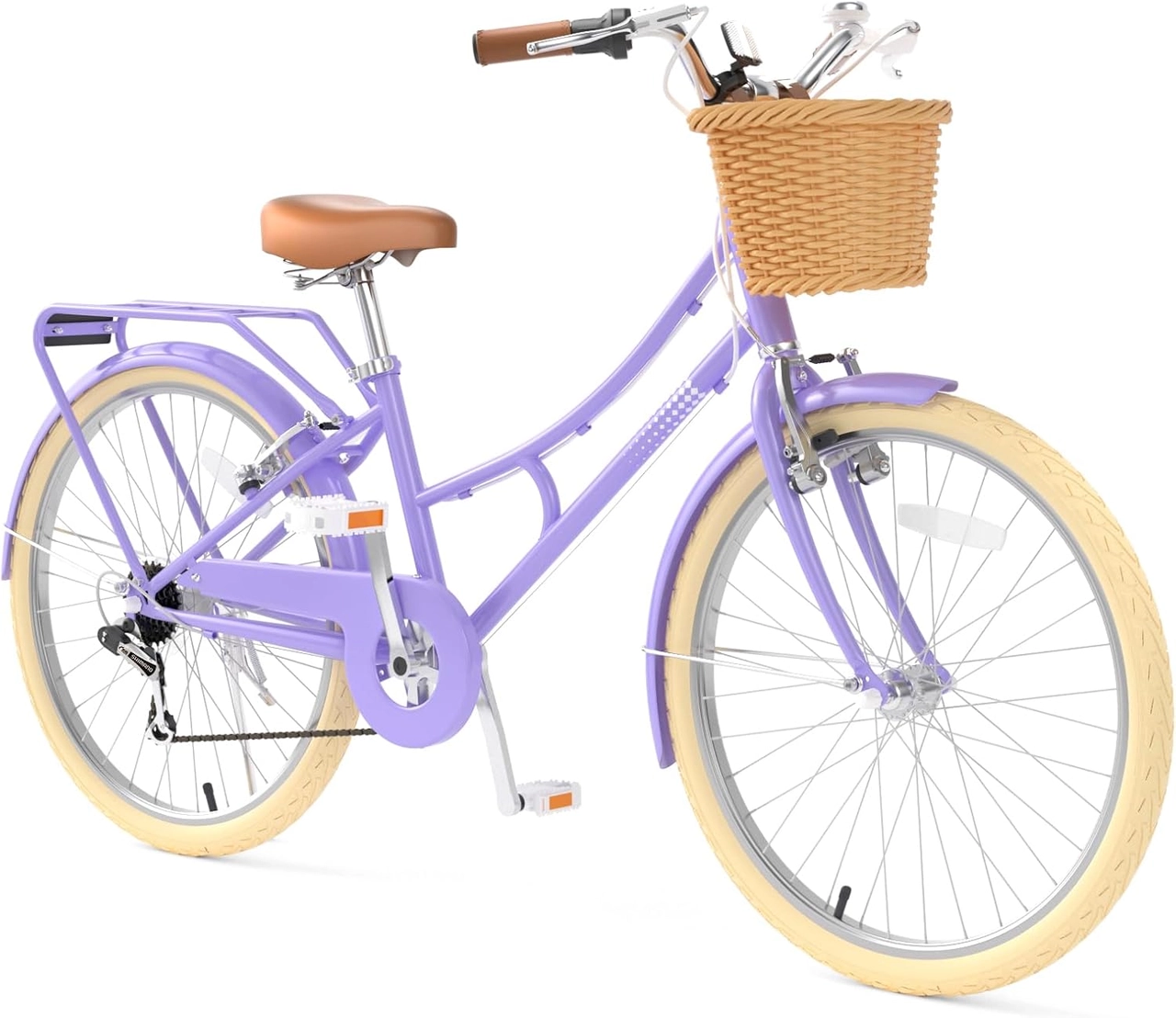
Because this is the only supplied catalog product, the product display is a 24-inch comparison point rather than a complete list of starter sizes. Its “Default” SKU label supplies no additional fit information. Consult the exact product manual or a qualified bicycle mechanic for assembly, maintenance, load limits, compatibility and torque details.
Prepare a safe first session
Use a properly fitting bicycle helmet. It should sit level and its straps should be adjusted according to the helmet manufacturer’s instructions. Choose a flat, open riding area away from traffic, driveways, steep slopes and crowded paths. Check the bicycle before each session and resolve loose, damaged or poorly operating parts according to its manual or with a qualified mechanic.
Keep the first practice short and calm. Let the child repeat starting, steering and stopping at a comfortable pace. Stay close enough to help without pulling the handlebar, which can prevent the child from learning balance and steering corrections.
Make the starting decision
Your child can start when three conditions agree: their measured height points to a suitable wheel-size range, the real bicycle passes the stand-over, reach and brake-control checks, and they can practice willingly while following basic directions. Measure height and inseam today, shortlist the chart sizes that fit the height range, and arrange an actual try. If the bike feels oversized or the child cannot stop confidently, choose a different fit or wait—do not buy extra size for growth.
Bikes for your next adventure
-

XJD Kids Bike for Girls – Pink, 12/14/16/20 Inch with Training Wheels
The XJD Kids Bike for Girls in Pink is a training-wheel bike built to carry your…$139
$159 -
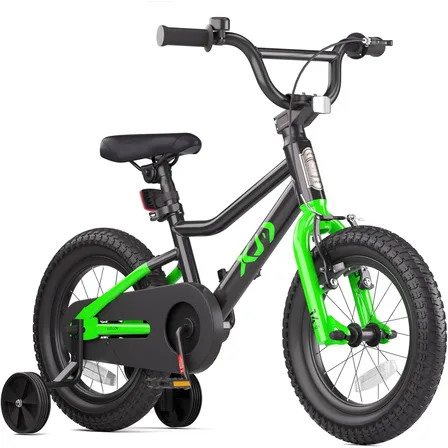
Black XJD Kids' BMX Bicycle with Training Wheels
The XJD Kids' BMX Bicycle with Training Wheels is built for children roughly 3 t…$99.99
$119.99 -
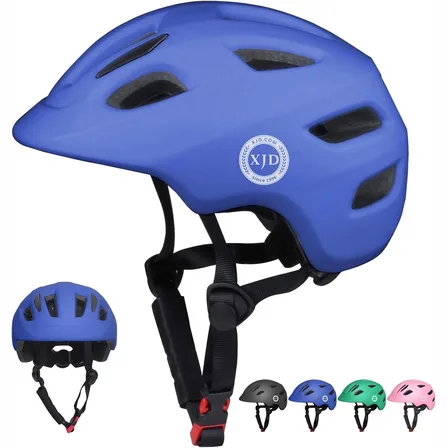
Blue XJD Kids' Bike Helmet, Adjustable Fit – Sizes XS & S
The Blue XJD Kids' Bike Helmet is a lightweight, adjustable helmet for toddlers …$20.39