

When can kids ride a bike
Kids can ride a bike when they fit it correctly and can steer, stop and stay balanced with control. Measure the child first; age is only a starting point.
Readiness comes before a birthday
There is no single age at which every child is ready. A suitable rider can follow simple directions, look ahead while moving, hold the handlebar securely and react without panicking. Before riding independently, the child should also be able to start, steer a predictable path and stop on request.
Confidence matters, but it should match current ability. A hesitant child may need more supported practice, while an eager child still needs a bicycle that fits. Do not move up to an oversized bike merely because the child will grow into it.
Measure before choosing a wheel size
Measure standing height without shoes. Also measure inseam from the floor to the crotch while the child stands naturally. Compare height with the XBikes starting points below, then have the child try the bicycle. The chart narrows the search; it does not confirm fit by itself.
| Wheel size | Age starting point | Rider height |
|---|---|---|
| 12 Inch | 3–4 | 34–40 in / 86–102 cm |
| 14 Inch | 3–6 | 37–45 in / 94–114 cm |
| 16 Inch | 4–7 | 40–48 in / 102–122 cm |
| 18 Inch | 5–9 | 43–52 in / 109–132 cm |
| 20 Inch | 7–12 | 48–60 in / 122–152 cm |
| 24 Inch | 10–14 | 54–64 in / 137–163 cm |
| 26 Inch | Youth and adults | Over 60 in / 153 cm |
Where ranges overlap, use measured fit, reach, brake control and confidence—not age—to decide which bicycle to try first. A larger wheel is not automatically the right next step.
Check the child on the actual bicycle
A parent should watch the whole fit check rather than judging by the wheel label alone. With the child standing over the bicycle, confirm there is comfortable clearance instead of contact with the frame. When seated, the child should reach the handlebar without stretching, twisting or locking the elbows.
Ask the child to operate the brakes while keeping a secure grip and stable riding position. Brake controls must be within comfortable reach, and the child must have enough hand control to use them reliably. Then check whether the rider can mount, start, steer, look ahead and stop without losing control.
If the child cannot clear the bicycle, comfortably reach its controls or stop predictably, that bike is not a current fit—even when the age range appears to match. Try another size or design and repeat the same checks.
How the supplied XBikes options compare
These catalog options provide concrete comparison points across 12-, 14-, 16-, 20- and 24-inch choices, helping parents relate measured height and present riding ability to an available wheel-size label. They still require an individual fit check.
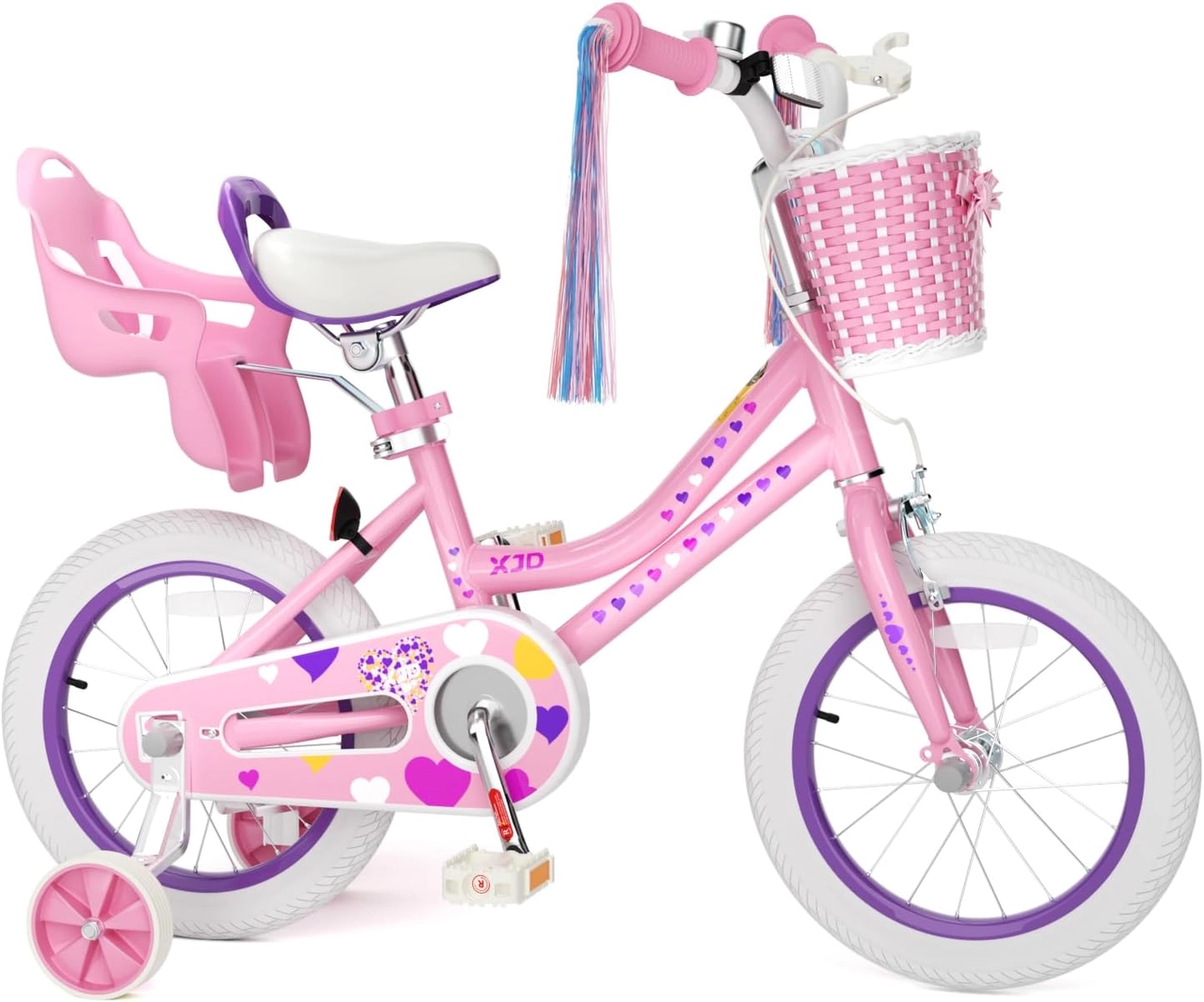 Pink Girls' 12/14/16" Bike by XJD – Basket & Doll Seat
A Training Wheel Bikes option with 12 Inch, 14 Inch and 16 Inch SKU labels, relevant for comparing measured height across the XBikes early-rider size ranges before an individual fit check.
 24-Inch Purple XJD Beach Cruiser Bike with U-Brake
This 24-inch Beach Cruiser Bikes option is relevant to riders within the 54–64 in / 137–163 cm starting range, provided stand-over, reach, U-brake control and confidence are checked individually.
 Blue XJD Freestyle BMX Bike, 20-Inch – No Pegs
A 20-inch Kids' BMX Bikes comparison point for the 48–60 in / 122–152 cm starting range. Confirm stand-over clearance, comfortable reach, brake operation and present riding control before choosing it.
The Pink Girls' 12/14/16" Bike by XJD – Basket & Doll Seat is listed in Training Wheel Bikes and offers 12 Inch, 14 Inch and 16 Inch SKU labels. Those sizes span several early-rider starting points, so compare the child's height with each relevant row rather than selecting by appearance or age alone.
The Blue XJD Freestyle BMX Bike, 20-Inch – No Pegs is a Kids' BMX Bikes option with a 20-inch wheel size. The XBikes starting range is ages 7–12 and 48–60 in / 122–152 cm, subject to the same stand-over, reach, braking and confidence checks.
The 24-Inch Purple XJD Beach Cruiser Bike with U-Brake is listed in Beach Cruiser Bikes. Its 24-inch size starts at ages 10–14 and 54–64 in / 137–163 cm. The child must be able to reach and control its U-brake; the catalog title alone does not establish fit.
Prepare for the first ride
Use a quiet, open practice area away from traffic and obstacles. Begin with short sessions that let the child practice starting, steering and controlled stopping. Stay close enough to assist without forcing speed or independence before the rider is ready.
A bicycle helmet must fit properly, sit level and have its straps adjusted according to the helmet manufacturer's instructions. Inspect and assemble the bicycle according to the exact product manual. For maintenance, compatibility, load limits, torque or assembly details not stated in the catalog, follow that manual or use a qualified bicycle mechanic.
Make the decision now
Measure height and inseam, choose the chart row that contains the child's measured height, and arrange an actual fit check. Let the child ride only when stand-over clearance, reach, brake operation, steering and stopping are all controlled. If any check fails, postpone independent riding or try a more suitable size rather than buying for future growth.
Bikes for your next adventure
-

XJD Kids Bike for Girls – Pink, 12/14/16/20 Inch with Training Wheels
The XJD Kids Bike for Girls in Pink is a training-wheel bike built to carry your…$139
$159 -

Black XJD Kids Bike for Boys – 12, 14 & 16 Inch Sizes
For a son between roughly 3 and 8 years old, the XJD Kids Bike in Black covers t…$169
$199 -
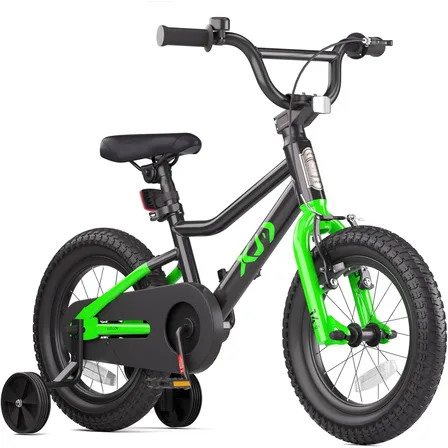
Black XJD Kids' BMX Bicycle with Training Wheels
The XJD Kids' BMX Bicycle with Training Wheels is built for children roughly 3 t…$99.99
$119.99