

When can you take baby on bike
You can take a baby on a bike only after the child meets every developmental and fit requirement in the exact child-seat or trailer manual, can wear a properly fitted bicycle helmet, and can remain supported and stable for the entire ride. If readiness is uncertain, ask the child’s pediatrician before riding.
Do not choose a date from age alone
There is no single birthday that proves a baby is ready. Children develop at different rates, while rear seats, front seats and trailers can have different instructions and restrictions. Use the minimum requirements stated by the manufacturer of the specific carrier you intend to use. Do not round up, assume that “almost ready” is close enough, or substitute advice written for another model.
A baby must be able to maintain the head and trunk position required by that carrier while wearing a helmet. The helmet adds weight and changes posture, so observe the child in the complete setup rather than judging head control without it. A baby who slumps, cannot keep a stable position or cannot tolerate the helmet is not ready for that setup.
What to measure and compare
Before installation, record the child’s current weight and relevant seated dimensions. Compare them directly with the carrier manual’s developmental requirements, permitted measurements and limits. Because no universal carrier limits apply, use the exact manual rather than a general chart or an estimate.
- Child readiness: Check stable head and trunk control in the riding position, with the helmet on.
- Helmet fit: The helmet should fit properly, sit level and have its straps adjusted according to its manufacturer’s instructions.
- Carrier fit: Confirm that the harness, supports and helmet clearance fit the child as the carrier manual requires.
- Bicycle compatibility: Verify the carrier, mounting points and bicycle are approved for use together. If the documentation is unclear, use a qualified bicycle mechanic.
- Adult control: Make sure the rider can mount, stop, balance and handle the bicycle with the installed carrier before placing the child in it.
Set up the complete system before riding
Follow the bicycle and carrier manuals for assembly, attachment, maintenance and load limits. Do not improvise hardware or guess at compatibility or torque. A qualified bicycle mechanic should inspect the setup when any mounting instruction, part or limit is uncertain.
First practise with the empty carrier in a controlled area. Notice changes in balance, turning, braking, mounting and dismounting. Then perform the manual’s pre-ride checks every time. Choose a short first outing on a predictable route, avoid conditions that make control difficult, and stop if the baby’s posture or comfort changes.
Why the supplied bikes are comparison points only
The supplied XBikes products are complete beach cruiser bicycles in 24-inch and 26-inch sizes. They are not identified in the catalog facts as baby carriers, trailers or carrier-compatible bicycles. They therefore help clarify the difference between a baby-passenger setup and a bicycle sized for an independent youth or adult rider; they do not establish when a baby can ride or whether a carrier can be attached.
These catalog options are useful only when comparing the later, separate question of rider-sized bicycles and available wheel sizes.
 XJD 24-Inch Green Beach Cruiser Bike with U-Brake
A beach cruiser offered in 24-inch and 26-inch SKU labels. It is a rider-sized comparison point; supplied facts do not establish baby-carrier compatibility or load limits.
 Pink XJD Beach Cruiser Bike, 24"/26", U-Brake
This U-brake beach cruiser is listed in 24-inch and 26-inch versions. Neither size determines when a baby is ready, and the supplied facts do not confirm carrier compatibility.
XJD 24-Inch Green Beach Cruiser Bike with U-Brake is listed with Green / 24 Inch, Pink / 24 Inch and Pink / 26 Inch SKU labels. Pink XJD Beach Cruiser Bike, 24"/26", U-Brake is listed in 24 Inch and 26 Inch versions. Those facts do not provide carrier compatibility, load limits or suitability for transporting a baby. Consult the exact product and carrier manuals, or a qualified bicycle mechanic, before considering either bicycle for that purpose.
When those wheel sizes become relevant
For an independent rider, XBikes lists 24-inch wheels as a starting point for ages 10–14 and heights of 54–64 inches (137–163 cm). It lists 26-inch wheels for youth and adults over 60 inches (153 cm). These are starting points, not proof of fit and not passenger-age guidance.
Have the rider try the bicycle. Prioritize measured height, inseam, stand-over clearance, reach, brake control and current confidence over age. Do not buy an oversized bicycle merely for growth. The rider must be able to control the bike and reach the brakes appropriately.
Your next decision
- Select the exact child seat or trailer first and read its full manual.
- Compare the baby’s present development and measurements with every stated requirement.
- Confirm helmet fit and complete bicycle-carrier compatibility.
- Have uncertain installation or compatibility checked by a qualified bicycle mechanic.
- If developmental readiness is unclear, pause and ask the child’s pediatrician.
Take the baby only when every check passes today. If even one requirement is unmet or unknown, wait rather than choosing a date by age alone.
Bikes for your next adventure
-
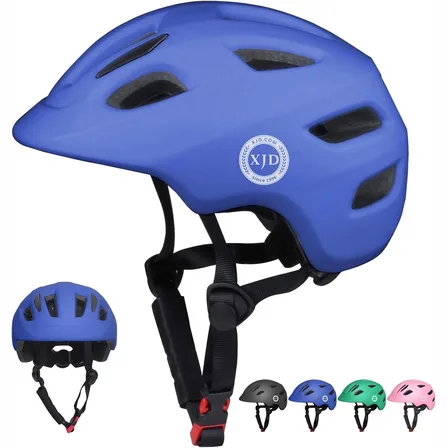
Blue XJD Kids' Bike Helmet, Adjustable Fit – Sizes XS & S
The Blue XJD Kids' Bike Helmet is a lightweight, adjustable helmet for toddlers …$20.39
-
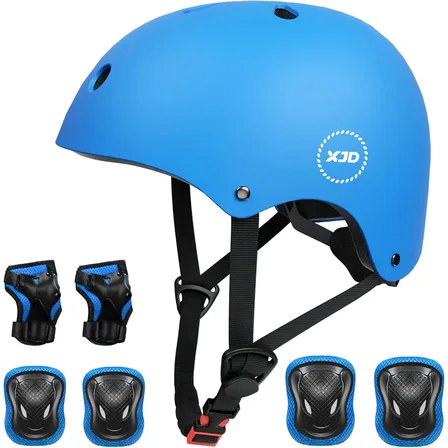
Blue XJD Helmet & Protective Gear Set for Kids, Sizes S/M
The Blue XJD Helmet & Protective Gear Set is made for kids roughly 3 to 8 years …$23.79
-

Blue XJD Freestyle BMX Bike, 20-Inch – No Pegs
The XJD 20-Inch Blue Freestyle BMX is an entry-level BMX bike for boys and girls…$189.99