

When do kids usually learn to ride a bike
Most children learn to ride a bike between ages 3 and 7, but there is no single correct age. Readiness, body fit, brake control and confidence matter more than the birthday.
What “usually” means for your child
Some children are ready to practise balancing at three or four; others learn comfortably at six, seven or later. A child is ready to progress when they willingly participate, can follow simple directions and can steer, stop and place their feet down without panic. Pressure, comparison with siblings or a fixed deadline usually makes practice less productive.
Learning is also not one skill. A child may pedal before balancing independently, or balance well while still needing help to start and stop. Judge each skill separately rather than treating one successful ride as complete mastery.
Measure before choosing a practice bike
Measure the child’s standing height and inseam while they wear the shoes used for riding. Then have the child try the actual bicycle. They should be able to stand over it comfortably, reach the handlebar without stretching and operate the brakes reliably. Check that turning the handlebar does not pull them into an awkward position.
Do not buy an oversized bicycle for future growth. A wheel-size label is only a starting point; frame shape and adjustment can change how two bicycles of the same nominal size feel. If the child cannot control the bike confidently now, a larger size is not an equivalent substitute.
| Wheel size | Starting age | Rider height |
|---|---|---|
| 12 Inch | 3–4 | 34–40 in / 86–102 cm |
| 14 Inch | 3–6 | 37–45 in / 94–114 cm |
| 16 Inch | 4–7 | 40–48 in / 102–122 cm |
| 18 Inch | 5–9 | 43–52 in / 109–132 cm |
| 20 Inch | 7–12 | 48–60 in / 122–152 cm |
| 24 Inch | 10–14 | 54–64 in / 137–163 cm |
| 26 Inch | Youth and adults | Over 60 in / 153 cm |
Overlapping ranges are intentional. Use measured height to identify candidates, then compare inseam clearance, reach, brake operation and present confidence on each bike.
How to tell whether training wheels are relevant
Training wheels may suit a child who is learning to pedal, steer or gain confidence with extra lateral support. They do not establish that a bicycle fits, and they do not replace practice with balance, controlled starting and stopping. A child who already balances comfortably may not need them.
The three catalog options below are relevant because each is a training-wheel bike offered in 12, 14, 16 and 20 Inch labels. Those sizes let you compare several XBikes starting ranges, but the label still has to be confirmed through an individual fit check.
 Girls' Training Wheel Bike by XJD, 12–20 Inch Wheels – Blue
A blue training-wheel bike offered in 12, 14, 16 and 20 Inch labels, making it relevant for comparing several wheel-size starting points after measuring the child and checking actual fit.
 XJD Girls' Bike with Training Wheels, 12/14/16/20 Inch – Purple
This purple Training Wheel Bikes option comes in 12, 14, 16 and 20 Inch labels. Consider it when lateral support is useful, but confirm stand-over, reach and brake control on the actual bicycle.
 XJD Kids Bike for Girls – Pink, 12/14/16/20 Inch with Training Wheels
A pink training-wheel model listed in 12, 14, 16 and 20 Inch options. Its relevance depends on the rider’s measured height, inseam, control and confidence rather than age alone.
Compare the supplied options without guessing
Girls' Training Wheel Bike by XJD, 12–20 Inch Wheels – Blue is listed in the Training Wheel Bikes category with 12, 14, 16 and 20 Inch options. XJD Girls' Bike with Training Wheels, 12/14/16/20 Inch – Purple has the same supplied size labels and category, with a different catalog color description.
XJD Kids Bike for Girls – Pink, 12/14/16/20 Inch with Training Wheels is likewise listed with training wheels and the same four size labels. The supplied facts do not establish differences in brakes, weight, materials, geometry or included adjustments, so do not infer those details from the titles.
None of these three products is supplied in an 18, 24 or 26 Inch option. If the child’s measurements point to one of those sizes, the displayed products are nearest-size comparison points only, not substitutes; another wheel size is not equal merely because its age or height range overlaps.
A practical first-session check
- Choose a flat, open area away from traffic and obstacles.
- Fit a bicycle helmet so it sits level and secure, using the straps exactly as its manufacturer directs.
- Confirm comfortable stand-over clearance, relaxed reach and reliable brake control before movement.
- Practise mounting, looking ahead, steering and stopping in short sessions.
- Stop if fear, fatigue or repeated loss of control appears; return another day or reassess the fit.
For assembly, adjustment, maintenance, load limits, compatibility and torque, follow the exact product manual or ask a qualified bicycle mechanic. Do not improvise specifications that are not provided.
Decide what to do next
If your child is interested and can control a correctly fitted bicycle, begin brief practice now, regardless of whether peers learned earlier. Measure height and inseam today, shortlist the corresponding wheel labels, and have the child compare stand-over, reach and braking in person. Select one of the supplied training-wheel models only when its actual fit and the child’s current learning needs both support that choice.
Bikes for your next adventure
-
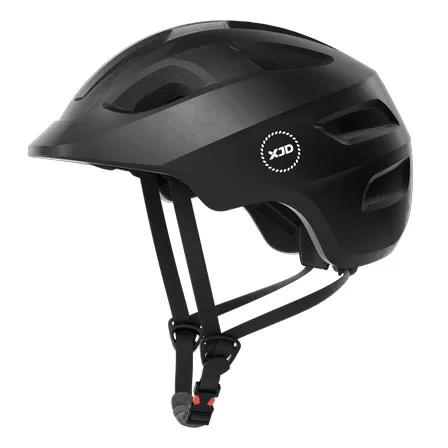
Kids Multi-Sport Bike Helmet by XJD – Black
7 reviews
The XJD Kids Multi-Sport Bike Helmet in Black is a lightweight, adjustable helme…$59.99
$49 -

Kids Bike Helmet by XJD for Boys & Girls – Black, Blue, Green, Pink, Purple
The XJD Kids Bike Helmet covers a wide 2-to-8-year age range thanks to two head-…$59.99
-

Kids Bike Helmet by XJD for Girls – Pink
The XJD Kids Bike Helmet in Pink is a lightweight multi-sport helmet for girls r…$59.99
$99