

When should a kid learn how to ride a bike
A child should learn to ride a bike when they can balance, steer, stop on request and follow simple directions—not at one fixed age. Measure height and inseam, then confirm control on the actual bicycle before deciding.
Readiness matters more than a birthday
The right time is when physical readiness and interest meet. Some children are eager early; others need more time. Avoid turning a sibling’s timeline, a catalog label or an age range into a deadline.
Look for a child who can walk and run steadily, climb on and off with limited help, hold the handlebar without becoming rigid, look ahead while moving and understand instructions such as “slow down” and “stop.” They should also be willing to practise. Fear, repeated refusal or difficulty following directions is a reason to pause and try again later.
Confidence does not mean the child must already know how to balance. It means they can attempt a new movement without becoming too distressed to listen or control the bike.
Measure before choosing a bicycle
Measure the child’s standing height without shoes. For inseam, have the child stand straight with feet slightly apart and measure from the floor to the crotch. These measurements narrow the options, but they do not replace trying the bicycle.
Use the XBikes wheel-size starting points below, prioritizing measured height over age:
| Wheel size | Starting age | Rider height |
|---|---|---|
| 12 Inch | 3–4 | 34–40 in / 86–102 cm |
| 14 Inch | 3–6 | 37–45 in / 94–114 cm |
| 16 Inch | 4–7 | 40–48 in / 102–122 cm |
| 18 Inch | 5–9 | 43–52 in / 109–132 cm |
| 20 Inch | 7–12 | 48–60 in / 122–152 cm |
| 24 Inch | 10–14 | 54–64 in / 137–163 cm |
| 26 Inch | Youth and adults | Over 60 in / 153 cm |
Overlapping ranges are normal. If a child falls within two rows, compare both sizes in person rather than automatically selecting the larger one. Never buy an oversized bicycle solely for growth.
Check fit and control on the actual bike
Have the child try the bicycle while wearing the shoes they will use for riding. A useful fit check answers five questions:
- Can the child mount and dismount without being lifted?
- Is there comfortable clearance when standing over the frame?
- Can they reach the handlebar without stretching, locking their elbows or losing an upright, controlled position?
- Can they operate the brakes comfortably and reliably with their hands in their normal riding position?
- Can they start, steer and stop without the bicycle’s size overwhelming them?
A wheel-size chart only identifies candidates. Inseam, stand-over clearance, reach, brake control and current confidence decide whether a particular bicycle fits. If controls cannot be reached or the child looks unstable merely holding the bike upright, choose another fit or wait.
Where the supplied bike is relevant
The Black XJD Kids Bike for Boys – 12, 14 & 16 Inch Sizes is listed in the Training Wheel Bikes category and has 12 Inch, 14 Inch and 16 Inch SKU labels. Those three options provide relevant comparison points for children whose measured height falls within the corresponding XBikes ranges. They do not remove the need to check inseam, reach, stand-over clearance, brake control and confidence on the exact bike.
These catalog options help answer when a child should learn because they let a parent compare three early wheel-size starting points against the child’s current measurements rather than choosing by age alone.

This product is not the relevant catalog option when the fit check points to 18, 20, 24 or 26 Inch wheels. A smaller listed size is not an equivalent substitute for a required larger size, and a larger listed option should not be chosen simply to extend growing room.
Make the first sessions manageable
Choose a flat, open area away from traffic, slopes and obstacles. Keep early sessions short enough that tiredness does not replace concentration. Work on one decision at a time: getting on and off, looking ahead, steering a simple line, then stopping on request.
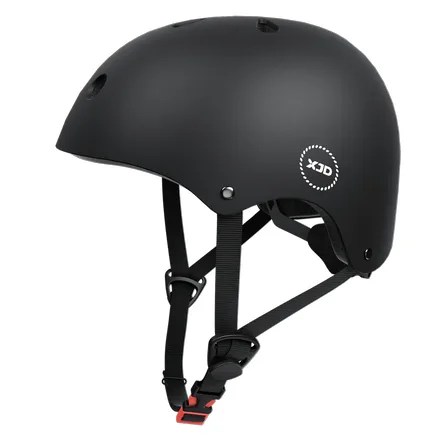
A properly fitting bicycle helmet is essential. It should sit level, fit properly and use its straps according to the helmet manufacturer’s instructions. Clothing and footwear should allow free movement and avoid loose items near moving parts.
Before riding, follow the exact bicycle manual for assembly, adjustment, inspection and maintenance. If the manual is missing, a component does not operate correctly or the fit cannot be adjusted confidently, use a qualified bicycle mechanic. Do not guess at compatibility, load limits or tightening procedures.
Decide what to do next
- Confirm that the child wants to learn and can follow start, slow and stop instructions.
- Record height and inseam, then identify the matching wheel-size candidates in the table.
- Have the child try those candidates and compare stand-over clearance, reach, brake operation and overall control.
- Select only a bike the child can control now; otherwise wait, practise basic coordination or try a more suitable size.
The child is ready to begin when willingness, basic coordination and a successful individual fit check align—not merely when they reach a particular birthday.
Bikes for your next adventure
-

Blue XJD Girls Bike with Training Wheels – 12/14/16 Inch
If you're shopping for a first pedal bike for a daughter roughly 3 to 8 years ol…$149
$169 -

XJD Kids Bike for Girls – Pink, 12/14/16/20 Inch with Training Wheels
The XJD Kids Bike for Girls in Pink is a training-wheel bike built to carry your…$139
$159 -
7-in-1 Kids Helmet & Protective Gear Set from XJD – Black or Blue
If you're outfitting one kid (or a couple of siblings) for biking, scootering, o…$59.99