

When should a kid learn to bike
A kid should learn to bike when they can follow simple directions, control the bike, and want to practise—not at one fixed age. Measure height and inseam, then check reach, stand-over clearance, brake control and confidence on the actual bicycle.
Readiness matters more than a birthday
Many children can begin exploring bicycles around the ages associated with 12- or 14-inch wheels, but age is only a starting point. A child is ready for a particular learning session when they can stay attentive, understand “stop” and “wait,” and place their feet securely where the bicycle’s design requires.
Interest also matters. A willing child can practise in short, calm sessions; a frightened or resistant child may benefit from waiting and trying again later. Progress does not need to match siblings or classmates.
Measure before choosing a wheel size
Measure the child’s height without shoes. Measure inseam from the floor to the crotch while the child stands straight. Use height to identify likely wheel sizes, then have the child try the bicycle. Inseam, frame shape and saddle adjustment determine whether the child can stand over and control that particular model.
| Wheel size | XBikes starting age | Rider height |
|---|---|---|
| 12 Inch | 3–4 | 34–40 in / 86–102 cm |
| 14 Inch | 3–6 | 37–45 in / 94–114 cm |
| 16 Inch | 4–7 | 40–48 in / 102–122 cm |
| 18 Inch | 5–9 | 43–52 in / 109–132 cm |
| 20 Inch | 7–12 | 48–60 in / 122–152 cm |
| 24 Inch | 10–14 | 54–64 in / 137–163 cm |
| 26 Inch | Youth and adults | Over 60 in / 153 cm |
The ranges overlap deliberately: children of the same age can need different sizes. Never choose an oversized bicycle solely to leave growing room. If height falls in an overlap, compare both candidate sizes in person and favor the one the child can presently manage.
Check the actual bicycle, not just its label
With an adult steadying the bike, check whether the child can stand over it comfortably, mount and dismount without getting tangled, and reach the handlebar without stretching or locking their arms. They should be able to steer through a gentle turn while remaining balanced and looking ahead.
Next, verify that the child can reach and operate the bicycle’s brakes as designed. Wheel size alone cannot confirm brake reach or control. If the child cannot stop predictably, turn without strain or recover from a slight wobble, the bike is not a suitable learning fit in its current setup.
When training-wheel models are relevant
Training-wheel bikes are relevant when a parent has chosen that learning format and the child fits the bicycle itself. The XJD Kids' Training Wheel Bike for Boys & Girls, 12/14/16 Inch – White provides 12 Inch, 14 Inch and 16 Inch catalog choices. The Girls' Training Wheel Bike by XJD, 12–20 Inch Wheels – Blue provides 12 Inch, 14 Inch, 16 Inch and 20 Inch choices. These options help families compare catalog wheel labels against the measured-height starting points above; they do not replace an individual fit check.
 XJD Kids' Training Wheel Bike for Boys & Girls, 12/14/16 Inch – White
Relevant for families considering a training-wheel learning format, with supplied 12 Inch, 14 Inch and 16 Inch choices. Compare each label with measured height and confirm individual stand-over, reach, brake control and confidence.
 Girls' Training Wheel Bike by XJD, 12–20 Inch Wheels – Blue
Offers supplied 12 Inch, 14 Inch, 16 Inch and 20 Inch training-wheel choices. Its broader size-label range helps comparison, but the child must still try the bicycle and demonstrate suitable reach, control and fit.
The blue model adds a supplied 20 Inch option, which corresponds to the XBikes starting range of ages 7–12 and heights 48–60 in / 122–152 cm. The supplied catalog lists no 18 Inch choice for either product and no 24 Inch or 26 Inch choice. If measurement points to one of those sizes, these products are comparison points only—not equal-size substitutes.
Likewise, select between the shared 12, 14 and 16 Inch options by fit rather than color or title wording. The supplied product information does not establish brake type, weight, materials, load limits, compatibility or included adjustments. Follow the exact product manual for assembly and maintenance, or use a qualified bicycle mechanic.
Make the first sessions controlled and short
- Choose a flat area away from traffic, parked cars and other obstacles.
- Fit a bicycle helmet so it sits level and secure, with its straps adjusted according to the helmet manufacturer’s instructions.
- Begin with mounting, looking ahead, steering and stopping before asking for longer riding.
- Stay close enough to assist, but stop the session if fear, fatigue or loss of attention reduces control.
Training wheels can support the selected learning approach, but they do not prove that the frame fits or that the child can brake and steer. Recheck fit after adjustments and as the child grows.
Decide what to do next
Measure height and inseam today, identify the overlapping wheel-size starting points, and arrange a supervised try-on. Choose only when the child can stand over, reach, steer and brake with present confidence. If those checks fail, adjust according to the manual, compare another appropriate size, consult a qualified mechanic, or wait before beginning.
Bikes for your next adventure
-

XJD Kids Bike for Girls – Pink, 12/14/16/20 Inch with Training Wheels
The XJD Kids Bike for Girls in Pink is a training-wheel bike built to carry your…$139
$159 -

Blue XJD Girls Bike with Training Wheels – 12/14/16 Inch
If you're shopping for a first pedal bike for a daughter roughly 3 to 8 years ol…$149
$169 -
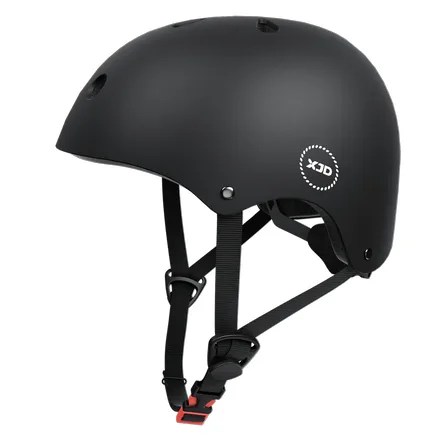
7-in-1 Kids Helmet & Protective Gear Set from XJD – Black or Blue
If you're outfitting one kid (or a couple of siblings) for biking, scootering, o…$59.99