

When should kids start riding a bike
Most kids can start riding a bike when they can balance, steer, stop and follow simple directions—not at one fixed age. Measure height and inseam, then check stand-over clearance, reach, brake control and confidence on the actual bike before deciding.
Readiness matters more than a birthday
The right starting time is when a child has enough coordination and attention to control a correctly fitted bicycle. Watch whether the child can walk and turn steadily, look ahead while moving, respond to instructions and stop deliberately. Interest matters too: a hesitant child may benefit from more low-pressure practice before riding, while an eager child still needs close supervision and a proper fit.
Age is only a starting point for comparing wheel sizes. Children of the same age can differ considerably in height, proportions, hand reach and confidence. Do not move a child to a larger bicycle merely because they have reached a certain birthday or because the larger size will last longer.
Measure before comparing wheel sizes
Measure the child's height without shoes, standing straight against a wall. Measure inseam from the floor to the crotch while the child stands naturally. Record both measurements rather than relying on clothing size or a remembered figure.
Use the height ranges below to create a shortlist. Where ranges overlap, the correct choice comes from trying the bicycles and comparing control—not automatically choosing the larger wheel.
| Wheel size | Starting age | Rider height |
|---|---|---|
| 12 Inch | 3–4 | 34–40 in / 86–102 cm |
| 14 Inch | 3–6 | 37–45 in / 94–114 cm |
| 16 Inch | 4–7 | 40–48 in / 102–122 cm |
| 18 Inch | 5–9 | 43–52 in / 109–132 cm |
| 20 Inch | 7–12 | 48–60 in / 122–152 cm |
| 24 Inch | 10–14 | 54–64 in / 137–163 cm |
| 26 Inch | Youth and adults | Over 60 in / 153 cm |
These XBikes figures are starting points, not a substitute for an individual fit check. Measured height, inseam, reach, brake control and current confidence take priority over age alone.
What to check on the actual bicycle
Have the child try the bicycle instead of judging fit from a size label. A suitable candidate lets the rider mount and dismount without struggling, stand over the bicycle with practical clearance, reach the controls comfortably and steer without stretching or losing posture.
- Stand-over: Check that the child can straddle the bicycle securely rather than being pressed against the frame.
- Reach: The child should hold the handlebars and turn them while remaining composed and in control.
- Brake control: Confirm that the child can reach and operate the fitted braking controls reliably. Do not assume small hands can manage them.
- Confidence: Ask the child to start, steer and stop in a quiet, open practice area under close adult supervision.
If the child cannot perform these checks comfortably, that bicycle is not the right starting fit. Do not buy an oversized bike for future growth. Compare another size or model, even when the child's age appears to match the chart.
How the supplied 12, 14 and 16 Inch options help
The three supplied catalog bicycles provide relevant comparison points for children whose measurements place them in the overlapping 12, 14 or 16 Inch ranges. Each is offered with those three wheel-size labels, so a parent can compare the appropriate listed size while still requiring the child to try the exact bicycle.
 Flower Pink XJD Girls Bike with Doll Seat & Basket
A Training Wheel Bike offered in 12 Inch, 14 Inch and 16 Inch labels; relevant for hands-on comparison only when the rider's measurements indicate one of those size ranges.
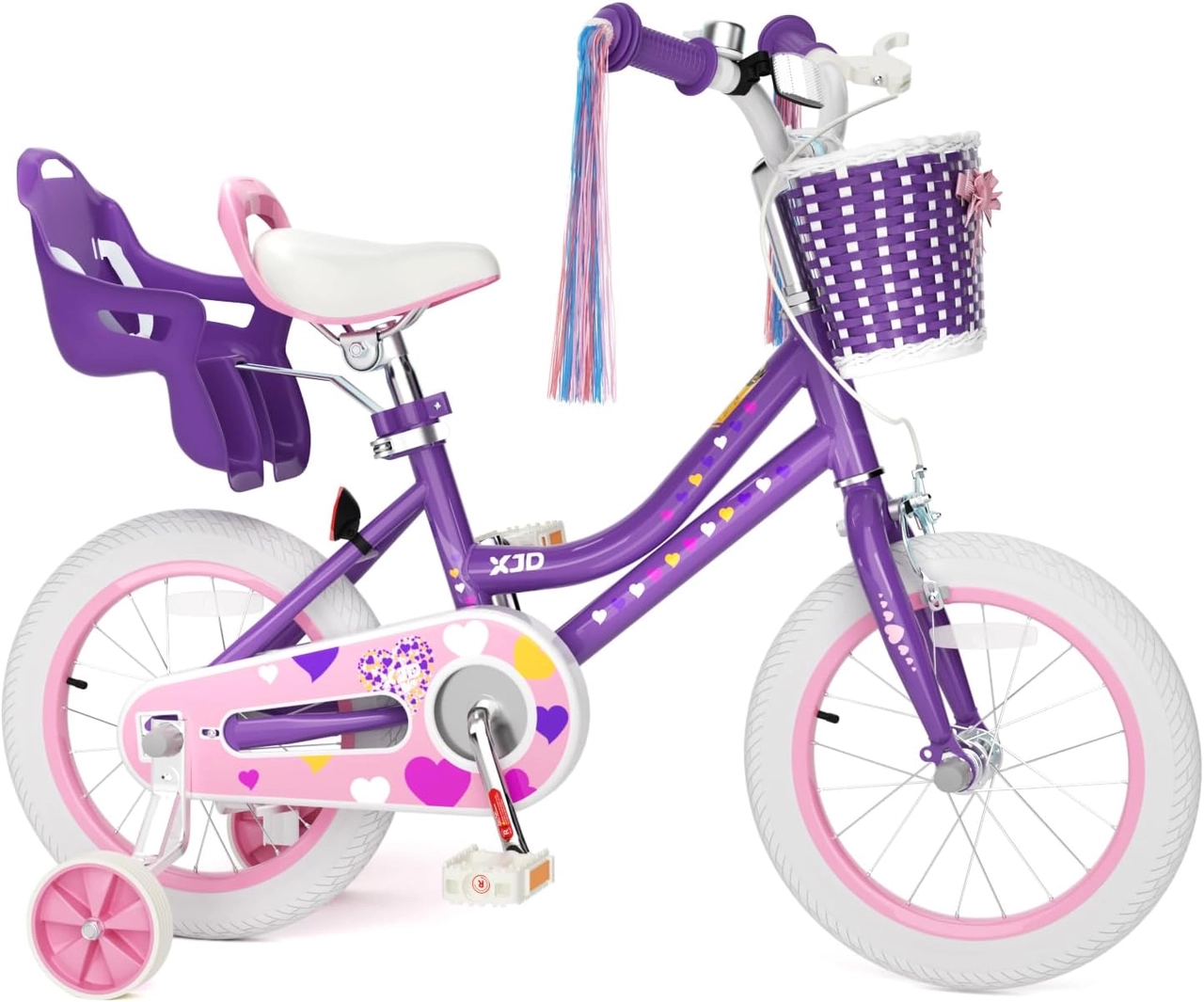 Purple XJD Girls' Bike with Doll Seat & Basket
This Training Wheel Bike lists 12 Inch, 14 Inch and 16 Inch options, making it a comparison candidate when measured height and an individual control check support one of those sizes.
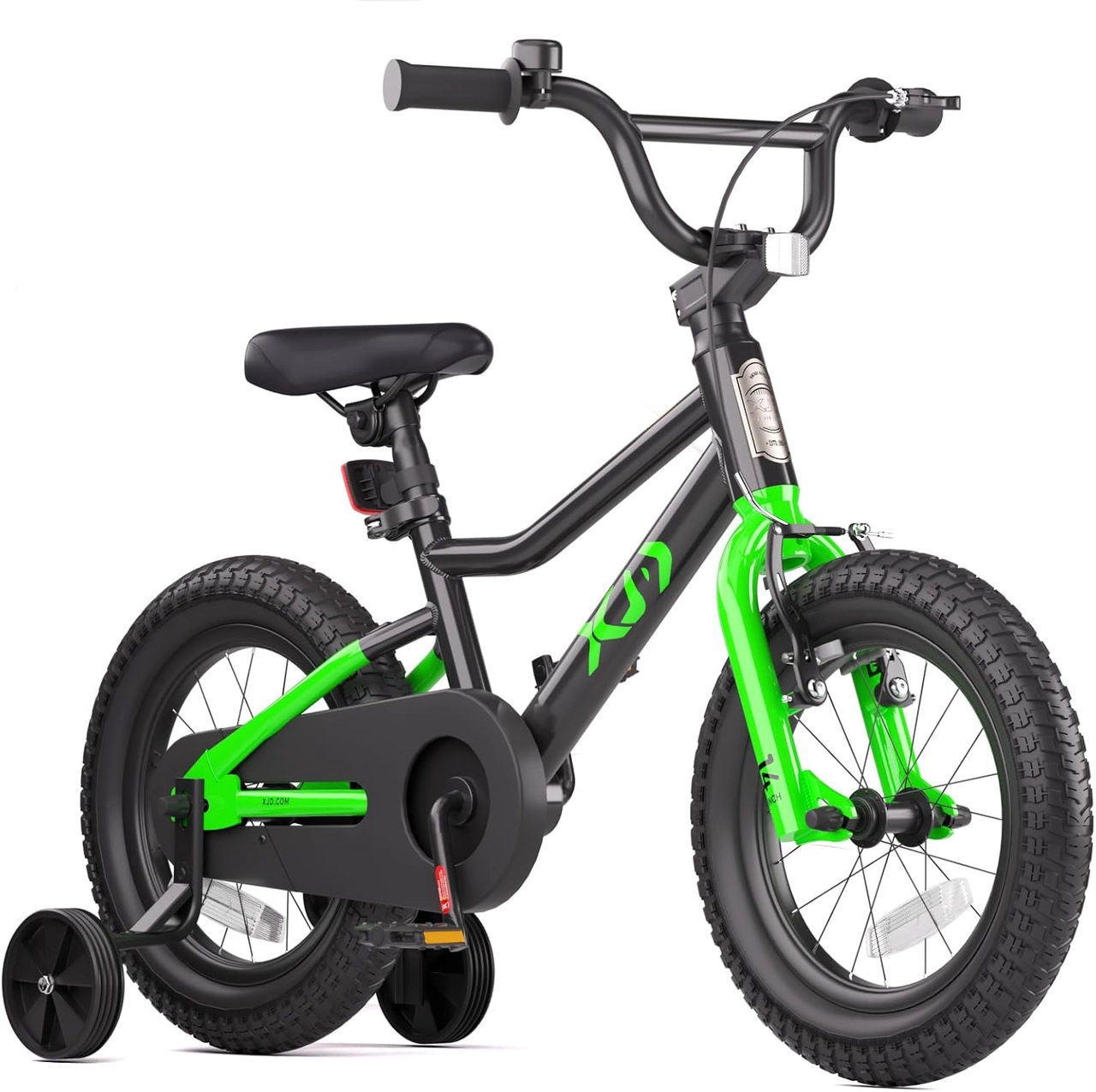 Black XJD Kids' BMX Bicycle with Training Wheels
Cataloged as a Kids' BMX Bike with training wheels and offered in 12 Inch, 14 Inch and 16 Inch labels; fit must still be confirmed on the exact bicycle.
The Flower Pink XJD Girls Bike with Doll Seat & Basket and Purple XJD Girls' Bike with Doll Seat & Basket are cataloged as Training Wheel Bikes. Their supplied differences are their exact titles; both list 12 Inch, 14 Inch and 16 Inch options.
The Black XJD Kids' BMX Bicycle with Training Wheels is cataloged under Kids' BMX Bikes and also lists 12 Inch, 14 Inch and 16 Inch options. Its BMX category distinguishes it from the two Training Wheel Bikes, but category wording does not prove that it fits a particular rider.
These products are relevant only when the child's measurements and hands-on fit support one of their listed sizes. If the child needs an 18, 20, 24 or 26 Inch bicycle, these three are nearest-range comparison points only—not substitutes for the required wheel size.
Prepare for the first ride
Use a bicycle helmet that fits properly, sits level and has its straps adjusted according to the helmet manufacturer's instructions. Choose a quiet practice area away from traffic and obstacles, supervise closely and keep early sessions short enough that fatigue does not undermine control.
Before use, follow the exact bicycle's manual for assembly, adjustment, maintenance, compatibility and load limits. If the instructions are missing, unclear or beyond your experience, use a qualified bicycle mechanic rather than inventing a procedure or torque setting.
Make the start decision
Start now only if the child is willing, falls within a sensible height shortlist and can demonstrate stand-over clearance, comfortable reach, effective brake control, steering and stopping on the actual bicycle. Otherwise, remeasure, try a different size or pause and practise readiness skills before buying.
Bikes for your next adventure
-

XJD Kids Bike for Girls – Pink, 12/14/16/20 Inch with Training Wheels
The XJD Kids Bike for Girls in Pink is a training-wheel bike built to carry your…$139
$159 -
Black XJD Kids' BMX Bicycle with Training Wheels
The XJD Kids' BMX Bicycle with Training Wheels is built for children roughly 3 t…$99.99
$119.99 -

Black XJD Kids Bike for Boys – 12, 14 & 16 Inch Sizes
For a son between roughly 3 and 8 years old, the XJD Kids Bike in Black covers t…$169
$199