

When to get a bike for toddler
Get a bike for your toddler when they fit it now and can control it confidently—not on a birthday alone. Measure height and inseam, then check stand-over, reach and brake control in person.
When is the right time?
The right time is when your child shows interest, follows simple stop-and-go directions and can remain in control while sitting, steering and stopping. Age is only a starting point. The XBikes chart begins with a 12 Inch bicycle at ages 3–4 and a rider height of 34–40 in / 86–102 cm.
If your toddler is younger than three, shorter than 34 in / 86 cm, unable to reach the controls or uncomfortable during a fitting, wait rather than moving up to the smallest listed bicycle automatically. Readiness can change quickly, so measure again later.
Measure before comparing bikes
- Height: Have the child stand straight without shoes against a wall and record the measurement.
- Inseam: Measure from the floor to the crotch while the child stands naturally. Use this to judge whether the frame can be straddled comfortably.
- Reach: During a real fitting, check that the child can hold the handlebars and steer without stretching, locking the elbows or leaning excessively.
- Brake control: Confirm that the child can reach and operate the bicycle’s supplied stopping controls. Follow the exact product manual for their correct use and adjustment.
Record the measurements instead of relying on clothing size or age. Bicycle geometry can vary even when two products share a wheel-size label, which is why trying the actual bicycle matters.
Use wheel size as a starting point
| Wheel size | Starting age | Rider height |
|---|---|---|
| 12 Inch | 3–4 | 34–40 in / 86–102 cm |
| 14 Inch | 3–6 | 37–45 in / 94–114 cm |
| 16 Inch | 4–7 | 40–48 in / 102–122 cm |
These ranges overlap because wheel size cannot determine fit by itself. Start with measured height, then compare inseam clearance, reach, stopping control and current confidence. The American Academy of Pediatrics advises having the child try the bicycle and not buying an oversized model merely for future growth.
A toddler measuring 34–36 in / 86–93 cm falls within the listed 12 Inch starting range but below the 14 Inch height range. A child measuring 37–40 in / 94–102 cm overlaps both starting ranges, so the in-person control checks decide which bicycle fits now. Do not treat the larger size as equivalent or assume it will be manageable.
How the supplied catalog option helps
The supplied catalog item helps you compare the larger options that may become relevant once the rider reaches their listed starting range. Its size labels make it useful for checking whether a 14 Inch option fits now or whether the available choices are still too large for this toddler.

Girls' Training Wheel Bike by XJD with Basket – Purple is categorized as a training wheel bike and is offered with 14 Inch, 16 Inch and 20 Inch labels. Of those choices, 14 Inch is the only one within the XBikes toddler-adjacent starting range of ages 3–6 and 37–45 in / 94–114 cm.
The 16 Inch option starts at ages 4–7 and 40–48 in / 102–122 cm; the 20 Inch option starts at ages 7–12 and 48–60 in / 122–152 cm. Those larger labels should not be chosen for a smaller toddler simply to allow room for growth. The title’s references to training wheels, a basket and purple describe the catalog item, but they do not establish fit.
Complete an in-person fit check
- Have the child straddle the bicycle and confirm suitable stand-over clearance rather than contact or an awkward lean.
- Seat the child and check that the handlebars and controls are comfortably reachable.
- Ask the child to steer, start and stop in a controlled practice area under close adult supervision.
- Watch for fear, unstable control, excessive stretching or an inability to stop reliably. Any of these means the current setup is not suitable.
Follow the exact product manual for assembly, maintenance, adjustments, load limits and compatibility. If the instructions are unclear or the bicycle cannot be adjusted to fit correctly, use a qualified bicycle mechanic rather than improvising a procedure or torque setting.
What to do before the first ride
Choose a properly fitting bicycle helmet for every ride. The U.S. Consumer Product Safety Commission advises that the helmet sit level and that its straps be used according to the helmet manufacturer’s instructions. A helmet that is merely owned, but loose, tilted or incorrectly strapped, has not passed the fit check.
Make the decision from today’s measurements: if your toddler meets a wheel-size height starting point and can straddle, reach, steer and stop the actual bicycle confidently, it is time to consider that size. If any check fails, wait and remeasure instead of buying ahead.
Bikes for your next adventure
-

Black XJD Toddler Bike Helmet, Adjustable – Kids' Protective Helmet
The XJD Toddler Bike Helmet in black is an adjustable protective helmet for kids…$20.39
-

Pink Girls' 12/14/16" Bike by XJD – Basket & Doll Seat
The XJD Pink Girls' Bike with Basket & Doll Seat is made for riders 71–122 cm ta…$75.99
$99.99 -
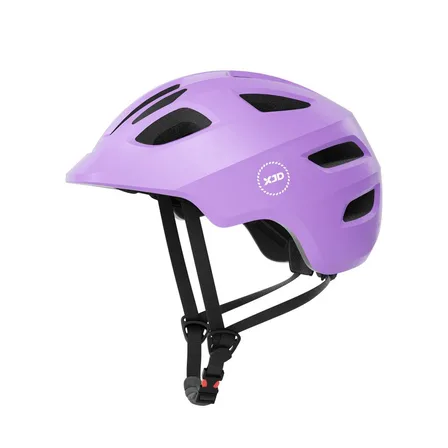
Girls' Bike Helmet from XJD – Purple
The XJD kids bike helmet in purple is a multi-sport helmet built for toddlers an…$59.99
$49