

When to start kid on bicycle
Start a child on a bicycle when they can follow simple directions, balance with support, and control a correctly fitted bike—not at a fixed birthday.
Check readiness before choosing a wheel size
A child is ready to begin when they show interest, can stay attentive long enough to practise, and can understand instructions such as stop, slow down and look ahead. They should also have enough coordination to sit steadily, hold the handlebar and place their feet where needed.
Confidence matters. A hesitant child may benefit from more time and short, pressure-free sessions, while an eager child still needs close supervision and a proper fit. Age is only a starting point; it cannot show whether the child can reach, steer or brake effectively.
Measure the child, then compare sizes
Measure standing height without shoes. Also measure inseam from the floor to the crotch while the child stands straight with feet slightly apart. Use height to identify likely wheel sizes, then have the child try the actual bicycle. Inseam helps you judge stand-over clearance and whether getting on and off feels manageable.
| Wheel size | Age starting point | Rider height |
|---|---|---|
| 12 Inch | 3–4 | 34–40 in / 86–102 cm |
| 14 Inch | 3–6 | 37–45 in / 94–114 cm |
| 16 Inch | 4–7 | 40–48 in / 102–122 cm |
| 18 Inch | 5–9 | 43–52 in / 109–132 cm |
| 20 Inch | 7–12 | 48–60 in / 122–152 cm |
| 24 Inch | 10–14 | 54–64 in / 137–163 cm |
| 26 Inch | Youth and adults | Over 60 in / 153 cm |
These XBikes ranges overlap intentionally because children develop at different rates. If height falls into two ranges, compare both sizes in person and choose according to actual control rather than selecting the larger bicycle for extra growing room.
Use a five-point fit check
Have the child try the complete bicycle in ordinary riding clothes and suitable closed-toe shoes. Check these points before deciding:
- Stand-over: the child can straddle the bicycle securely rather than being forced onto tiptoes or against the frame.
- Starting and stopping: they can get into position and come to a controlled stop without the bicycle overwhelming them.
- Reach: they can hold and turn the handlebar without locking their elbows, stretching their torso or losing a stable seated position.
- Brake control: if the bicycle has hand-operated controls, the child can reach and operate them reliably. Confirm operation according to the exact product manual.
- Confidence: they can look ahead, steer and respond to instructions without freezing or panicking.
If any point fails, adjust only as the manual permits or compare another size. Do not buy an oversized bicycle for future growth; poor reach and limited control are reasons to wait or choose a better-fitting option.
When training-wheel models are relevant
The supplied catalog options are relevant when a fit check points to 12, 14, 16 or 20 Inch wheels and the family specifically wants a training-wheel bicycle for early supported riding. They let you compare the same four labeled wheel sizes across three catalog designs; the titles identify color and style differences, not proof of fit.
 Girls' Training Wheel Bike by XJD, 12–20 Inch Wheels – Blue
A blue training-wheel bicycle offered in 12 Inch, 14 Inch, 16 Inch and 20 Inch labels; relevant only when one of those sizes passes the child's individual fit and control checks.
 XJD Girls' Bike with Training Wheels, 12/14/16/20 Inch – Purple
A purple XJD training-wheel bicycle with 12 Inch, 14 Inch, 16 Inch and 20 Inch SKU labels, providing size comparison options after measuring rider height and checking reach and control.
 XJD Kids Bike for Girls – Pink, 12/14/16/20 Inch with Training Wheels
A pink XJD kids training-wheel bicycle offered with 12 Inch, 14 Inch, 16 Inch and 20 Inch labels; compare the appropriate labeled size through an individual stand-over, reach and brake-control check.
Girls' Training Wheel Bike by XJD, 12–20 Inch Wheels – Blue is offered with 12 Inch, 14 Inch, 16 Inch and 20 Inch SKU labels. XJD Girls' Bike with Training Wheels, 12/14/16/20 Inch – Purple offers the same labeled choices in purple. XJD Kids Bike for Girls – Pink, 12/14/16/20 Inch with Training Wheels provides those four labeled sizes in pink.
These products are not direct options when the fit check points to 18, 24 or 26 Inch wheels, because none has that exact wheel-size label. In that case, they are nearest-size comparison points only, not substitutes; continue looking for the exact size the child can control.
Prepare for the first ride
Choose a flat area away from traffic and obstacles, supervise closely, and keep the first practice brief. A bicycle helmet should fit properly, sit level on the head and have its straps used according to the helmet manufacturer's instructions. Replace guesswork about bicycle assembly, adjustments, maintenance, compatibility or torque with the exact product manual or help from a qualified bicycle mechanic.
Begin now only if the child's measured height suggests a size that passes the stand-over, reach, brake-control and confidence checks. Otherwise, compare another size or wait and measure again rather than letting age—or room to grow—make the decision.
Bikes for your next adventure
-

XJD Kids Bike for Girls – Pink, 12/14/16/20 Inch with Training Wheels
The XJD Kids Bike for Girls in Pink is a training-wheel bike built to carry your…$139
$159 -
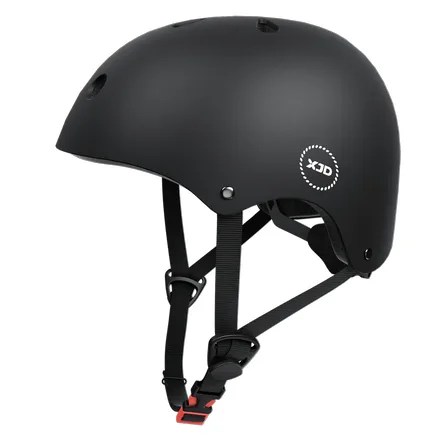
7-in-1 Kids Helmet & Protective Gear Set from XJD – Black or Blue
If you're outfitting one kid (or a couple of siblings) for biking, scootering, o…$59.99
-

Blue XJD Girls Bike with Training Wheels – 12/14/16 Inch
If you're shopping for a first pedal bike for a daughter roughly 3 to 8 years ol…$149
$169