

Which child bike seat is the best
The best child bike seat is the one that fits the child’s measured height, inseam, reach and braking ability now—not an oversized bicycle chosen for future growth.
First, clarify what “bike seat” means
If you mean a child’s complete bicycle, choose the wheel-size starting point below and confirm the fit in person. If you mean a passenger seat that attaches to an adult bicycle, none of the supplied products is relevant: all three are complete bicycles, not child carriers. For an attached passenger seat, use the seat and bicycle manufacturers’ compatibility and load instructions, or ask a qualified bicycle mechanic.
What to measure before comparing bikes
Measure the child’s standing height and inseam while they wear the shoes they normally ride in. Height narrows the wheel-size range, but it does not prove that a particular frame fits.
Have the child try the actual bicycle. Check that they can stand over it appropriately, reach the handlebar without stretching, steer while remaining balanced, and operate the brakes comfortably. Their current confidence matters too: a wheel size that appears suitable on a chart can still feel difficult to start, stop or control.
Do not move up to an oversized bicycle merely to leave room for growth. A bicycle that fits now is the better choice than one the child must “grow into.”
XBikes wheel-size starting points
| Wheel size | Starting age | Rider height |
|---|---|---|
| 12 Inch | 3–4 | 34–40 in / 86–102 cm |
| 14 Inch | 3–6 | 37–45 in / 94–114 cm |
| 16 Inch | 4–7 | 40–48 in / 102–122 cm |
| 18 Inch | 5–9 | 43–52 in / 109–132 cm |
| 20 Inch | 7–12 | 48–60 in / 122–152 cm |
| 24 Inch | 10–14 | 54–64 in / 137–163 cm |
| 26 Inch | Youth and adults | Over 60 in / 153 cm |
Use age only as a rough starting point. Overlapping ranges are normal, so prioritize measured height, inseam, reach, brake control and confidence. The chart also cannot determine saddle position or frame clearance on a specific bicycle; those require an individual fit check.
How the supplied bicycles compare
These catalog options help answer the question by providing complete bicycles across several listed wheel sizes, from a training-wheel model to larger beach-cruiser models. They are useful comparison points only after the child’s measurements indicate which size to try.
 Pink 12/14/16/20" XJD Girls Bike with Training Wheels & Basket
A complete training-wheel bicycle offered with 12 Inch, 14 Inch, 16 Inch and 20 Inch SKU labels, making it relevant for comparing the smaller supplied wheel-size options after measuring the rider.
 26-Inch XJD Beach Cruiser Bike for Girls – Purple, V-Brake
A complete Beach Cruiser Bike with listed 20 Inch, 24 Inch and 26 Inch SKU options in several colors; relevant for larger riders whose measurements indicate one of those starting sizes.
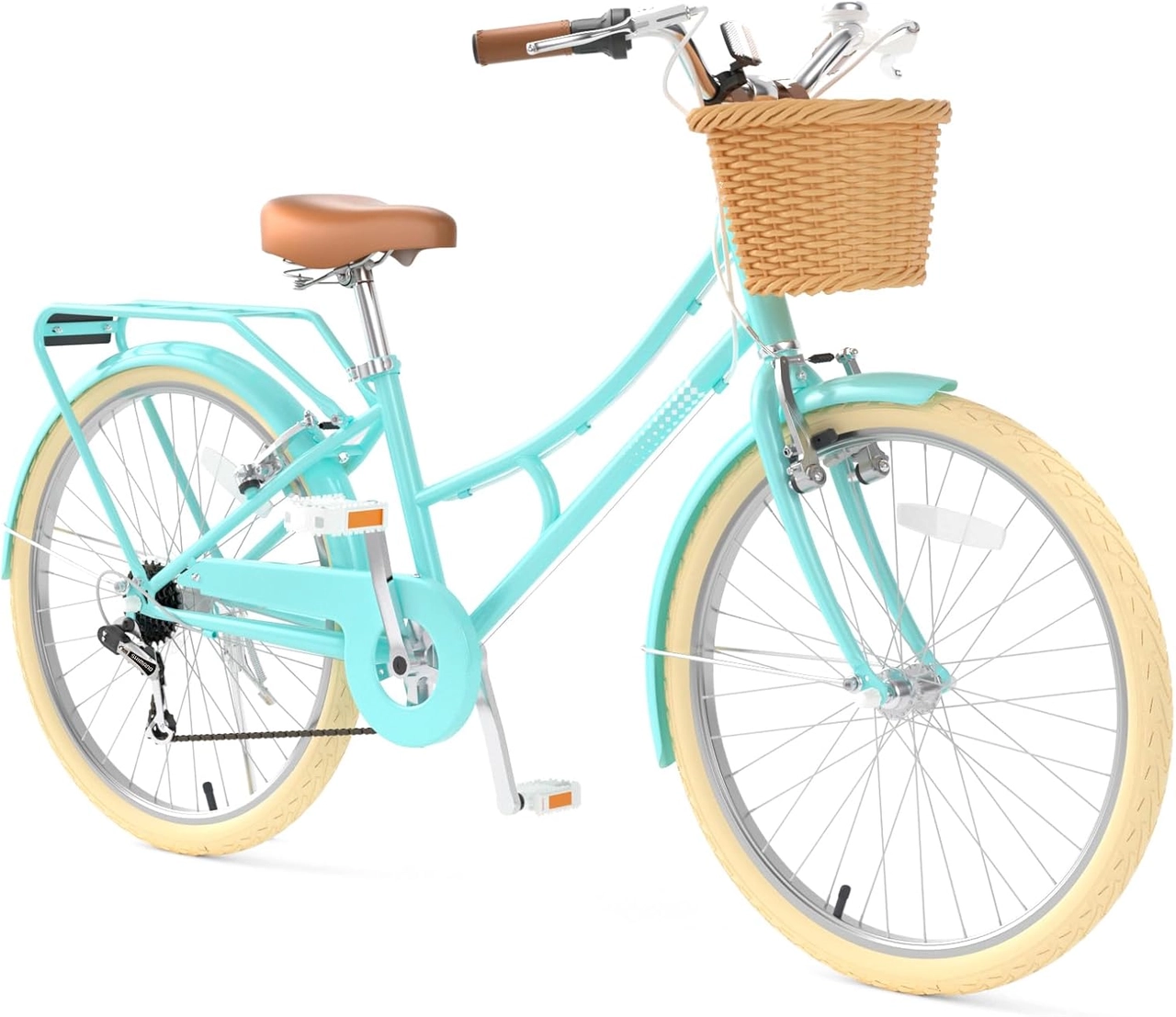 XJD 24-Inch Green Beach Cruiser Bike with U-Brake
A complete Beach Cruiser Bike offered in Green / 24 Inch, Pink / 24 Inch and Pink / 26 Inch, useful when an individual fit check points toward a larger wheel size.
Smaller wheel-size options
The Pink 12/14/16/20" XJD Girls Bike with Training Wheels & Basket is listed in the Training Wheel Bikes category with 12 Inch, 14 Inch, 16 Inch and 20 Inch SKU labels. That range makes it the only supplied option covering the smaller starting points in the chart. The catalog title mentions training wheels and a basket, but neither feature replaces checks for stand-over clearance, reach, braking control and confidence.
Larger wheel-size options
The 26-Inch XJD Beach Cruiser Bike for Girls – Purple, V-Brake is categorized as a Beach Cruiser Bike. Its available SKU labels include 20 Inch, 24 Inch and 26 Inch choices in the listed colors, including Purple / 26 Inch. Compare only the specific SKU whose wheel-size label matches the child’s measured range; do not infer fit from the product title alone.
The XJD 24-Inch Green Beach Cruiser Bike with U-Brake is also categorized as a Beach Cruiser Bike. Its supplied SKU labels are Green / 24 Inch, Pink / 24 Inch and Pink / 26 Inch. The 24-inch labels are starting points for riders measuring 54–64 inches / 137–163 cm, while 26-inch sizing begins over 60 inches / 153 cm. The overlap makes an actual fit and control check especially important.
No supplied bicycle has an 18 Inch SKU label. If the child’s measurements point to 18 Inch, these products are nearest-size comparison points, not substitutes; another wheel size should never be treated as equivalent.
Check control, setup and protection
- Stand-over: Have the child straddle the bicycle and assess clearance rather than relying on the wheel label.
- Reach: Confirm they can hold the handlebar and steer without excessive stretching.
- Braking: Make sure they can reach and operate the bicycle’s brakes with control.
- Confidence: Watch a start, controlled turn and stop in a suitable riding area.
- Helmet: Use a bicycle helmet that fits properly, sits level and has straps adjusted according to its manufacturer’s instructions.
For assembly, maintenance, compatibility, load limits or torque settings, follow the exact product manual or use a qualified bicycle mechanic. Do not guess settings from the bicycle’s category or wheel size.
Make the final choice
Measure the child, select the matching wheel-size starting point, and arrange a fit check on that exact SKU. Choose it only if the child can stand over, reach, steer and brake confidently today; otherwise, try a different size rather than buying for future growth.
Bikes for your next adventure
-
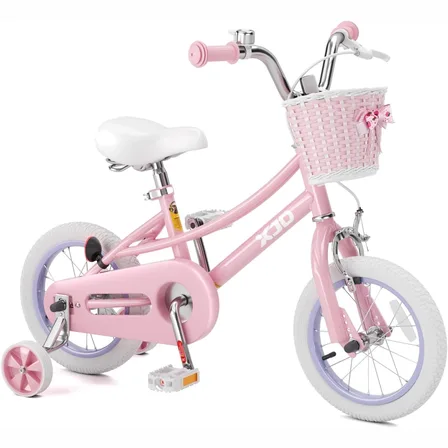
Pink 12/14/16/20" XJD Girls Bike with Training Wheels & Basket
The Pink XJD Girls Bike with Training Wheels & Basket is a first-bike pick f…$65.99
$75.99 -
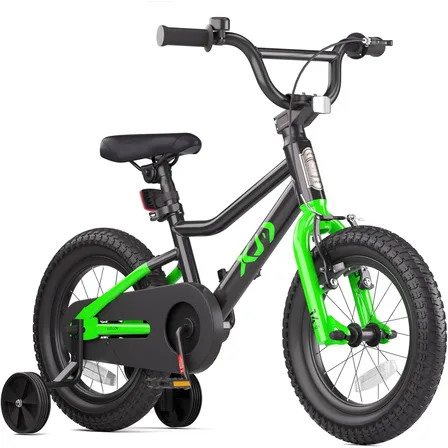
Black XJD Kids' BMX Bicycle with Training Wheels
The XJD Kids' BMX Bicycle with Training Wheels is built for children roughly 3 t…$99.99
$119.99 -
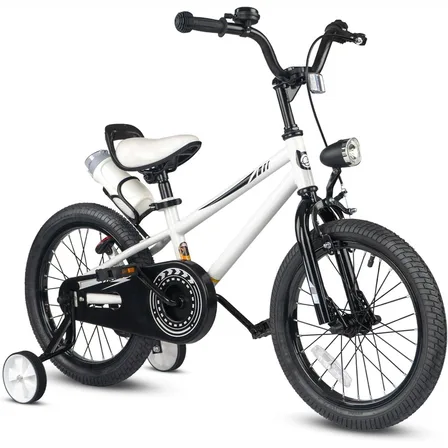
XJD Kids' Training Wheel Bike for Boys & Girls, 12/14/16 Inch – White
The XJD kids' training wheel bike in White is made for riders ages 3–8 (roughly …$169
$199