

Which child bike seat is the safest
The safest child bike seat is one that fits the child, is explicitly compatible with the bicycle, and is installed exactly as its manual requires.
There is no universally safest position
A front-mounted or rear-mounted seat cannot be declared safest from position alone. The correct choice depends on the seat’s stated child and load limits, its mounting system, the bicycle manufacturer’s compatibility guidance, and whether the adult rider can still steer, balance, mount, stop and dismount confidently.
Reject any seat or bicycle combination when compatibility is uncertain. Do not improvise a rack, clamp, adapter or mounting point. Check the exact manuals for the bicycle, seat and any required carrier. If their instructions conflict, or the mounting area is damaged or unclear, ask a qualified bicycle mechanic to inspect the combination.
Measure the child and compare the limits
Record the child’s current height and weight, then compare both with the seat manufacturer’s stated limits. Also check every developmental requirement in the manual. Age by itself does not establish readiness or fit.
With the child seated, confirm that the restraint system adjusts snugly as directed, the child remains supported, and feet cannot reach a wheel or moving component. Clothing, straps and shoelaces must also stay clear of moving parts. If the child cannot be secured exactly as instructed, that seat is not the safe choice.
Check the bicycle before choosing a seat
- Mounting approval: Confirm that the bicycle and seat manuals permit the exact frame, rack or other mounting method.
- Load: Include the child, seat and carried items when checking every applicable bicycle, rack and seat limit.
- Clearance: Verify the seat, restraints, feet and clothing cannot contact wheels, brakes, steering parts or other moving components.
- Control: The adult must retain comfortable reach to the handlebar and brakes and be able to start, steer and stop predictably with the added load.
- Condition: Do not use damaged, loose or incomplete mounting hardware. Follow the manuals for inspection, assembly, maintenance and torque.
Because the supplied catalog information does not include child-seat compatibility, load limits or mounting instructions, those details must come from the exact manuals or a qualified bicycle mechanic.
What the XBikes catalog option can tell you
The 26-Inch XJD Beach Cruiser Bike for Girls – Purple, V-Brake is a complete beach cruiser bicycle, not a child bike seat. Its catalog options include 20-inch, 24-inch and 26-inch labels in specified colors, while the exact title identifies a purple 26-inch version with a V-brake. These options are useful only as bicycle-size comparison points; they do not establish that any child seat will fit or that the bicycle is suitable for carrying a passenger.
The catalog item below helps distinguish bicycle wheel-size choices from the separate child-seat safety decision. It is relevant only if its exact manual confirms compatibility with the intended seat and passenger load.

Do not confuse wheel size with seat safety
If the bicycle is also intended for a young independent rider, use measured fit rather than an age guess. XBikes lists these starting points: 20 inches for heights 48–60 in / 122–152 cm and ages 7–12; 24 inches for 54–64 in / 137–163 cm and ages 10–14; and 26 inches for youth and adults over 60 in / 153 cm.
Those ranges are not passenger-seat limits and do not prove compatibility. Have the rider try the bicycle. Check stand-over clearance, reach, brake control and present confidence, and never choose an oversized bicycle merely for growth. The rider’s measured height, inseam and actual control take priority over age.
Complete the safety check before riding
- Read the bicycle and child-seat manuals together and confirm the exact mounting method and all limits.
- Install and inspect every component as directed; use a qualified bicycle mechanic when compatibility, condition or torque is uncertain.
- Secure the child exactly as the seat manufacturer specifies, including restraints and foot protection.
- Fit an appropriate bicycle helmet so it sits level and its straps are adjusted according to the helmet manufacturer’s instructions.
- With the child off the bicycle first, check steering, brake operation and mounting security. Then assess whether the adult can manage the loaded bicycle in a controlled setting.
The safest decision is therefore conditional: choose only the seat that matches the measured child, is expressly approved for the exact bicycle and mount, and leaves the adult in full control. If any one of those checks fails, do not ride that combination.
Bikes for your next adventure
-
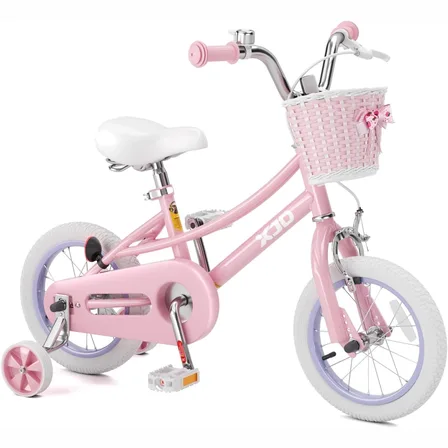
Pink 12/14/16/20" XJD Girls Bike with Training Wheels & Basket
The Pink XJD Girls Bike with Training Wheels & Basket is a first-bike pick f…$65.99
$75.99 -
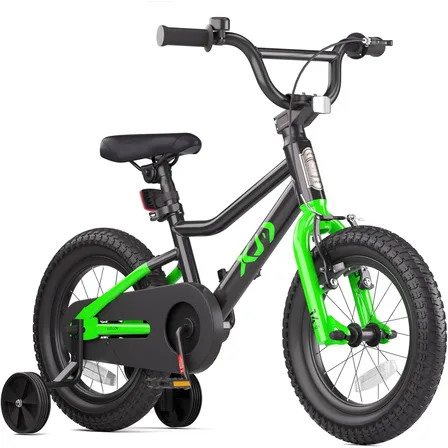
Black XJD Kids' BMX Bicycle with Training Wheels
The XJD Kids' BMX Bicycle with Training Wheels is built for children roughly 3 t…$99.99
$119.99 -
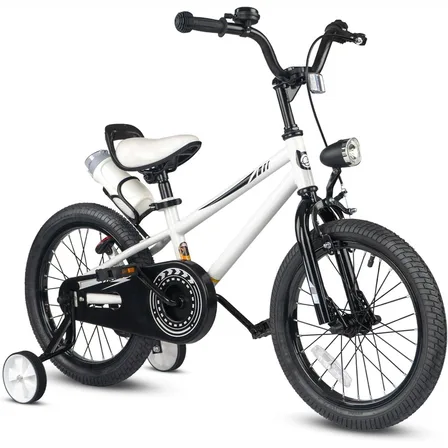
XJD Kids' Training Wheel Bike for Boys & Girls, 12/14/16 Inch – White
The XJD kids' training wheel bike in White is made for riders ages 3–8 (roughly …$169
$199