

Which kind of bike would be best with kid attachment
Choose an adult bike that fits its rider and is explicitly approved for the child seat, trailer or tow attachment you plan to use. Match the attachment first; do not assume every city, hybrid, cargo, mountain or electric bike accepts it.
Start with the type of kid attachment
The most suitable bicycle depends on how the child will be carried or connected. A rear or front child seat needs the exact frame, rack or steering-area compatibility specified by its manufacturer. A trailer needs an approved hitch location and clearance around the wheel, frame and drivetrain. A tow bar or trailer cycle must connect at the point required by its manual without obstructing steering, braking or pedaling.
A city or hybrid bike may be a practical starting point when it gives the adult a comfortable, controlled riding position and accepts the chosen attachment. A cargo bike can be relevant when its manufacturer specifically supports carrying children. Mountain bikes, folding bikes and electric bikes are not automatically unsuitable, but unusual frame shapes, suspension, hinges, axles, batteries or wiring can prevent a correct connection. The attachment manual—not the bicycle category name—settles compatibility.
What to measure before choosing
- Adult fit: Measure the rider's height and inseam, then check stand-over clearance, reach, steering control and access to both brakes on the actual bicycle.
- Mounting area: Identify the attachment point required by the child-seat, trailer or tow-system manual. Compare its shape and clearances with the bicycle.
- Combined load: Find the bicycle, rack and attachment load limits in their exact manuals. Every relevant limit must accommodate the intended setup.
- Child fit: Follow the attachment manufacturer's requirements for the child's size, seating position and restraints. Do not estimate compatibility from age alone.
Have the adult try the bicycle with normal footwear. They should be able to start, stop, turn and operate the brakes confidently before a child attachment is fitted. Never choose an oversized bicycle for future growth; poor reach or stand-over clearance makes the added load harder to manage.
Compare complete setups, not isolated bikes
Ask the bicycle and attachment manufacturers whether the exact models can be combined. Confirm whether an approved rack, axle, hitch or adapter is required and whether fitting the attachment changes any load restriction. If compatibility, assembly or torque information is absent, follow both exact product manuals or have a qualified bicycle mechanic assess and install the setup.
After installation, check that the attachment cannot interfere with wheels, brakes, cables, steering, pedals or the rider's legs. Test the empty setup in a quiet area first. The adult should still be able to mount, balance, steer and brake predictably. If the bike becomes difficult to control, the combination is not appropriate even when the parts can physically connect.
Where the supplied kids bike fits
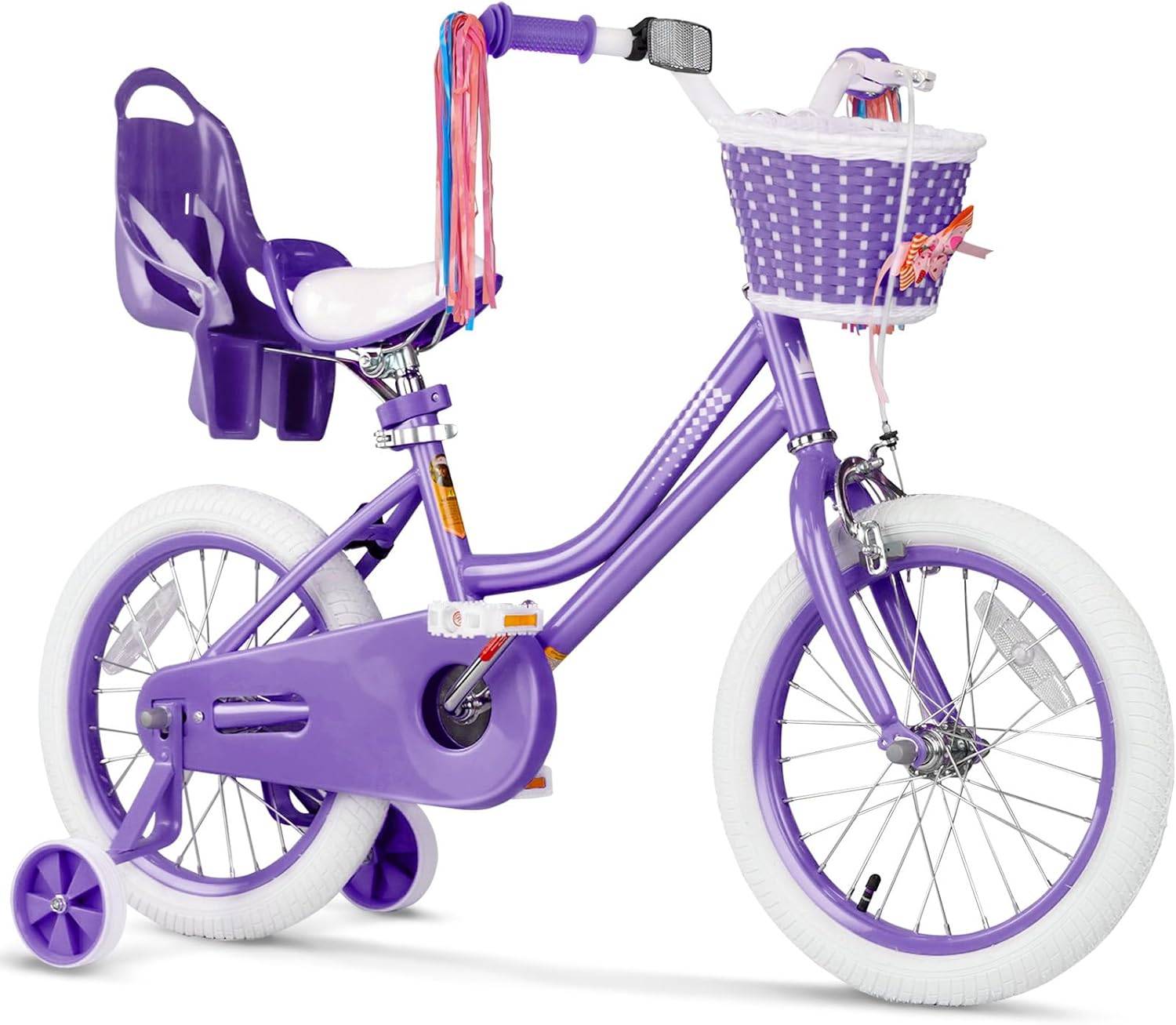
The XJD Girls Bike for Kids Ages 3-8, 12/14/16 Inch with Training Wheels – Purple is a training-wheel bicycle offered in 12 Inch, 14 Inch and 16 Inch labels. It is relevant only if the child is learning to ride independently, not as evidence that an adult bicycle can accept a child seat, trailer or tow attachment. Its age wording is a catalog label, not proof of individual fit.
These catalog options help compare an independent child's bicycle against an adult bike-and-attachment setup: the available wheel sizes provide starting points for the child's own riding fit, while attachment compatibility must be established separately.
If the child will ride independently
| Wheel size | XBikes starting point |
|---|---|
| 12 Inch | Ages 3–4; height 34–40 in / 86–102 cm |
| 14 Inch | Ages 3–6; height 37–45 in / 94–114 cm |
| 16 Inch | Ages 4–7; height 40–48 in / 102–122 cm |
Use measured height before age, then check inseam, stand-over clearance, reach, brake control and current confidence on the actual bike. The three sizes overlap, so a label alone cannot choose among them. The child should try the bicycle, and the larger option should not be selected merely to allow room for growth.
Safety checks before the first family ride
- Confirm written compatibility among the exact bicycle, attachment and any rack, hitch, axle or adapter.
- Verify every load limit and assembly requirement in the relevant manuals.
- Have a qualified bicycle mechanic resolve any uncertainty about installation, compatibility or torque.
- Make sure each rider's bicycle helmet fits properly, sits level and has its straps adjusted according to the helmet manufacturer's instructions.
- Practise mounting, low-speed turns and controlled stops without the child before using the complete setup as intended.
Your next decision is therefore attachment-specific: choose the child seat, trailer or tow system, verify which correctly fitted adult bicycles its manufacturer approves, and reject any bike that leaves compatibility, load limits or brake control uncertain. Consider the supplied training-wheel bike only when the child will ride independently.
Bikes for your next adventure
-
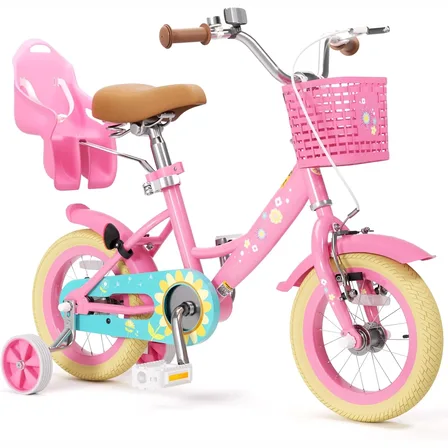
Flower Pink XJD Girls Bike with Doll Seat & Basket
The XJD Flower Pink girls' bike is made for riders 71–122 cm tall (roughly ages …$69.99
-
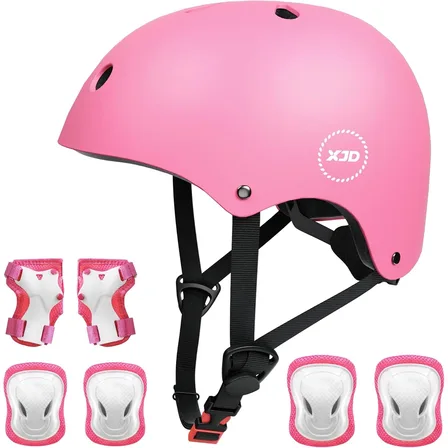
XJD Kids Helmet & Protective Gear Set for Girls, Pink
The XJD Kids Helmet & Protective Gear Set in Pink is a complete safety kit for g…$24.64
-

Kids Bike Helmet by XJD for Boys & Girls – Black, Blue, Green, Pink, Purple
The XJD Kids Bike Helmet covers a wide 2-to-8-year age range thanks to two head-…$59.99