

Who makes a good quality kids bike
A good-quality kids bike is made by a brand that offers the right size, clear product information and a bike your child can control comfortably.
Judge the bike, not just the maker
A recognizable name can narrow the search, but it cannot prove that a particular model fits your child. A useful quality check starts with the individual bike: choose the wheel-size range from measured height, then have the rider try it. Confirm comfortable stand-over clearance, an easy reach to the controls and reliable brake operation.
Do not buy an oversized bicycle solely to leave room for growth. If the child struggles to mount, steer, stop or remain composed, the apparent future value does not outweigh the poor fit now. Age is only a starting point; height, inseam, reach, brake control and current confidence should decide.
Measure before comparing brands
Measure the child’s height without shoes. Measure inseam from the floor to the crotch while the child stands straight. The XBikes ranges below help identify wheel sizes worth trying, but they do not replace an individual fit check.
| Wheel size | Starting age | Rider height |
|---|---|---|
| 12 Inch | 3–4 | 34–40 in / 86–102 cm |
| 14 Inch | 3–6 | 37–45 in / 94–114 cm |
| 16 Inch | 4–7 | 40–48 in / 102–122 cm |
| 18 Inch | 5–9 | 43–52 in / 109–132 cm |
| 20 Inch | 7–12 | 48–60 in / 122–152 cm |
| 24 Inch | 10–14 | 54–64 in / 137–163 cm |
| 26 Inch | Youth and adults | Over 60 in / 153 cm |
If the child falls between ranges, try the plausible sizes rather than choosing by age. On each candidate, check whether the child can stand over the bike, reach the handlebars without stretching, turn them comfortably and operate the brakes confidently. The child’s inseam and the bicycle’s actual geometry still matter even when height falls inside a range.
What signals a good-quality choice?
A good maker gives you enough accurate information to make and maintain a sound choice. Before ordering, compare:
- Fit options: Is an appropriate wheel size actually offered?
- Control: Can the child steer, start and stop without being overextended or overwhelmed?
- Brake reach: Can the rider reach and operate the controls consistently?
- Documentation: Does the exact product manual explain assembly, adjustment, maintenance, compatibility, load limits and torque where applicable?
- Serviceability: If assembly or adjustment is unclear, can a qualified bicycle mechanic inspect the bike?
Cosmetic details and accessories can distinguish otherwise suitable candidates, but they should follow fit and control—not replace them.
How the supplied XJD options compare
These XJD models help answer the question because they cover several catalog categories and wheel-size choices, allowing a parent to compare a training-wheel design, a BMX option and a beach cruiser only after identifying the child’s likely fit range.
 XJD Light Purple Girls Bike with Basket, Training Wheels, 12/14/16/20 Inch
A Training Wheel Bike offered in supplied 12 Inch, 14 Inch and 16 Inch SKU labels. Use it as a candidate only when one of those sizes passes the child’s individual fit and control check.
 XJD Kids Beach Cruiser Bicycle, Rear Rack & V-Brakes, Mint Green
A Beach Cruiser Bike with supplied 20 Inch, 24 Inch and 26 Inch options; its catalog facts specify a rear rack and V-brakes. Check reach, fit and brake control on the actual size.
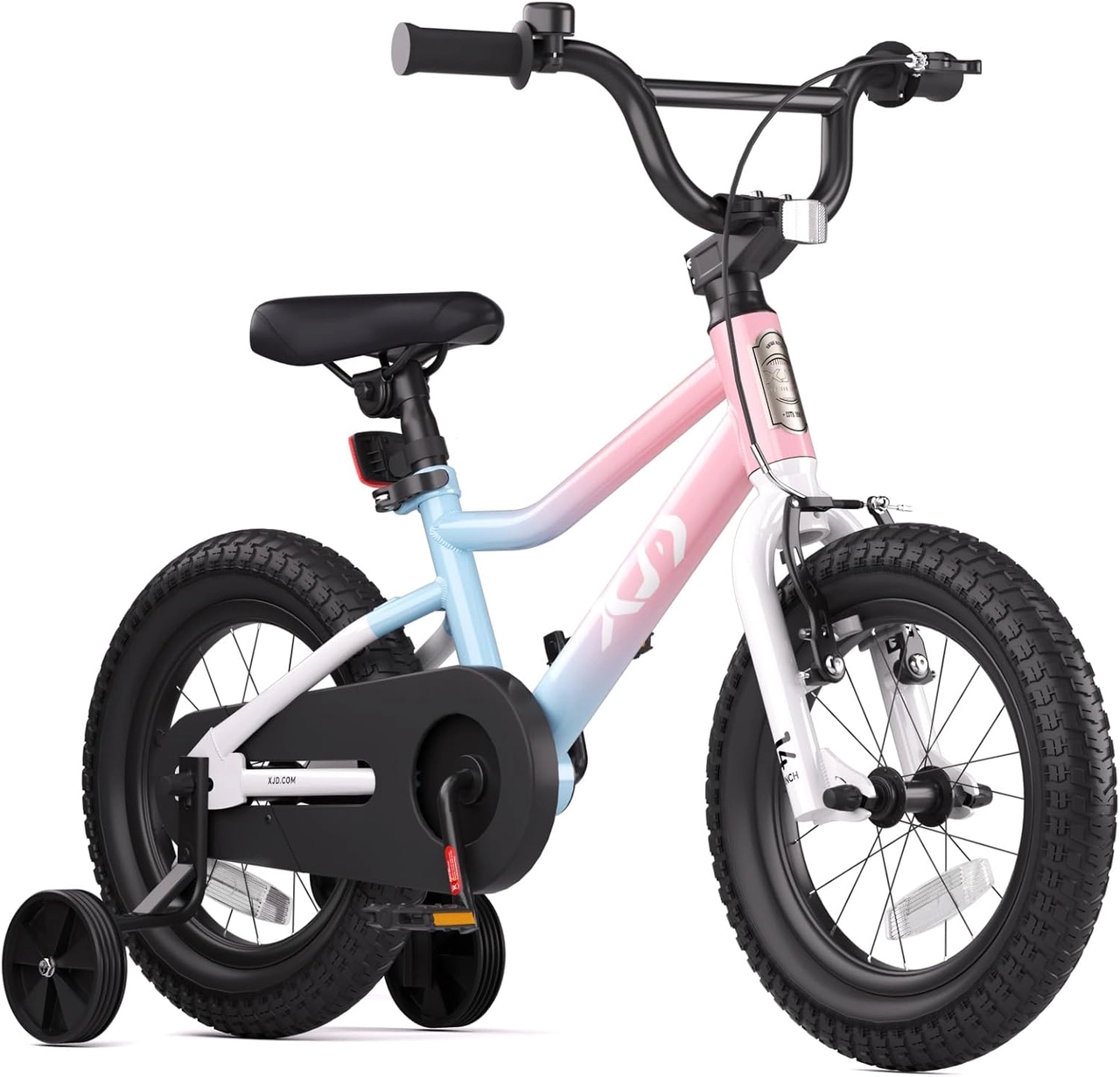 XJD Girls BMX Bike 12/14/16 Inch with Training Wheels – Pink Blue
A Kids' BMX Bike with supplied 12 Inch, 14 Inch and 16 Inch options and training wheels in its exact title. Its category and sizes make it relevant for comparison after measuring the rider.
The XJD Light Purple Girls Bike with Basket, Training Wheels, 12/14/16/20 Inch is categorized as a Training Wheel Bike. Its currently supplied SKU labels are 12 Inch, 14 Inch and 16 Inch; despite 20 Inch appearing in the exact catalog title, 20 Inch is not among the supplied available SKU labels.
The XJD Girls BMX Bike 12/14/16 Inch with Training Wheels – Pink Blue is categorized as a Kids' BMX Bike and has supplied 12 Inch, 14 Inch and 16 Inch options. Compare it with the first model by category and desired features only after confirming which of those sizes the child can control.
The XJD Kids Beach Cruiser Bicycle, Rear Rack & V-Brakes, Mint Green is categorized as a Beach Cruiser Bike, with supplied 20 Inch, 24 Inch and 26 Inch options. Its catalog facts specify a rear rack and V-brakes. The rider must still demonstrate comfortable reach and brake control on the chosen size.
If your fit check points to 18 Inch, none of these supplied products has an 18 Inch SKU label. They are nearest-size comparison points, not substitutes; a 16 Inch or 20 Inch bike is not equivalent to an 18 Inch bike.
Try the final candidate before deciding
- Use measured height to identify the starting wheel-size range.
- Check inseam and stand-over clearance on the actual bicycle.
- Have the child test mounting, steering, reach and stopping in a controlled setting.
- Reject a size that requires stretching or reduces confidence, even if the age range appears suitable.
- Follow the exact product manual for assembly, maintenance, compatibility, load limits and torque, or use a qualified bicycle mechanic.
Add a properly fitting bicycle helmet: it should sit level, fit correctly and use its straps according to the helmet manufacturer’s instructions.
The practical answer
A good-quality kids bike comes from a maker whose correctly sized model lets your child stand over, reach, steer and brake with confidence and whose manual supports proper setup. Measure first, compare only available sizes, arrange an individual fit check, and choose none of these XJD options if the child cannot control the appropriate candidate comfortably.
Bikes for your next adventure
-
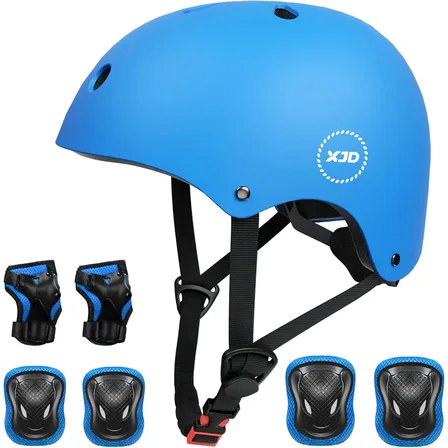
Blue XJD Helmet & Protective Gear Set for Kids, Sizes S/M
The Blue XJD Helmet & Protective Gear Set is made for kids roughly 3 to 8 years …$23.79
-
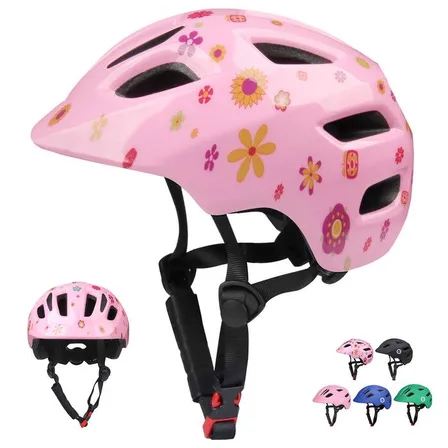
Girls Bike Helmet by XJD, Pink Flower Print
7 reviews
The XJD Girls Bike Helmet in Pink Flower print is a fun, floral kids helmet desi…$59.99
-

Green XJD Toddler Bike Helmet with Adjustable Fit, XS (46–51 cm)
The XJD toddler bike helmet in Green is built for the youngest riders — the size…$20.39
$23.99