

Who makes good kid bikes
Good kid bikes are made by brands that offer the right wheel size, let the child achieve a confident individual fit, and provide clear product instructions. A maker’s name alone cannot prove that a bicycle is good for your child; measure the rider and check the actual bike before buying.
Judge the maker by fit, not reputation alone
A useful shortlist begins with manufacturers offering a suitable size and enough product information to support an in-person fit check. Do not buy an oversized bicycle merely because a child may grow into it. A bike that is too large can make starting, stopping, steering and reaching the controls harder.
Have the child try the bicycle whenever possible. Check that the rider can stand over it appropriately, hold the handlebar without stretching, steer with control and operate the brakes comfortably. Confidence matters too: two children of the same height may not be ready for the same riding position or wheel size.
Measure before comparing brands
Measure the child’s height without shoes and check inseam using the same careful, repeatable method for every comparison. Height selects a starting range; inseam, reach, brake control and present riding confidence determine whether the particular bicycle actually fits.
| Wheel size | Age starting point | Rider-height starting point |
|---|---|---|
| 12 Inch | 3–4 | 34–40 in / 86–102 cm |
| 14 Inch | 3–6 | 37–45 in / 94–114 cm |
| 16 Inch | 4–7 | 40–48 in / 102–122 cm |
| 18 Inch | 5–9 | 43–52 in / 109–132 cm |
| 20 Inch | 7–12 | 48–60 in / 122–152 cm |
| 24 Inch | 10–14 | 54–64 in / 137–163 cm |
| 26 Inch | Youth and adults | Over 60 in / 153 cm |
These XBikes ranges are starting points, not promises of fit. If a rider falls where ranges overlap, compare the relevant bicycles directly instead of choosing by age. Never move up a size solely to extend the purchase’s useful life.
What makes one manufacturer worth considering?
A good candidate makes it possible to answer practical questions before the child rides. Compare makers and models on the following evidence:
- Suitable sizing: the offered wheel size corresponds to the rider’s measured-height starting point.
- Usable controls: the child can comfortably reach and operate the brakes while maintaining control.
- Manageable position: the rider is not stretched toward the handlebar and can handle starts, stops and turns confidently.
- Clear documentation: the exact product manual explains assembly, adjustment, maintenance and applicable limits.
- Service path: unanswered setup or compatibility questions can be taken to a qualified bicycle mechanic.
This approach answers “who makes good kid bikes” more reliably than a brand ranking: the better maker-model combination is the one that supplies an appropriate option and passes the child’s real fit-and-control check.
How the supplied XJD option helps
The XJD Kids Beach Cruiser Bicycle, Rear Rack & V-Brakes, Mint Green is the supplied catalog example. It is categorized as a beach cruiser bike and has 20 Inch, 24 Inch and 26 Inch SKU labels. Those choices make it relevant when comparing larger children’s or youth starting points, while its listed V-brakes make brake reach and operation an especially concrete fit check.
These particular catalog options help answer the title by showing how one maker spans three adjacent larger wheel-size starting points. They do not establish that XJD is universally good, and they do not replace inspection of the selected size with the intended rider.

This product is not relevant when the child needs a 12, 14, 16 or 18 Inch bicycle; its listed sizes are not substitutes for those smaller sizes. For a rider in the 20, 24 or 26 Inch starting range, compare only the corresponding SKU and then verify stand-over clearance, reach, brake control and confidence on the actual bicycle.
Complete the decision safely
- Record the rider’s height and inseam.
- Use height to identify the likely wheel-size starting point.
- Confirm that the maker offers that exact size; do not round up for growth.
- Have the child try the bicycle and assess stand-over, reach, steering, stopping and brake operation.
- Follow the exact product manual for assembly, maintenance, compatibility, load limits and torque. If anything is uncertain, use a qualified bicycle mechanic.
- Choose a bicycle helmet that fits properly, sits level and has straps adjusted according to its manufacturer’s instructions.
The answer is therefore conditional: consider XJD for the listed 20, 24 or 26 Inch comparison only when the rider’s measurements point there. Otherwise, choose a maker offering the child’s correct smaller size, and make the final decision only after the child demonstrates comfortable control.
Bikes for your next adventure
-
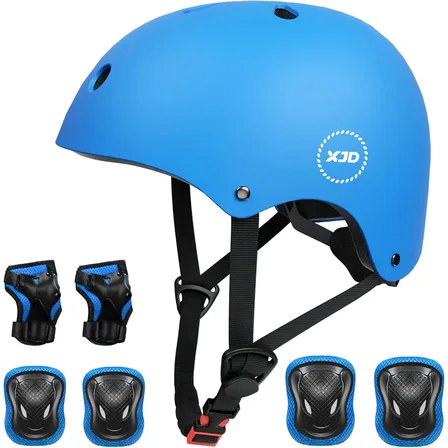
Blue XJD Helmet & Protective Gear Set for Kids, Sizes S/M
The Blue XJD Helmet & Protective Gear Set is made for kids roughly 3 to 8 years …$23.79
-
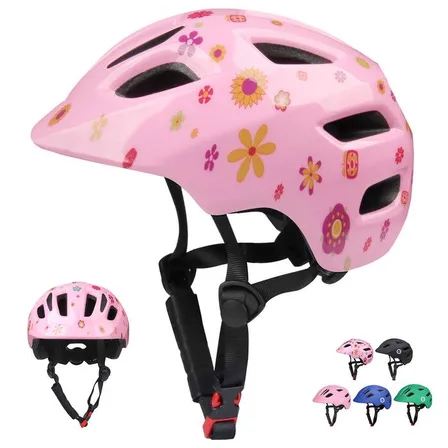
Girls Bike Helmet by XJD, Pink Flower Print
7 reviews
The XJD Girls Bike Helmet in Pink Flower print is a fun, floral kids helmet desi…$59.99
-
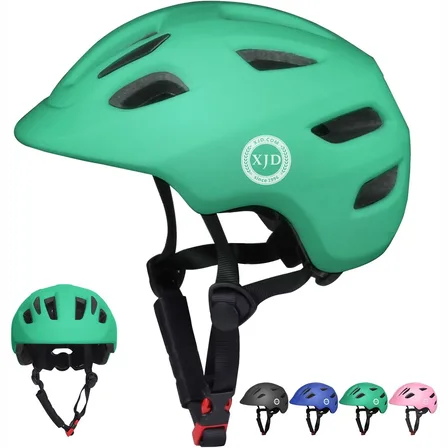
Green XJD Toddler Bike Helmet with Adjustable Fit, XS (46–51 cm)
The XJD toddler bike helmet in Green is built for the youngest riders — the size…$20.39
$23.99