

Why are children's bikes so heavy
Children’s bikes are often heavy because frames, wheels, tyres, cranks and safety-related parts cannot shrink in direct proportion to the rider. A small bike may therefore weigh far more relative to its rider than an adult bike does.
Why the weight feels disproportionate
A child is light, but a bicycle still needs parts strong enough to handle riding, bumps and everyday knocks. Bearings, axles, chains, pedals and fasteners also have practical minimum sizes. On a small bicycle, those parts account for a larger share of the complete weight.
Training wheels and their mounting hardware add more mass. They can also make a bike feel harder to steer or lift because some of that weight sits away from the centre. Thick tyres, full chain guards, substantial saddles and adjustment hardware may contribute too. The result is not necessarily an unusually heavy object in absolute terms; it is a high bike-to-rider weight relationship.
Measure before comparing bikes
Start with the child, not the age printed on a label. Measure standing height and inseam while the child wears normal riding shoes. Then have the child try the bicycle wherever possible. Check that mounting and dismounting feel controlled, the frame provides suitable stand-over clearance, and the child can reach the handlebar without stretching.
Also test whether the child can operate the brakes comfortably and steer while looking ahead. Confidence matters: a size that looks correct on paper can still be too demanding if the child struggles to start, stop, turn or hold the bike upright. Do not buy an oversized bicycle merely to allow room for growth.
| Wheel size | XBikes starting point |
|---|---|
| 12 Inch | Ages 3–4; height 34–40 in / 86–102 cm |
| 14 Inch | Ages 3–6; height 37–45 in / 94–114 cm |
| 16 Inch | Ages 4–7; height 40–48 in / 102–122 cm |
These ranges are starting points, not proof of fit. Prioritize measured height, inseam, reach, brake control and present confidence over age alone.
How to make a useful weight comparison
Use the same method for every candidate. Record each complete bike’s weight in the configuration the child will actually ride, including training wheels if they will remain fitted. If published information is unavailable, ask the seller or weigh the assembled bicycle rather than guessing from appearance.
- Compare bikes of the same suitable wheel size and intended setup.
- Note whether the stated weight includes removable equipment.
- Ask the child to push, turn, lift slightly, start and stop each correctly fitted bike.
- Compare the bike’s weight with the rider’s weight as a relationship, but do not treat any single percentage as a universal pass-or-fail rule.
A lighter correctly fitted bike will generally require less effort to move and recover, but weight should not override control. A light bike with excessive reach or poor stand-over clearance remains the wrong choice.
Where the supplied BMX options are relevant
The catalog options help because both are Kids’ BMX Bikes offered in 12 Inch, 14 Inch and 16 Inch labels, letting parents compare three nearby size starting points within a similar product category. Their supplied facts do not include complete weight, materials, brakes or load limits, so they cannot establish how heavy either bike is.
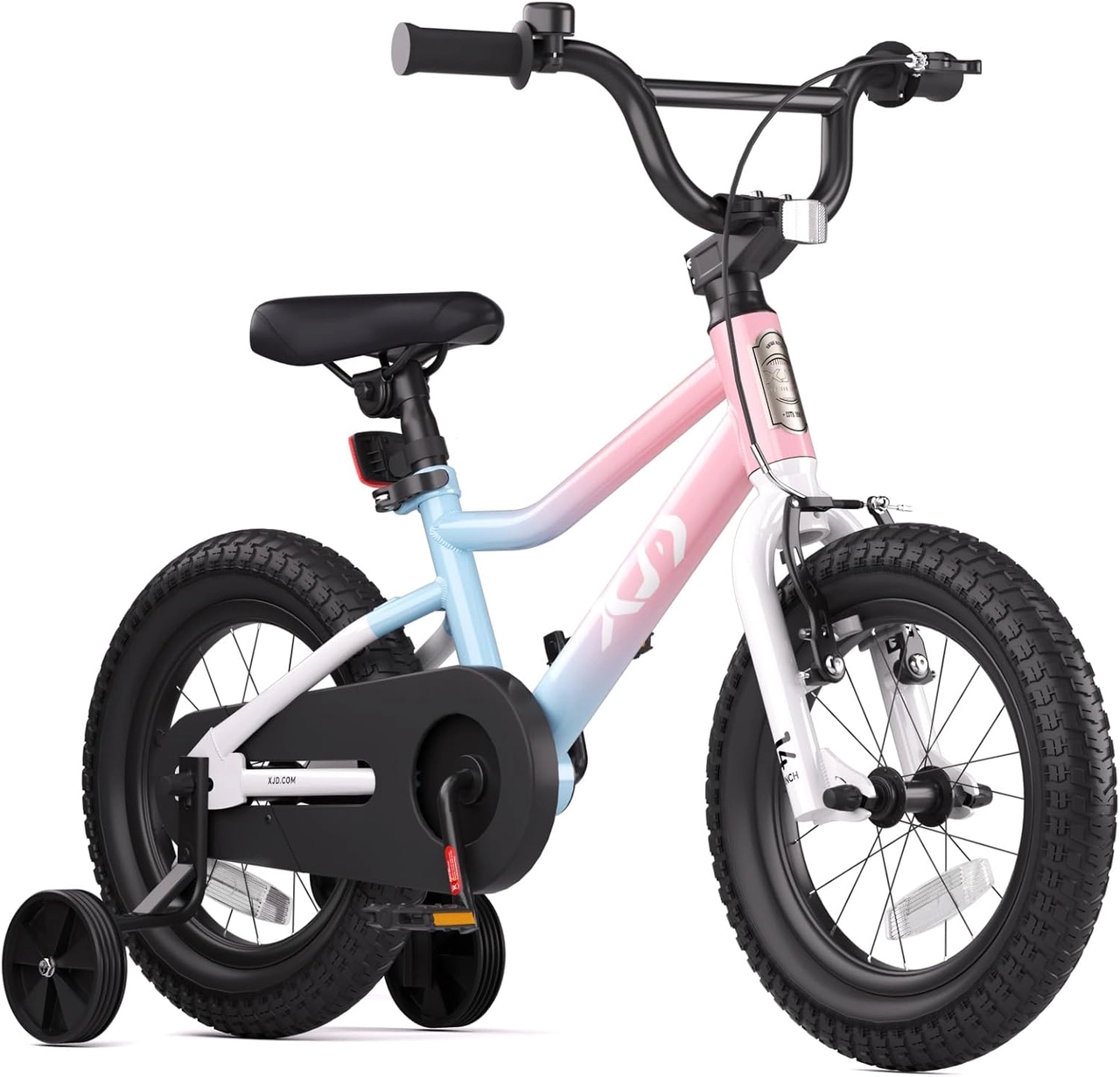 XJD Girls BMX Bike 12/14/16 Inch with Training Wheels – Pink Blue
A Kids’ BMX Bike offered in 12 Inch, 14 Inch and 16 Inch labels, with training wheels named in the title. Relevant for fit-based size and complete-setup comparisons; no product weight is supplied.
 XJD Boys & Girls BMX Bike with Training Wheels, 12/14/16" – Blue
A Kids’ BMX Bike with 12 Inch, 14 Inch and 16 Inch labels and training wheels stated in its title. It provides nearby size comparison points, but the catalog facts do not establish weight or individual fit.
XJD Girls BMX Bike 12/14/16 Inch with Training Wheels – Pink Blue is available with 12 Inch, 14 Inch and 16 Inch SKU labels. XJD Boys & Girls BMX Bike with Training Wheels, 12/14/16" – Blue lists the same three size labels. Both titles specify training wheels, making them relevant when comparing the weight and handling of the complete supported setup.
Neither title proves individual fit, and the matching size labels do not prove equal geometry, weight or handling. Select a wheel-size starting point from measured height, then verify inseam clearance, reach and brake operation on the exact bicycle. For assembly, maintenance, adjustment, compatibility, load limits and torque, follow that product’s manual or use a qualified bicycle mechanic.
When heaviness becomes a practical problem
Pay attention when the child cannot lift the bike after a minor tip, struggles to push it up a modest incline, repeatedly loses balance during starts, or cannot steer and stop with confidence. Weight may be contributing, but poor fit, an unsuitable setup, low tyre pressure or a mechanical problem can produce similar symptoms. Have unexplained resistance, rubbing or difficult controls checked by a qualified bicycle mechanic.
A properly fitting bicycle helmet is also essential: it should sit level and be secured with its straps according to the helmet manufacturer’s instructions. A helmet does not correct an ill-fitting or unmanageable bicycle.
What to do next
- Measure the child’s height and inseam.
- Choose the wheel-size starting point that contains the measured height; do not size up solely for growth.
- Weigh comparable, fully configured bikes and note what equipment is included.
- Conduct a supervised fit and control check covering stand-over, reach, brakes, starts, turns and stops.
If the child controls two correctly fitted options equally well, the lighter complete setup is the practical choice. If neither can be handled confidently, reconsider the fit or setup instead of asking the child simply to cope with a heavy bike.
Bikes for your next adventure
-
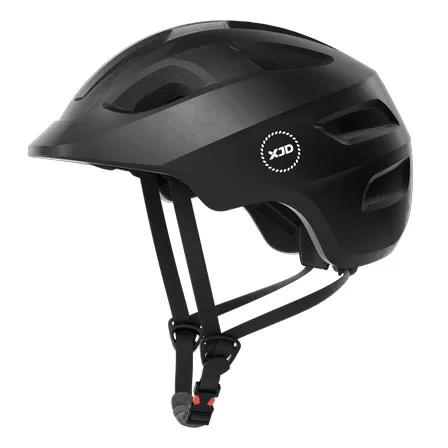
Kids Multi-Sport Bike Helmet by XJD – Black
7 reviews
The XJD Kids Multi-Sport Bike Helmet in Black is a lightweight, adjustable helme…$59.99
$49 -

Kids Bike Helmet by XJD for Girls – Pink
The XJD Kids Bike Helmet in Pink is a lightweight multi-sport helmet for girls r…$59.99
$99 -

Kids Bike Helmet by XJD for Boys & Girls – Black, Blue, Green, Pink, Purple
The XJD Kids Bike Helmet covers a wide 2-to-8-year age range thanks to two head-…$59.99