

Why can t my child ride a bike
Most children struggle to ride because the bicycle does not fit, its controls are hard to reach, or balance and pedalling have not yet become one smooth sequence.
Check fit before judging ability
Measure your child’s height without shoes, then compare it with the XBikes wheel-size starting points below. Age can narrow the search, but measured height, inseam, reach, brake control and current confidence matter more.
| Wheel size | Starting age | Rider height |
|---|---|---|
| 12 Inch | 3–4 | 34–40 in / 86–102 cm |
| 14 Inch | 3–6 | 37–45 in / 94–114 cm |
| 16 Inch | 4–7 | 40–48 in / 102–122 cm |
| 18 Inch | 5–9 | 43–52 in / 109–132 cm |
| 20 Inch | 7–12 | 48–60 in / 122–152 cm |
| 24 Inch | 10–14 | 54–64 in / 137–163 cm |
| 26 Inch | Youth and adults | Over 60 in / 153 cm |
These ranges overlap deliberately: wheel size alone cannot confirm fit. Have the child try the bicycle. Do not choose an oversized model for future growth.
Use a five-point fit check
- Stand-over: With the child straddling the bicycle, check that the frame does not prevent stable footing.
- Starting and stopping: The child should be able to get on, set off and put a foot down without panic or a sharp lean.
- Reach: Hands should reach the handlebar without stretching, locked elbows or a hunched posture.
- Brake control: The child must be able to reach and operate the bicycle’s braking controls confidently.
- Steering: Ask for slow turns in both directions. Watch whether the child can steer while remaining balanced and looking ahead.
If one of these checks fails, the problem may be bicycle fit rather than willingness or coordination. Adjust only as the exact product manual permits; for uncertain assembly, compatibility, maintenance or torque, use a qualified bicycle mechanic.
Identify where the riding sequence breaks
Watch one attempt and name the first difficulty instead of giving several instructions at once. A child who cannot coast steadily needs balance practice. One who coasts but cannot start may need help positioning a pedal and pushing away. A child who pedals but veers may be staring at the front wheel instead of looking toward the intended path.
Fear often looks like a skill problem. A bicycle that feels tall, heavy to control or difficult to stop can make a child grip tightly and steer abruptly. Return to a flat, open area away from traffic, reduce the task to one skill, and let confidence build without rushing.
When training-wheel models are relevant
The supplied catalog options are relevant when the measured fit check points to a 12, 14 or 16 Inch bicycle and the family wants to compare models associated with training wheels. They help answer whether a smaller catalog option exists, but their titles and categories do not prove individual fit or riding readiness.
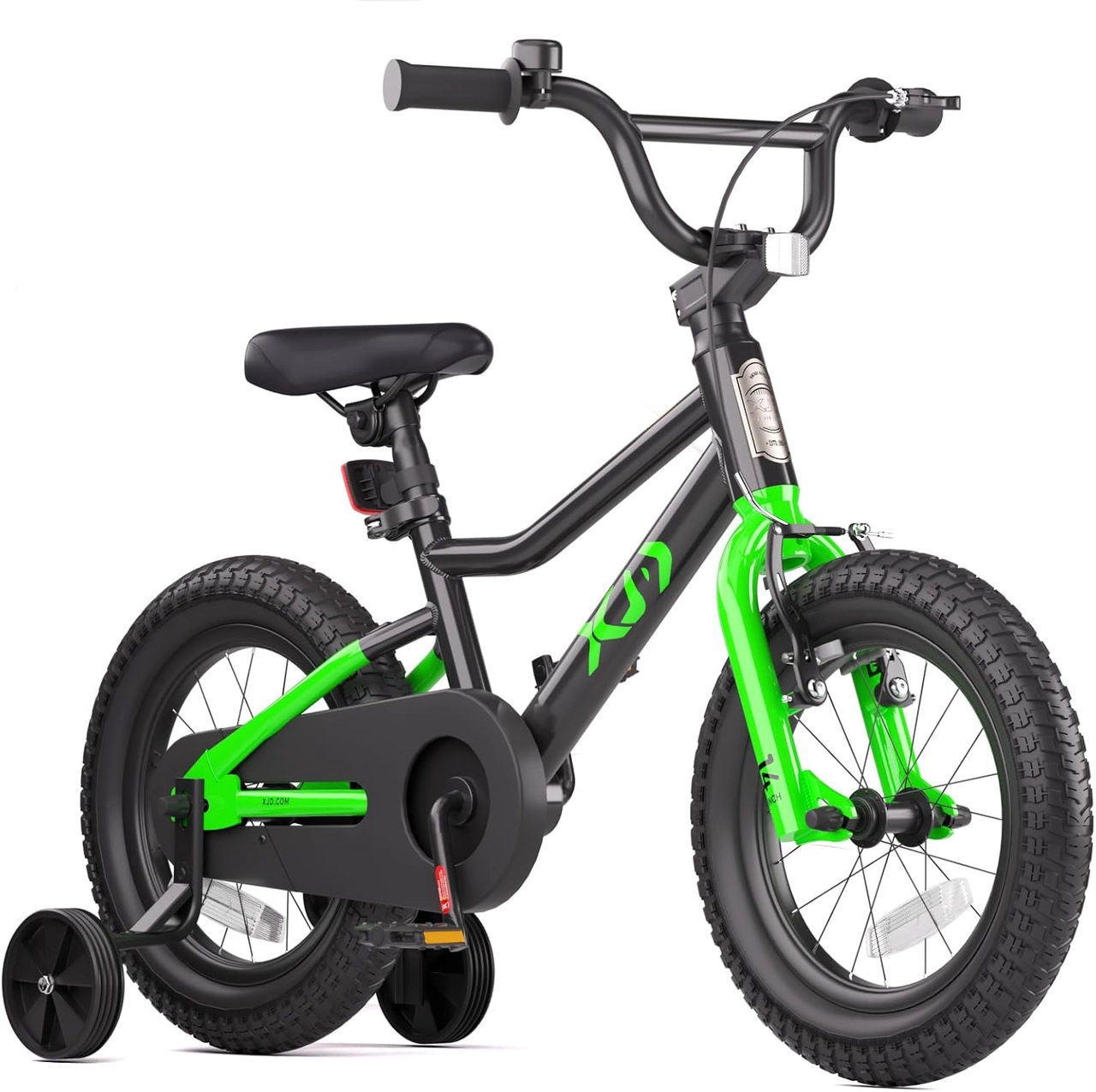 Black XJD Kids' BMX Bicycle with Training Wheels
A relevant comparison when measured fit points to 12, 14 or 16 Inch. This Kids' BMX Bikes catalog model includes training wheels in its exact title, but individual fit and control still require an in-person check.
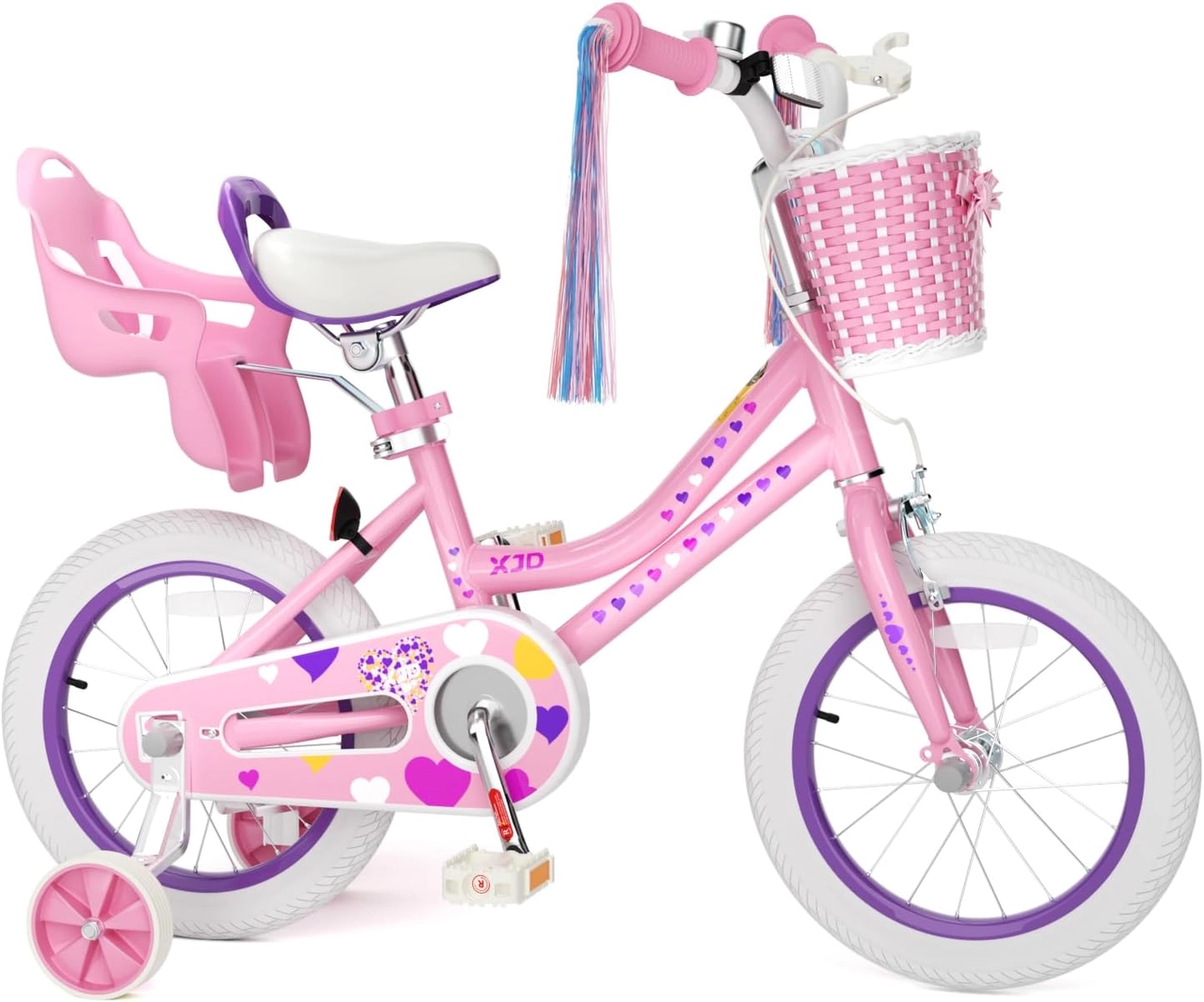 Pink Girls' 12/14/16" Bike by XJD – Basket & Doll Seat
This Training Wheel Bikes option has 12 Inch, 14 Inch and 16 Inch SKU labels. Compare the appropriate starting size by measured height, then confirm stand-over, reach, braking and steering on the actual bicycle.
Black XJD Kids' BMX Bicycle with Training Wheels is listed under Kids' BMX Bikes and offers 12 Inch, 14 Inch and 16 Inch SKU labels. Pink Girls' 12/14/16" Bike by XJD – Basket & Doll Seat is listed under Training Wheel Bikes with the same three wheel-size labels.
Compare the wheel-size label that matches the child’s measured-height starting point, then perform the stand-over, reach, brake and control checks. Choose between these products only on supplied facts and the child’s successful fit check; their catalog categories and title wording do not establish a performance or safety advantage.
If the measurement points to 18, 20, 24 or 26 Inch, neither supplied product is an equivalent substitute. These 12, 14 and 16 Inch products are only nearest-size comparison points in this article, and a different wheel size must not be treated as the same fit.
Check equipment and conditions
Before practice, follow the bicycle’s exact manual for assembly, inspection and adjustment. Do not invent or guess load limits, compatibility, torque settings or maintenance procedures. If anything is loose, damaged, incorrectly aligned or unclear, pause riding and consult a qualified bicycle mechanic.
Use a bicycle helmet that fits properly, sits level and has straps adjusted according to its manufacturer’s instructions. Practise on a flat, clear surface away from vehicles, steep slopes and distracting obstacles.
Decide what to do next
Measure height first, select the corresponding wheel-size starting point, and conduct the five fit checks on the actual bicycle. If fit and control are sound, practise the first missing skill in isolation. If the child cannot stand over, reach, brake or steer confidently, change or adjust the bicycle before asking for another full riding attempt. If pain, persistent distress or an unexpected physical limitation is stopping progress, pause and seek appropriate professional advice.
Bikes for your next adventure
-
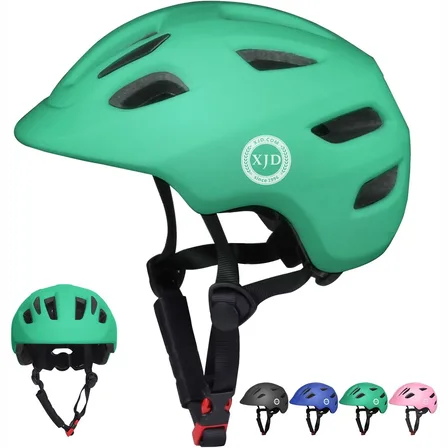
Green XJD Toddler Bike Helmet with Adjustable Fit, XS (46–51 cm)
The XJD toddler bike helmet in Green is built for the youngest riders — the size…$20.39
$23.99 -

Kids Bike Helmet by XJD for Boys & Girls – Black, Blue, Green, Pink, Purple
The XJD Kids Bike Helmet covers a wide 2-to-8-year age range thanks to two head-…$59.99
-

Kids Bike Helmet by XJD for Girls – Pink
The XJD Kids Bike Helmet in Pink is a lightweight multi-sport helmet for girls r…$59.99
$99