

Can boys ride girls bike
Yes, boys can ride a girls’ bike. The label does not determine fit: choose a bicycle the child can stand over, steer, brake and control confidently.
What matters more than the boys’ or girls’ label
Children’s bicycles may be marketed by gender because of color, graphics or frame styling, but those labels do not decide who can ride them. A boys’ bike and a girls’ bike can both be suitable when the bicycle fits the individual rider and the child is comfortable using it.
Start by asking whether the child likes the bike. Then assess physical fit and control. Do not reject a suitable bicycle merely because its catalog label says “girls,” and do not accept a poorly fitting one because its label says “boys.”
Measure the rider before choosing a wheel size
Measure the child’s height without shoes. Also measure inseam from the floor to the crotch while the child stands naturally. Compare the measured height with these XBikes wheel-size starting points, but use the actual fit check—not age alone—to make the decision.
| Wheel size | Starting age | Rider height |
|---|---|---|
| 12 Inch | 3–4 | 34–40 in / 86–102 cm |
| 14 Inch | 3–6 | 37–45 in / 94–114 cm |
| 16 Inch | 4–7 | 40–48 in / 102–122 cm |
| 18 Inch | 5–9 | 43–52 in / 109–132 cm |
| 20 Inch | 7–12 | 48–60 in / 122–152 cm |
| 24 Inch | 10–14 | 54–64 in / 137–163 cm |
| 26 Inch | Youth and adults | Over 60 in / 153 cm |
Overlapping ranges are normal. They mean two sizes may deserve a trial, not that both will fit equally well. Never buy an oversized bicycle solely to allow room for growth.
Have the child try the bicycle
A hands-on check answers the important question: can this boy control this particular girls’ bike? With an adult stabilizing the bicycle, check the following:
- Stand-over: The child should be able to straddle the bicycle securely rather than being forced onto tiptoes or against the frame.
- Reach: The handlebars should be reachable without an uncomfortable stretch, locked elbows or a sharply hunched posture.
- Brake control: If the bicycle has hand brakes, the child must be able to reach and operate them. Do not assume controls fit small hands.
- Starting and stopping: The rider should be able to get going, steer, slow down and stop without losing control.
- Confidence: Hesitation caused by excessive height, reach or weight distribution is a reason to compare another size or design.
Frame shape can affect how easily a child mounts and stands over a bike, so inspect the real bicycle rather than relying on a gender label or appearance.
How the supplied XBikes option is relevant
The XJD Kids' Training Wheel Bike for Boys & Girls, 12/14/16 Inch – White is explicitly cataloged for boys and girls and is offered with 12 Inch, 14 Inch and 16 Inch SKU labels. That makes it useful for comparing three early-childhood wheel-size starting points after measuring the rider. Its title and category also identify it as a training-wheel bicycle; they do not prove that every child within an age or height range will fit it.

This option is relevant only if the child’s measurements and hands-on control point toward 12, 14 or 16 inches and training wheels suit the child’s current confidence. If the fit check indicates 18 inches or larger, this supplied product is a smaller-size comparison point, not an equal substitute. Consult the exact product manual or a qualified bicycle mechanic for assembly, adjustments, maintenance, load limits, compatibility and torque information.
Safety checks before the first ride
Use a bicycle helmet that fits properly, sits level and has straps adjusted according to the helmet manufacturer’s instructions. Check the child’s helmet fit each time rather than assuming last season’s adjustment still works.
An adult should also confirm that the bicycle is correctly assembled and in suitable operating condition before riding. If anything about the controls, wheels, training wheels or adjustment is uncertain, follow the exact bicycle manual or ask a qualified bicycle mechanic. Practice starting, steering and stopping in a controlled area away from traffic until the child demonstrates consistent control.
The decision to make now
Let the boy ride the girls’ bike if he likes it and can pass the stand-over, reach, brake and control checks. Measure height and inseam first, compare the appropriate wheel-size range, and arrange a real fit trial. If he must stretch, cannot operate the brakes, struggles to stop or appears intimidated by the size, choose a different size or frame—regardless of the gender written on the label.
Bikes for your next adventure
-

XJD Boys & Girls BMX Bike with Training Wheels, 12/14/16" – Blue
The XJD Boys & Girls BMX Bike in Blue is a first pedal bike for kids roughly age…$99.99
$119.99 -
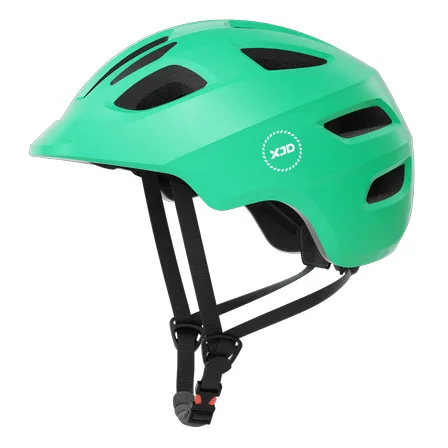
Green XJD Kids Bike Helmet for Boys & Girls
The Green XJD Kids Bike Helmet is a lightweight multi-sport helmet for toddlers …$59.99
$99 -

Blue XJD Freestyle BMX Bike, 20-Inch – No Pegs
The XJD 20-Inch Blue Freestyle BMX is an entry-level BMX bike for boys and girls…$189.99