

Is a sporty a girl bike
No. A “sporty” bike is not automatically a girl bike. Choose it for the child who can fit, control and confidently ride it, regardless of gender.
What “sporty” tells you—and what it does not
“Sporty” describes an appearance or riding character, not who may use the bicycle. Colors and gendered product names may help a child express a preference, but they do not determine physical fit. A girl can ride a sporty bike, and the same bike may suit another child equally well.
The useful question is therefore not “Is it for girls?” but “Does this particular bike fit this rider now?” The answer depends on measured height, inseam, reach, access to the brakes and present confidence. Age is only a starting point.
Measure the rider before comparing bikes
- Measure height: Have the child stand straight without shoes against a wall. Compare that measurement with the wheel-size starting points below.
- Measure inseam: With feet slightly apart, measure from the floor to the crotch. Use this during an actual stand-over check; wheel size alone cannot prove clearance.
- Check reach: On the bicycle, the child should be able to hold the handlebar and steer without stretching awkwardly or losing a stable riding position.
- Check brake control: The rider must be able to reach and operate the bicycle’s brakes as designed. Follow the exact product manual for adjustment instructions.
- Check confidence: Notice whether the child can start, stop, turn and put a foot down without fear or loss of control.
Record the height and inseam rather than relying on clothing size or age. The American Academy of Pediatrics advises having the child try the bicycle and avoiding an oversized bike bought merely for future growth.
Use wheel size as a starting point
| Wheel size | Age starting point | Rider height starting point |
|---|---|---|
| 12 Inch | 3–4 | 34–40 in / 86–102 cm |
| 14 Inch | 3–6 | 37–45 in / 94–114 cm |
| 16 Inch | 4–7 | 40–48 in / 102–122 cm |
| 18 Inch | 5–9 | 43–52 in / 109–132 cm |
| 20 Inch | 7–12 | 48–60 in / 122–152 cm |
| 24 Inch | 10–14 | 54–64 in / 137–163 cm |
| 26 Inch | Youth and adults | Over 60 in / 153 cm |
Overlapping ranges are normal. When a rider falls into two rows, do not assume the larger wheel is better. Compare both in person where possible, then prioritize stand-over clearance, comfortable reach, brake control and confidence. Never move up a size solely to leave room for growth.
How the supplied bikes relate to the question
The two catalog options help because both are kids’ BMX bikes offered in the same 12, 14 and 16 Inch sizes, while their titles present different gender and color wording. This makes them useful examples of why labeling should come after fit and the child’s preference.
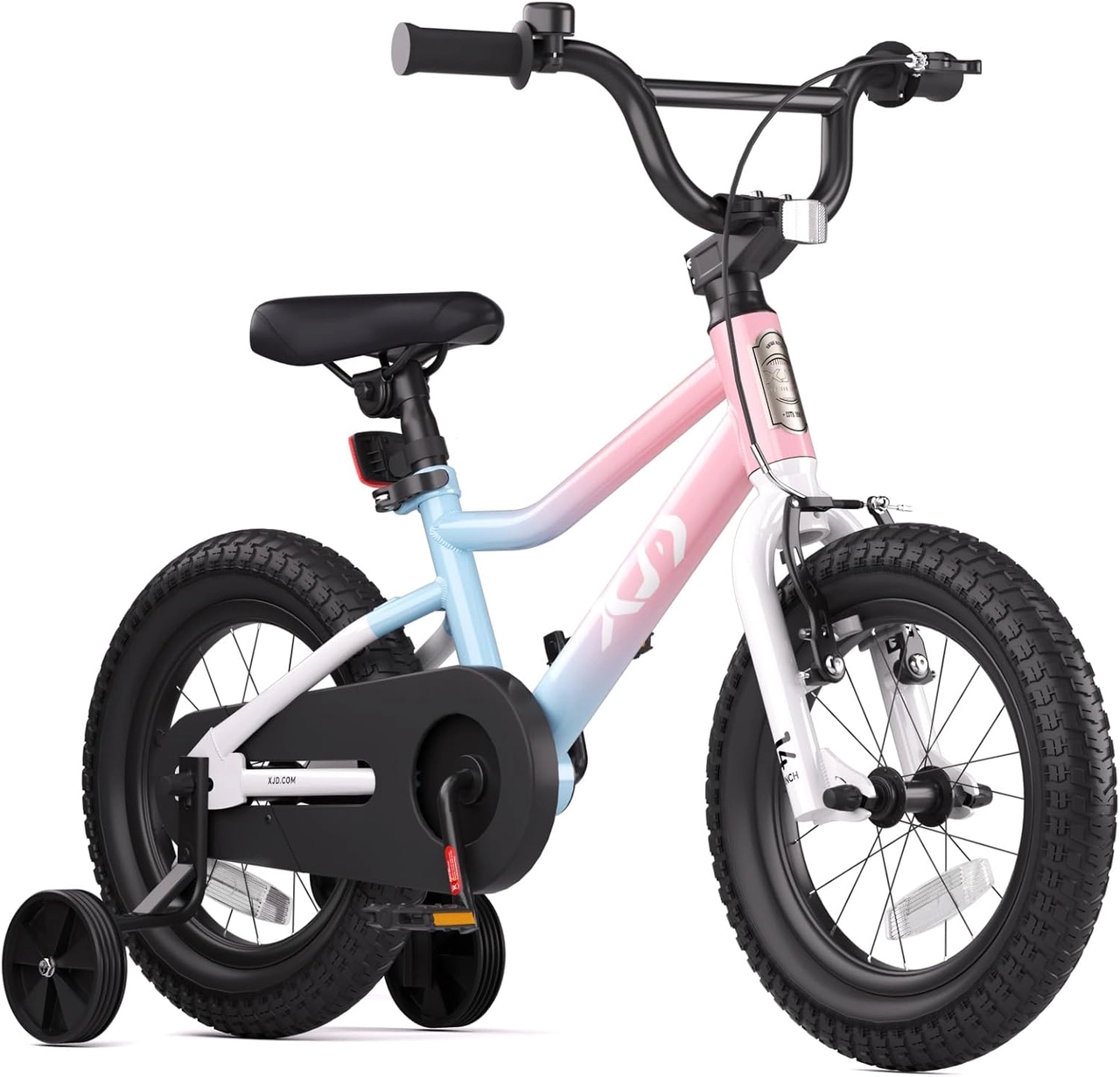 XJD Girls BMX Bike 12/14/16 Inch with Training Wheels – Pink Blue
A girls-titled kids’ BMX bike with training wheels, offered in 12, 14 and 16 Inch labels. Its pink-blue wording may match a rider’s preference, but an individual fit check remains essential.
 XJD Boys & Girls BMX Bike with Training Wheels, 12/14/16" – Blue
A boys-and-girls kids’ BMX bike with training wheels, offered in 12, 14 and 16 Inch labels. It provides a blue alternative while requiring the same height, reach, brake-control and confidence checks.
XJD Girls BMX Bike 12/14/16 Inch with Training Wheels – Pink Blue is explicitly titled for girls and is available in 12 Inch, 14 Inch and 16 Inch labels. Its pink-blue wording may suit a child’s taste, but neither the word “Girls” nor the colors establish fit.
XJD Boys & Girls BMX Bike with Training Wheels, 12/14/16" – Blue uses boys-and-girls wording and is also available in 12 Inch, 14 Inch and 16 Inch labels. The blue title does not limit who can ride it.
Because the supplied facts list the same size choices and identify both as kids’ BMX bikes with training wheels, compare their exact available size first and let the rider choose between the stated color presentations. No supplied facts establish differences in brakes, weight, materials, geometry or load limits, so do not infer them from the titles.
Perform the fit check on the exact bicycle
Have the child try the selected size. Check that the child can stand over the bicycle with usable clearance, get on and off without struggling, reach the handlebar naturally, turn it comfortably and access the brakes. Then confirm that the rider can put a foot down and remain composed while starting and stopping.
Training wheels do not correct a frame that is too large or a reach that prevents control. If fit is uncertain, compare the adjacent eligible sizes rather than assuming age settles the choice. Ask a qualified bicycle mechanic to assess the setup when you cannot verify it confidently.
Complete the safety and setup checks
Use a bicycle helmet that fits properly, sits level and has straps positioned according to the helmet manufacturer’s instructions, consistent with U.S. Consumer Product Safety Commission guidance. A helmet that is loose, tilted back or incorrectly strapped needs correction before riding.
For assembly, maintenance, fastener torque, load limits and component adjustment, follow the exact bicycle’s manual. Those details are not supplied here, and they should not be guessed. Use a qualified bicycle mechanic if the manual is unavailable, unclear or beyond your experience.
Make the title-specific decision
Do not classify a sporty bike by gender first. Measure the child, shortlist the matching wheel-size starting points, and have the rider test stand-over, reach, brakes and control. If one of the listed 12, 14 or 16 Inch options fits now and its presentation appeals to the child, it is relevant; if it does not fit, its gender wording cannot make it the right bike.
Bikes for your next adventure
-
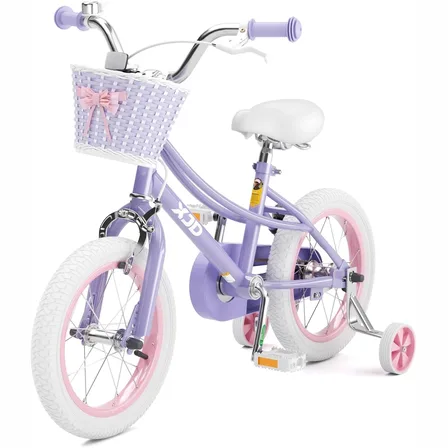
Girls' Training Wheel Bike by XJD with Basket – Purple
If you're shopping for a first bike for a girl roughly 3 to 12 years old (91–152…$75.99
-
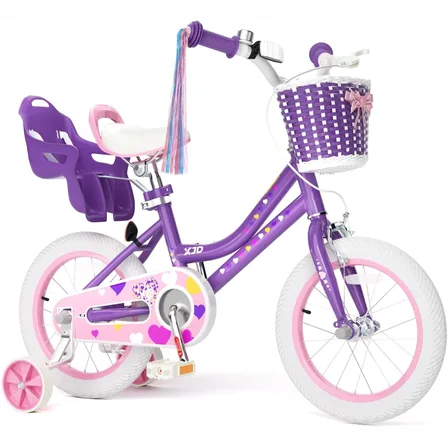
XJD Light Purple Girls Bike with Basket, Training Wheels, 12/14/16/20 Inch
The XJD Girls Bike with Basket in Light Purple is a single-speed training-wheel …$99.99
$119.99 -

Pink 12/14/16/20" XJD Girls Bike with Training Wheels & Basket
The Pink XJD Girls Bike with Training Wheels & Basket is a first-bike pick f…$65.99
$75.99