

What is the difference between boy bikes and girl bikes
Boy bikes and girl bikes usually differ in color, graphics or frame styling—not in the fit a child needs. Choose by measured height, inseam, reach, brake control and confidence, not by the gender label.
What actually matters
A bike marketed to boys is not automatically shaped or equipped better for a boy, and the same is true of a girls’ bike. A child needs a bicycle they can stand over, steer and stop comfortably. Styling can matter if it makes the rider excited to use the bike, but it should come after fit and control.
Have the child try the bicycle whenever possible. Do not buy an oversized model simply to allow room for growth. A bike that is too large can make starting, stopping and handling harder even if its suggested age range appears suitable.
Measure before comparing labels
- Measure standing height: Have the child stand straight without shoes against a wall. Record the result from the floor to the top of the head.
- Measure inseam: With feet slightly apart, measure from the floor to the crotch. Compare that measurement with the bicycle’s stand-over clearance during an actual fit check.
- Check reach: Seated in a normal riding position, the child should be able to hold the handlebar without an uncomfortable stretch or cramped posture.
- Check brake control: Confirm that the rider can reach and operate the bicycle’s brakes as designed. The exact controls vary, so inspect the actual model rather than assuming from a boys’ or girls’ label.
- Consider confidence: A cautious beginner may need a more reassuring fit than a confident rider of the same height.
Use wheel size only as a starting point
| Wheel size | Starting age | Rider height |
|---|---|---|
| 12 Inch | 3–4 | 34–40 in / 86–102 cm |
| 14 Inch | 3–6 | 37–45 in / 94–114 cm |
| 16 Inch | 4–7 | 40–48 in / 102–122 cm |
| 18 Inch | 5–9 | 43–52 in / 109–132 cm |
| 20 Inch | 7–12 | 48–60 in / 122–152 cm |
| 24 Inch | 10–14 | 54–64 in / 137–163 cm |
| 26 Inch | Youth and adults | Over 60 in / 153 cm |
These ranges help narrow the search, but overlapping sizes are normal. Prioritize the child’s measured height, inseam, reach, brake control and present confidence over age. When two sizes appear possible, have the rider try both instead of choosing the larger one for future growth.
How the supplied bikes relate
The catalog includes two gender-inclusive options that make the distinction clear: both exact titles say they are for boys and girls, while their categories and styling descriptions differ. Each is offered in 12, 14 and 16 Inch SKU labels, so the meaningful comparison begins with size and bicycle type rather than gender.
XJD Kids' Training Wheel Bike for Boys & Girls, 12/14/16 Inch – White is categorized as a Training Wheel Bike. XJD Boys & Girls BMX Bike with Training Wheels, 12/14/16" – Blue is categorized as a Kids' BMX Bike. Those supplied facts support comparisons of category, color named in the title and available wheel-size labels; they do not establish differences in weight, frame geometry, brakes, materials or performance.
 XJD Kids' Training Wheel Bike for Boys & Girls, 12/14/16 Inch – White
A gender-inclusive Training Wheel Bike offered with 12 Inch, 14 Inch and 16 Inch SKU labels. It is relevant when the child’s measurements and individual fit check support one of those sizes.
 XJD Boys & Girls BMX Bike with Training Wheels, 12/14/16" – Blue
A boys-and-girls Kids' BMX Bike with training wheels, offered in 12 Inch, 14 Inch and 16 Inch SKU labels. Compare its category and blue styling only after confirming the rider’s fit and control.
These products are relevant when the child’s fit check points toward 12, 14 or 16 Inch options and training wheels are wanted. They are not substitutes when the rider needs an 18, 20, 24 or 26 Inch bicycle. For those sizes, use the table only to identify a starting point and then compare appropriately sized bicycles in person.
Compare two bikes without relying on gender
- First eliminate any option outside the child’s measured height range.
- Check stand-over space using the child’s inseam and the actual bicycle.
- Have the rider sit naturally and confirm comfortable handlebar reach.
- Verify that the child can use the brakes and maintain control while starting, turning and stopping.
- Only after fit is confirmed, let the child choose preferred color, graphics or category styling.
If assembly, adjustments, compatibility, load limits, maintenance or torque requirements affect the decision, follow the exact product manual or ask a qualified bicycle mechanic. Do not infer those details from wheel size, color or gender wording.
Safety and the final decision
A properly fitting bicycle helmet is essential. It should sit level, fit correctly and have its straps adjusted according to the helmet manufacturer’s instructions. A helmet cannot compensate for a bicycle that is too large or difficult for the child to control.
The practical difference between a boy bike and a girl bike is often presentation, while the decisive difference is whether the individual child fits and controls it. Measure height and inseam now, shortlist the matching wheel sizes, test stand-over, reach and braking, then let the rider choose the styling they prefer among the bikes that genuinely fit.
Bikes for your next adventure
-
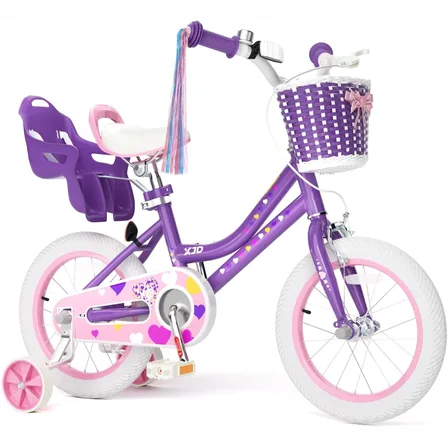
XJD Light Purple Girls Bike with Basket, Training Wheels, 12/14/16/20 Inch
The XJD Girls Bike with Basket in Light Purple is a single-speed training-wheel …$99.99
$119.99 -
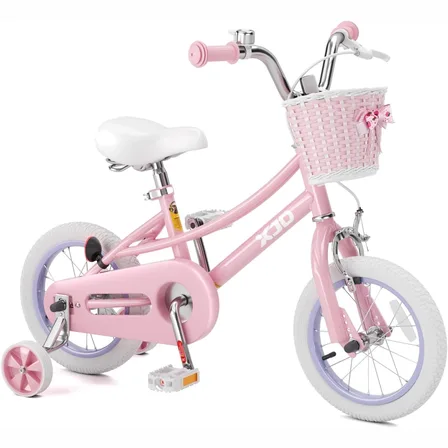
Pink 12/14/16/20" XJD Girls Bike with Training Wheels & Basket
The Pink XJD Girls Bike with Training Wheels & Basket is a first-bike pick f…$65.99
$75.99 -
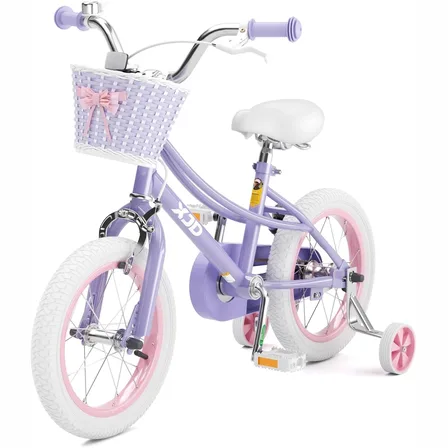
Girls' Training Wheel Bike by XJD with Basket – Purple
If you're shopping for a first bike for a girl roughly 3 to 12 years old (91–152…$75.99