

Can you put a baby seat on a cruiser bike
Yes, you can put a baby seat on some cruiser bikes—but only when the seat, bicycle frame or rear rack, wheel clearance and combined load are explicitly compatible.
What determines whether a baby seat will fit?
“Cruiser” describes a style, not a universal mounting standard. Before buying a front-mounted, frame-mounted rear or rack-mounted rear seat, identify the exact cruiser model and read both the bicycle manual and child-seat manual. Each must permit the proposed installation.
Check these points:
- Mounting location: Confirm that the frame, handlebar or rear-rack area has the shape and unobstructed space required by the seat.
- Rack approval: A rear rack is not automatically a child-seat carrier. The rack and bicycle manuals must specifically support the seat type and its load.
- Clearance: Compare the seat maker’s required space with the rear wheel, tire, brakes, cables, saddle, pedals and the rider’s heels.
- Total load: Account for the adult rider, child, seat and anything else carried. Use only the limits stated by the bicycle, rack and seat manufacturers.
- Handling: The adult must still be able to mount, start, steer, brake and stop while controlling the added weight.
If any limit or compatibility statement is missing, ask the manufacturer or have a qualified bicycle mechanic inspect the exact bicycle and seat. Do not guess at hardware, torque or load capacity.
What to measure and compare
Record the cruiser’s exact model, wheel-size label and mounting dimensions requested by the baby-seat manufacturer. For a rear seat, measure the available area around the seat tube or rack, along with clearance above and beside the rear wheel. For a front seat, measure the specified steering or frame mounting area and check that the rider can turn fully without striking the seat.
Then compare those measurements directly with the seat’s compatibility diagram. Also verify that the rider can reach the ground as intended for that bicycle, comfortably reach the handlebar and operate both brakes with control. A loaded child seat raises the bicycle’s center of gravity, so a bicycle that already feels large or difficult to control is unsuitable for this use.
How the XBikes cruiser options help with comparison
The supplied catalog options provide 20-, 24- and 26-inch cruiser reference points, including two models listed with rear racks. They help narrow wheel size and rack configuration, but the catalog facts do not confirm baby-seat compatibility, rack load limits or approved mounting methods.
 Pink XJD Beach Cruiser Bike, 24"/26", U-Brake
A 24 Inch or 26 Inch cruiser comparison with a listed U-brake. No rear rack or baby-seat compatibility is supplied, so check the exact bicycle and seat manuals.
 XJD Kids Beach Cruiser Bicycle, Rear Rack & V-Brakes, Mint Green
Offered in 20 Inch, 24 Inch and 26 Inch versions with a rear rack and V-brakes. The rack is relevant, but the supplied facts do not establish child-seat approval or load capacity.
 XJD Pink Beach Cruiser for Girls – Rear Rack & V-Brake
A rear-rack cruiser offered with 20 Inch, 24 Inch and 26 Inch labels and a V-brake. Confirm the exact rack limit and baby-seat mounting approval in the applicable manuals.
Pink XJD Beach Cruiser Bike, 24"/26", U-Brake is offered with 24 Inch and 26 Inch labels and is identified with a U-brake. Because no rear rack or baby-seat approval is supplied, use its manual and the intended seat manual before treating it as a candidate.
XJD Kids Beach Cruiser Bicycle, Rear Rack & V-Brakes, Mint Green is offered in 20 Inch, 24 Inch and 26 Inch versions and is listed with a rear rack and V-brakes. The rack makes it relevant to a rear-seat discussion, but its presence alone does not establish that it can carry a child seat.
XJD Pink Beach Cruiser for Girls – Rear Rack & V-Brake also has 20 Inch, 24 Inch and 26 Inch labels and a listed rear rack. Again, confirm the exact SKU, rack approval, load limit and seat attachment requirements in the applicable manuals.
Choose a bicycle that fits the adult rider
A baby passenger does not determine the bicycle wheel size; the person controlling the bicycle does. XBikes uses these relevant starting points: 20 Inch for riders 48–60 in (122–152 cm), typically ages 7–12; 24 Inch for 54–64 in (137–163 cm), typically ages 10–14; and 26 Inch for youth and adults over 60 in (153 cm).
These ranges are starting points, not proof of fit. Measure the rider’s height and inseam, then check stand-over clearance, reach, brake control and current confidence on the exact bicycle. Consistent with pediatric bicycle-fit guidance, the rider should try the bicycle, and an oversized model should not be chosen merely to allow growth.
A child-sized cruiser should not be selected simply because the passenger is a child. The operator must individually fit and confidently control the bicycle, especially when carrying a baby seat.
Do a controlled check before riding
- Have a qualified bicycle mechanic install or verify the seat when the manuals permit it, following the specified hardware and torque instructions.
- Check that the seat is secure and that straps, feet, clothing and loose items cannot contact the wheel or moving parts.
- Confirm full steering movement, brake operation and stable mounting and dismounting.
- Practice away from traffic without the child first, using only a safe substitute load if the seat manufacturer permits one.
- Before every ride, fit the child’s bicycle helmet so it sits level and the straps follow the helmet manufacturer’s instructions; the adult rider should also wear a properly fitted helmet.
If the bicycle manual, rack documentation or baby-seat instructions do not explicitly support the same installation, do not attach the seat. Choose a confirmed-compatible cruiser and seat combination, or ask a qualified bicycle mechanic to identify one after measuring the exact bike.
Bikes for your next adventure
-
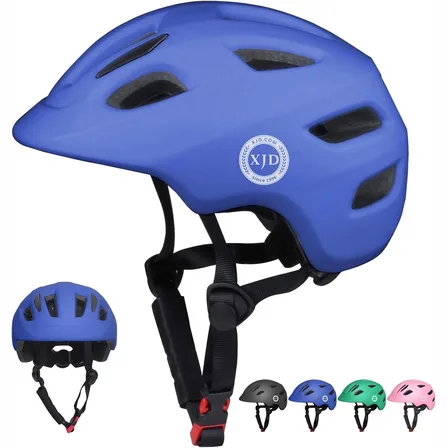
Blue XJD Kids' Bike Helmet, Adjustable Fit – Sizes XS & S
The Blue XJD Kids' Bike Helmet is a lightweight, adjustable helmet for toddlers …$20.39
-

Kids Bike Helmet by XJD for Boys & Girls – Black, Blue, Green, Pink, Purple
The XJD Kids Bike Helmet covers a wide 2-to-8-year age range thanks to two head-…$59.99
-
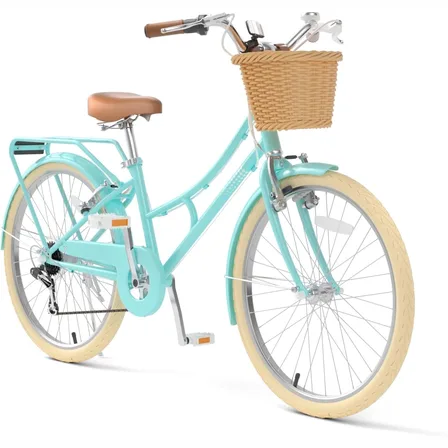
XJD Kids Beach Cruiser Bicycle, Rear Rack & V-Brakes, Mint Green
The XJD Beach Cruiser in Mint Green is a geared, multi-speed cruiser bike for ol…$179.99
$209.99