

Can you put a child seat on a cruiser bike
Yes, you can put a child seat on some cruiser bikes—but only when the seat, bicycle, mounting area and load limits are explicitly compatible.
What determines whether it will work
“Cruiser” describes a style of bicycle, not a universal child-seat mounting standard. Before buying or installing a seat, identify its mounting system: some attach to the rear rack, some to the frame, and others mount at the front. Then check the exact bicycle manual and child-seat instructions for matching requirements.
Confirm the bicycle manufacturer permits carrying a child and permits the proposed mounting method. Compare the seat’s required frame-tube shape and dimensions, rack specification, wheel clearance and permitted load with the bicycle’s documented details. If either manual is silent, unclear or contradictory, do not assume compatibility; ask the manufacturers or a qualified bicycle mechanic.
Measure and inspect before choosing a seat
Record the bicycle’s exact model and wheel size, then inspect the intended mounting area. Depending on the seat design, useful checks include accessible frame-tube dimensions, the space around cables and brakes, clearance above the rear wheel, and the distance between the saddle and any proposed rear seat.
- For a rack-mounted seat: verify that the rack itself is approved for that specific type of child seat and for the required load. A rack’s presence alone is not proof.
- For a frame-mounted seat: compare the seat maker’s clamp requirements with the bicycle’s frame shape and available unobstructed mounting space.
- For any installation: check that the seat cannot contact the tire, interfere with steering or braking, obstruct cables, or leave the child’s feet exposed to moving parts.
Do not invent a clamp position, torque setting or load allowance. Use the exact manuals for installation and fastener settings, or have a qualified bicycle mechanic assess and install the system.
How the supplied cruisers help with the comparison
The catalog options below are useful for separating visible features from verified compatibility. XJD Pink Beach Cruiser for Girls – Rear Rack & V-Brake is offered in 20 Inch, 24 Inch and 26 Inch sizes and includes a rear rack, but the supplied facts do not say that its rack accepts a child seat. 24-Inch Purple XJD Beach Cruiser Bike with U-Brake is a 24-inch cruiser, but no rear rack or child-seat approval is specified. Neither listing alone establishes a mounting method, load limit or passenger suitability.
 XJD Pink Beach Cruiser for Girls – Rear Rack & V-Brake
Available in 20 Inch, 24 Inch and 26 Inch with a rear rack and V-brake. The rack makes this a relevant comparison, but supplied facts do not confirm child-seat compatibility or a load limit.
 24-Inch Purple XJD Beach Cruiser Bike with U-Brake
This 24-inch cruiser has a U-brake. No rear rack, child-seat mounting approval or load limit is supplied, so its manual and the proposed seat requirements must be checked before use.
Accordingly, treat both bicycles as comparison points, not confirmed child-seat carriers. For the first, request the rack and bicycle documentation before considering a rack-mounted seat. For the second, identify a manufacturer-approved mounting solution rather than assuming that a separate rack or frame clamp will work.
Do not confuse a passenger seat with the child’s own bike fit
If “child seat” means the saddle on a cruiser that the child will ride independently, choose the bicycle by measured fit—not by the word “girls,” by appearance, or by age alone. XBikes uses these starting points for the wheel sizes represented in the supplied catalog:
| Wheel size | Starting age | Rider height |
|---|---|---|
| 20 Inch | 7–12 | 48–60 in / 122–152 cm |
| 24 Inch | 10–14 | 54–64 in / 137–163 cm |
| 26 Inch | Youth and adults | Over 60 in / 153 cm |
These figures are starting points, not a substitute for trying the bicycle. Measure the rider’s height and inseam, then check stand-over clearance, reach, current confidence and the ability to operate the particular brakes comfortably. Do not buy an oversized cruiser merely to allow room for growth.
Check control after installation
A child passenger changes how a bicycle feels when starting, stopping, turning and parking. After a compatible seat has been installed according to its instructions, check the complete bicycle in a controlled area without the child aboard. Make sure the mount remains secure, steering moves freely, both brakes operate correctly and no part rubs the wheel or catches a cable.
Then consider the adult rider’s ability to hold the loaded bicycle upright, mount and dismount without tipping it, start smoothly and stop under control. If balance or clearance feels uncertain, stop and have the installation and bicycle assessed. Follow the manuals for recurring inspections and maintenance because no universal schedule or torque applies to every cruiser and seat.
Before the first ride
Use a properly fitting bicycle helmet for the child and adult rider. Each helmet should sit level and have its straps adjusted according to its manufacturer’s instructions. Secure the child exactly as the seat manual directs, and never use the seat if required restraints, guards or mounting parts are missing or damaged.
The practical decision is simple: install a child passenger seat only after both manufacturers’ documentation confirms the bicycle, mount and limits match. A rear rack—such as the one listed on the pink XJD cruiser—is a reason to investigate compatibility, not permission to attach a seat.
Bikes for your next adventure
-
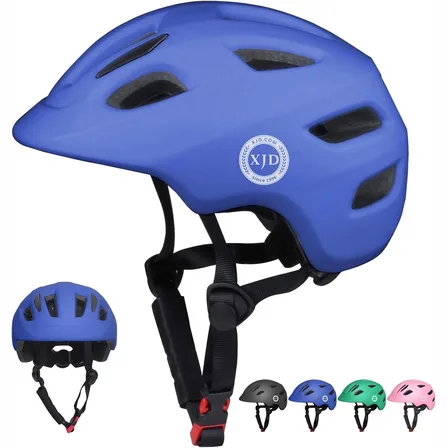
Blue XJD Kids' Bike Helmet, Adjustable Fit – Sizes XS & S
The Blue XJD Kids' Bike Helmet is a lightweight, adjustable helmet for toddlers …$20.39
-

Kids Bike Helmet by XJD for Boys & Girls – Black, Blue, Green, Pink, Purple
The XJD Kids Bike Helmet covers a wide 2-to-8-year age range thanks to two head-…$59.99
-
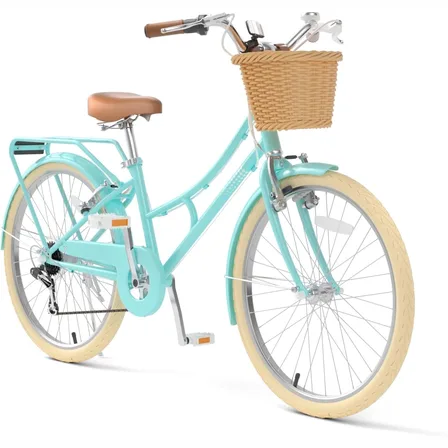
XJD Kids Beach Cruiser Bicycle, Rear Rack & V-Brakes, Mint Green
The XJD Beach Cruiser in Mint Green is a geared, multi-speed cruiser bike for ol…$179.99
$209.99