Can you put training wheels on a 16 inch bike
Yes, you can put training wheels on many 16-inch bikes, but only when the bicycle and training-wheel kit are compatible. Check the rear axle, frame clearance, mounting hardware, and the bicycle manual before fitting them.
What the 16-inch label tells you
A 16-inch wheel designation helps you choose the general size of training-wheel kit, but it does not prove that a particular kit will attach correctly. Two 16-inch bicycles can have different rear axles, guards, frame shapes, or mounting restrictions.
Begin by confirming that the bicycle is actually the 16-inch version. Then check its manual for permission to install training wheels and for any model-specific parts or instructions. If the manual does not address compatibility, have a qualified bicycle mechanic inspect the bicycle rather than improvising a mounting method.
Measure and compare before buying a kit
Inspect both sides of the rear wheel and record what is present. You need enough information to compare the bicycle with the kit maker’s stated requirements:
- Rear attachment: Identify the axle or other approved mounting point and check whether components block access.
- Axle dimensions: Measure the exposed usable length and the relevant diameter or thread specification. Do not assume that hardware supplied for another bicycle will fit.
- Frame clearance: Check the space around the rear axle, chainstays, guards, and any nearby parts on both sides.
- Kit range: Confirm that the kit explicitly includes 16-inch bicycles and that its brackets match the bicycle’s approved mounting arrangement.
- Required hardware: Compare every bracket, fastener, washer, and retention part with the exact kit instructions.
Do not force mismatched threads, substitute unspecified fasteners, or guess at tightening values. Use the exact bicycle and training-wheel manuals for assembly, compatibility, maintenance, and torque requirements. A bicycle mechanic should handle any uncertainty.
Confirm that a 16-inch bike fits the rider
Training wheels do not make an oversized bicycle fit. XBikes uses ages 4–7 and rider height 40–48 inches (102–122 cm) as starting points for a 16-inch bicycle, not as a substitute for trying the bike.
Measure the child’s height and inseam, then check stand-over clearance, comfortable reach to the handlebar, reliable access to the brakes, and the ability to steer without stretching. Current confidence also matters. HealthyChildren guidance recommends having the child try the bicycle, avoiding an oversized bike bought merely for growth, and checking stand-over, control, and brake reach.
If the rider cannot start, stop, steer, or operate the brakes comfortably, training wheels do not solve the underlying fit problem. Reassess the bicycle size first.
How the supplied 16-inch options are relevant
The catalog options below help because each is offered with a 16 Inch SKU label and is listed in the Training Wheel Bikes category. They are complete catalog bicycle options to compare with a separate retrofit; their titles and size labels do not establish that their parts fit another bicycle.
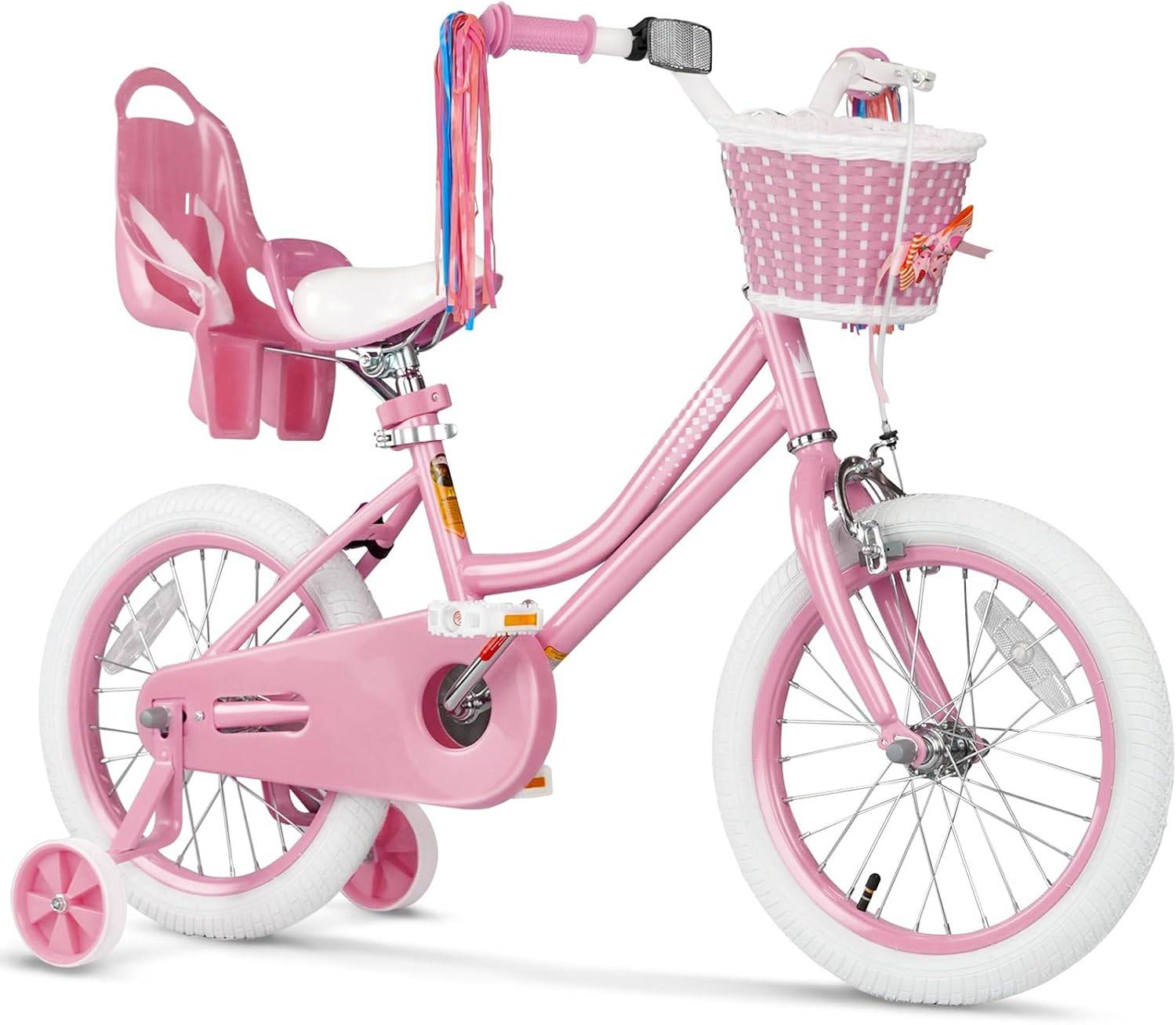 XJD Pink Girls' Bike – Kids 12/14/16 Inch Training Wheel Bicycle
Available with a 16 Inch SKU label as well as 12 Inch and 14 Inch options, making its 16 Inch variant directly relevant when comparing complete training-wheel bicycles.
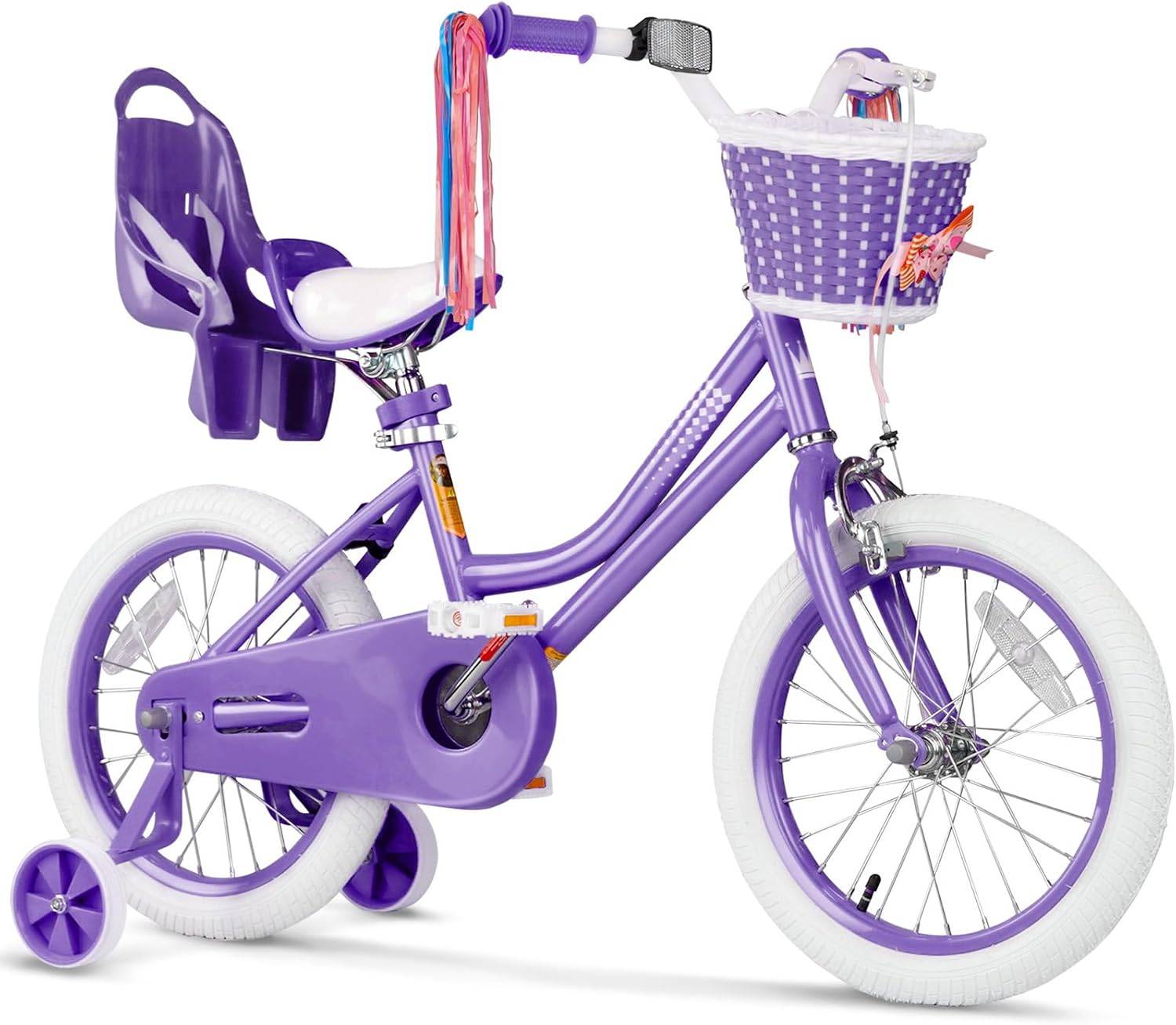 XJD Girls Bike for Kids Ages 3-8, 12/14/16 Inch with Training Wheels – Purple
This training-wheel bicycle has 12 Inch, 14 Inch, and 16 Inch SKU labels. Its title’s age wording is a catalog label; individual height, reach, inseam, brake control, and confidence still determine fit.
XJD Pink Girls' Bike – Kids 12/14/16 Inch Training Wheel Bicycle is available in 12 Inch, 14 Inch, and 16 Inch SKU labels. Select the 16 Inch variant when comparing it with the question on this page, then perform the individual rider fit check.
XJD Girls Bike for Kids Ages 3-8, 12/14/16 Inch with Training Wheels – Purple also has 12 Inch, 14 Inch, and 16 Inch SKU labels. The “Ages 3-8” wording is part of its catalog title, not evidence that it fits a particular child; use the XBikes height starting point and an actual fit check.
Install and check the result
Follow the exact product manual in its stated sequence. The supports should be fitted symmetrically, use only specified hardware, and leave the bicycle operating as the manufacturer intends. Because no universal clearance or torque figure applies here, use the manual’s values and adjustment method rather than an invented number.
Before every ride, check that the fasteners remain secure, the supports are not bent, and neither side interferes with the wheel, chain, brakes, guards, or normal pedaling. Stop using the bicycle if anything loosens, rubs, shifts, or affects steering or braking, and ask a qualified bicycle mechanic to correct it.
Make the final decision
Fit training wheels only if the bicycle manual permits them, a 16-inch kit matches the measured mounting details, and the child fits and controls the bike. Add a properly fitted bicycle helmet that sits level, with straps adjusted according to its manufacturer’s instructions, as advised by the U.S. Consumer Product Safety Commission. If any compatibility point remains uncertain, take the bicycle, its manual, and the proposed kit to a mechanic before installation.
Recommended products
-

Blue XJD Kids' Bike Helmet, Adjustable Fit – Sizes XS & S
The Blue XJD Kids' Bike Helmet is a lightweight, adjustable helmet for toddlers …
Bike Helmets XS (46–51 cm) -
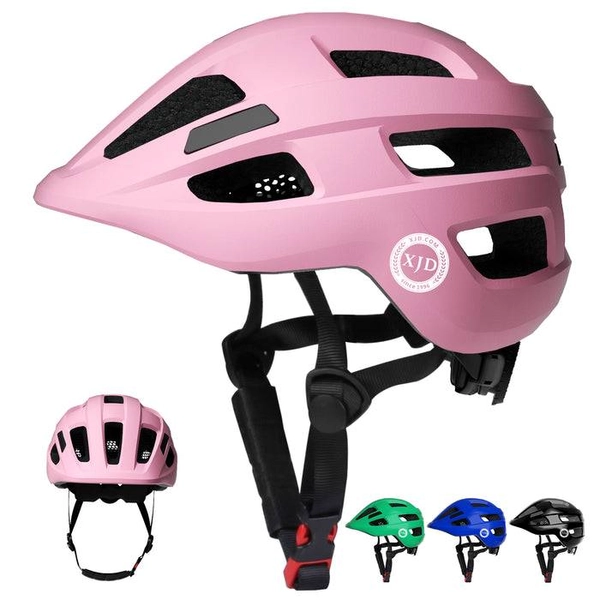
Kids Bike Helmet by XJD for Boys & Girls – Black, Blue, Green, Pink, Purple
The XJD Kids Bike Helmet covers a wide 2-to-8-year age range thanks to two head-…
Bike Helmets Pink / M:20.47"-22.05" / 52-56 cm -
Save 12%
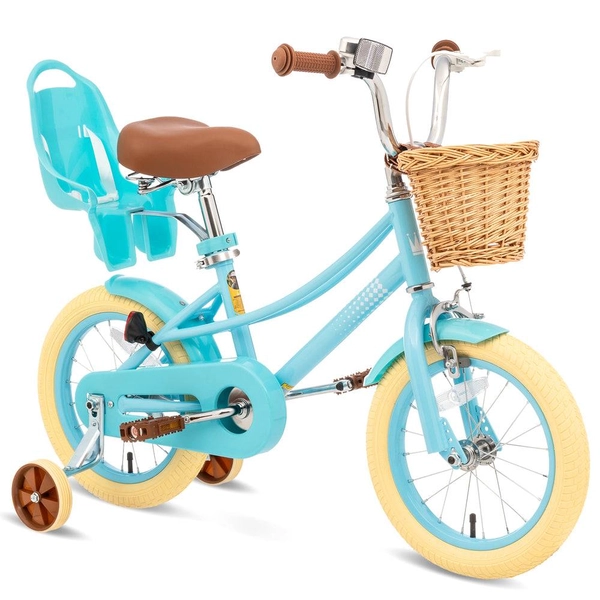
Girls' Training Wheel Bike by XJD, 12–20 Inch Wheels – Blue
This XJD girls' training wheel bike in Blue covers one of the widest fit ranges …
Training Wheel Bikes Wheel Size 12 Inch / 14 Inch / 16 Inch / 20 Inch Recommended Height 86–152 cm Training Wheels Yes 12 Inch -
Save 15%
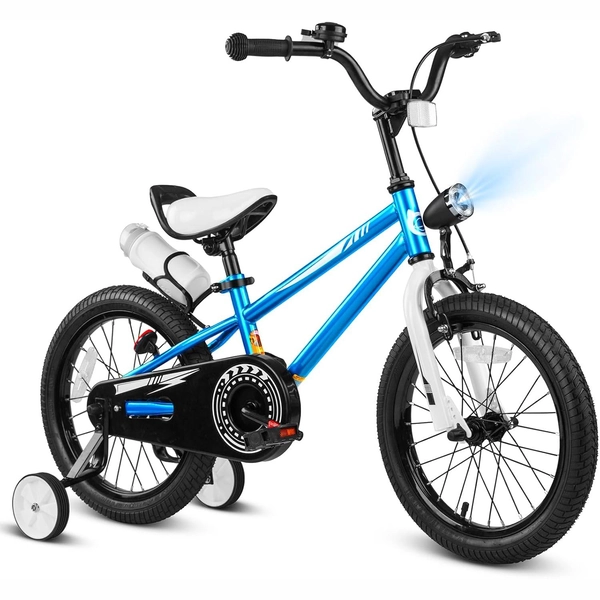
XJD Boys 12/14/16" Training Wheel Bike – Blue
The XJD Boys Bike in Blue is a training wheel bike for riders 71–122 cm tall—rou…
Training Wheel Bikes Wheel Size 12 Inch / 14 Inch / 16 Inch Recommended Height 86–122 cm Training Wheels Yes 16 Inch