What age do kids ride bikes without training wheels
There is no single age when kids should ride without training wheels. Remove them when your child can balance, steer, brake and stop confidently on a correctly fitted bike.
Readiness matters more than a birthday
Age can suggest a wheel-size starting point, but it does not show whether a child is ready to ride independently. A cautious older child may still benefit from support, while a younger child with practiced balance may be ready to try two wheels. Do not turn training-wheel removal into a deadline.
Look for several abilities working together: the child starts with little help, looks ahead while steering, keeps the bike on a chosen path, uses the brakes without losing control and puts a foot down deliberately when stopping. A child who freezes, cannot reach the controls or depends heavily on the training wheels needs a fit adjustment or more practice.
Measure the child and check the fit
Measure standing height without shoes, then check inseam, reach and brake control on the actual bicycle. The child should be able to stand over the bike comfortably, reach the handlebar without stretching and operate the brakes reliably. Have the child try the bicycle rather than choosing solely from an age label, and do not buy an oversized bike just for future growth.
| Wheel size | Age starting point | Rider height |
|---|---|---|
| 12 Inch | 3–4 | 34–40 in / 86–102 cm |
| 14 Inch | 3–6 | 37–45 in / 94–114 cm |
| 16 Inch | 4–7 | 40–48 in / 102–122 cm |
| 18 Inch | 5–9 | 43–52 in / 109–132 cm |
| 20 Inch | 7–12 | 48–60 in / 122–152 cm |
| 24 Inch | 10–14 | 54–64 in / 137–163 cm |
| 26 Inch | Youth and adults | Over 60 in / 153 cm |
These ranges are starting points, not proof of fit or readiness. When age and measured height point in different directions, prioritize height and the individual checks for inseam clearance, reach, brake control and confidence.
How to decide whether to remove the training wheels
- Watch how support is used. If the child continually leans onto one training wheel, independent balance is not yet consistent.
- Check control before changing equipment. Confirm comfortable reach, purposeful steering and dependable braking on the current setup.
- Practise in a suitable area. Choose a flat, open space away from traffic and obstacles, with close adult supervision.
- Make a short trial. If the child becomes frightened or cannot control starts and stops, return to supported practice without presenting it as failure.
Use a properly fitting bicycle helmet for every attempt. It should sit level and its straps should be adjusted according to the helmet manufacturer’s instructions.
Where the supplied bikes fit the decision
The three catalog options are relevant when a child still needs training wheels or when you are comparing 12-, 14- and 16-inch starting points before an individual fit check. They do not establish the age for removing training wheels; they provide size-labelled options for the supported-riding stage.
The XJD Girls Bike for Kids Ages 3-8, 12/14/16 Inch with Training Wheels – Purple, Girls 12/14/16 Inch Kids Bike by XJD with Training Wheels – Peach and XJD Light Purple Girls Bike with Basket, Training Wheels, 12/14/16/20 Inch can be compared through their supplied 12 Inch, 14 Inch and 16 Inch SKU labels. That shared range helps you compare a child’s measured height with the XBikes starting points while keeping training wheels available.
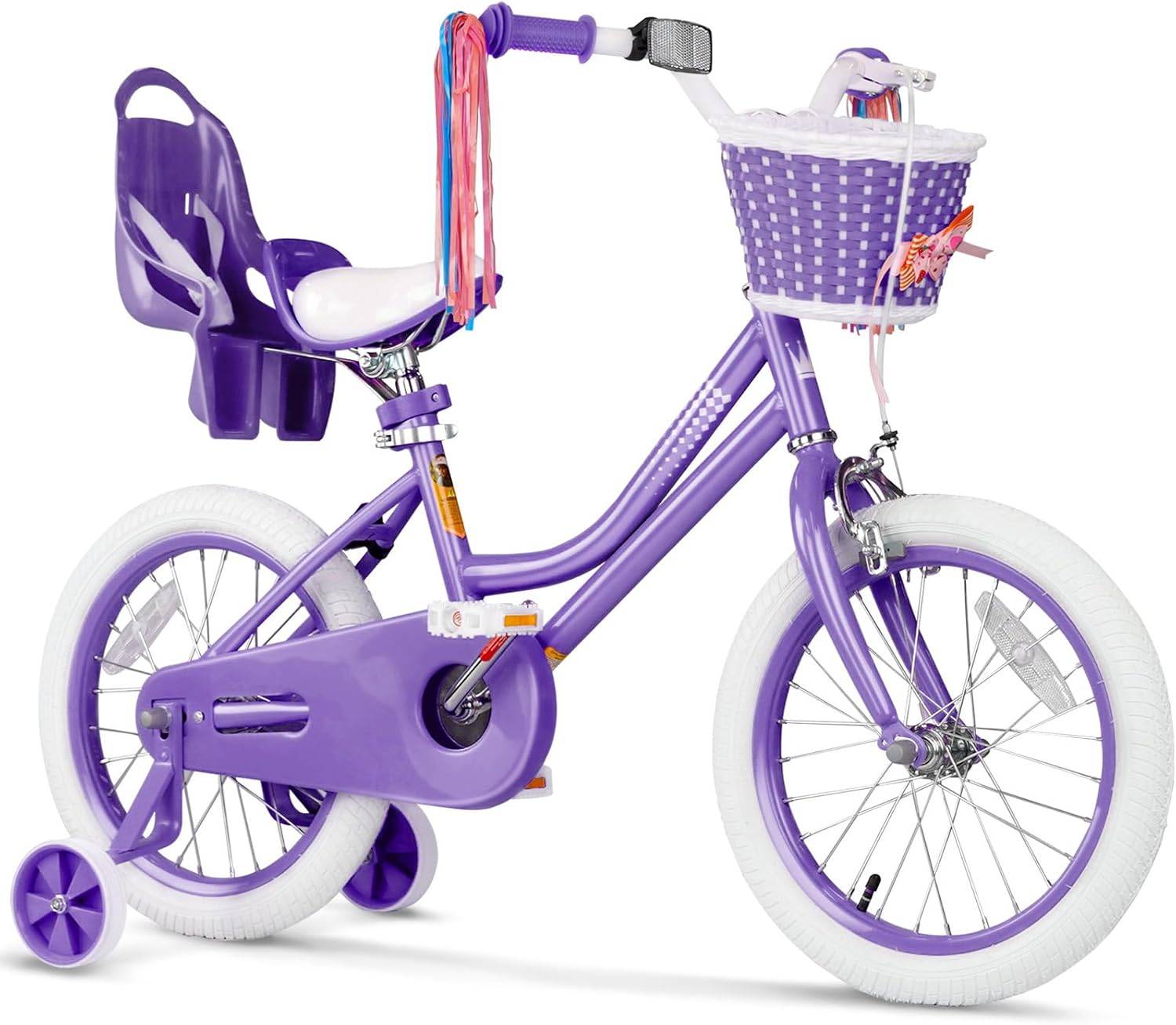 XJD Girls Bike for Kids Ages 3-8, 12/14/16 Inch with Training Wheels – Purple
A training-wheel bike offered in supplied 12 Inch, 14 Inch and 16 Inch SKU labels. Compare the rider’s measured height with XBikes size starting points and verify individual fit; the age wording in its title is only a catalog label.
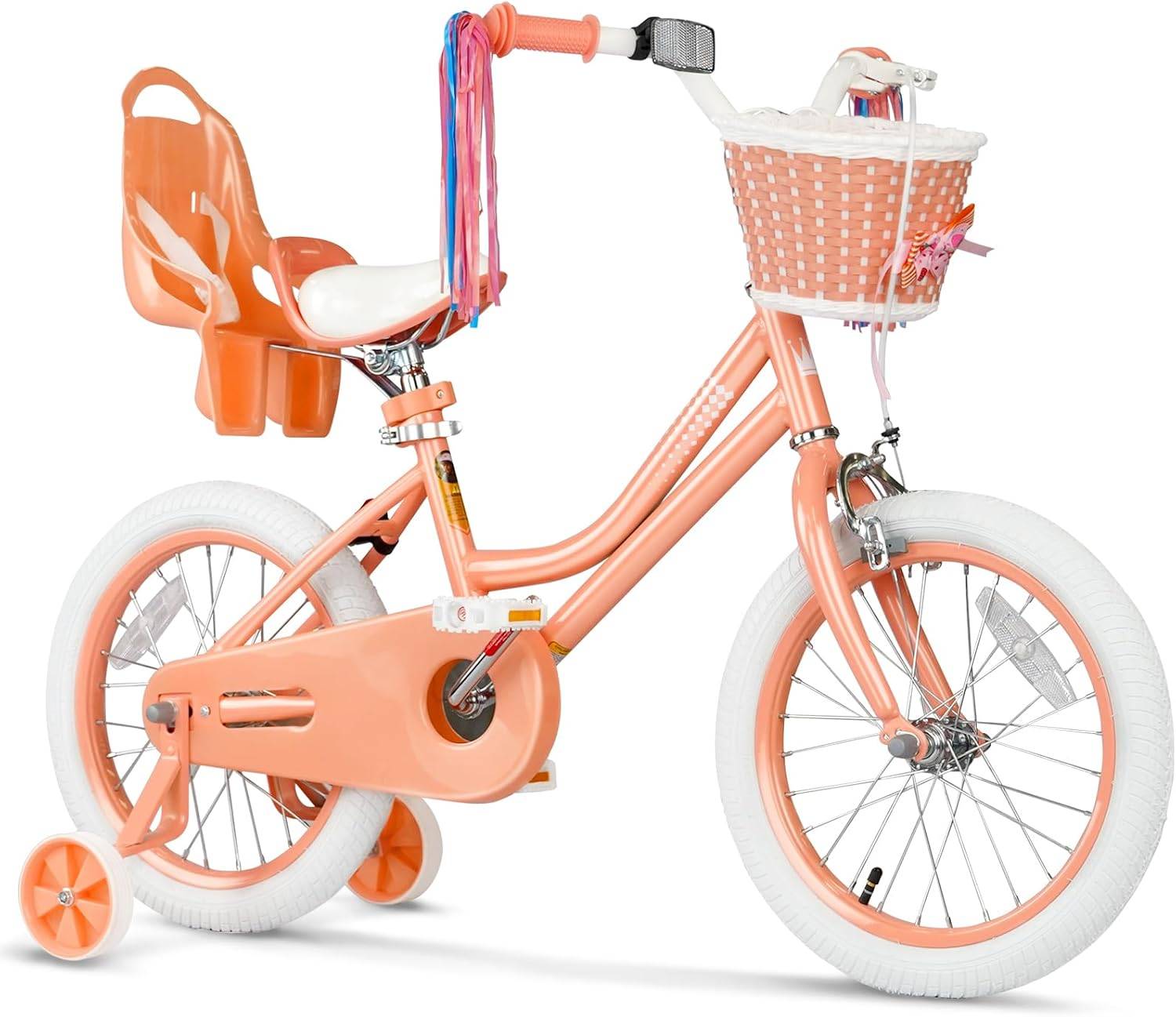 Girls 12/14/16 Inch Kids Bike by XJD with Training Wheels – Peach
This peach training-wheel model has supplied 12 Inch, 14 Inch and 16 Inch SKU labels, making it relevant for supported-riding size comparisons. Height, inseam, reach, brake control and confidence still determine suitability.
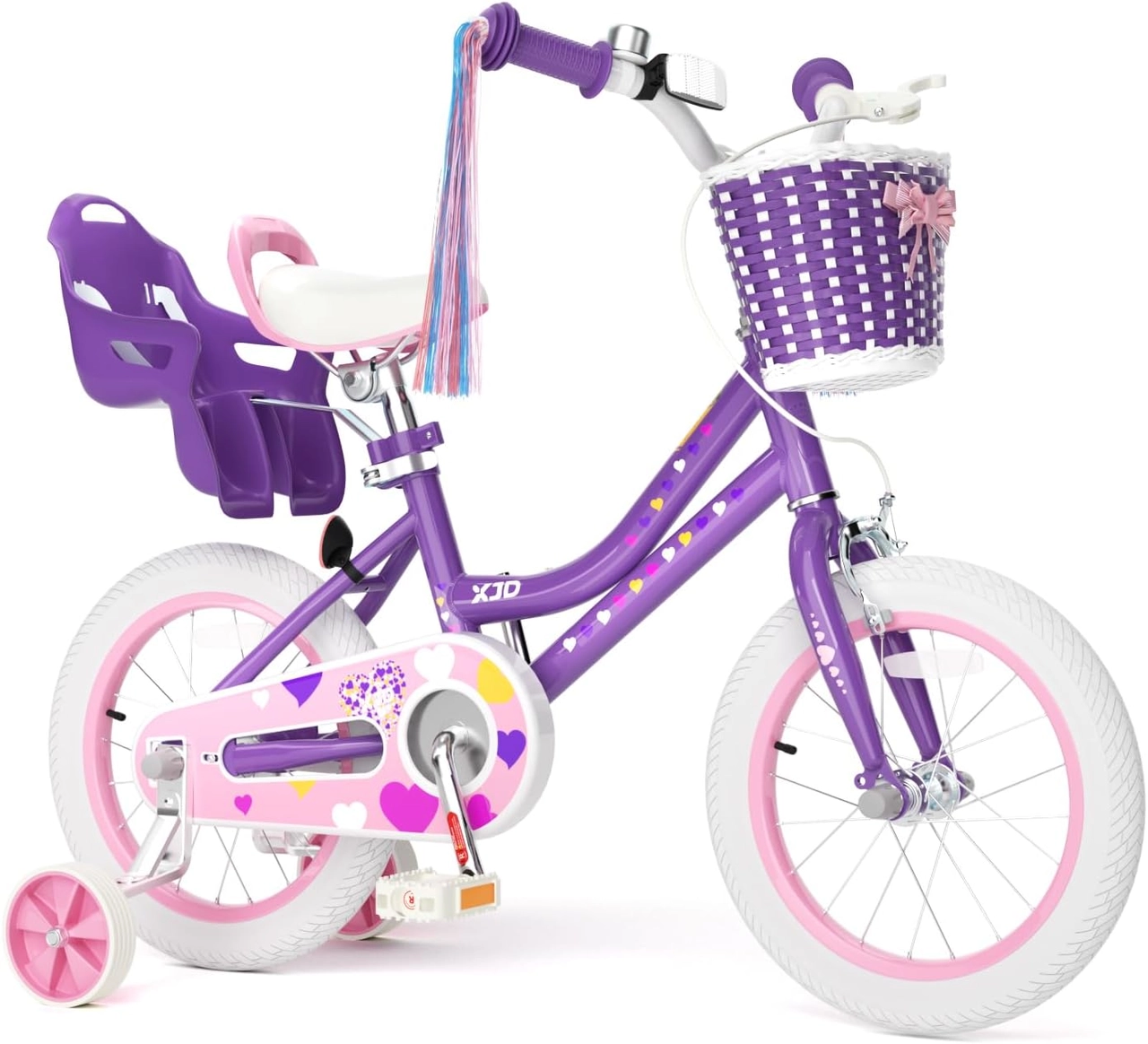 XJD Light Purple Girls Bike with Basket, Training Wheels, 12/14/16/20 Inch
This basket-equipped training-wheel bike has supplied available SKU labels of 12 Inch, 14 Inch and 16 Inch. Although its exact title mentions 20 Inch, no 20 Inch available SKU label was supplied.
The age wording in a product title is a catalog label, not fit evidence. Also, although the third product’s exact title includes “20 Inch,” its supplied available SKU labels are only 12 Inch, 14 Inch and 16 Inch. Do not assume a 20 Inch option is available without verified catalog information.
When these products are not the answer
These choices are not relevant if the child’s measurements and hands-on fit check point outside 12, 14 or 16 inches, or if the child already rides confidently without training wheels and needs a different configuration. They are also not substitutes for checking stand-over clearance, reach and brake operation on the exact bike.
For training-wheel adjustment, removal, assembly, compatibility, load limits or torque, follow the exact product manual or ask a qualified bicycle mechanic. An incorrect setup can make a readiness judgment misleading because the child may be compensating for the equipment rather than showing their actual balance skills.
Make the next decision
Measure height and inseam today, compare height with the wheel-size table, and have the child try the correctly sized bicycle. Keep the training wheels if balance or control remains inconsistent; plan a closely supervised two-wheel trial when the child can steer, brake and stop calmly without relying on them.
Recommended products
-
Save 11%
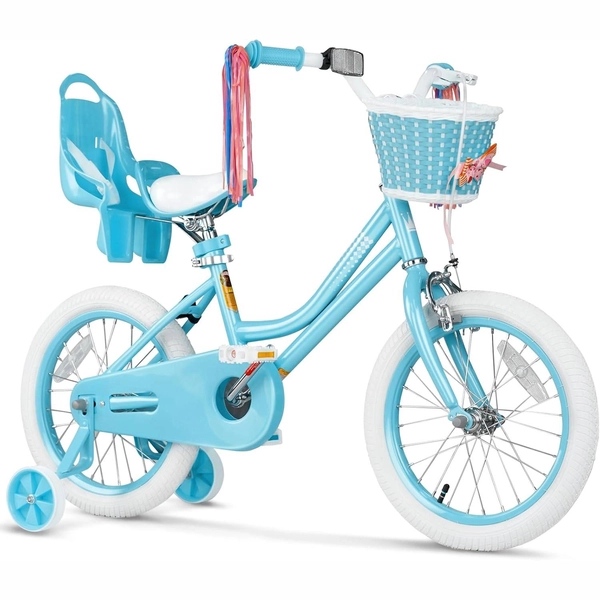
Blue XJD Girls Bike with Training Wheels – 12/14/16 Inch
If you're shopping for a first pedal bike for a daughter roughly 3 to 8 years ol…
Training Wheel Bikes Wheel Size 12 Inch / 14 Inch / 16 Inch Recommended Height 86–122 cm Training Wheels Yes 16 Inch -
Save 16%
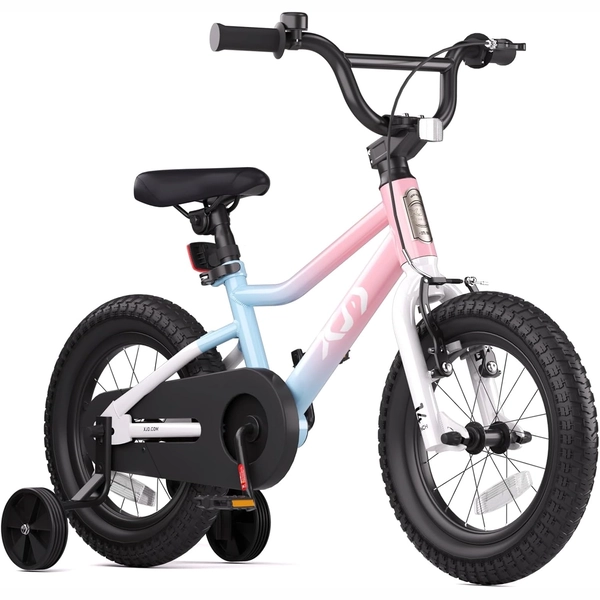
XJD Girls BMX Bike 12/14/16 Inch with Training Wheels – Pink Blue
The XJD Girls BMX Bike in Pink/Blue is built as a first pedal bike for kids roug…
Kids' BMX Bikes Wheel Size 12 Inch / 14 Inch / 16 Inch Recommended Height 86–122 cm Training Wheels Yes Single Speed 12 Inch -
Save 5%
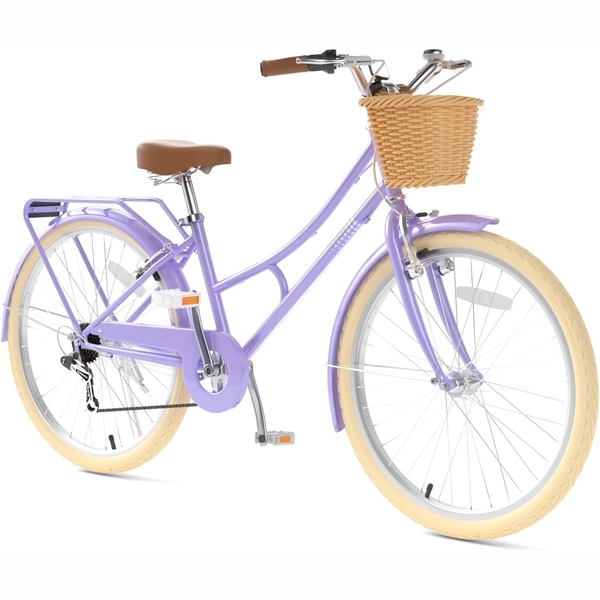
26-Inch XJD Beach Cruiser Bike for Girls – Purple, V-Brake
This XJD 26-inch purple beach cruiser is sized for big kids and teens — suggeste…
Beach Cruiser Bikes Wheel Size 20 Inch / 24 Inch / 26 Inch Recommended Height 122–200 cm Training Wheels No Geared Purple / 26 Inch -
Save 14%
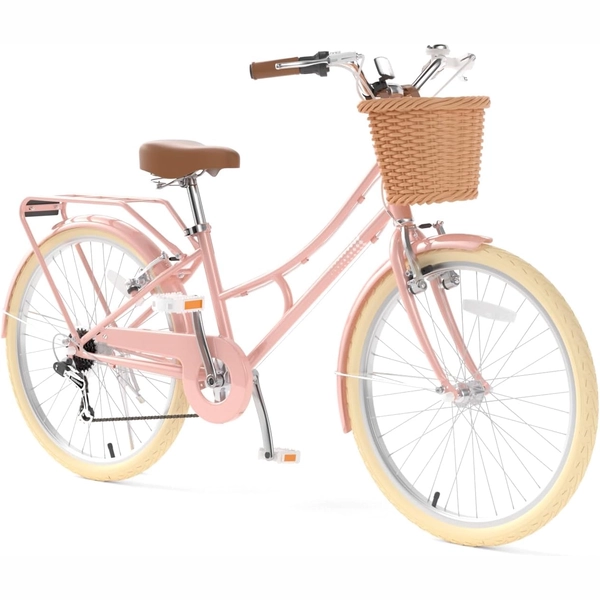
XJD Pink Beach Cruiser for Girls – Rear Rack & V-Brake
The XJD Pink Beach Cruiser for girls is the step-up bike for riders who've outgr…
Beach Cruiser Bikes Wheel Size 20 Inch / 24 Inch / 26 Inch Recommended Height 122–200 cm Training Wheels No Geared 20 Inch