How old do kids ride a bike without training wheels
Most children ride without training wheels between ages 4 and 7, but readiness matters more than age. Check fit, balance, braking and confidence first.
Age is only a starting point
There is no single correct age for removing training wheels. Some children are ready earlier than 4; others need them beyond 7. A child is more likely to succeed when the bicycle fits now, they can balance while coasting, and they can start, steer and stop without panic.
Do not move a child to a larger bicycle simply because of age or expected growth. The American Academy of Pediatrics advises having the child try the bicycle and checking stand-over clearance, control and brake reach. A too-large bicycle can make learning harder because mounting, stopping and catching a wobble become more difficult.
Measure before deciding
Measure the child’s height without shoes, then measure inseam from the floor to the crotch. Compare height with the XBikes starting points below, but confirm the individual fit on the actual bicycle.
| Wheel size | Starting age | Rider height |
|---|---|---|
| 12 Inch | 3–4 | 34–40 in / 86–102 cm |
| 14 Inch | 3–6 | 37–45 in / 94–114 cm |
| 16 Inch | 4–7 | 40–48 in / 102–122 cm |
| 18 Inch | 5–9 | 43–52 in / 109–132 cm |
| 20 Inch | 7–12 | 48–60 in / 122–152 cm |
| 24 Inch | 10–14 | 54–64 in / 137–163 cm |
| 26 Inch | Youth and adults | Over 60 in / 153 cm |
These overlapping ranges are screening points, not a guarantee. On the bicycle, check that the child can stand over it comfortably, reach the controls without stretching, turn the handlebar while remaining balanced and operate the brakes reliably. Their current confidence should also influence the decision.
Signs a child is ready
Training wheels can come off when the child consistently demonstrates the underlying skills rather than merely reaching a birthday. Look for all of the following:
- They can sit comfortably and reach the handlebar and controls.
- They can coast and keep the bicycle upright without leaning on the training wheels.
- They steer around gentle turns while looking ahead.
- They start with limited assistance and stop when asked.
- They understand how their bicycle’s brakes work and can use them under control.
- They want to try and can follow simple practice instructions.
If the child depends heavily on one training wheel, cannot brake predictably or is frightened by brief periods of balancing, keep practicing. Waiting is preferable to turning the change into a test they feel pressured to pass.
How to make the transition
- Choose a flat, open area away from traffic, obstacles and steep slopes.
- Confirm the bicycle fits and is assembled and maintained according to its exact product manual. Ask a qualified bicycle mechanic when setup or mechanical condition is uncertain.
- Use short sessions to practise looking ahead, smooth steering and controlled stopping.
- Let the child rehearse balance through brief coasting runs, with close adult supervision.
- Remove the training wheels only when balance and braking are repeatable. Follow the product manual or use a qualified mechanic; compatibility and procedures vary.
- Support the child lightly at first, then release gradually without surprising them.
A properly fitted bicycle helmet is essential for every session. The U.S. Consumer Product Safety Commission advises that it sit level, fit properly and have its straps adjusted according to the helmet manufacturer’s instructions.
How the supplied bicycles compare
The two catalog options are relevant because both offer multiple wheel-size labels within the common learning years and are listed as training-wheel bicycles. They let you compare the child’s measured height with available sizes before arranging an individual fit check.
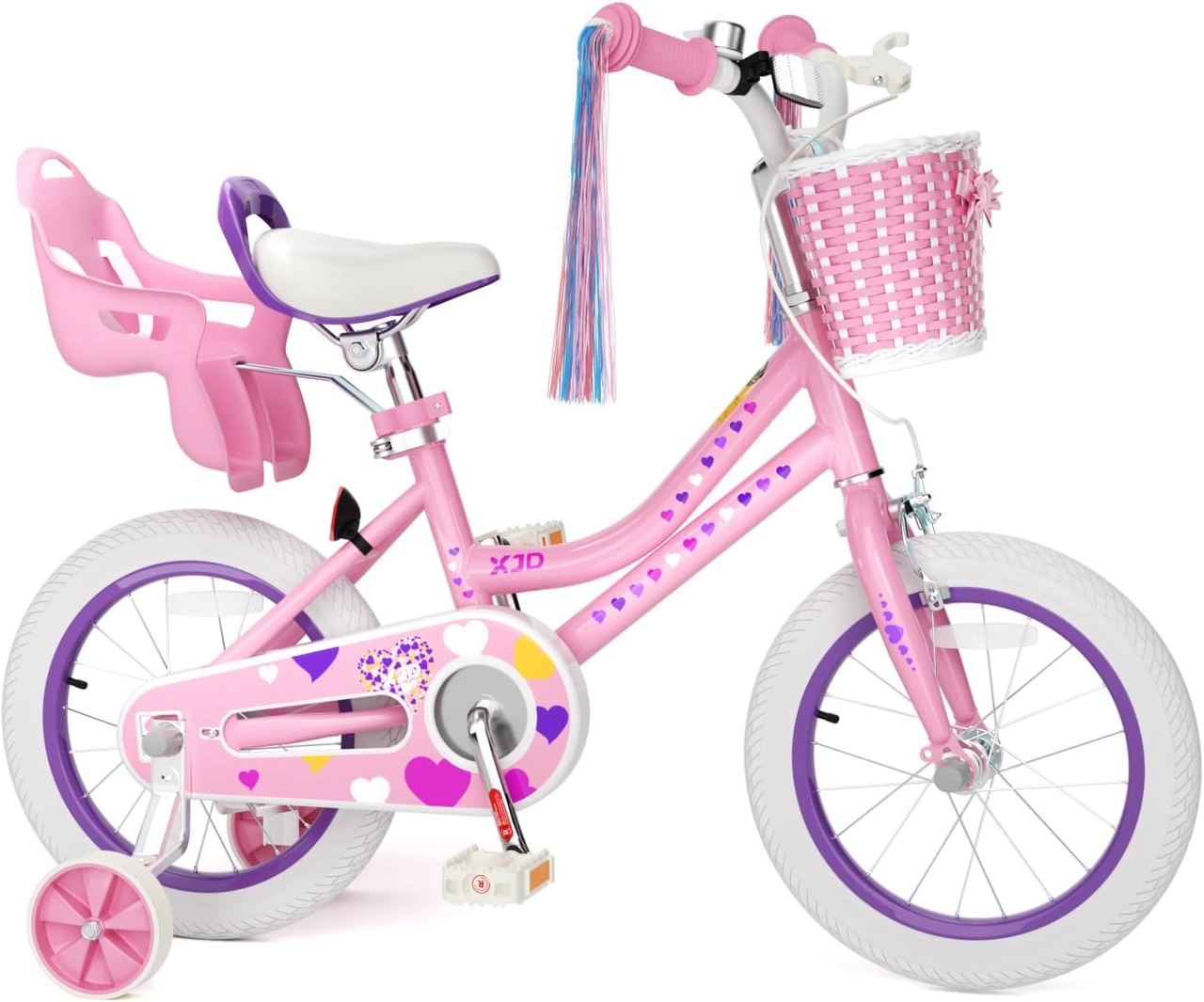 Pink Girls' 12/14/16" Bike by XJD – Basket & Doll Seat
Available in 12 Inch, 14 Inch and 16 Inch labels, this training-wheel bicycle provides three size comparison points for children within overlapping XBikes height ranges. Confirm stand-over, reach, braking and confidence on the exact size.
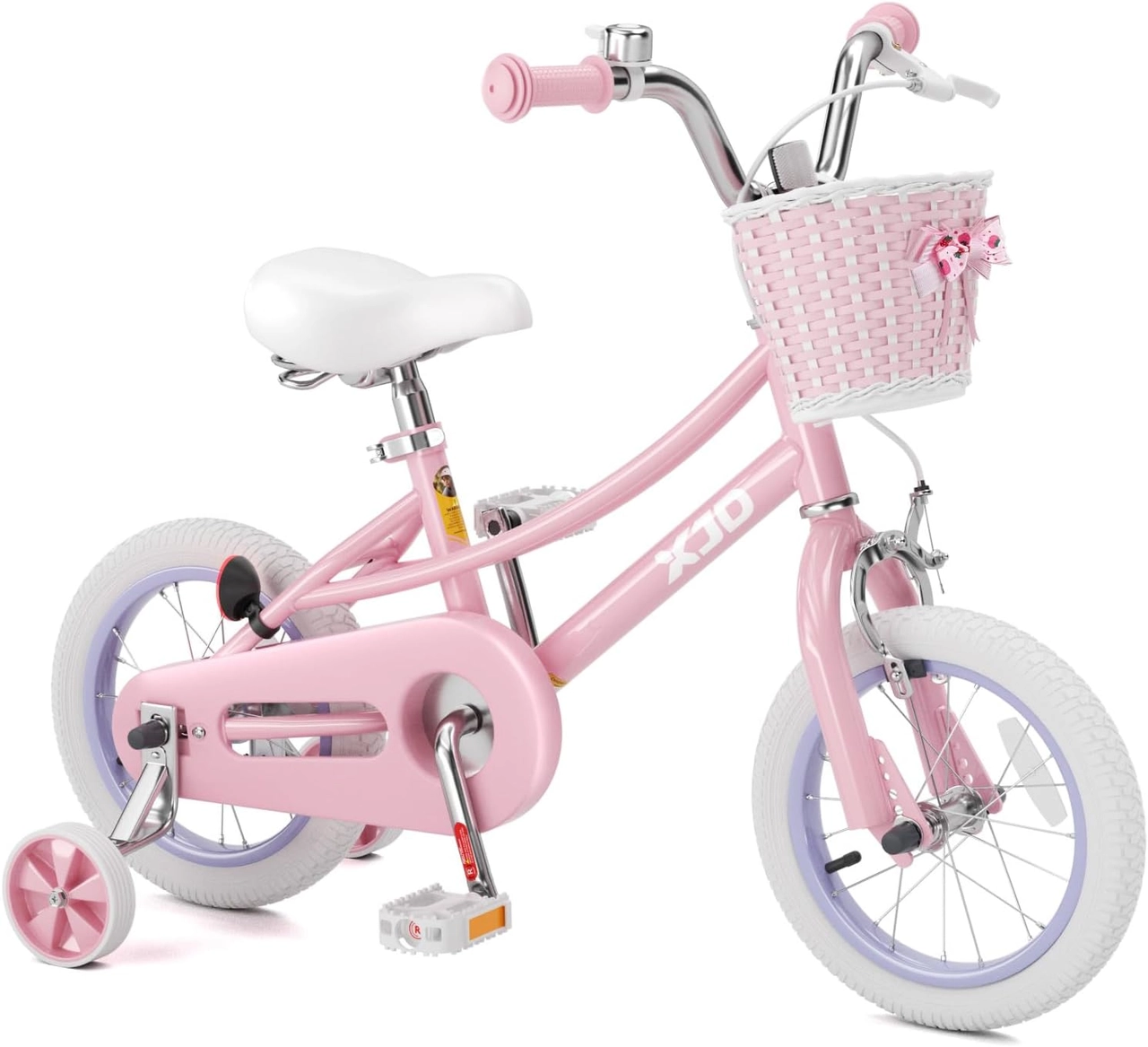 Pink 12/14/16/20" XJD Girls Bike with Training Wheels & Basket
This training-wheel bicycle offers 12 Inch, 14 Inch, 16 Inch and 20 Inch labels. The broader size selection supports comparison by measured height, but each option still requires an individual fit and control check.
Pink Girls' 12/14/16" Bike by XJD – Basket & Doll Seat is offered in 12 Inch, 14 Inch and 16 Inch labels. Those sizes cover overlapping XBikes starting points from ages 3–7 and heights 34–48 inches / 86–122 cm; select by measured fit, not the combined span.
Pink 12/14/16/20" XJD Girls Bike with Training Wheels & Basket offers 12 Inch, 14 Inch, 16 Inch and 20 Inch labels. Its additional 20 Inch option has an XBikes starting point of ages 7–12 and 48–60 inches / 122–152 cm. That does not make 20 Inch equivalent to a smaller size, and it does not prove readiness to ride without training wheels.
Neither title supplies enough information to judge reach, brake control, assembly details or training-wheel removal procedures. Have the child try the exact size and consult its manual or a qualified bicycle mechanic for setup and compatibility.
Make the decision from the child, not the calendar
If the bicycle fits now and the child can balance, steer, brake and stop confidently, try a supervised session without training wheels. If any one of those checks fails, keep practising on the correctly fitted bicycle and reassess later—the child’s demonstrated control, not a particular birthday, determines the right time.
Recommended products
-
Save 12%
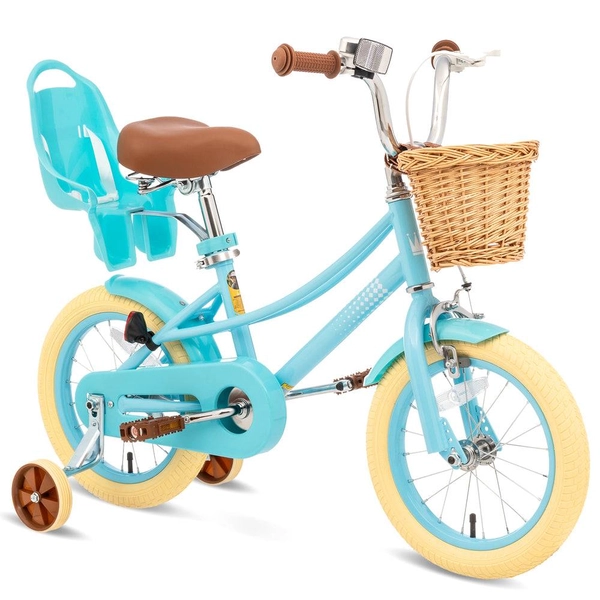
Girls' Training Wheel Bike by XJD, 12–20 Inch Wheels – Blue
This XJD girls' training wheel bike in Blue covers one of the widest fit ranges …
Training Wheel Bikes Wheel Size 12 Inch / 14 Inch / 16 Inch / 20 Inch Recommended Height 86–152 cm Training Wheels Yes 12 Inch -
Save 15%
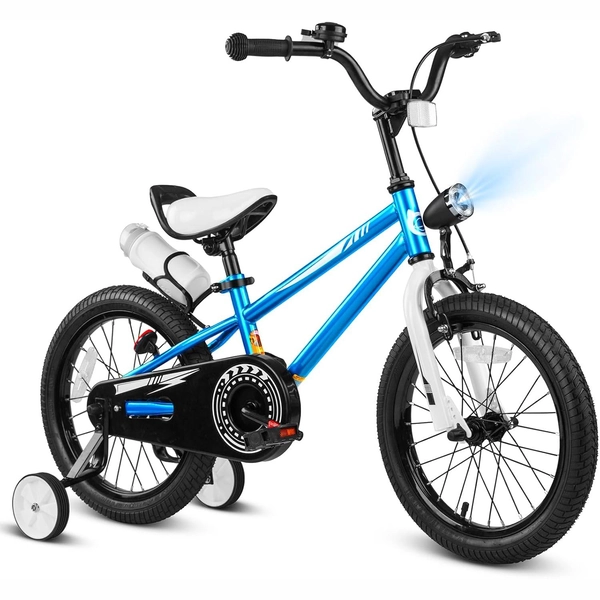
XJD Boys 12/14/16" Training Wheel Bike – Blue
The XJD Boys Bike in Blue is a training wheel bike for riders 71–122 cm tall—rou…
Training Wheel Bikes Wheel Size 12 Inch / 14 Inch / 16 Inch Recommended Height 86–122 cm Training Wheels Yes 16 Inch -
Save 15%
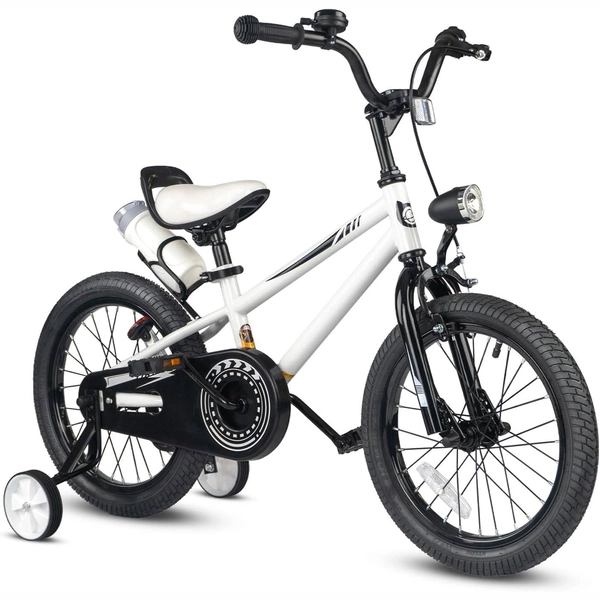
XJD Kids' Training Wheel Bike for Boys & Girls, 12/14/16 Inch – White
The XJD kids' training wheel bike in White is made for riders ages 3–8 (roughly …
Training Wheel Bikes Wheel Size 12 Inch / 14 Inch / 16 Inch Recommended Height 86–122 cm Training Wheels Yes 14 Inch -
Save 12%
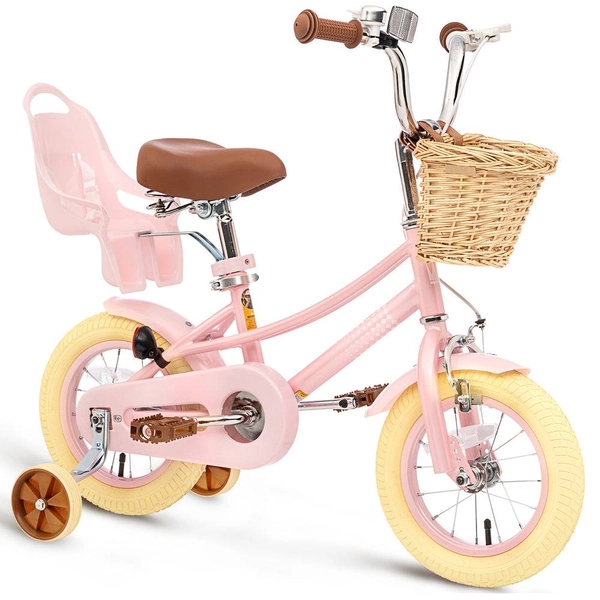
XJD Kids Bike for Girls – Pink, 12/14/16/20 Inch with Training Wheels
The XJD Kids Bike for Girls in Pink is a training-wheel bike built to carry your…
Training Wheel Bikes Wheel Size 12 Inch / 14 Inch / 16 Inch / 20 Inch Recommended Height 86–152 cm Training Wheels Yes 12 Inch