How to teach kid to ride bike with training wheels
Teach a child to ride with training wheels by choosing a bike that fits now, checking helmet and brake control, then practicing starting, steering, braking and looking ahead in a quiet, open area.
Measure the rider before choosing the bike
Measure the child’s standing height without shoes. Also check inseam, because the rider needs comfortable stand-over clearance rather than a frame that presses against the body. Height gives you a wheel-size starting point; it does not confirm that a particular bicycle fits.
Have the child try the bike. Check that they can get on and off without struggling, reach the handlebar without stretching, turn it while remaining balanced, and operate the brakes confidently. The American Academy of Pediatrics advises against buying an oversized bicycle for a child to grow into.
| Wheel size | Age starting point | Rider-height starting point |
|---|---|---|
| 12 Inch | 3–4 | 34–40 in / 86–102 cm |
| 14 Inch | 3–6 | 37–45 in / 94–114 cm |
| 16 Inch | 4–7 | 40–48 in / 102–122 cm |
| 18 Inch | 5–9 | 43–52 in / 109–132 cm |
| 20 Inch | 7–12 | 48–60 in / 122–152 cm |
| 24 Inch | 10–14 | 54–64 in / 137–163 cm |
| 26 Inch | Youth and adults | Over 60 in / 153 cm |
Where ranges overlap, choose by measured fit, reach, brake control and confidence—not age alone. A smaller, manageable bike is more useful for learning than a larger bike the child cannot control.
Prepare the bike and riding area
Complete assembly and training-wheel adjustment exactly as directed by the product manual. If instructions are missing, unclear or the bicycle feels unstable, use a qualified bicycle mechanic. Do not guess at compatibility, fastener torque or a replacement-part procedure.
Before each lesson, confirm that the wheels rotate normally, the handlebar and saddle do not move unexpectedly, and the brakes respond. Choose a flat, spacious area away from traffic, parked vehicles, steep slopes and obstacles. An attentive adult should stay close enough to intervene without constantly steering for the child.
Use a bicycle helmet that fits properly, sits level and has straps positioned according to its manufacturer’s instructions, consistent with U.S. Consumer Product Safety Commission guidance. Closed-toe shoes and clothing that cannot catch in moving parts are sensible practice choices.
Teach one control at a time
- Mount and settle: Let the child practice getting onto the saddle, placing feet on the pedals and holding the handlebar without rushing.
- Start: Position one pedal where the child can press it forward firmly. Support the child lightly at the torso or back of the saddle rather than pulling the handlebar.
- Look and steer: Ask the rider to look toward an open destination, keep both hands on the handlebar and make gradual turns.
- Pedal steadily: Encourage smooth, continuous pedaling. Avoid pushing the bike faster than the child chooses.
- Brake and stop: Practice controlled stops repeatedly, including placing a foot down after stopping. The child should be able to reach and use the bike’s brakes reliably before riding farther.
Keep early sessions short enough that attention and confidence remain intact. Stop after repeated loss of control, fear or fatigue; another calm attempt is more productive than forcing progress.
Use training wheels as a learning stage
Training wheels support the bicycle while the child learns pedaling, steering and braking, but they do not teach full two-wheel balance. Watch whether the child can start without being pushed, follow a broad path, turn both directions, stop on request and remain calm when the bike shifts slightly.
Do not raise or remove training wheels according to age or a deadline. Follow the bicycle’s exact manual for permitted adjustments. A mechanic should handle the change if the instructions or condition of the hardware are uncertain.
Compare the supplied XBikes options
These particular Training Wheel Bikes help answer the sizing decision because their available labels cover 12, 14, 16 and 20 Inch choices. Compare only a label that matches the rider’s measured starting range, then verify stand-over, reach and brake control on the actual bike.
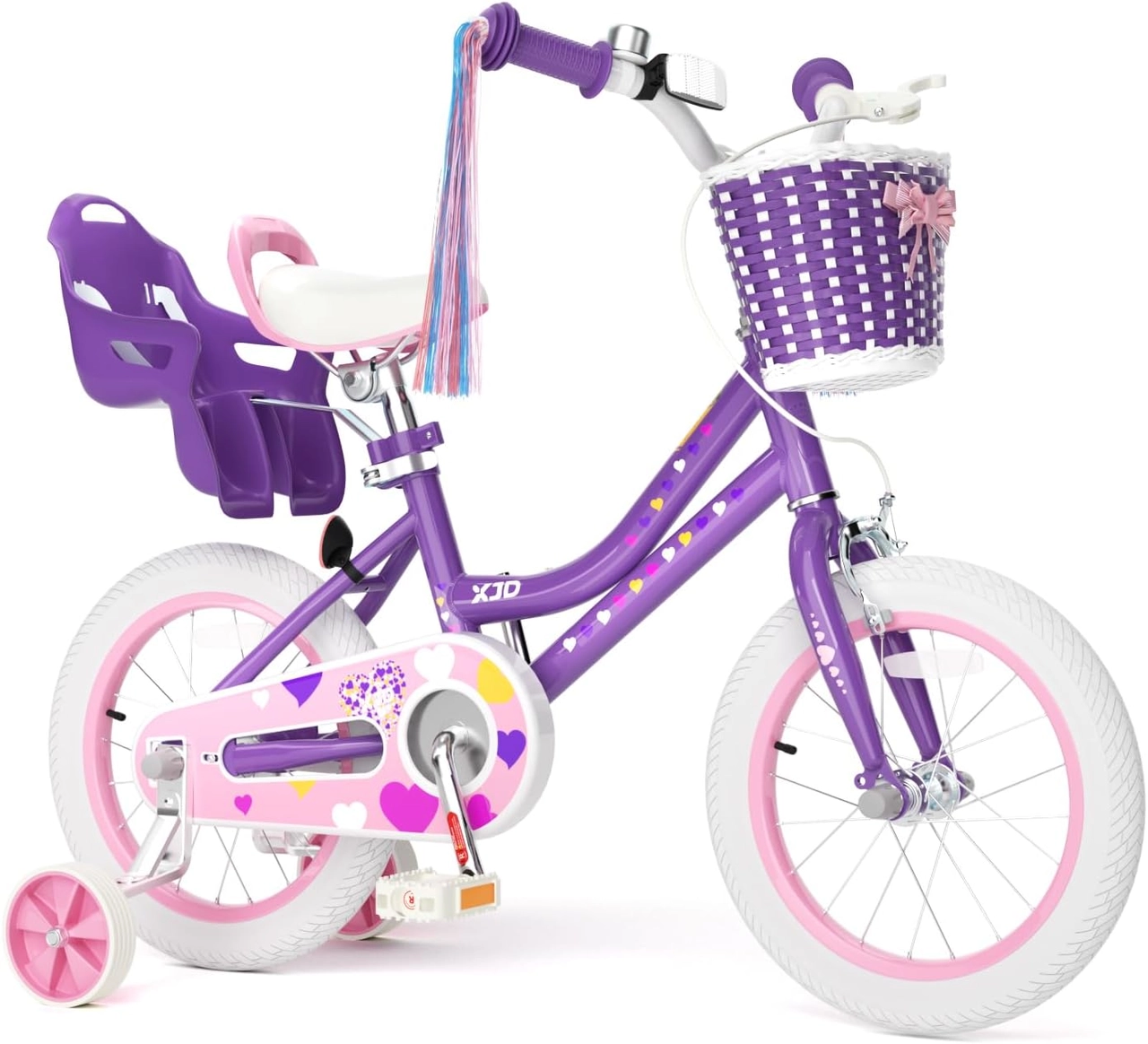 XJD Light Purple Girls Bike with Basket, Training Wheels, 12/14/16/20 Inch
Offers available 12, 14 and 16 Inch SKU labels for comparison against the rider’s measured height and individual fit check; its title also identifies a basket and training wheels.
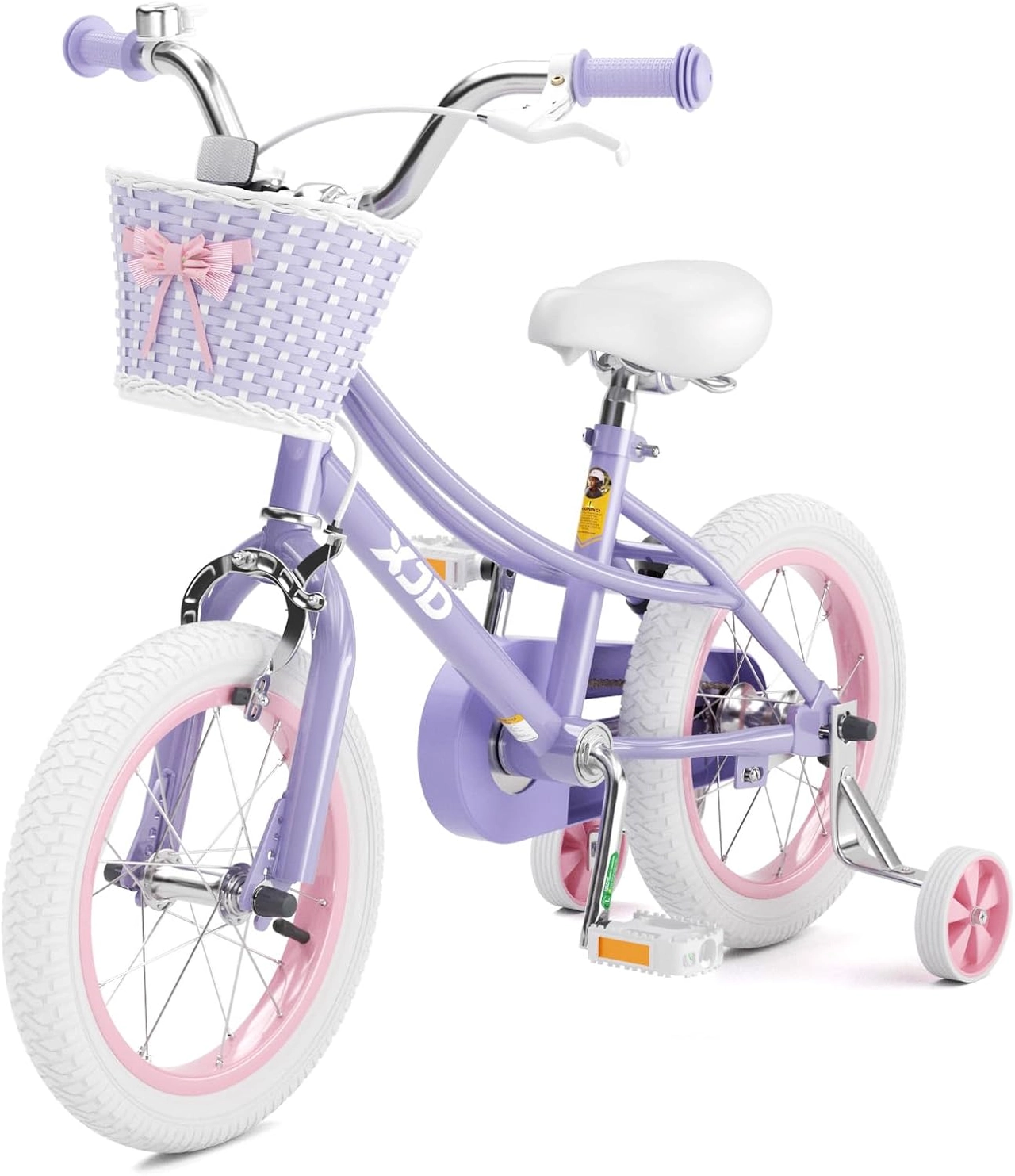 Girls' Training Wheel Bike by XJD with Basket – Purple
Relevant for riders whose measurements point toward its available 14, 16 or 20 Inch SKU labels, subject to stand-over, reach, brake control and confidence checks.
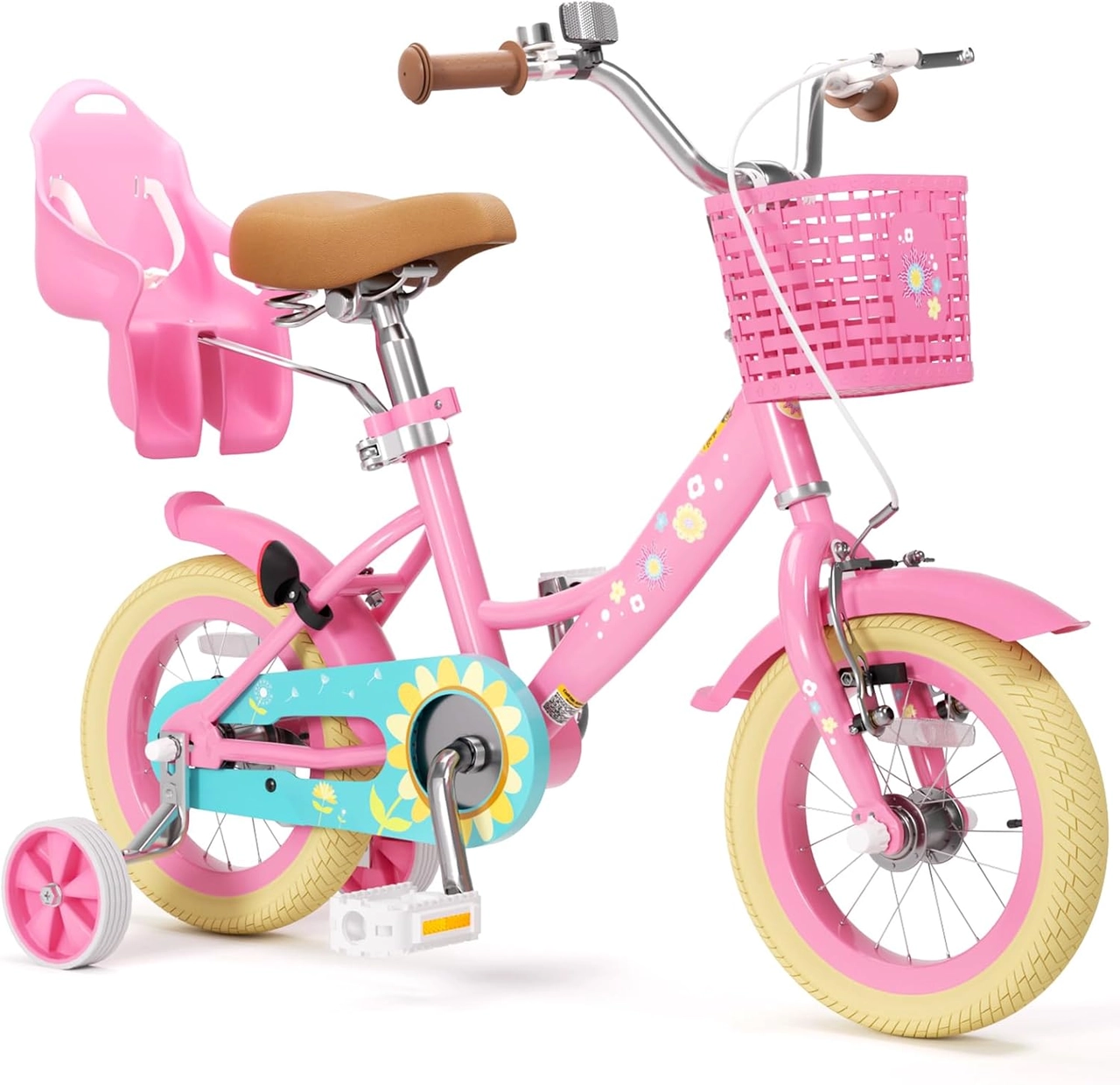 Flower Pink XJD Girls Bike with Doll Seat & Basket
Provides available 12, 14 and 16 Inch SKU labels. Its title identifies a doll seat and basket, while actual bicycle fit still requires an individual try-on and control check.
- XJD Light Purple Girls Bike with Basket, Training Wheels, 12/14/16/20 Inch has available 12, 14 and 16 Inch SKU labels.
- Girls' Training Wheel Bike by XJD with Basket – Purple has available 14, 16 and 20 Inch SKU labels.
- Flower Pink XJD Girls Bike with Doll Seat & Basket has available 12, 14 and 16 Inch SKU labels.
The listed differences establish wheel-size availability and the accessories named in the titles; they do not establish fit, brake type, weight, materials or compatibility. None of these supplied options has an 18, 24 or 26 Inch label, so they are not substitutes if the rider’s measurement and individual fit check point to one of those sizes.
Decide what to do next
First measure height and inseam, identify the corresponding starting size, and have the child try that size. Choose only when mounting, stand-over, reach, steering and braking are manageable. Then follow the manual for assembly, fit adjustments and training wheels, and begin with starts and stops in a flat traffic-free area. Move toward two-wheel practice only when the child consistently controls the fitted bike and is willing to try.
Recommended products
-
Save 12%
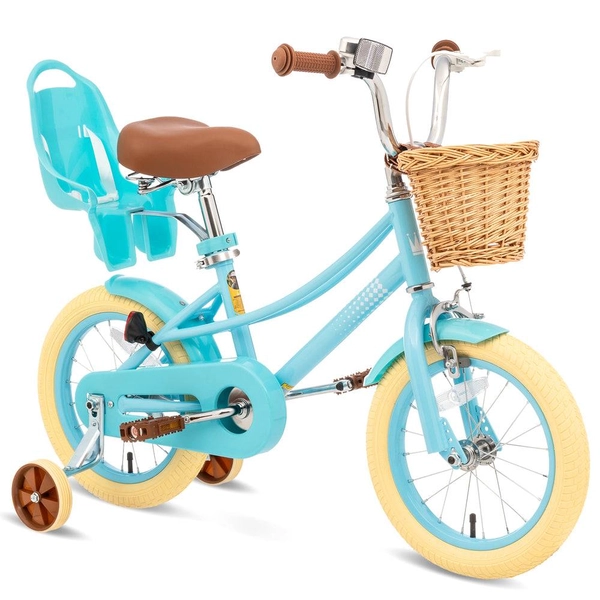
Girls' Training Wheel Bike by XJD, 12–20 Inch Wheels – Blue
This XJD girls' training wheel bike in Blue covers one of the widest fit ranges …
Training Wheel Bikes Wheel Size 12 Inch / 14 Inch / 16 Inch / 20 Inch Recommended Height 86–152 cm Training Wheels Yes 12 Inch -
Save 15%
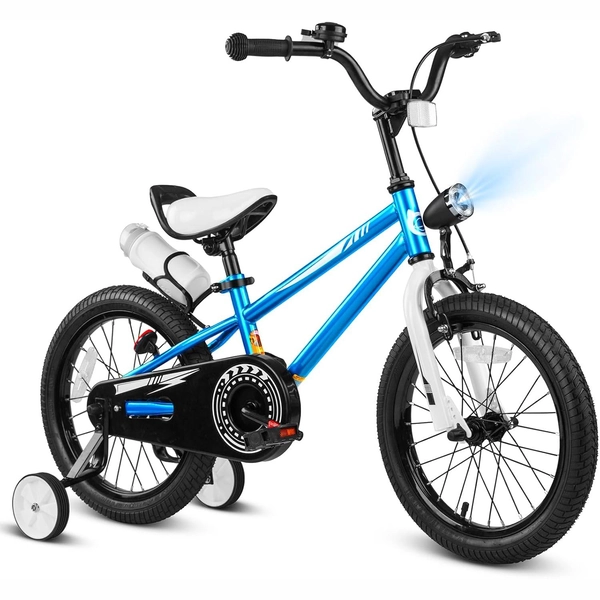
XJD Boys 12/14/16" Training Wheel Bike – Blue
The XJD Boys Bike in Blue is a training wheel bike for riders 71–122 cm tall—rou…
Training Wheel Bikes Wheel Size 12 Inch / 14 Inch / 16 Inch Recommended Height 86–122 cm Training Wheels Yes 16 Inch -
Save 15%
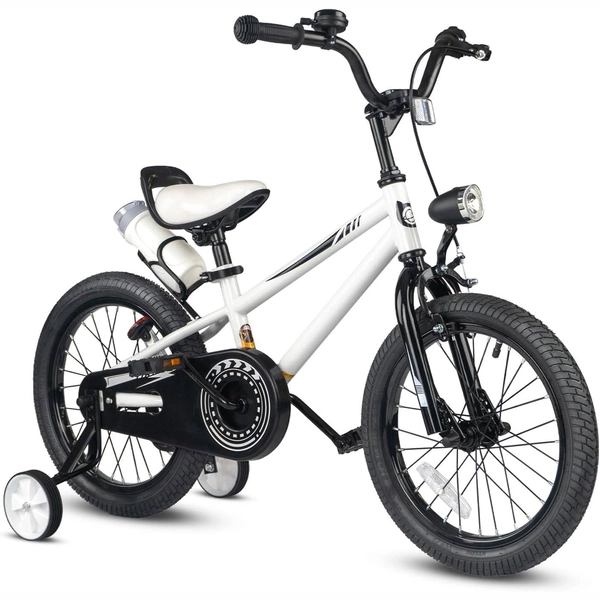
XJD Kids' Training Wheel Bike for Boys & Girls, 12/14/16 Inch – White
The XJD kids' training wheel bike in White is made for riders ages 3–8 (roughly …
Training Wheel Bikes Wheel Size 12 Inch / 14 Inch / 16 Inch Recommended Height 86–122 cm Training Wheels Yes 14 Inch -
Save 12%
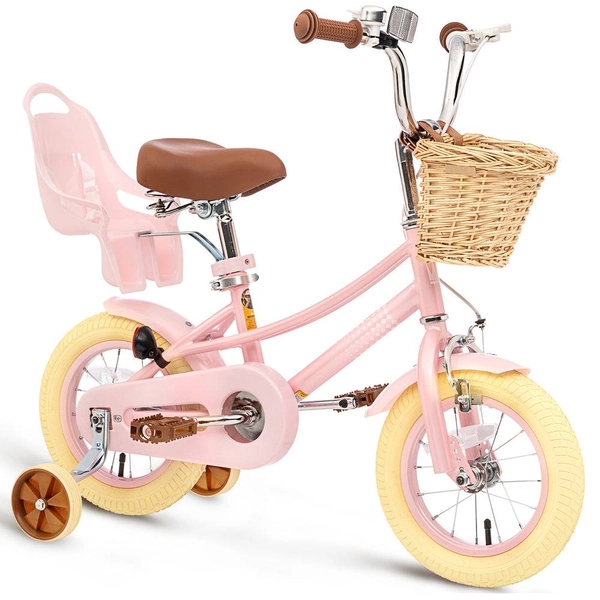
XJD Kids Bike for Girls – Pink, 12/14/16/20 Inch with Training Wheels
The XJD Kids Bike for Girls in Pink is a training-wheel bike built to carry your…
Training Wheel Bikes Wheel Size 12 Inch / 14 Inch / 16 Inch / 20 Inch Recommended Height 86–152 cm Training Wheels Yes 12 Inch