What age do kids ride a bike with training wheels
There is no single correct age for training wheels. XBikes uses ages 3–4 for 12-inch, 3–6 for 14-inch, and 4–7 for 16-inch bikes as starting points, but your child’s measured fit and control matter more than age.
What age is appropriate?
A child may use training wheels when they are ready to pedal and steer but do not yet have enough confidence or balance for two wheels. Training wheels are a temporary support, not a milestone that must begin or end on a particular birthday.
Age can narrow the initial wheel-size search, but it cannot confirm fit. A younger child may be tall enough for a larger wheel, while an older child may need a smaller option for comfortable control. Do not choose an oversized bicycle merely to allow room for growth.
Measure before comparing sizes
Measure the child’s standing height without shoes. Also measure inseam from the floor to the crotch while the child stands straight with feet slightly apart. Compare height with the XBikes starting points, then have the child try the actual bicycle.
| Wheel size | Age starting point | Rider height |
|---|---|---|
| 12 Inch | 3–4 | 34–40 in / 86–102 cm |
| 14 Inch | 3–6 | 37–45 in / 94–114 cm |
| 16 Inch | 4–7 | 40–48 in / 102–122 cm |
| 18 Inch | 5–9 | 43–52 in / 109–132 cm |
| 20 Inch | 7–12 | 48–60 in / 122–152 cm |
These ranges overlap deliberately. If the child falls into two ranges, compare both bicycles in person rather than automatically selecting the larger one.
Check the bicycle with the child aboard
A height chart only identifies candidates. The American Academy of Pediatrics recommends having the child try the bicycle and checking stand-over clearance, control, and brake reach. During the fit check, confirm that the child can:
- stand over the frame without being forced onto tiptoes;
- sit in a stable position and reach the handlebars without stretching;
- turn the bars while remaining balanced and in control;
- reach and operate the bicycle’s braking controls comfortably;
- start, pedal, stop, and get off without panic or adult lifting.
Inseam, reach, brake control, and current confidence can rule out a size even when height and age fall inside its starting range. If safe adjustment or assembly is uncertain, follow the exact product manual or ask a qualified bicycle mechanic.
When training wheels still help
Keep training wheels relevant while the child can pedal and steer but still needs side-to-side support. Practice in a flat area away from traffic, obstacles, slopes, and moving vehicles. Stay close enough to intervene without steering for the child.
Readiness to remove them is behavioral: the rider starts smoothly, looks ahead, steers a chosen path, stops on request, and increasingly rides without leaning heavily onto either training wheel. Confidence counts; pressure based on age can make practice harder.
Before every ride, use a properly fitting bicycle helmet. U.S. Consumer Product Safety Commission guidance calls for the helmet to sit level and for its straps to be adjusted according to the helmet manufacturer’s instructions.
How the supplied bikes compare
The catalog choices are useful because together they provide 12-, 14-, 16-, and 20-inch comparison points across several XBikes height ranges. The XJD Light Purple Girls Bike with Basket, Training Wheels, 12/14/16/20 Inch is supplied in 12 Inch, 14 Inch, and 16 Inch SKUs. Girls' Training Wheel Bike by XJD with Basket – Purple is supplied in 14 Inch, 16 Inch, and 20 Inch SKUs.
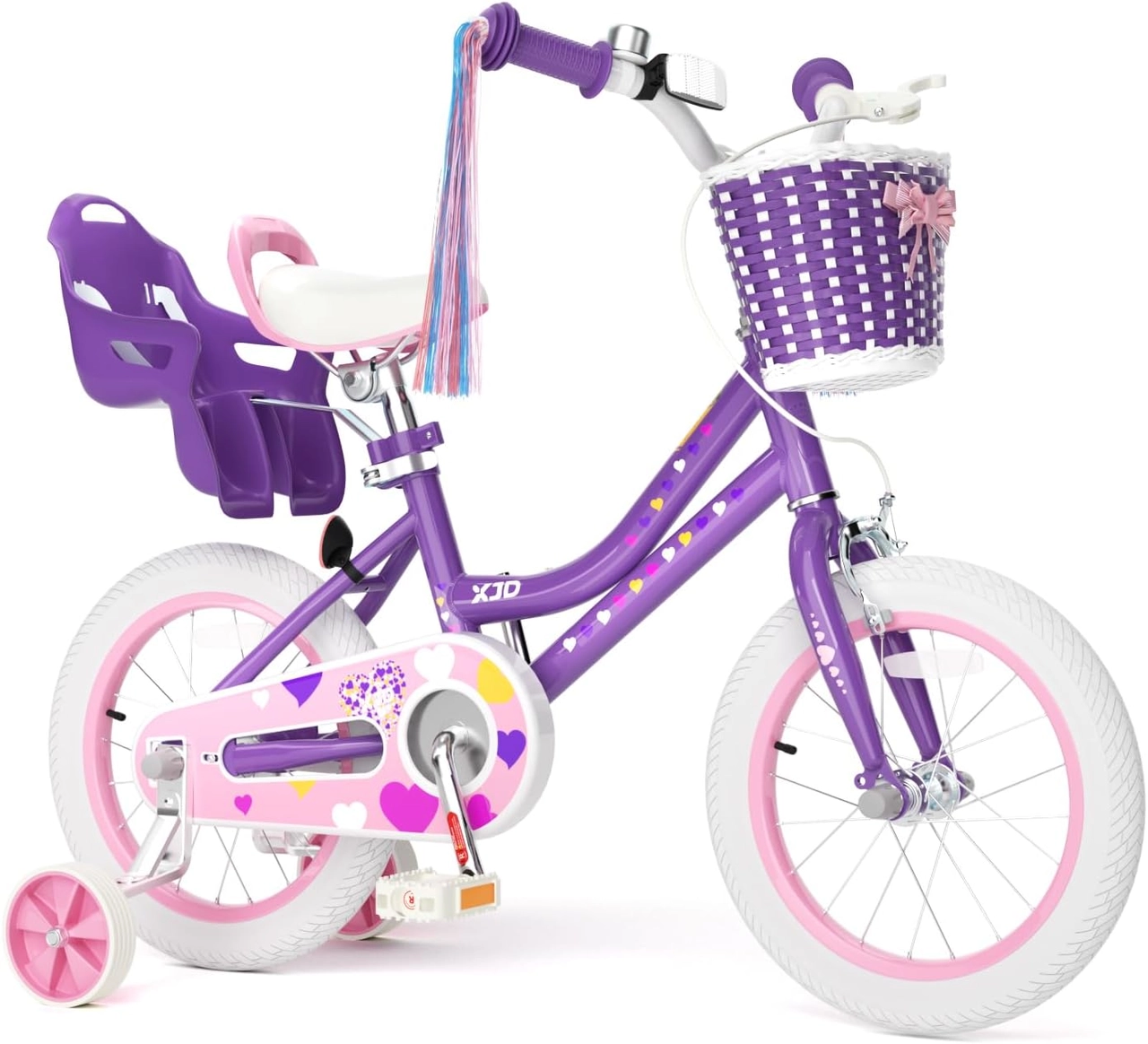 XJD Light Purple Girls Bike with Basket, Training Wheels, 12/14/16/20 Inch
Offers supplied 12 Inch, 14 Inch, and 16 Inch choices, making it relevant for comparing three XBikes height-based starting ranges after measuring the rider and checking individual fit.
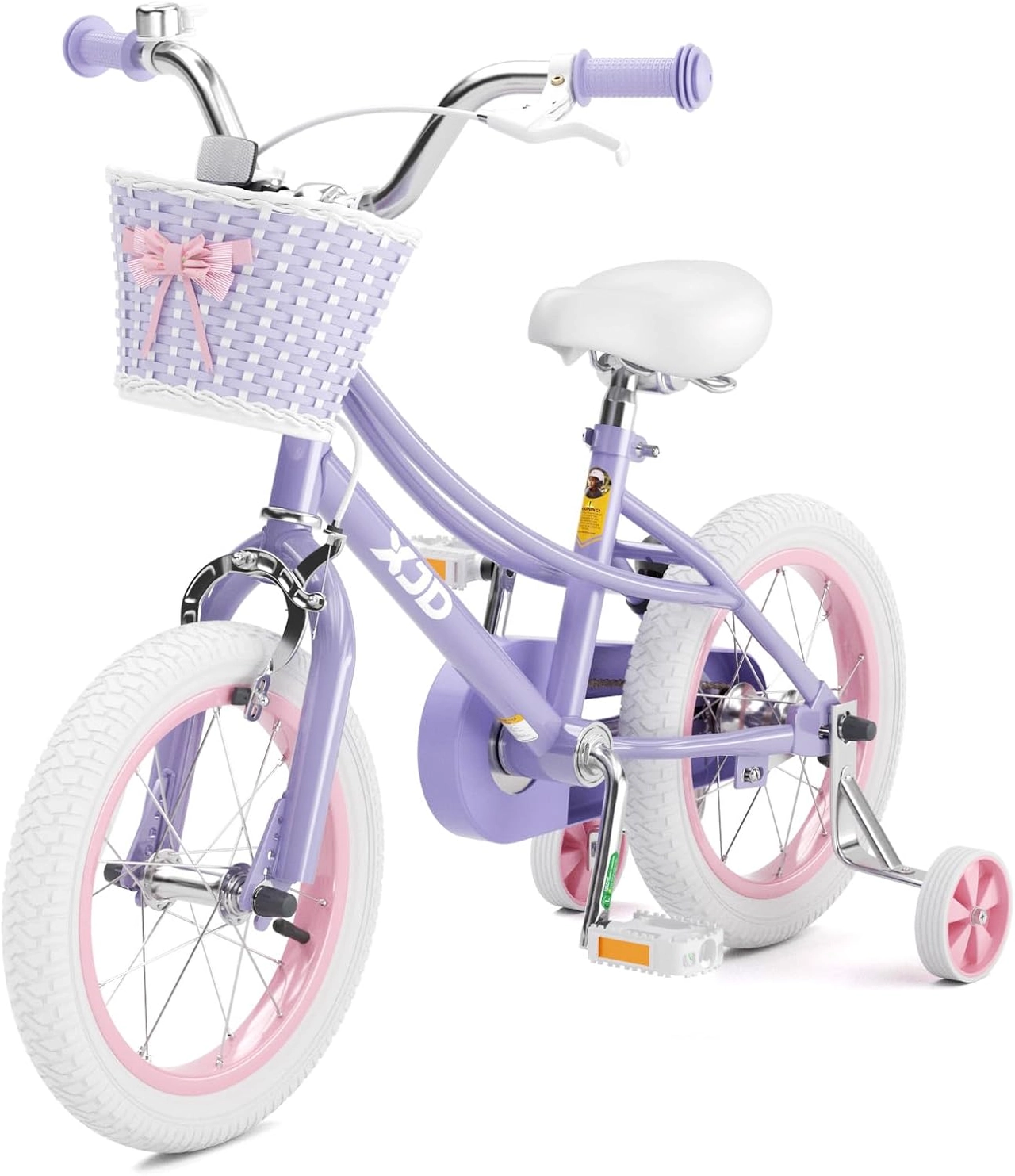 Girls' Training Wheel Bike by XJD with Basket – Purple
Offers supplied 14 Inch, 16 Inch, and 20 Inch choices, allowing comparison across overlapping XBikes age and height starting points while still requiring an individual fit and control check.
For a rider measuring 34–40 inches, the first product’s 12 Inch SKU is the catalog option aligned with that XBikes height starting point. At 37–45 inches, both products offer a 14 Inch comparison; at 40–48 inches, both offer a 16 Inch comparison. The second product also offers a 20 Inch SKU for the 48–60-inch starting range.
The products overlap at 14 and 16 inches, so the listed facts do not establish that one will fit better. Compare the child’s actual stand-over position, reach, braking control, and confidence on the exact model. No supplied 18 Inch option is available; these products are adjacent-size comparison points, not substitutes for an 18 Inch bicycle when that is the required fit.
Make the decision now
- Record the child’s height and inseam.
- Use the table to shortlist wheel sizes, prioritizing height over age.
- Try each shortlisted bicycle and reject any that compromises stand-over, reach, braking, or confident control.
- Choose training wheels only while balance support remains useful, then reassess as independent control improves.
For the question “what age do kids ride a bike with training wheels,” use age only to start the search: measure the rider, test the exact bicycle, and let fit and demonstrated confidence determine both the wheel size and when training wheels come off.
Recommended products
-
Save 11%
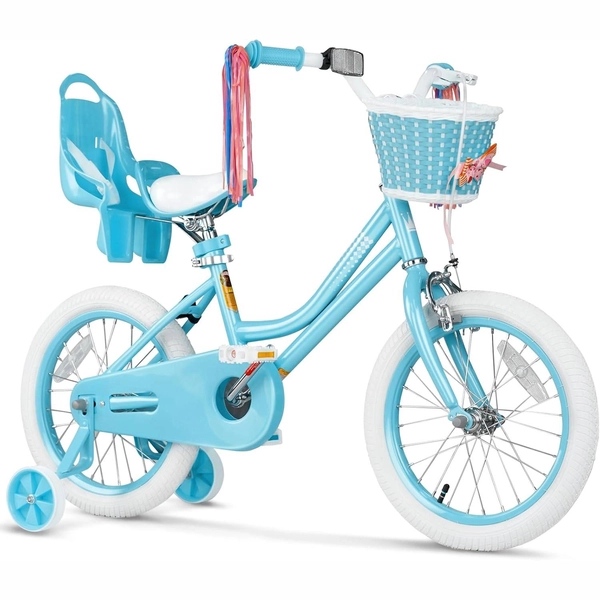
Blue XJD Girls Bike with Training Wheels – 12/14/16 Inch
If you're shopping for a first pedal bike for a daughter roughly 3 to 8 years ol…
Training Wheel Bikes Wheel Size 12 Inch / 14 Inch / 16 Inch Recommended Height 86–122 cm Training Wheels Yes 16 Inch -
Save 16%
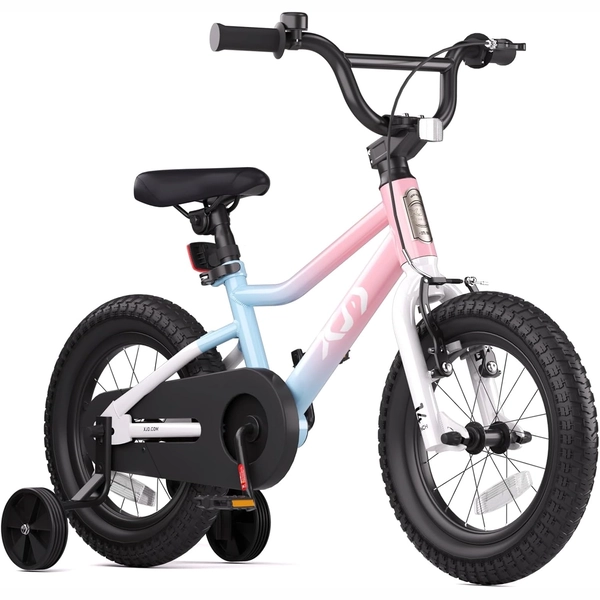
XJD Girls BMX Bike 12/14/16 Inch with Training Wheels – Pink Blue
The XJD Girls BMX Bike in Pink/Blue is built as a first pedal bike for kids roug…
Kids' BMX Bikes Wheel Size 12 Inch / 14 Inch / 16 Inch Recommended Height 86–122 cm Training Wheels Yes Single Speed 12 Inch -
Save 5%
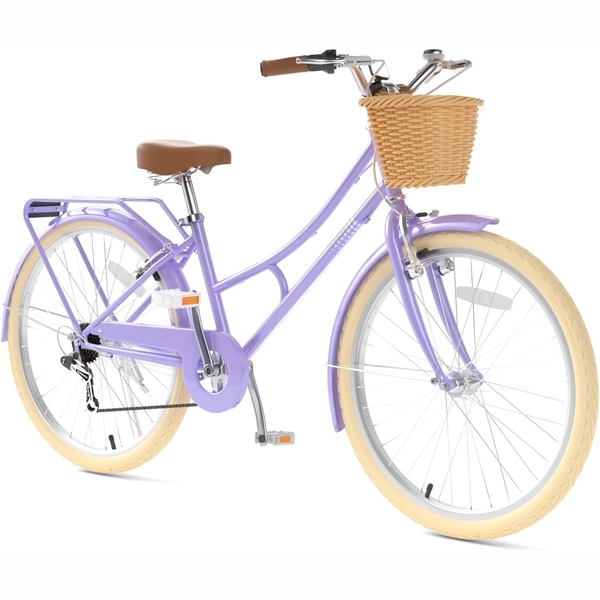
26-Inch XJD Beach Cruiser Bike for Girls – Purple, V-Brake
This XJD 26-inch purple beach cruiser is sized for big kids and teens — suggeste…
Beach Cruiser Bikes Wheel Size 20 Inch / 24 Inch / 26 Inch Recommended Height 122–200 cm Training Wheels No Geared Purple / 26 Inch -
Save 14%
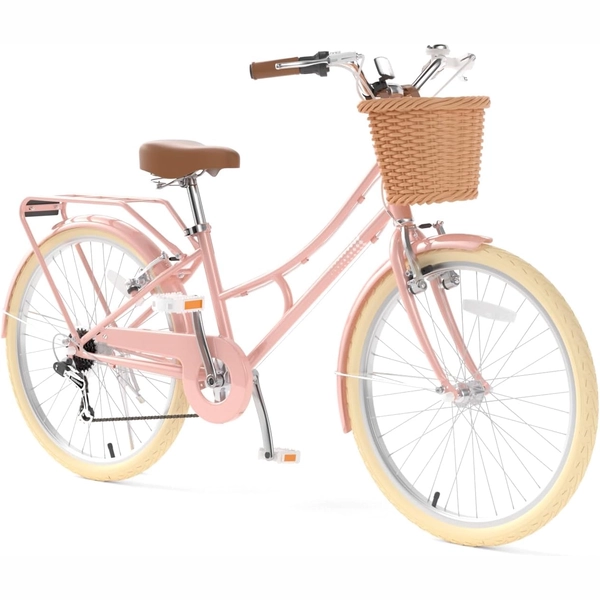
XJD Pink Beach Cruiser for Girls – Rear Rack & V-Brake
The XJD Pink Beach Cruiser for girls is the step-up bike for riders who've outgr…
Beach Cruiser Bikes Wheel Size 20 Inch / 24 Inch / 26 Inch Recommended Height 122–200 cm Training Wheels No Geared 20 Inch