What age should a child ride a bike with stabilisers
There is no single correct age for stabilisers. Many children first fit suitable 12–16 inch bikes between ages 3 and 7, but measured fit, control and confidence—not age alone—should decide.
Start with readiness, then use age as a guide
Stabilisers can be useful when a child is ready to pedal and steer but cannot yet balance confidently. Their purpose is to support early practice, not to make an unsuitable bicycle fit.
Before choosing a bike, check whether the child can follow simple instructions, look ahead while steering and remain interested without being pressured. A hesitant child may need more time; a confident child may be ready to learn without stabilisers. There is no deadline for removing them.
Measure the child before comparing wheel sizes
Measure height without shoes against a wall. Also measure inseam from the floor to the crotch while the child stands naturally. Use the height ranges below as starting points, then have the child try the actual bicycle.
| Wheel size | Starting age | Rider height |
|---|---|---|
| 12 Inch | 3–4 | 34–40 in / 86–102 cm |
| 14 Inch | 3–6 | 37–45 in / 94–114 cm |
| 16 Inch | 4–7 | 40–48 in / 102–122 cm |
| 18 Inch | 5–9 | 43–52 in / 109–132 cm |
| 20 Inch | 7–12 | 48–60 in / 122–152 cm |
Overlapping ranges are intentional: two children of the same age may need different sizes. Do not buy an oversized bike merely to allow room for growth.
Perform an individual fit check
Ask the child to stand over the bicycle and confirm that the frame does not prevent a comfortable, controlled stance. Seated, the child should be able to reach the handlebar without stretching or locking the arms.
Check that the child can operate the fitted brakes reliably. Small hands must be able to reach and control them, and the child should be able to start, stop and place a foot down without panic. Compare inseam with the bicycle’s actual stand-over and saddle adjustment information rather than inferring clearance from wheel size.
If reach, stand-over, brake access or confidence is poor, try another size or model. Follow the exact product manual for adjustment and assembly details, or ask a qualified bicycle mechanic; do not improvise settings or procedures.
When stabilisers are relevant
Stabilisers are relevant when the bike fits correctly and the remaining difficulty is balance. They are not a remedy for a frame that is too tall, controls that are out of reach or a child who is not ready to practise.
Use a flat, open area away from traffic and obstacles. Keep sessions short enough that the child can concentrate. A properly fitting bicycle helmet should sit level and be secured with its straps according to the helmet manufacturer’s instructions.
As control improves, watch for smooth steering, deliberate braking and fewer attempts to lean heavily on the stabilisers. Those signs can prompt balance practice, but removal should follow the product manual or be handled by a qualified bicycle mechanic when the correct procedure is uncertain.
How the supplied XBikes options compare
These catalog options help because both are training-wheel bicycles with several wheel-size choices, allowing parents to compare the child’s measured height with relevant starting ranges before arranging an actual fit check.
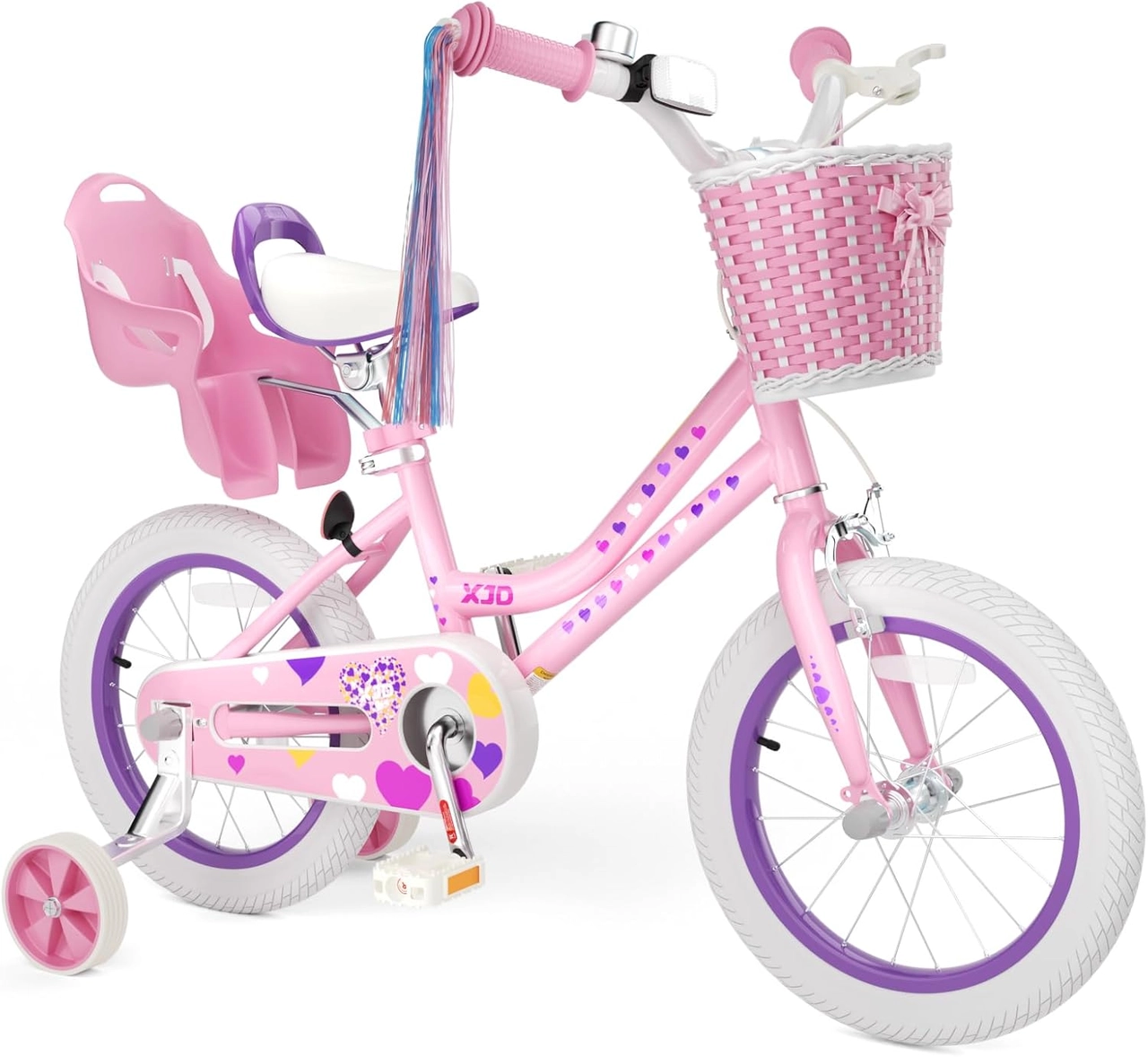 Light Pink XJD Girls' Bicycle with Basket & Training Wheels
Available in 12, 14, 16 and 20 Inch labels, this training-wheel bicycle provides several size starting points to compare with measured height before an individual fit check.
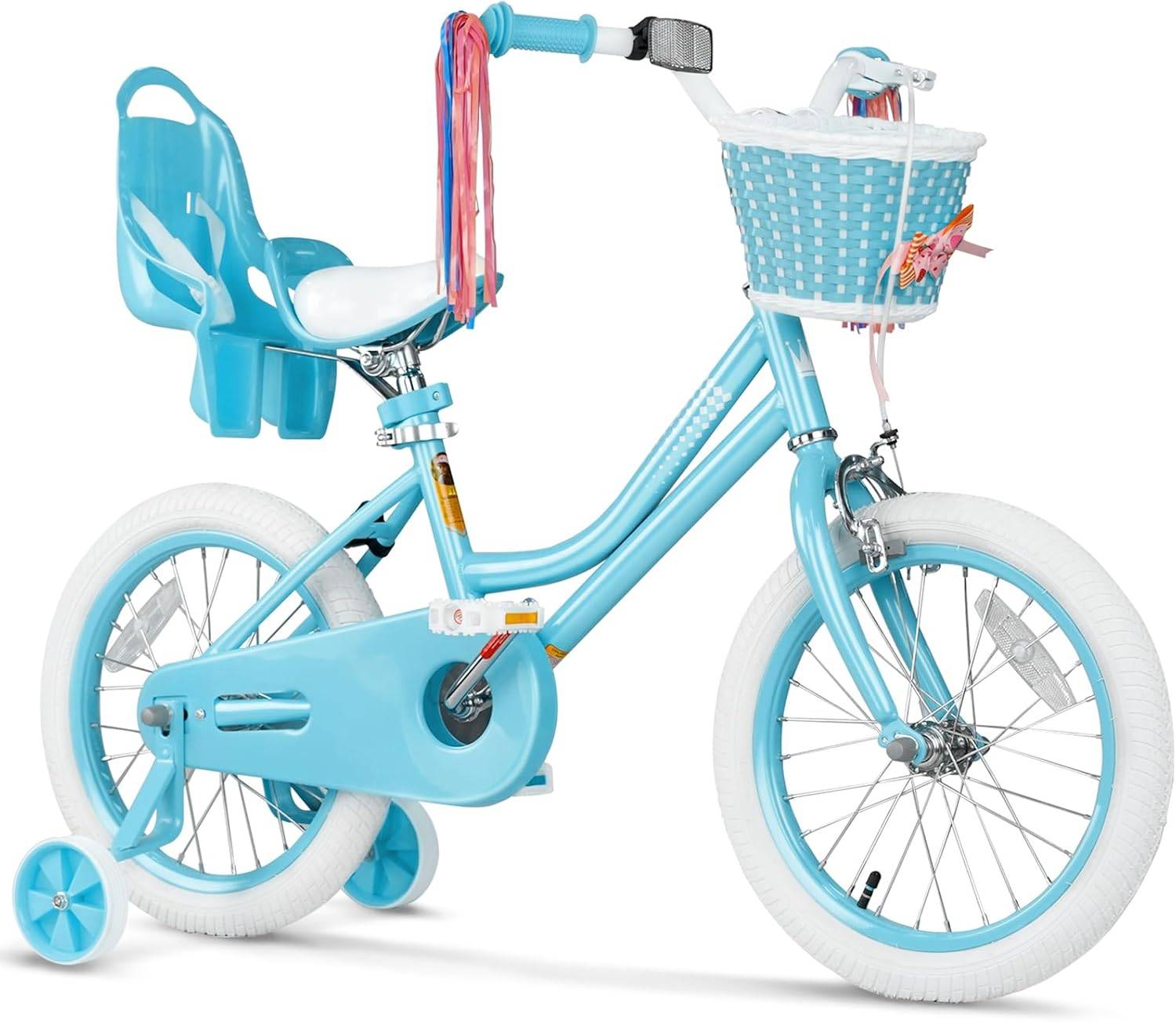 Blue XJD Girls Bike with Training Wheels – 12/14/16 Inch
Offered in 12, 14 and 16 Inch labels, this training-wheel bicycle is relevant for comparing the supplied smaller-wheel height ranges; reach, stand-over, brake control and confidence still require checking.
The Light Pink XJD Girls' Bicycle with Basket & Training Wheels is offered in 12, 14, 16 and 20 Inch labels. It therefore spans starting points from ages 3–4 and 34–40 in / 86–102 cm at 12 Inch through ages 7–12 and 48–60 in / 122–152 cm at 20 Inch.
The Blue XJD Girls Bike with Training Wheels – 12/14/16 Inch is offered in 12, 14 and 16 Inch labels. Those choices cover the supplied starting ranges associated with ages 3–7 and heights from 34–48 in / 86–122 cm, with overlap between sizes.
Those labels establish available wheel-size comparisons only. They do not prove that a particular size fits an individual child, and the age wording in a product title would not replace measurement or a trial.
Make the decision today
- Measure the child’s height and inseam.
- Shortlist the wheel-size range that includes the measured height.
- Have the child try the bicycle and check stand-over, reach, braking and confidence.
- Choose stabilisers only if the bicycle fits and balance is the remaining barrier.
If any fit or control check fails, do not rely on the child’s age or the stabilisers—compare another size and repeat the trial.
Recommended products
-
Save 12%
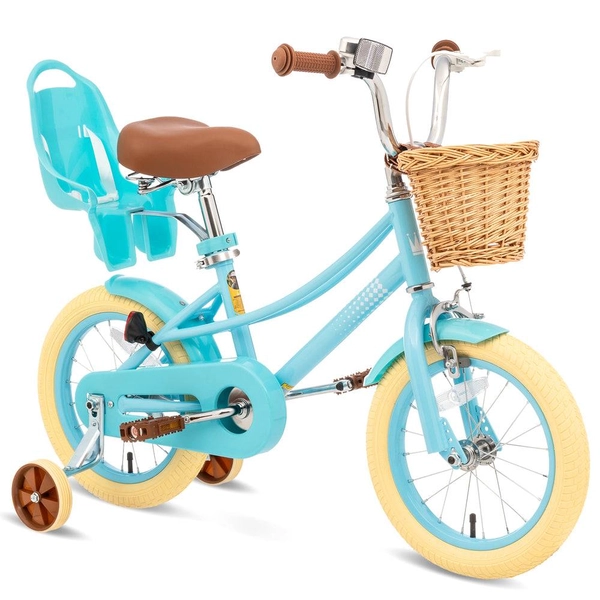
Girls' Training Wheel Bike by XJD, 12–20 Inch Wheels – Blue
This XJD girls' training wheel bike in Blue covers one of the widest fit ranges …
Training Wheel Bikes Wheel Size 12 Inch / 14 Inch / 16 Inch / 20 Inch Recommended Height 86–152 cm Training Wheels Yes 12 Inch -
Save 15%
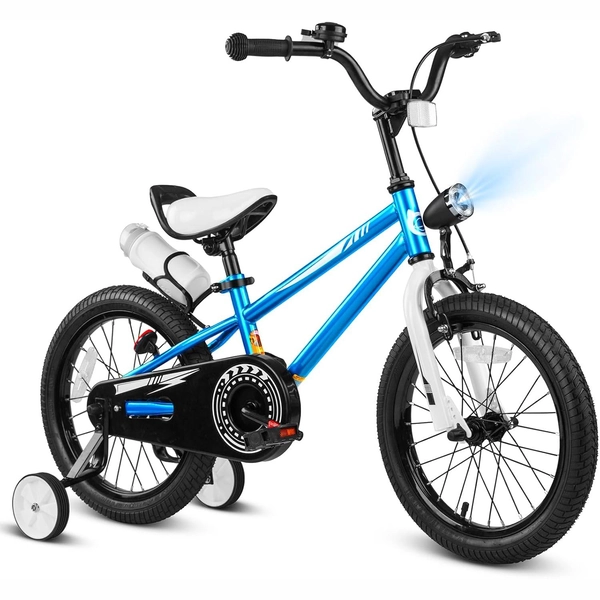
XJD Boys 12/14/16" Training Wheel Bike – Blue
The XJD Boys Bike in Blue is a training wheel bike for riders 71–122 cm tall—rou…
Training Wheel Bikes Wheel Size 12 Inch / 14 Inch / 16 Inch Recommended Height 86–122 cm Training Wheels Yes 16 Inch -
Save 15%
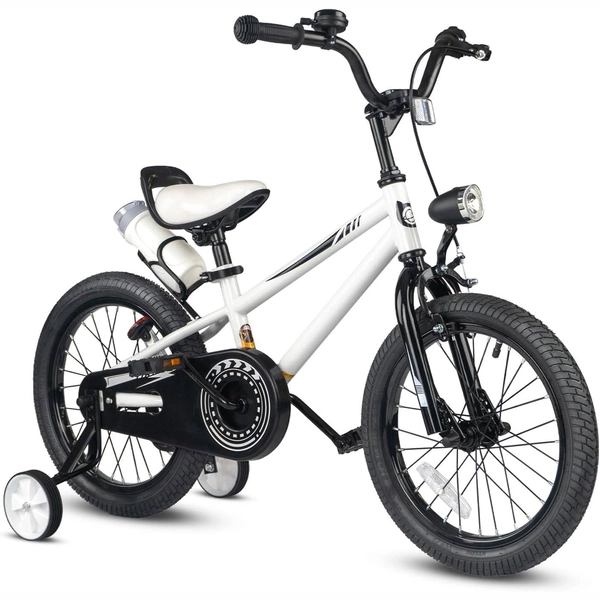
XJD Kids' Training Wheel Bike for Boys & Girls, 12/14/16 Inch – White
The XJD kids' training wheel bike in White is made for riders ages 3–8 (roughly …
Training Wheel Bikes Wheel Size 12 Inch / 14 Inch / 16 Inch Recommended Height 86–122 cm Training Wheels Yes 14 Inch -
Save 12%
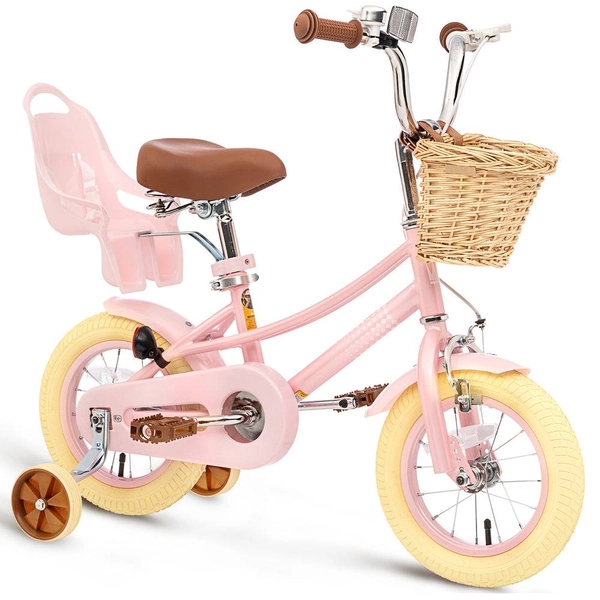
XJD Kids Bike for Girls – Pink, 12/14/16/20 Inch with Training Wheels
The XJD Kids Bike for Girls in Pink is a training-wheel bike built to carry your…
Training Wheel Bikes Wheel Size 12 Inch / 14 Inch / 16 Inch / 20 Inch Recommended Height 86–152 cm Training Wheels Yes 12 Inch