When can a toddler ride a bike with training wheels
A toddler can ride a bike with training wheels when they fit and control it—often around age 3 on a 12-inch bike, after an individual fit check.
Readiness matters more than the word “toddler”
The XBikes starting point for a 12-inch bicycle is ages 3–4 and a rider height of 34–40 inches (86–102 cm). A 14-inch bicycle starts at ages 3–6 and 37–45 inches (94–114 cm). These ranges help narrow the search, but age alone cannot show that a child is ready.
A child should be able to get into position without being stretched, hold the handlebar comfortably, steer deliberately and operate the bicycle’s brakes. They also need enough confidence to listen, stop trying when tired and ride with close adult supervision. Training wheels support side-to-side balance; they do not correct an oversized frame, excessive reach or poor brake access.
What to measure and check
- Measure standing height: With shoes off, have the child stand straight against a wall. Compare the result with the wheel-size starting points below.
- Measure inseam: Measure from the floor to the crotch while the child stands naturally. Then have the child try the actual bicycle; the measurement is useful only when compared with that model’s stand-over space and setup.
- Check stand-over fit: The child should be able to straddle the bicycle securely rather than being supported by the frame. Do not buy an oversized bicycle merely to allow room for growth.
- Check reach and control: Seated in a normal riding position, the child should reach the handlebar without an uncomfortable stretch and turn it without losing control.
- Check brake access: Confirm that the child can reach and operate the supplied braking controls. Follow the exact product manual for adjustment; if correct setup is uncertain, use a qualified bicycle mechanic.
Relevant XBikes size starting points
| Wheel label | Age starting point | Rider height |
|---|---|---|
| 12 Inch | 3–4 | 34–40 in / 86–102 cm |
| 14 Inch | 3–6 | 37–45 in / 94–114 cm |
| 16 Inch | 4–7 | 40–48 in / 102–122 cm |
| 20 Inch | 7–12 | 48–60 in / 122–152 cm |
For many children near age three, the practical comparison begins with 12-inch and 14-inch options. The child’s measured height, inseam, reach, brake control and current confidence must decide whether either size actually fits. A larger wheel label is not automatically a useful upgrade.
How the supplied products compare
The two catalog options are useful because both are Training Wheel Bikes and offer 12-, 14- and 16-inch size labels, letting parents compare the sizes nearest the usual starting range. One also extends to a 20-inch label for a substantially taller, older starting range; that does not make 20 inches suitable for a toddler.
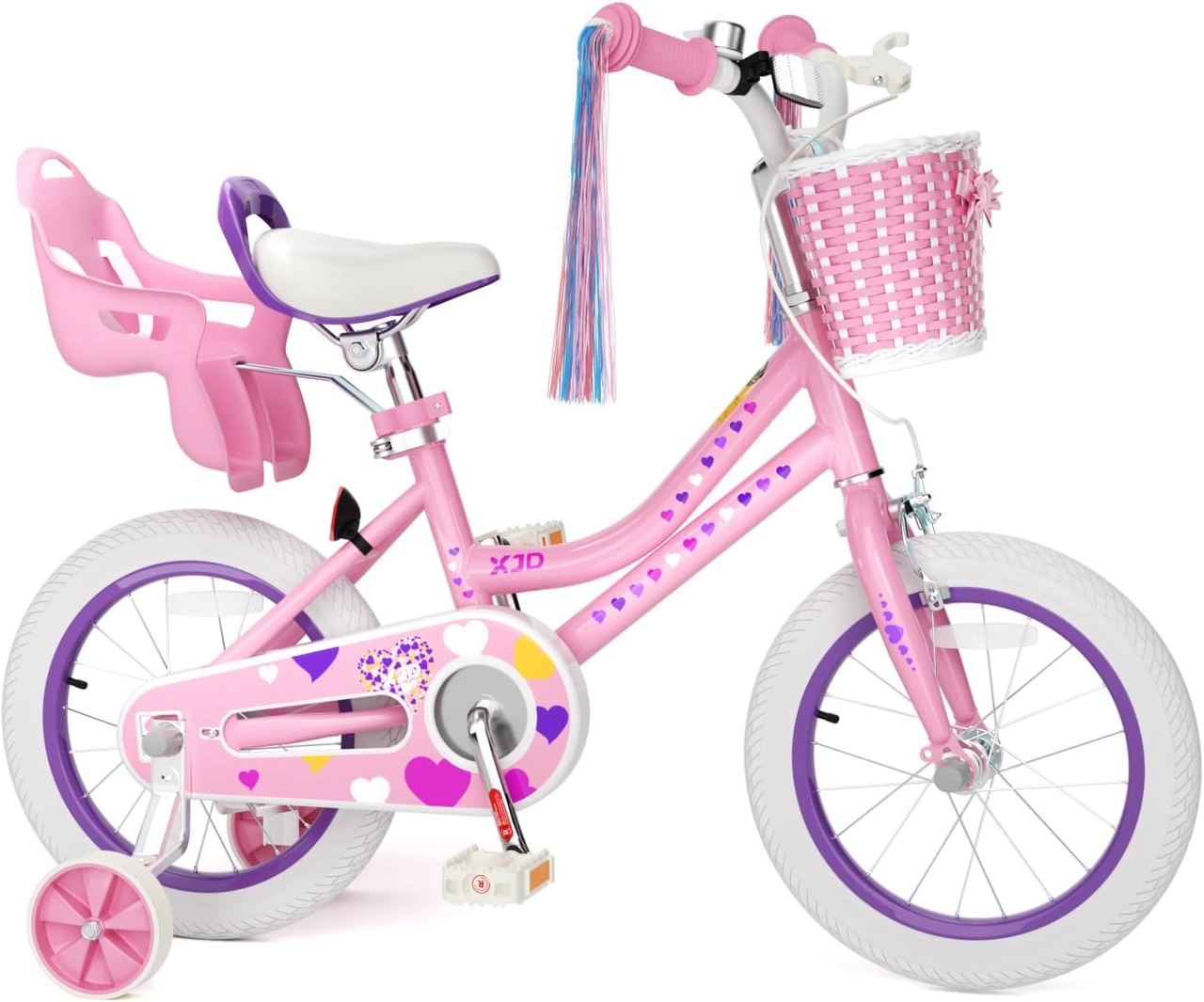 Pink Girls' 12/14/16" Bike by XJD – Basket & Doll Seat
A Training Wheel Bikes option offered in 12 Inch, 14 Inch and 16 Inch, providing two size-label comparisons near the age-three starting points plus a larger 16-inch option.
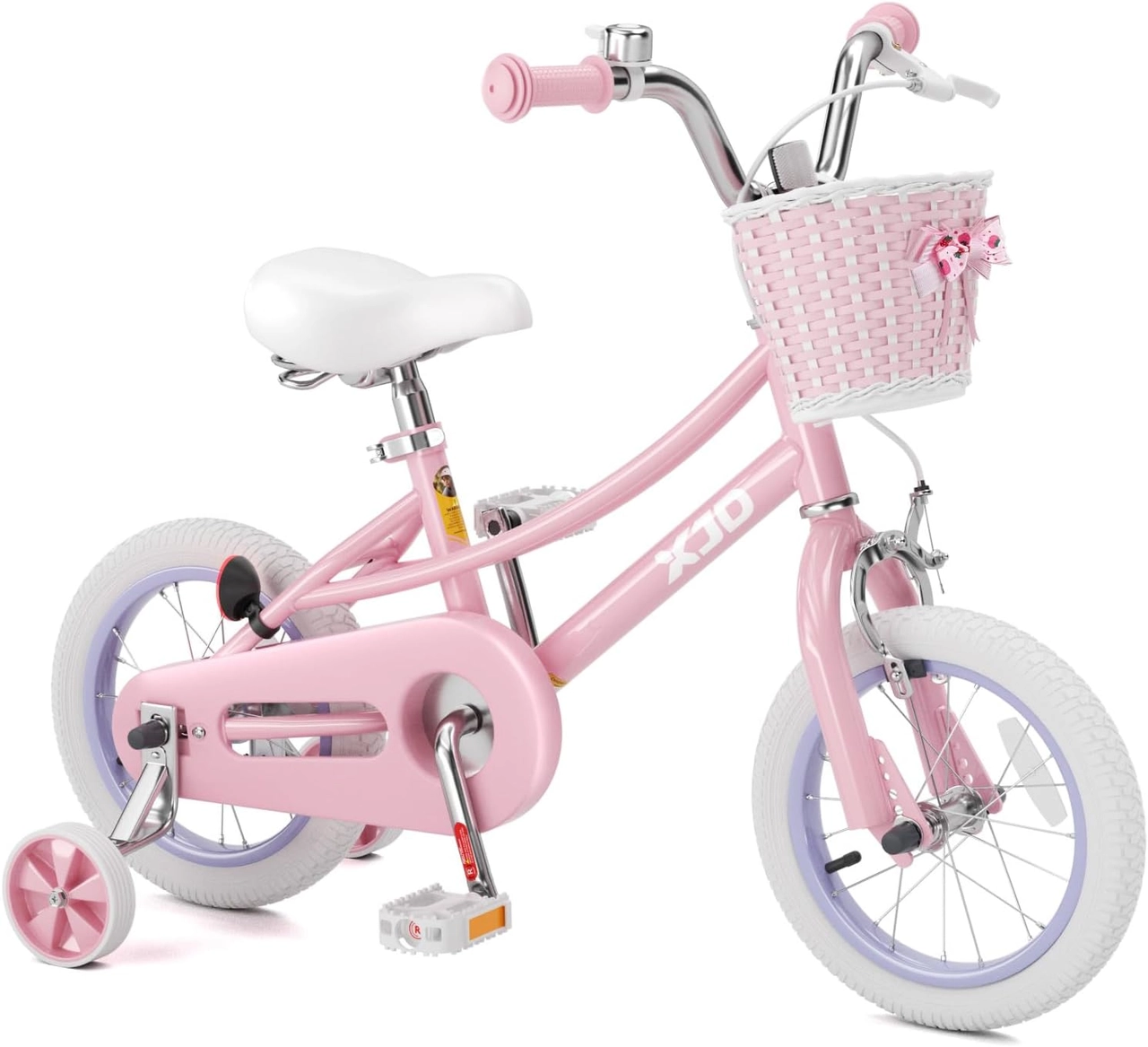 Pink 12/14/16/20" XJD Girls Bike with Training Wheels & Basket
A Training Wheel Bikes option offered in 12 Inch, 14 Inch, 16 Inch and 20 Inch; only sizes matching the child’s measurements should be considered for toddler use.
Pink Girls' 12/14/16" Bike by XJD – Basket & Doll Seat is offered in 12 Inch, 14 Inch and 16 Inch. Its 12- and 14-inch labels are the relevant starting comparisons for a child around age three who falls within the corresponding height range. The 16-inch label begins at ages 4–7 and 40–48 inches (102–122 cm), so it should not be chosen early simply for growth.
Pink 12/14/16/20" XJD Girls Bike with Training Wheels & Basket offers 12 Inch, 14 Inch, 16 Inch and 20 Inch. For the question in this article, begin by comparing only the sizes supported by the child’s measurements. Its 20-inch option starts at ages 7–12 and 48–60 inches (122–152 cm), well beyond the supplied toddler-relevant starting points.
These labels do not establish fit by themselves. Have the child try the exact bicycle and verify stand-over position, reach and brake operation. Follow its manual for assembly, training-wheel adjustment, maintenance, compatibility, load limits and torque values, or ask a qualified bicycle mechanic.
What to do before the first ride
- Choose the size only after the child has tried the bicycle and demonstrated comfortable control.
- Use a properly fitting bicycle helmet. It should sit level, with straps positioned and fastened according to the helmet manufacturer’s instructions.
- Confirm that the bicycle and training wheels have been assembled and adjusted according to the exact product manual.
- Start in a flat, open area away from traffic, slopes and obstacles, with an adult close enough to intervene.
- Practice starting, steering and stopping in short sessions. Stop if the child becomes tired, frightened or unable to control direction and braking.
Make the decision
If the child is under 34 inches (86 cm), cannot straddle the bicycle securely, cannot comfortably reach and operate its controls, or lacks confidence, wait rather than sizing up. If the child is around age three, falls within the 12- or 14-inch height starting point and passes the complete fit-and-control check on the actual bicycle, a training-wheel bike can be considered now.
Recommended products
-
Save 12%
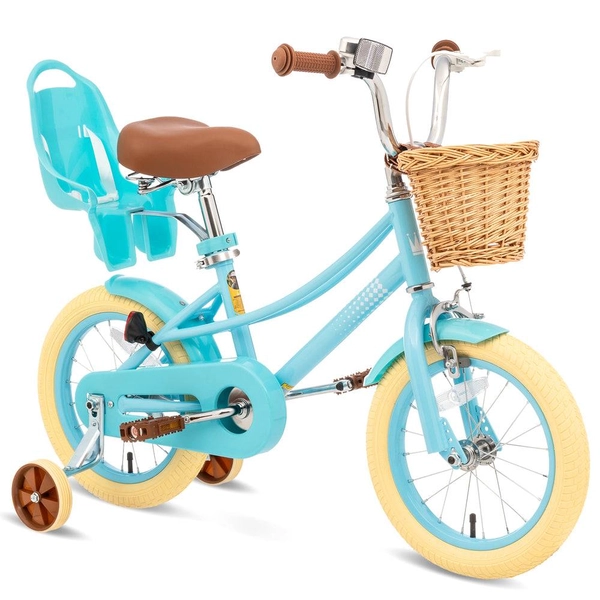
Girls' Training Wheel Bike by XJD, 12–20 Inch Wheels – Blue
This XJD girls' training wheel bike in Blue covers one of the widest fit ranges …
Training Wheel Bikes Wheel Size 12 Inch / 14 Inch / 16 Inch / 20 Inch Recommended Height 86–152 cm Training Wheels Yes 12 Inch -
Save 11%
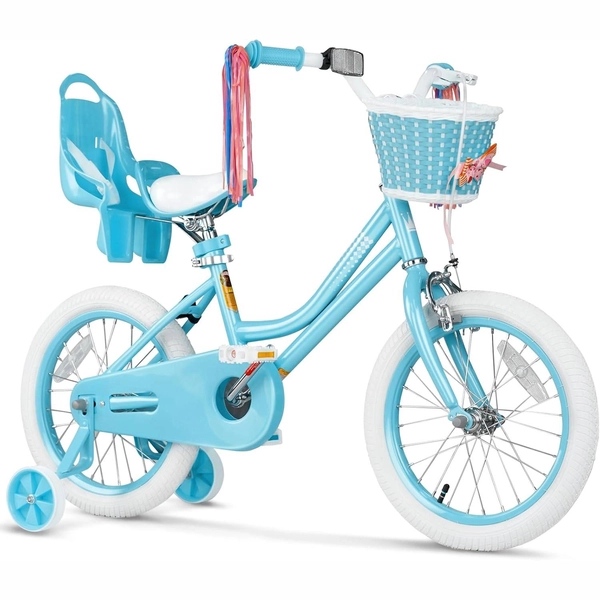
Blue XJD Girls Bike with Training Wheels – 12/14/16 Inch
If you're shopping for a first pedal bike for a daughter roughly 3 to 8 years ol…
Training Wheel Bikes Wheel Size 12 Inch / 14 Inch / 16 Inch Recommended Height 86–122 cm Training Wheels Yes 16 Inch -
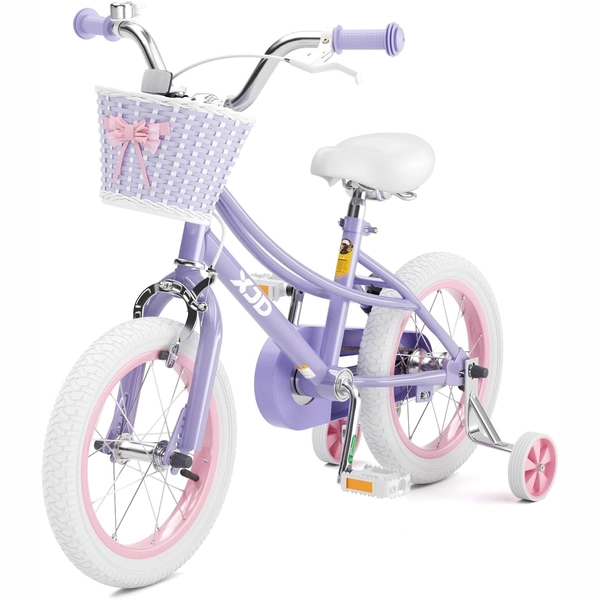
Girls' Training Wheel Bike by XJD with Basket – Purple
If you're shopping for a first bike for a girl roughly 3 to 12 years old (91–152…
Training Wheel Bikes Wheel Size 14 Inch / 16 Inch / 20 Inch Recommended Height 94–152 cm Training Wheels Yes Single Speed 14 Inch -
Save 13%
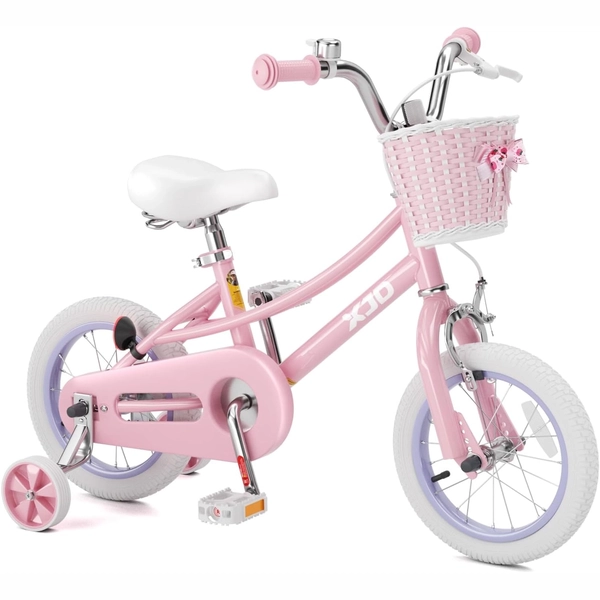
Pink 12/14/16/20" XJD Girls Bike with Training Wheels & Basket
The Pink XJD Girls Bike with Training Wheels & Basket is a first-bike pick f…
Training Wheel Bikes Wheel Size 12 Inch / 14 Inch / 16 Inch / 20 Inch Recommended Height 86–152 cm Training Wheels Yes Single Speed 12 Inch