When can child ride bike with training wheels
A child can ride a bike with training wheels when they can sit securely, reach the controls, follow simple directions and fit the bicycle—not at one fixed age.
Check readiness before choosing a wheel size
Age is only a starting point. The child should be willing to ride, able to hold the handlebar without strain and capable of stopping when asked. They also need enough attention to steer around people and obstacles. If they cannot reliably respond to “stop,” wait and try again later.
Training wheels add side support, but they do not correct a poor fit or replace supervision. A child who feels frightened, cannot reach the brakes or struggles to control the handlebar is not ready for that bicycle, even if their age matches a chart.
Measure height, inseam and control reach
Measure the child’s standing height without shoes. Then measure inseam from the floor to the crotch while the child stands straight. Compare measured height with the XBikes starting points below, but have the child try the bicycle before deciding.
| Wheel size | Age starting point | Rider-height starting point |
|---|---|---|
| 12 Inch | 3–4 | 34–40 in / 86–102 cm |
| 14 Inch | 3–6 | 37–45 in / 94–114 cm |
| 16 Inch | 4–7 | 40–48 in / 102–122 cm |
| 18 Inch | 5–9 | 43–52 in / 109–132 cm |
| 20 Inch | 7–12 | 48–60 in / 122–152 cm |
Do not buy an oversized bicycle for the child to grow into. With the bicycle upright, check that they have appropriate stand-over clearance and can get on and off without becoming trapped or tipping. While seated, they should reach the handlebar comfortably, turn it with control and operate the brakes without stretching or shifting their hands into an unstable position.
Because frame shapes and adjustment ranges are not supplied here, inseam cannot be converted into a guaranteed wheel size. Compare the child’s inseam with the actual stand-over and saddle arrangement on the exact bicycle.
What to do during the first fit check
- Place the bicycle on level ground in a traffic-free area and have an adult stabilize it.
- Ask the child to mount, sit, hold the handlebar and place their feet where needed for a controlled start and stop.
- Confirm that their knees and arms are not cramped and that their reach does not pull them forward.
- Ask them to steer gently in both directions and demonstrate the braking action before moving.
- Begin with short, supervised practice away from roads, driveways, slopes, water and other hazards.
If any control is difficult to reach, the bicycle feels unwieldy or the child cannot stop predictably, do not proceed. Recheck adjustment and size using the exact product manual, or ask a qualified bicycle mechanic.
How the supplied training-wheel bikes compare
These catalog options help answer the sizing question because all three are training-wheel bikes offered in several wheel-size labels, allowing parents to compare the child’s measured height with relevant 12-, 14-, 16- or 20-inch starting points before performing an individual fit check.
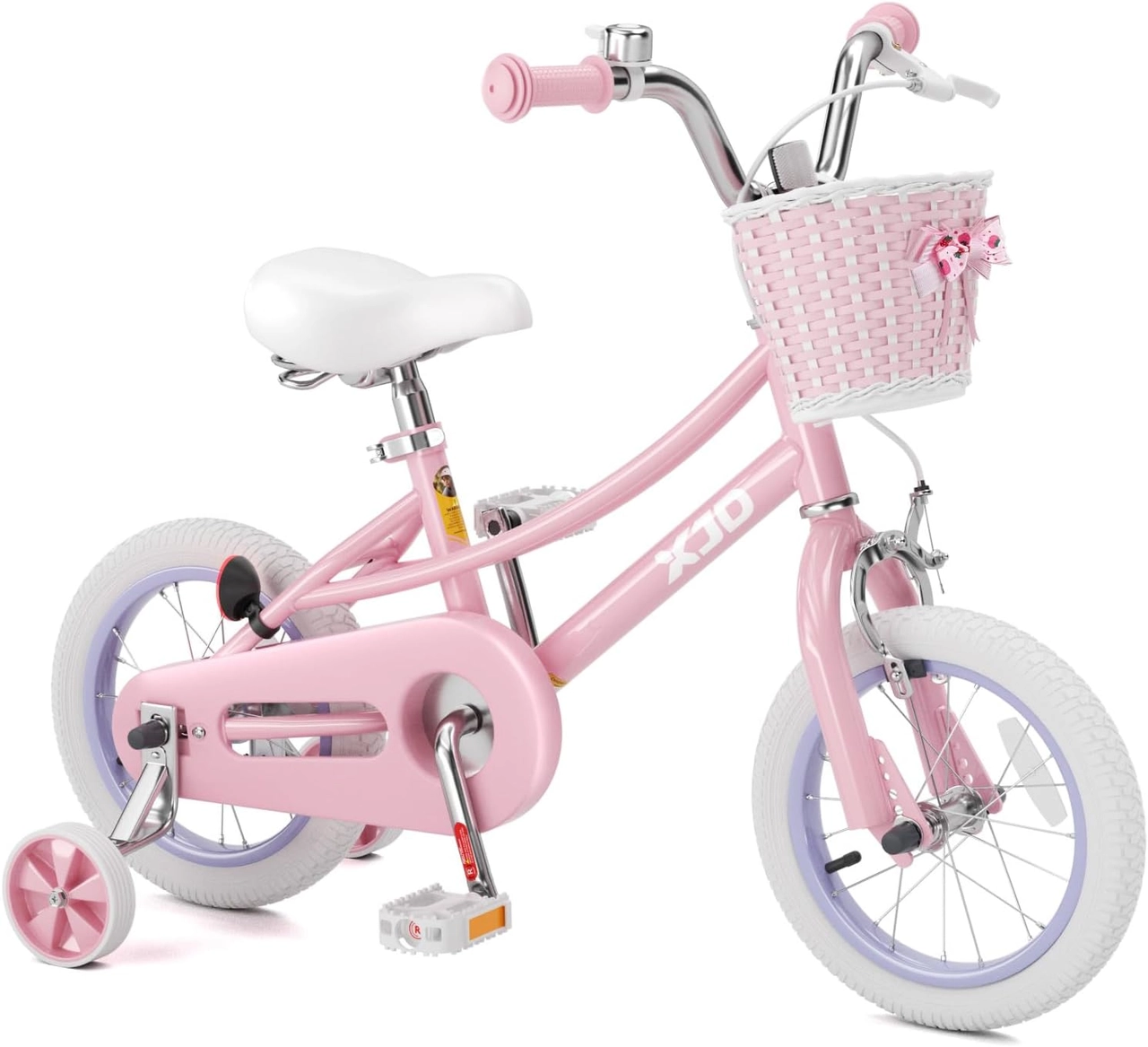 Pink 12/14/16/20" XJD Girls Bike with Training Wheels & Basket
Offered in 12, 14, 16 and 20 Inch labels, this training-wheel bike provides four size starting points to compare with measured rider height before an individual fit check.
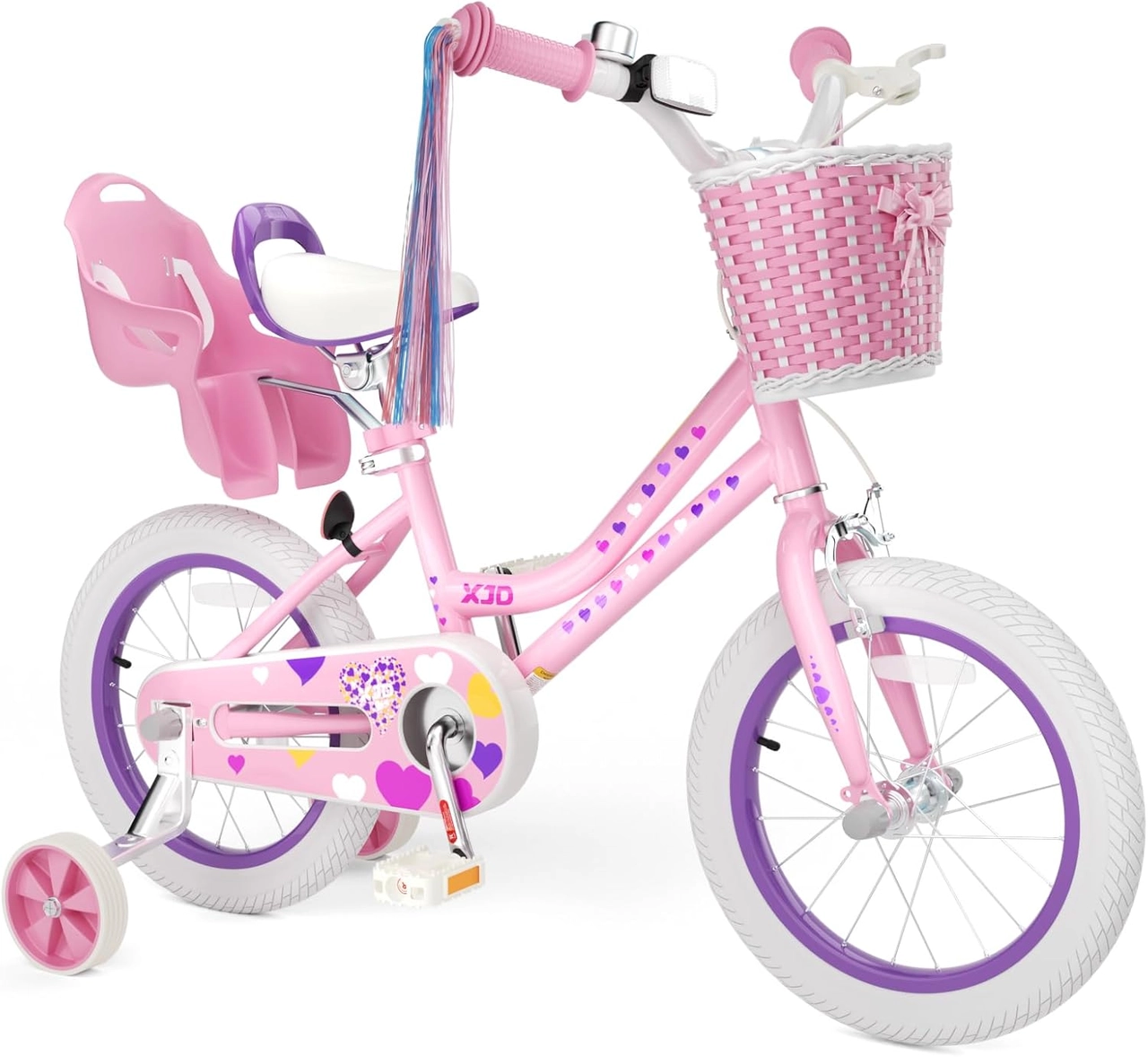 Light Pink XJD Girls' Bicycle with Basket & Training Wheels
This training-wheel bicycle is supplied in 12, 14, 16 and 20 Inch options. Use the labels to narrow the comparison, then verify inseam, stand-over, reach and control on the actual bike.
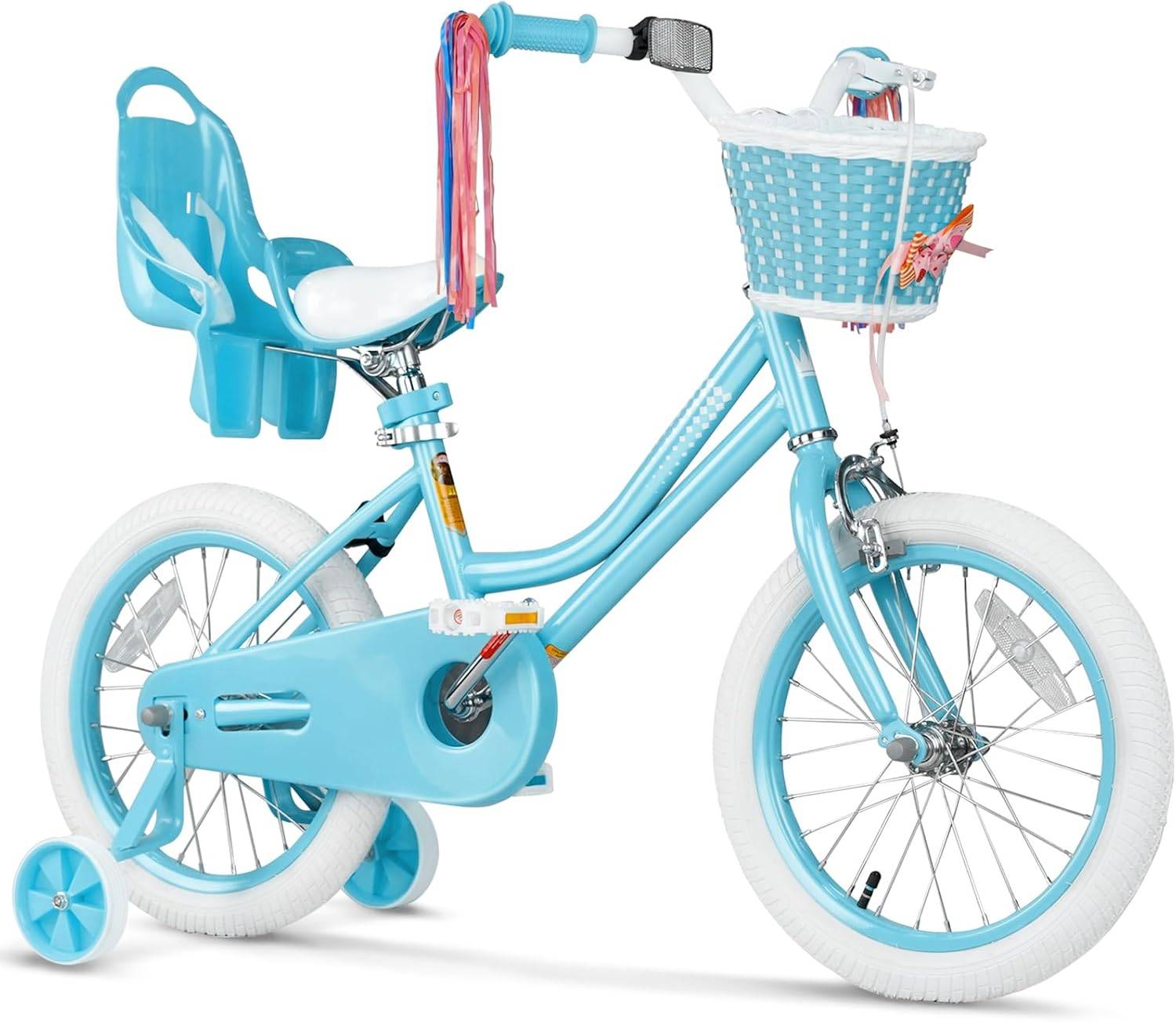 Blue XJD Girls Bike with Training Wheels – 12/14/16 Inch
Available in 12, 14 and 16 Inch labels, this training-wheel bike is relevant for children whose measured height points toward those starting sizes, subject to a complete hands-on fit check.
Pink 12/14/16/20" XJD Girls Bike with Training Wheels & Basket is listed in 12 Inch, 14 Inch, 16 Inch and 20 Inch. Light Pink XJD Girls' Bicycle with Basket & Training Wheels has the same four supplied size labels. These options span several starting points in the table, but the label alone does not establish fit.
Blue XJD Girls Bike with Training Wheels – 12/14/16 Inch is supplied in 12 Inch, 14 Inch and 16 Inch. It is relevant when the child’s height points toward one of those sizes; it is not a 20-inch alternative. None of the supplied products has an 18-inch label, so they are nearest-size comparison points—not substitutes—when an individual fit check indicates 18 Inch.
Helmet, setup and the decision to ride
Use a bicycle helmet that fits properly, sits level and has straps adjusted according to its manufacturer’s instructions. Check the bicycle before every session and supervise the child throughout practice. For assembly, training-wheel adjustment, fastener torque, maintenance, load limits and compatibility, follow the exact product manual or use a qualified bicycle mechanic; those details are not established by the catalog facts provided here.
Let the child ride with training wheels only after measured height narrows the size, the real bicycle passes the inseam, stand-over, reach and brake-control checks, and the child can follow stop-and-steer directions with confidence. If any one of those checks fails, choose a better-fitting bicycle or postpone riding.
Recommended products
-
Save 11%
Blue XJD Girls Bike with Training Wheels – 12/14/16 Inch
If you're shopping for a first pedal bike for a daughter roughly 3 to 8 years ol…
Training Wheel Bikes Wheel Size 12 Inch / 14 Inch / 16 Inch Recommended Height 86–122 cm Training Wheels Yes 16 Inch -
Save 16%
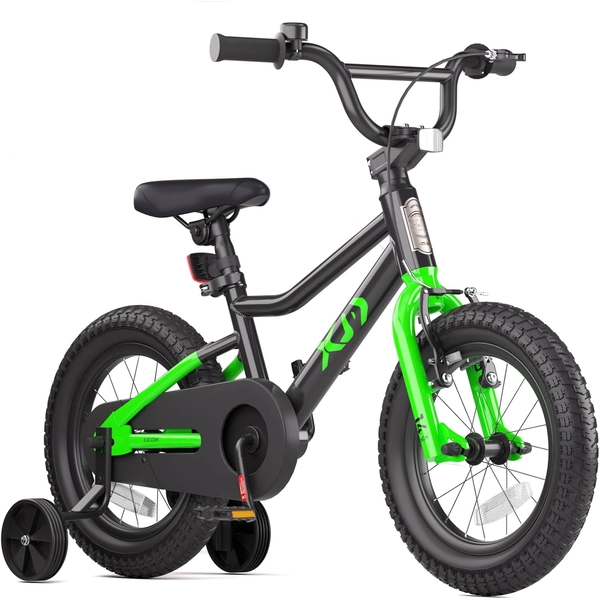
Black XJD Kids' BMX Bicycle with Training Wheels
The XJD Kids' BMX Bicycle with Training Wheels is built for children roughly 3 t…
Kids' BMX Bikes Wheel Size 12 Inch / 14 Inch / 16 Inch Recommended Height 86–122 cm Training Wheels Yes Single Speed 12 Inch -
Save 13%
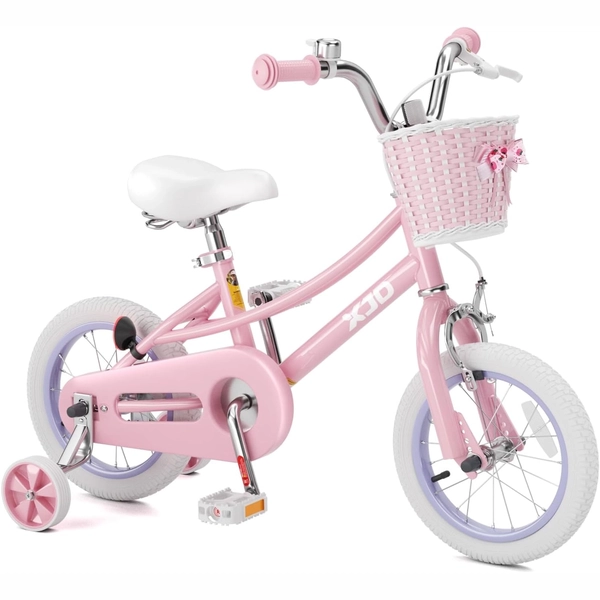
Pink 12/14/16/20" XJD Girls Bike with Training Wheels & Basket
The Pink XJD Girls Bike with Training Wheels & Basket is a first-bike pick f…
Training Wheel Bikes Wheel Size 12 Inch / 14 Inch / 16 Inch / 20 Inch Recommended Height 86–152 cm Training Wheels Yes Single Speed 12 Inch -
Save 12%
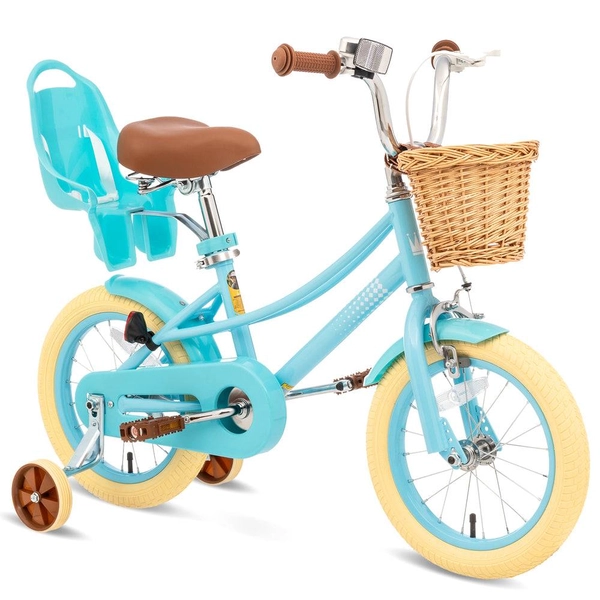
Girls' Training Wheel Bike by XJD, 12–20 Inch Wheels – Blue
This XJD girls' training wheel bike in Blue covers one of the widest fit ranges …
Training Wheel Bikes Wheel Size 12 Inch / 14 Inch / 16 Inch / 20 Inch Recommended Height 86–152 cm Training Wheels Yes 12 Inch