When can child ride bike without training wheels
Most children can ride without training wheels when they can balance, steer, start, stop and use the brakes confidently—not at a particular age.
Look for readiness, not a birthday
Age and wheel size do not determine when training wheels should come off. A child is ready to try when they can ride with their head up, steer a predictable line, respond to instructions and stop the bicycle without panic.
Watch what happens while the training wheels are still fitted. If the child frequently leans on them through turns, they are not yet balancing independently. If both training wheels are often clear of the ground on straight sections and the child remains composed, a supervised trial without them may be appropriate.
- Balance: Can the child coast briefly without tipping sharply?
- Control: Can they steer around a simple obstacle without staring at the front wheel?
- Stopping: Can they reach, operate and understand the bicycle's brakes?
- Confidence: Are they willing to practise without being pressured?
Measure fit before removing the wheels
Measure the child's standing height and inseam, then have them try the bicycle. Check that they can stand over it, reach the handlebar without stretching, turn it comfortably and operate the brakes. The bicycle should offer control now; do not choose an oversized model merely to allow room for growth.
Use the XBikes ranges below only as starting points. Measured height, inseam, reach, brake control and current confidence take priority over age.
| Wheel size | Starting age | Rider height |
|---|---|---|
| 12 Inch | 3–4 | 34–40 in / 86–102 cm |
| 14 Inch | 3–6 | 37–45 in / 94–114 cm |
| 16 Inch | 4–7 | 40–48 in / 102–122 cm |
| 18 Inch | 5–9 | 43–52 in / 109–132 cm |
| 20 Inch | 7–12 | 48–60 in / 122–152 cm |
| 24 Inch | 10–14 | 54–64 in / 137–163 cm |
| 26 Inch | Youth and adults over 60 in | Over 60 in / 153 cm |
Run a low-pressure readiness check
- Choose a flat, open area away from traffic, slopes and obstacles.
- Fit a bicycle helmet so it sits level, fits properly and has straps adjusted according to its manufacturer's instructions.
- Let the child practise pushing and gliding with close adult supervision. They should be able to place their feet down promptly when needed.
- Ask them to look ahead, coast, steer gently and make a controlled stop.
- If those actions are repeatable and calm, follow the exact bicycle manual for training-wheel removal or ask a qualified bicycle mechanic to do it.
Do not improvise removal, compatibility or tightening instructions. Those details are not universal, so the exact product manual or a qualified mechanic should govern assembly and torque.
What to do during the first wheel-free rides
Begin with short sessions. Stand close enough to assist, but avoid pulling the handlebar because that takes steering control away from the rider. A light hold at the child or saddle area may help at the start, then release as balance develops.
Practise one task at a time: a steady launch, looking ahead, straight coasting, gentle turns and deliberate stops. End before fatigue or frustration changes the child's control. If repeated attempts produce fear, uncontrolled turns or unreliable stopping, reinstall the training wheels according to the manual or seek help from a bicycle mechanic. Waiting and trying again later is a valid decision.
How the supplied bicycle relates
The Light Pink XJD Girls' Bicycle with Basket & Training Wheels is relevant because its supplied options—12 Inch, 14 Inch, 16 Inch and 20 Inch—let parents compare several XBikes starting ranges while considering a training-wheel bicycle. Its title and size labels do not prove an individual fit or readiness to ride without training wheels.
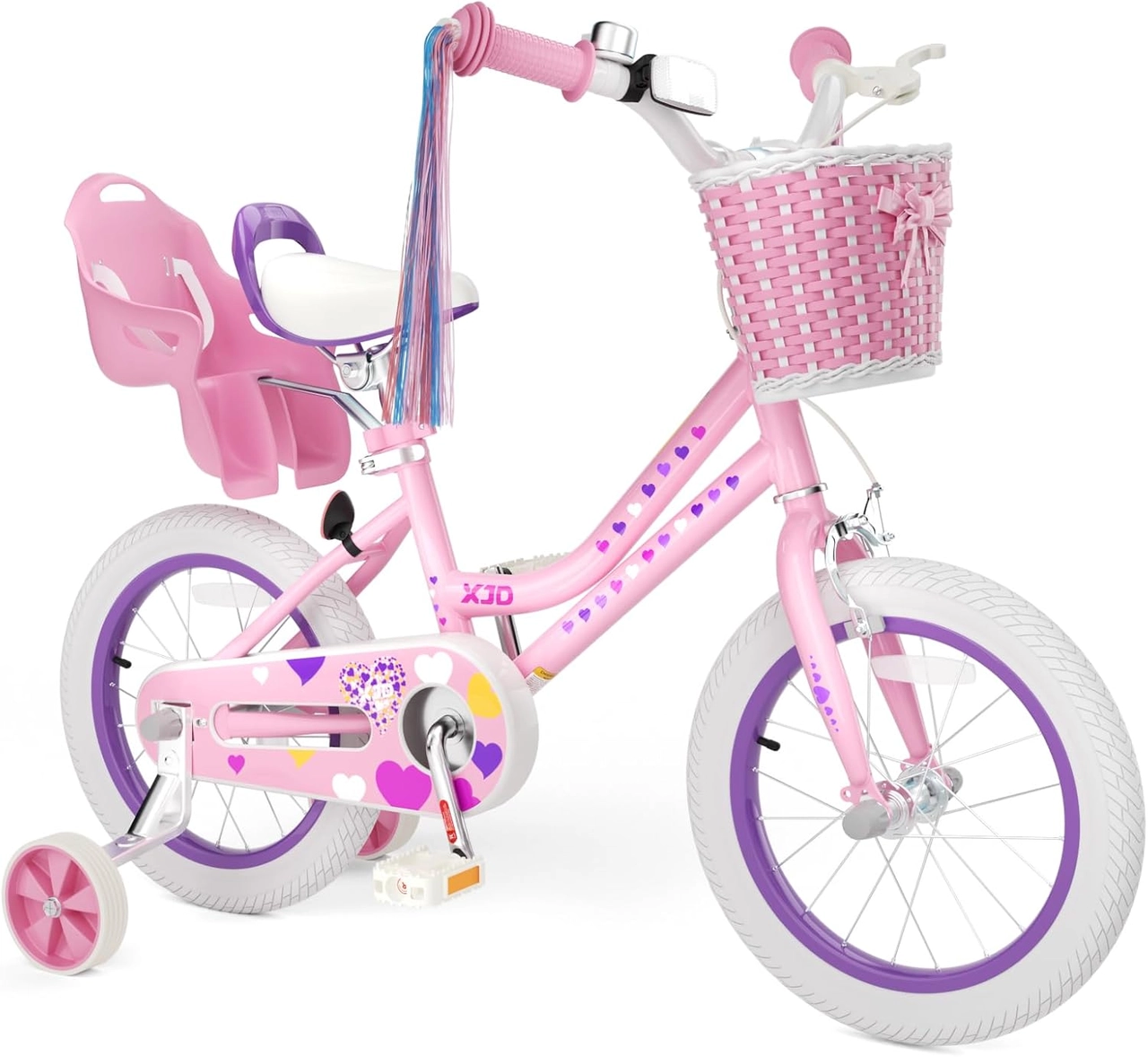
Compare the child's measured height with the relevant range, then conduct the stand-over, reach and brake-control checks in person. The product is relevant when one of its listed sizes fits and training wheels suit the child's current confidence. It is not relevant if none of those sizes fits, if the child cannot control the bicycle, or if a specifically needed 18 Inch, 24 Inch or 26 Inch option is required; its listed sizes are comparison points, not equivalent substitutes.
Make the decision
Remove the training wheels only after the bicycle fits now and the child can repeatedly balance, steer and stop with calm control in a traffic-free practice area. If any one of those checks fails, keep the supported setup, correct the fit or control issue, and reassess later.
Recommended products
-
Save 13%
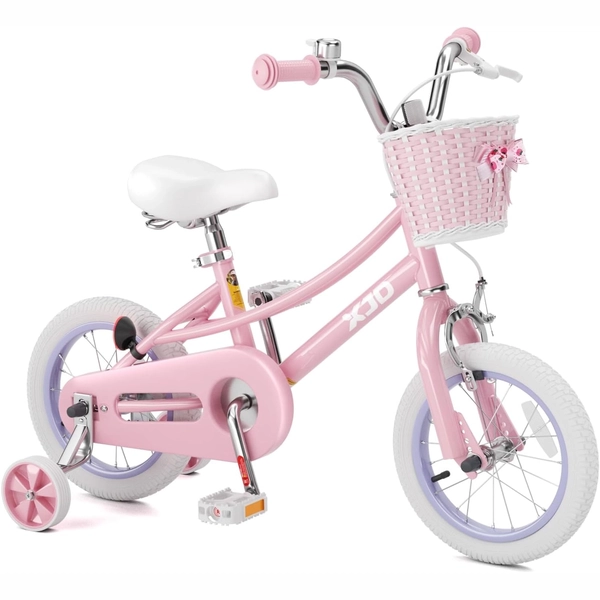
Pink 12/14/16/20" XJD Girls Bike with Training Wheels & Basket
The Pink XJD Girls Bike with Training Wheels & Basket is a first-bike pick f…
Training Wheel Bikes Wheel Size 12 Inch / 14 Inch / 16 Inch / 20 Inch Recommended Height 86–152 cm Training Wheels Yes Single Speed 12 Inch -
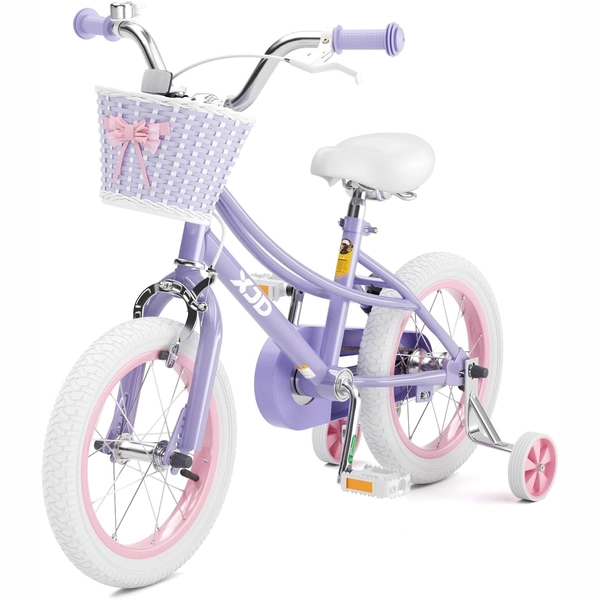
Girls' Training Wheel Bike by XJD with Basket – Purple
If you're shopping for a first bike for a girl roughly 3 to 12 years old (91–152…
Training Wheel Bikes Wheel Size 14 Inch / 16 Inch / 20 Inch Recommended Height 94–152 cm Training Wheels Yes Single Speed 14 Inch -
Save 11%
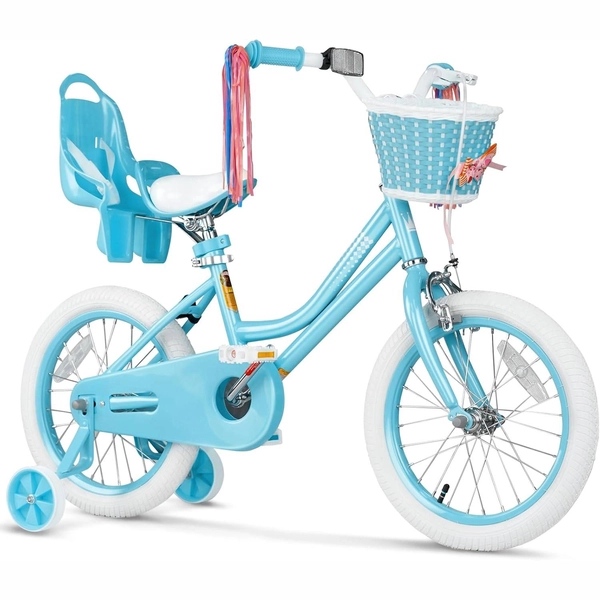
Blue XJD Girls Bike with Training Wheels – 12/14/16 Inch
If you're shopping for a first pedal bike for a daughter roughly 3 to 8 years ol…
Training Wheel Bikes Wheel Size 12 Inch / 14 Inch / 16 Inch Recommended Height 86–122 cm Training Wheels Yes 16 Inch -
Save 15%
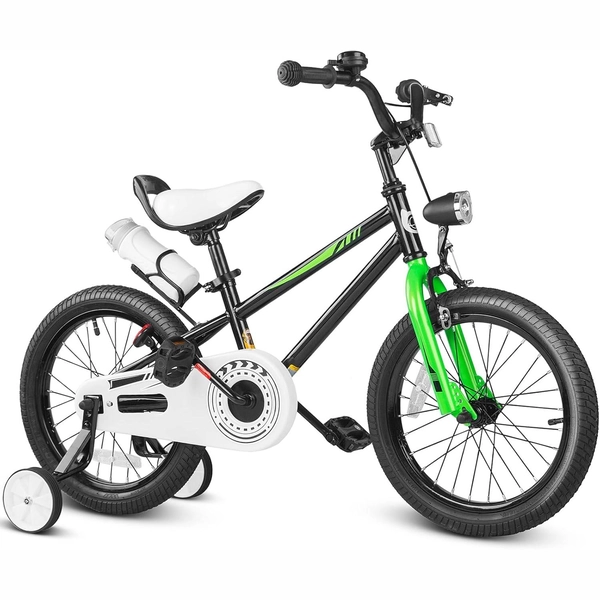
Black XJD Kids Bike for Boys – 12, 14 & 16 Inch Sizes
For a son between roughly 3 and 8 years old, the XJD Kids Bike in Black covers t…
Training Wheel Bikes Wheel Size 12 Inch / 14 Inch / 16 Inch Recommended Height 86–122 cm Training Wheels Yes 12 Inch