When can kids ride a bike with training wheels
Kids can ride a bike with training wheels when they fit the bike, can reach and operate its controls, and feel ready to pedal and steer with supervision. Age is only a starting point: measure height, check inseam clearance and reach, and have the child try the bicycle before deciding.
When a child is ready
Training wheels may help a child who can sit securely, hold the handlebar, steer, pedal and respond to simple directions but does not yet have the confidence or balance to ride on two wheels. They do not make a poorly fitted bicycle suitable.
During a supervised tryout, look for controlled starts, stops and turns. The child should not have to stretch to reach the handlebar or brake controls, lean excessively to one side, or struggle to keep their feet positioned on the pedals. Hesitation is a reason to pause and practice, not to move up to a larger bike.
Measure before comparing sizes
Measure the child’s standing height without shoes. Also measure inseam from the floor to the crotch while the child stands naturally. Then compare those measurements with the actual bicycle: there should be practical stand-over clearance, a comfortable seated position and an easy reach to the handlebar and brakes.
The following XBikes ranges are starting points, not guarantees of fit:
| Wheel size | Age starting point | Rider-height starting point |
|---|---|---|
| 12 Inch | Ages 3–4 | 34–40 in / 86–102 cm |
| 14 Inch | Ages 3–6 | 37–45 in / 94–114 cm |
| 16 Inch | Ages 4–7 | 40–48 in / 102–122 cm |
| 18 Inch | Ages 5–9 | 43–52 in / 109–132 cm |
| 20 Inch | Ages 7–12 | 48–60 in / 122–152 cm |
| 24 Inch | Ages 10–14 | 54–64 in / 137–163 cm |
| 26 Inch | Youth and adults | Over 60 in / 153 cm |
Because the ranges overlap, height alone does not settle the choice. Prioritize the child’s measured height, inseam, reach, brake control and current confidence. Have the child try the bicycle, and do not choose an oversized model simply to allow room for growth.
How to perform the fit check
- Check stand-over: With the child standing over the bike, confirm that the frame does not prevent a comfortable, controlled stance.
- Check the seated reach: The child should reach the handlebar without being pulled far forward or locking their arms.
- Check every control: Make sure the child can reach and operate the brakes and can steer without losing a stable riding position.
- Watch a short practice: On a flat, open area away from traffic, supervise starts, straight riding, turns and stops.
- Ask how it feels: A technically plausible size is not the right choice if the child feels unable to control it.
How the supplied bikes compare
The supplied catalog options are relevant because each offers 12 Inch, 14 Inch and 16 Inch choices, covering the XBikes starting ranges from ages 3–7 and rider heights 34–48 in / 86–122 cm across those sizes. The Blue XJD Girls Bike with Training Wheels – 12/14/16 Inch and the XJD Boys 12/14/16" Training Wheel Bike – Blue differ in their catalog titles, but their supplied size choices are the same. Those title labels are not evidence of fit; choose by measurements and an individual tryout.
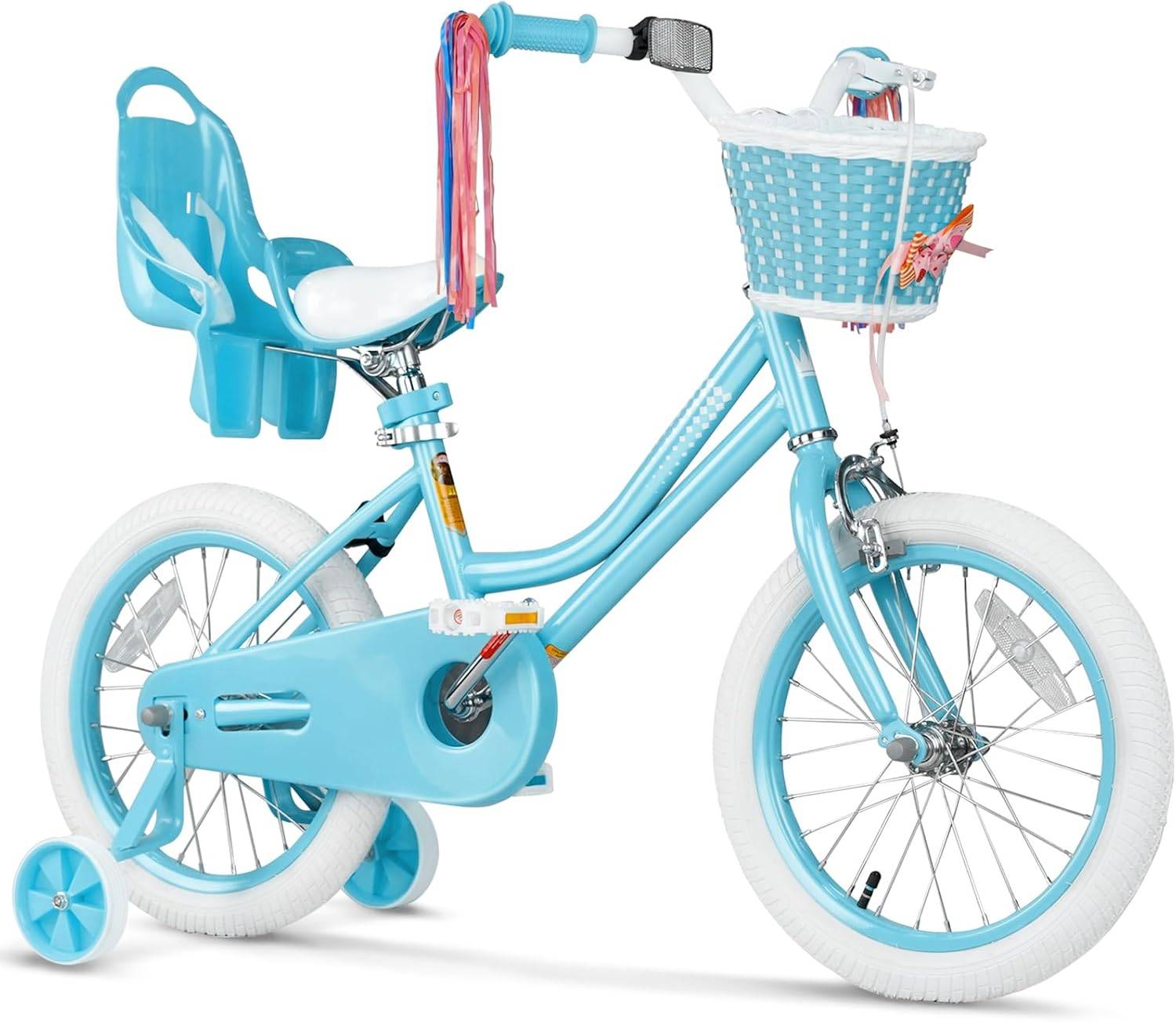 Blue XJD Girls Bike with Training Wheels – 12/14/16 Inch
Offers 12 Inch, 14 Inch and 16 Inch catalog choices. Compare the child’s measurements with the relevant XBikes starting range, then confirm stand-over clearance, reach and control on the actual bike.
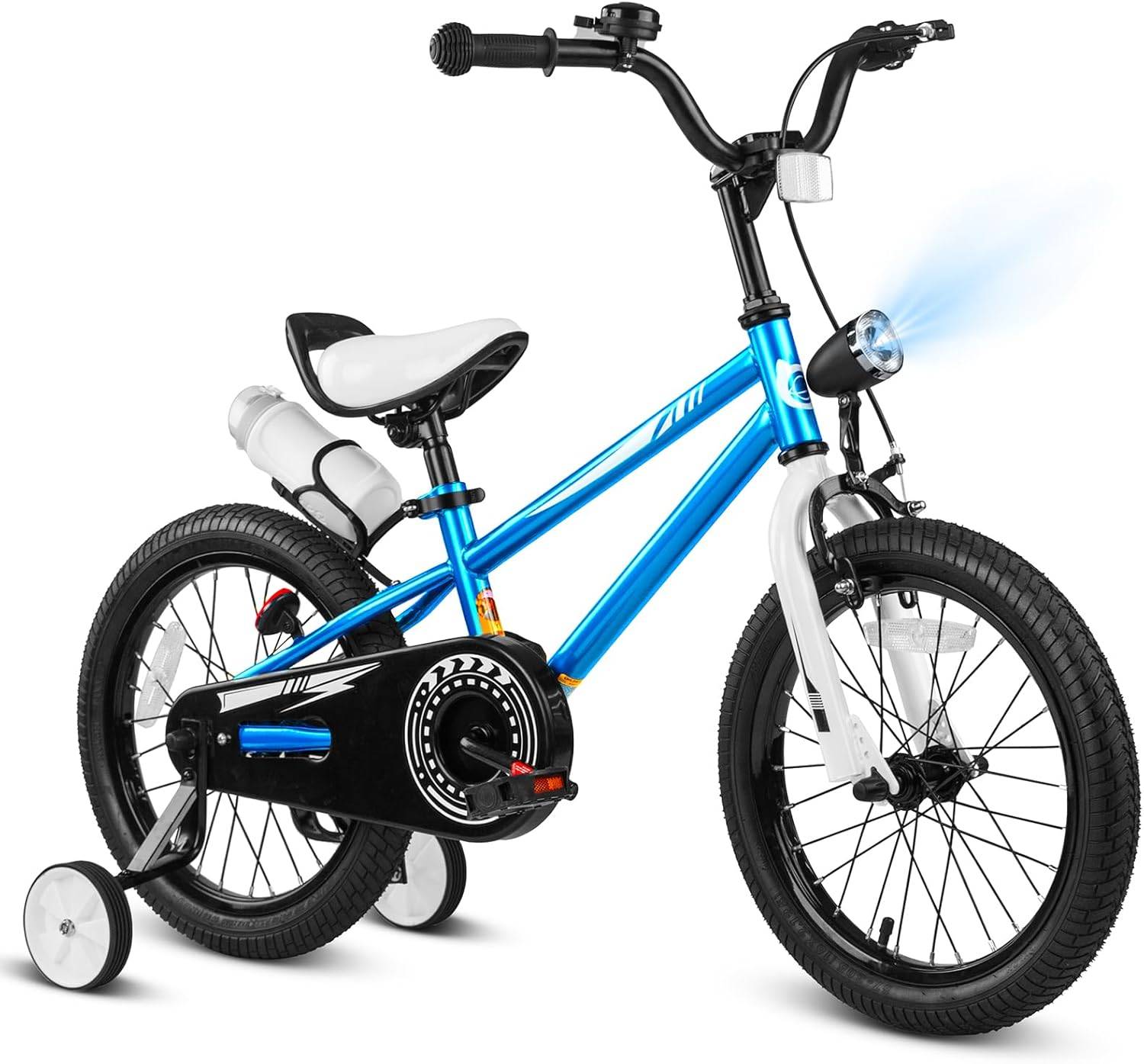 XJD Boys 12/14/16" Training Wheel Bike – Blue
Available in 12 Inch, 14 Inch and 16 Inch sizes. Its supplied size selection matches the other catalog option, so fit should be decided through measurements and an individual tryout, not the title label.
Neither supplied product includes an 18 Inch, 20 Inch, 24 Inch or 26 Inch option in the catalog facts. For a rider whose measurements and control point toward one of those sizes, these products are smaller comparison points, not equivalent substitutes.
Training wheels still require setup and supervision
Training wheels assist with side-to-side stability, but the rider still needs to steer, pedal, stop and judge space. Begin in a level area away from vehicles, slopes, obstacles and crowds. Stay close enough to intervene while the child learns how the bike responds.
Assembly and training-wheel adjustment can affect how the bicycle behaves. Follow the exact product manual for installation, maintenance, compatibility, load limits and torque. If the instructions are missing, unclear or the bicycle does not feel stable, use a qualified bicycle mechanic rather than guessing.
A bicycle helmet is also necessary. It must fit properly, sit level and have its straps positioned according to the helmet manufacturer’s instructions. Training wheels do not remove the possibility of a fall.
Make the decision
Start with the child’s measured height, narrow the choice to the matching wheel-size range, and then require a successful hands-on check of stand-over clearance, reach, braking and confidence. Choose a supplied 12, 14 or 16 Inch option only when that exact bike fits; otherwise, wait or compare the correctly sized bicycle instead.
Recommended products
-
Save 16%
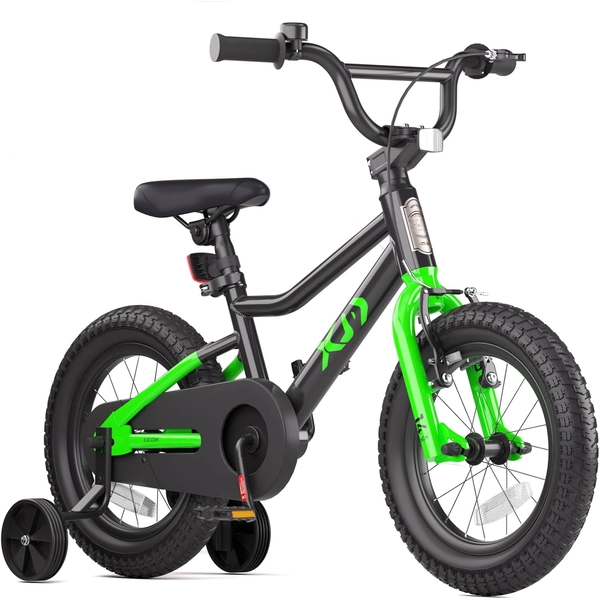
Black XJD Kids' BMX Bicycle with Training Wheels
The XJD Kids' BMX Bicycle with Training Wheels is built for children roughly 3 t…
Kids' BMX Bikes Wheel Size 12 Inch / 14 Inch / 16 Inch Recommended Height 86–122 cm Training Wheels Yes Single Speed 12 Inch -
Save 11%
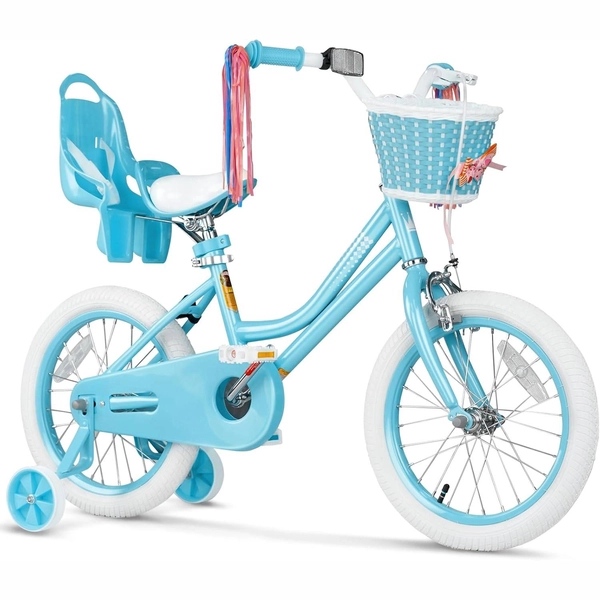
Blue XJD Girls Bike with Training Wheels – 12/14/16 Inch
If you're shopping for a first pedal bike for a daughter roughly 3 to 8 years ol…
Training Wheel Bikes Wheel Size 12 Inch / 14 Inch / 16 Inch Recommended Height 86–122 cm Training Wheels Yes 16 Inch -
Save 13%
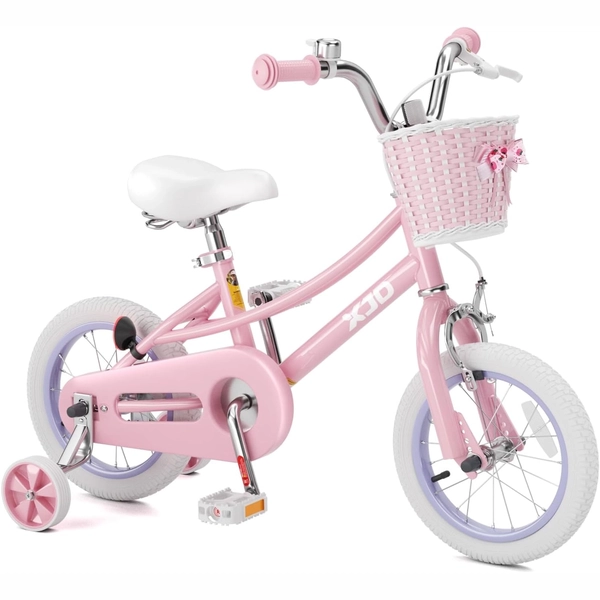
Pink 12/14/16/20" XJD Girls Bike with Training Wheels & Basket
The Pink XJD Girls Bike with Training Wheels & Basket is a first-bike pick f…
Training Wheel Bikes Wheel Size 12 Inch / 14 Inch / 16 Inch / 20 Inch Recommended Height 86–152 cm Training Wheels Yes Single Speed 12 Inch -
Save 12%
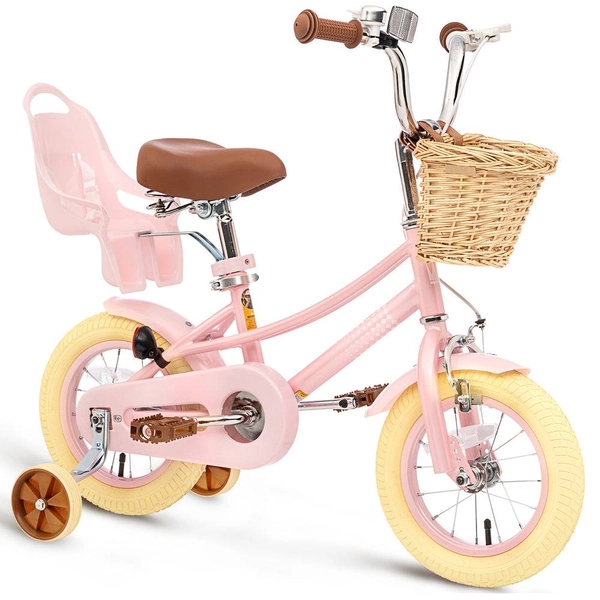
XJD Kids Bike for Girls – Pink, 12/14/16/20 Inch with Training Wheels
The XJD Kids Bike for Girls in Pink is a training-wheel bike built to carry your…
Training Wheel Bikes Wheel Size 12 Inch / 14 Inch / 16 Inch / 20 Inch Recommended Height 86–152 cm Training Wheels Yes 12 Inch