When can my kid ride a bike with training wheels
Most kids can ride a bike with training wheels when they can sit securely, reach the controls, pedal, steer and stop with supervision. Age is only a starting point: measure height and inseam, then confirm the fit on the actual bicycle.
Start with readiness, not a birthday
A child is ready to try when they can follow simple directions, look ahead while steering and keep their feet on the pedals without becoming overwhelmed. They should also be willing to practice; training wheels cannot compensate for fear, poor control or a bicycle that does not fit.
For a rough starting point, XBikes lists 12-inch wheels for ages 3–4 and heights 34–40 in (86–102 cm), and 14-inch wheels for ages 3–6 and heights 37–45 in (94–114 cm). Because these ranges overlap, age alone cannot choose the size.
Measure before comparing wheel sizes
Measure the child barefoot or in their usual riding shoes. Record total height, then measure inseam from the floor to the crotch. Use height to identify likely wheel sizes and inseam to assess whether the child can stand over and manage the bicycle comfortably.
Next, have the child try the exact bike. The American Academy of Pediatrics advises against buying an oversized bicycle for a child to grow into. Check that the child can stand over it, mount and dismount without struggling, reach the handlebar without stretching, turn it while remaining controlled, and operate the brakes reliably. The precise stand-over clearance and adjustment procedure depend on the bicycle, so follow its manual or ask a qualified bicycle mechanic.
Use this wheel-size range as a starting point
| Wheel size | Starting age | Rider height |
|---|---|---|
| 12 Inch | 3–4 | 34–40 in / 86–102 cm |
| 14 Inch | 3–6 | 37–45 in / 94–114 cm |
| 16 Inch | 4–7 | 40–48 in / 102–122 cm |
| 18 Inch | 5–9 | 43–52 in / 109–132 cm |
| 20 Inch | 7–12 | 48–60 in / 122–152 cm |
The broader XBikes standard continues with 24-inch wheels for ages 10–14 and heights 54–64 in (137–163 cm), and 26-inch wheels for youth and adults over 60 in (153 cm). Those larger sizes are rarely the first comparison for a child just beginning with training wheels. In every range, measured fit, reach, brake control and present confidence take priority over the age column.
What the supplied bikes let you compare
The three catalog options are relevant because each is offered with 12-, 14-, 16- and 20-inch wheel labels. That gives families several starting sizes to compare against the child’s measurements, although the label never replaces an individual fit check. None offers an 18-inch option, so these products are only nearest-size comparison points if the child’s measurements suggest 18 inches; a 16- or 20-inch bike is not an equivalent substitute.
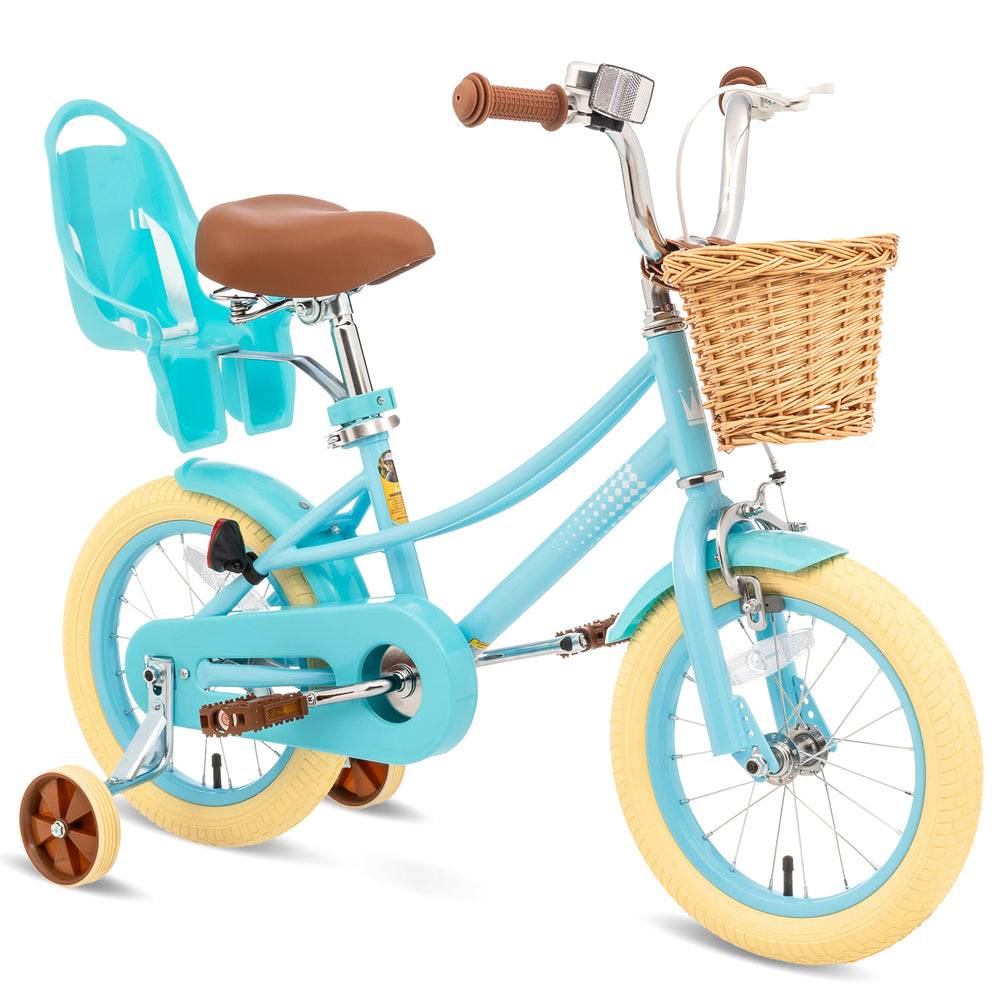 Girls' Training Wheel Bike by XJD, 12–20 Inch Wheels – Blue
Available in 12-, 14-, 16- and 20-inch wheel labels, this blue XJD training-wheel bike is relevant for comparing the child’s measured height with XBikes starting points. Confirm inseam, reach, braking and control on the actual bicycle.
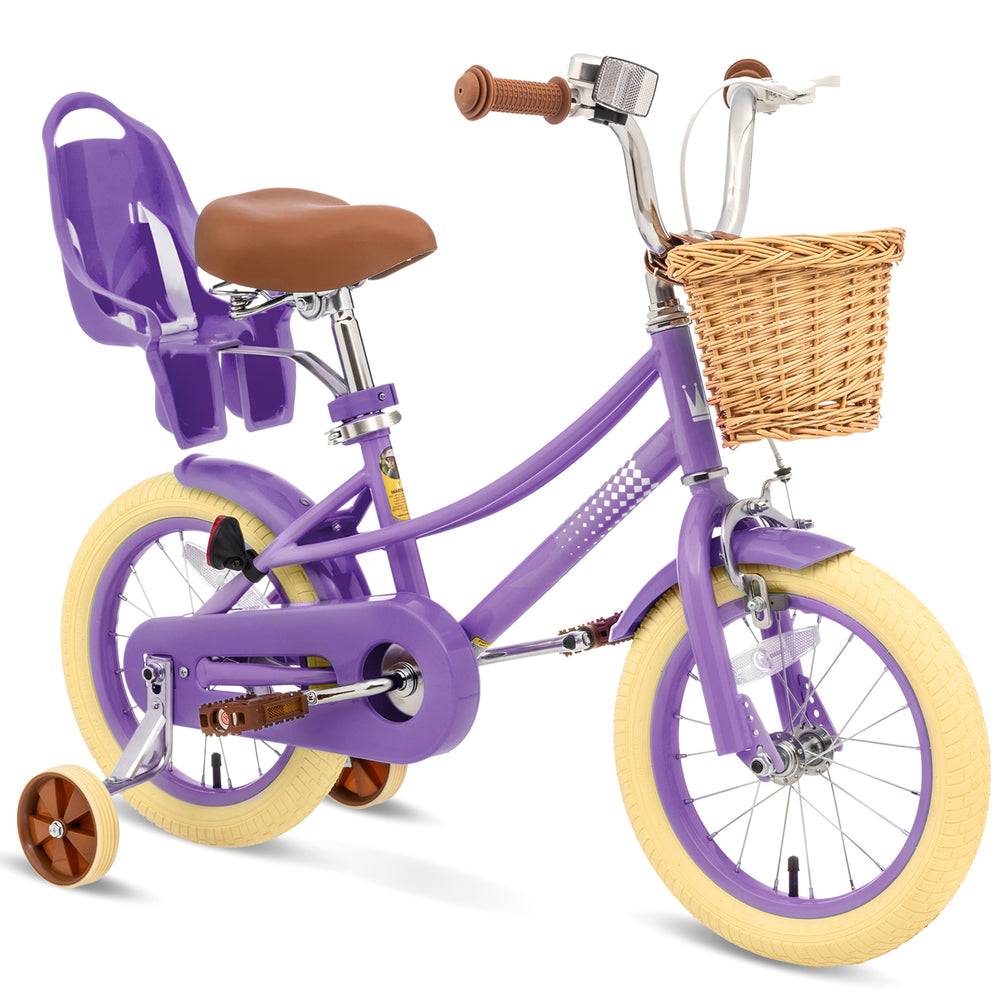 XJD Girls' Bike with Training Wheels, 12/14/16/20 Inch – Purple
This purple XJD training-wheel bike offers 12-, 14-, 16- and 20-inch labels. Use those options to shortlist by measured height, then require an individual check of stand-over fit, reach, brake operation and confidence.
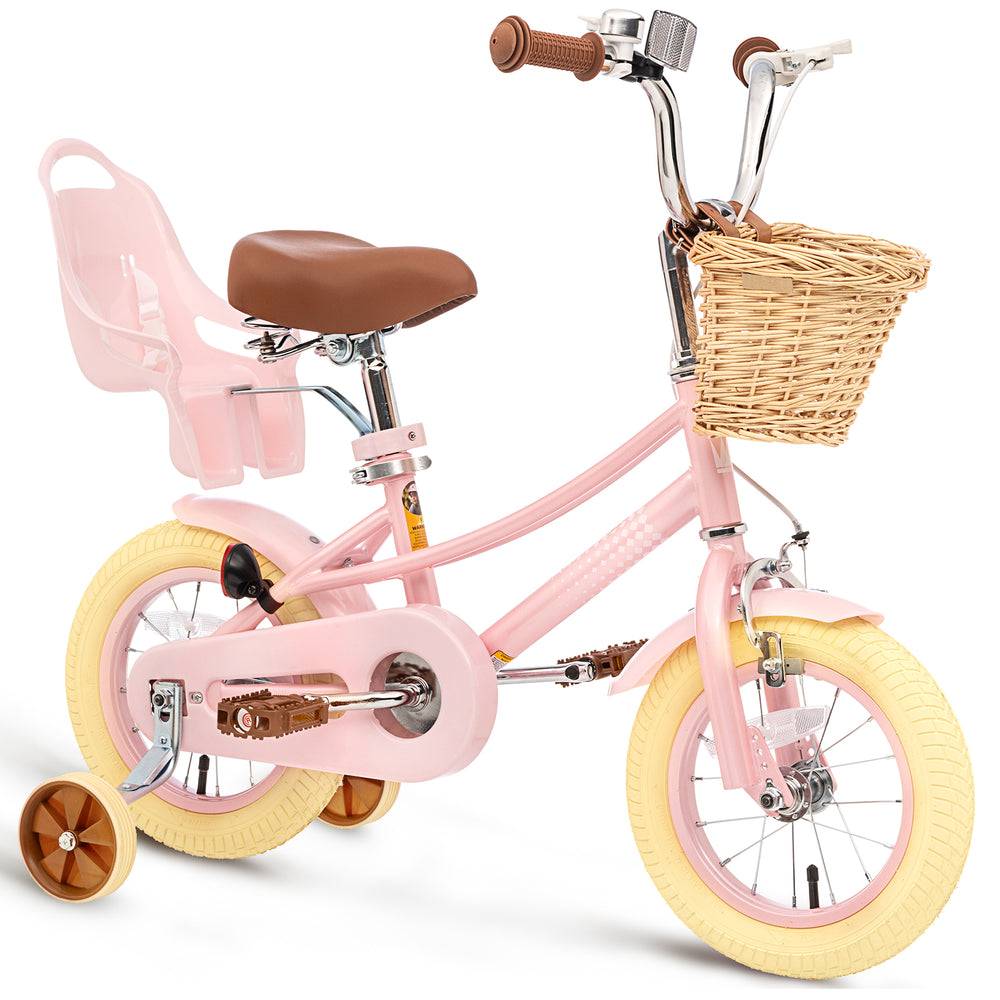 XJD Kids Bike for Girls – Pink, 12/14/16/20 Inch with Training Wheels
The pink XJD kids bike is listed with training wheels in 12-, 14-, 16- and 20-inch sizes. It provides several measurement-based comparison points, but no 18-inch option and no substitute for trying the exact fit.
The color and exact catalog titles distinguish the choices: Girls' Training Wheel Bike by XJD, 12–20 Inch Wheels – Blue, XJD Girls' Bike with Training Wheels, 12/14/16/20 Inch – Purple, and XJD Kids Bike for Girls – Pink, 12/14/16/20 Inch with Training Wheels. All three list the same available wheel-size labels: 12 Inch, 14 Inch, 16 Inch and 20 Inch. The supplied facts do not establish differences in brakes, weight, materials, load limits or adjustability, so do not use those features to choose without checking the exact product information and manual.
Confirm control on the actual bicycle
On a clear, level practice area away from traffic, support the child while they test the fitted bike. Watch whether they can:
- mount and dismount without the bicycle controlling their movement;
- sit securely and reach the handlebar without locking their arms or leaning far forward;
- pedal and steer together while looking where they want to go;
- reach and operate the bicycle’s braking controls consistently; and
- stop when asked and place a foot down with confidence.
If they cannot do these things, pause. Recheck the size and adjustments according to the exact manual, compare another listed wheel size, or consult a qualified bicycle mechanic. If the fit is correct but the child is tense or unable to coordinate the controls, more time and short, calm practice sessions may be more useful than forcing progress.
Prepare for the first ride
Use close adult supervision and choose a flat, open surface without vehicles, steep slopes or fixed obstacles. A properly fitting bicycle helmet is essential: the U.S. Consumer Product Safety Commission says it should sit level and its straps should be adjusted according to the helmet manufacturer’s instructions.
Before riding, follow the exact bicycle manual for assembly, inspection, training-wheel setup and maintenance. The supplied catalog facts do not provide torque settings, load limits or compatibility details. If anything is loose, unclear or difficult to adjust, have a qualified bicycle mechanic inspect it rather than guessing.
Make the decision
Measure height and inseam today, shortlist the matching XBikes starting size, and let the child try that exact bicycle. Proceed with training wheels only if they can stand over, reach, steer, pedal and brake with control; otherwise choose a better-fitting size or wait until their coordination and confidence catch up.
Recommended products
-
Save 15%

Green XJD Toddler Bike Helmet with Adjustable Fit, XS (46–51 cm)
The XJD toddler bike helmet in Green is built for the youngest riders — the size…
Bike Helmets Green / S:18.11"-20.08" / 46-51 cm -
Save 12%
Girls' Training Wheel Bike by XJD, 12–20 Inch Wheels – Blue
This XJD girls' training wheel bike in Blue covers one of the widest fit ranges …
Training Wheel Bikes Wheel Size 12 Inch / 14 Inch / 16 Inch / 20 Inch Recommended Height 86–152 cm Training Wheels Yes 12 Inch -
Save 15%
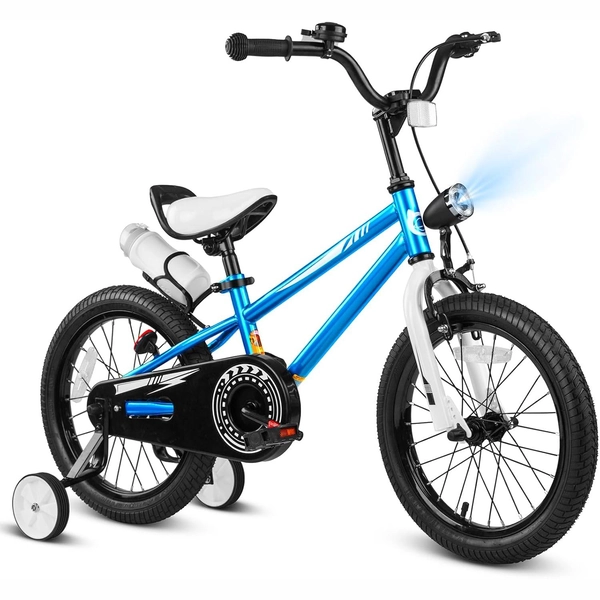
XJD Boys 12/14/16" Training Wheel Bike – Blue
The XJD Boys Bike in Blue is a training wheel bike for riders 71–122 cm tall—rou…
Training Wheel Bikes Wheel Size 12 Inch / 14 Inch / 16 Inch Recommended Height 86–122 cm Training Wheels Yes 16 Inch -
Save 15%
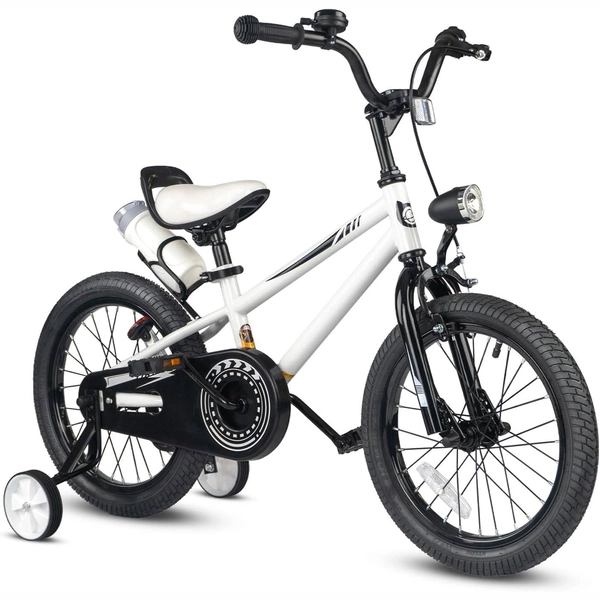
XJD Kids' Training Wheel Bike for Boys & Girls, 12/14/16 Inch – White
The XJD kids' training wheel bike in White is made for riders ages 3–8 (roughly …
Training Wheel Bikes Wheel Size 12 Inch / 14 Inch / 16 Inch Recommended Height 86–122 cm Training Wheels Yes 14 Inch