When do kids ride bikes without training wheels
Kids can ride without training wheels when they can balance, steer, start and stop with control—not when they reach one fixed age.
Use skills, not a birthday, as the deciding test
A child is ready to try two wheels when they can sit comfortably on a correctly fitted bike, look ahead while moving, steer around a gentle curve and stop on request. They should also be willing to practise; fear, a recent growth spurt or difficulty reaching the controls are good reasons to wait.
Training wheels can help a child become familiar with pedalling and steering, but they do not prove that the child can balance. Before removing them, watch whether the rider stays relaxed, steers deliberately and uses the brakes without searching or stretching for the controls.
Measure the rider and check the bike
Measure height without shoes, then measure inseam from the floor to the crotch. Compare height with the XBikes starting points below, but have the child try the actual bicycle. Age overlaps considerably and should never override fit.
| Wheel size | Starting age | Rider height |
|---|---|---|
| 12 Inch | 3–4 | 34–40 in / 86–102 cm |
| 14 Inch | 3–6 | 37–45 in / 94–114 cm |
| 16 Inch | 4–7 | 40–48 in / 102–122 cm |
| 18 Inch | 5–9 | 43–52 in / 109–132 cm |
| 20 Inch | 7–12 | 48–60 in / 122–152 cm |
| 24 Inch | 10–14 | 54–64 in / 137–163 cm |
| 26 Inch | Youth and adults | Over 60 in / 153 cm |
On the bike, check that the child can stand over it appropriately, reach the handlebar without leaning or locking their arms, turn the bars without losing posture and operate the brakes confidently. The American Academy of Pediatrics advises having the child try the bicycle and avoiding an oversized model bought for future growth. If the inseam, reach or brake access is wrong, choose a different fit even when the age label appears suitable.
How to test readiness before removing the wheels
- Choose a flat, open area away from traffic, slopes and obstacles.
- Fit a bicycle helmet so it sits level and secure, with its straps adjusted according to the helmet maker's instructions.
- Ask the child to demonstrate steering and stopping several times while the training wheels remain fitted.
- Have them practise balancing and gliding on a suitable bike setup, with close adult supervision.
- Try short starts without training-wheel support only when the child is calm and can place their feet down comfortably.
End the session before fatigue turns into poor control. If the rider repeatedly tips, looks down, cannot stop predictably or asks to stop, reinstall or retain the training wheels as directed by the exact bike manual and practise again later. For removal, refitting, compatibility or any unspecified adjustment, follow that manual or ask a qualified bicycle mechanic.
What the supplied training-wheel bikes can clarify
The two catalog options are relevant when the rider's individual fit points toward a 12-, 14- or 16-inch bike and training wheels are still useful during the transition. The Purple XJD Girls' Bike with Doll Seat & Basket and the Pink Girls' 12/14/16" Bike by XJD – Basket & Doll Seat are both listed in 12 Inch, 14 Inch and 16 Inch versions. Their titles and color or accessory wording do not establish fit; compare the chosen size with measured height, inseam, reach, brake control and confidence.
These particular catalog options help answer the question by providing same-category comparison points across three overlapping starter sizes, so a parent can evaluate whether continued training-wheel use matches the child's present fit and readiness.
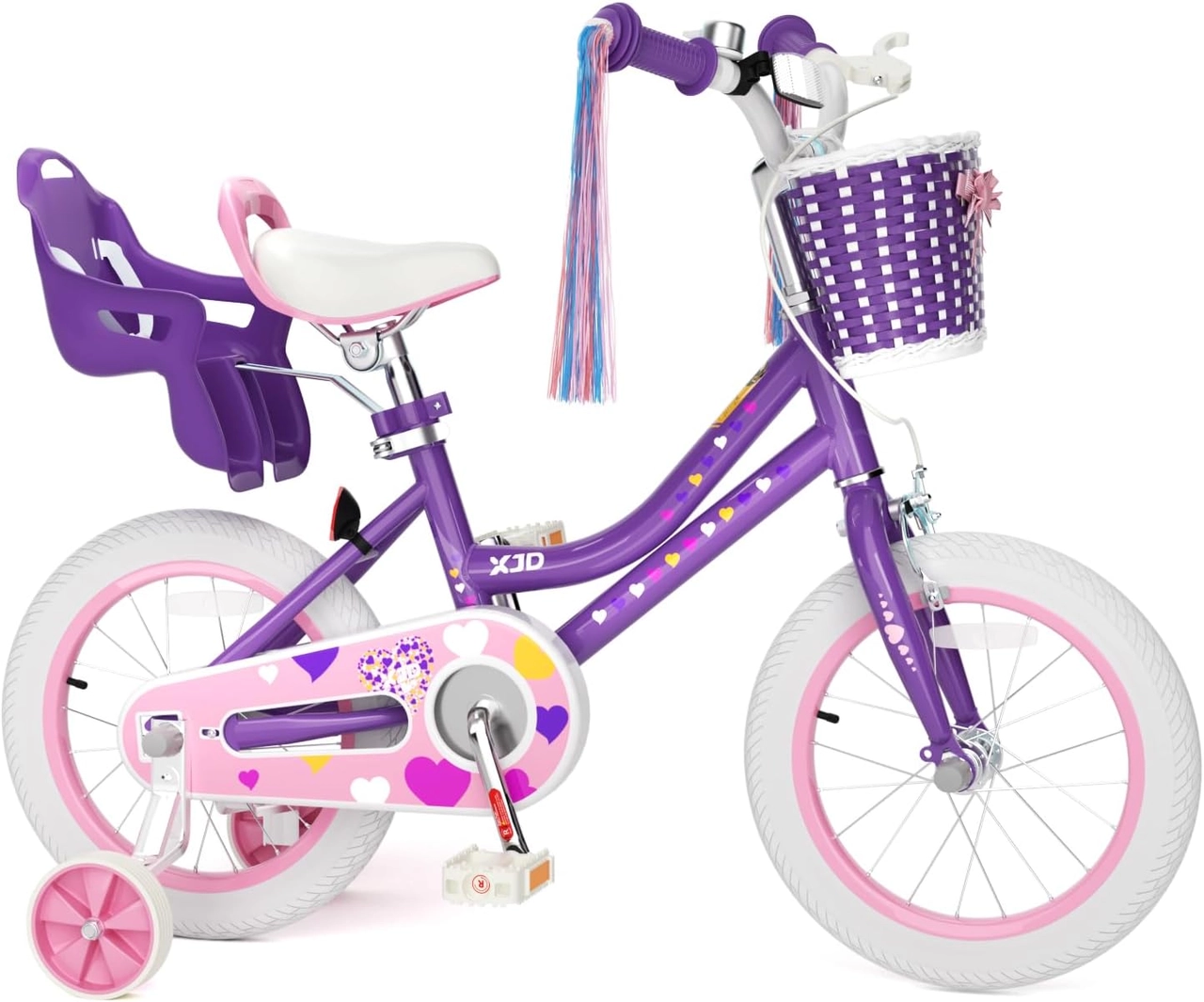 Purple XJD Girls' Bike with Doll Seat & Basket
A Training Wheel Bikes option offered in 12 Inch, 14 Inch and 16 Inch labels; compare the selected size with the rider’s measured fit and current balance confidence.
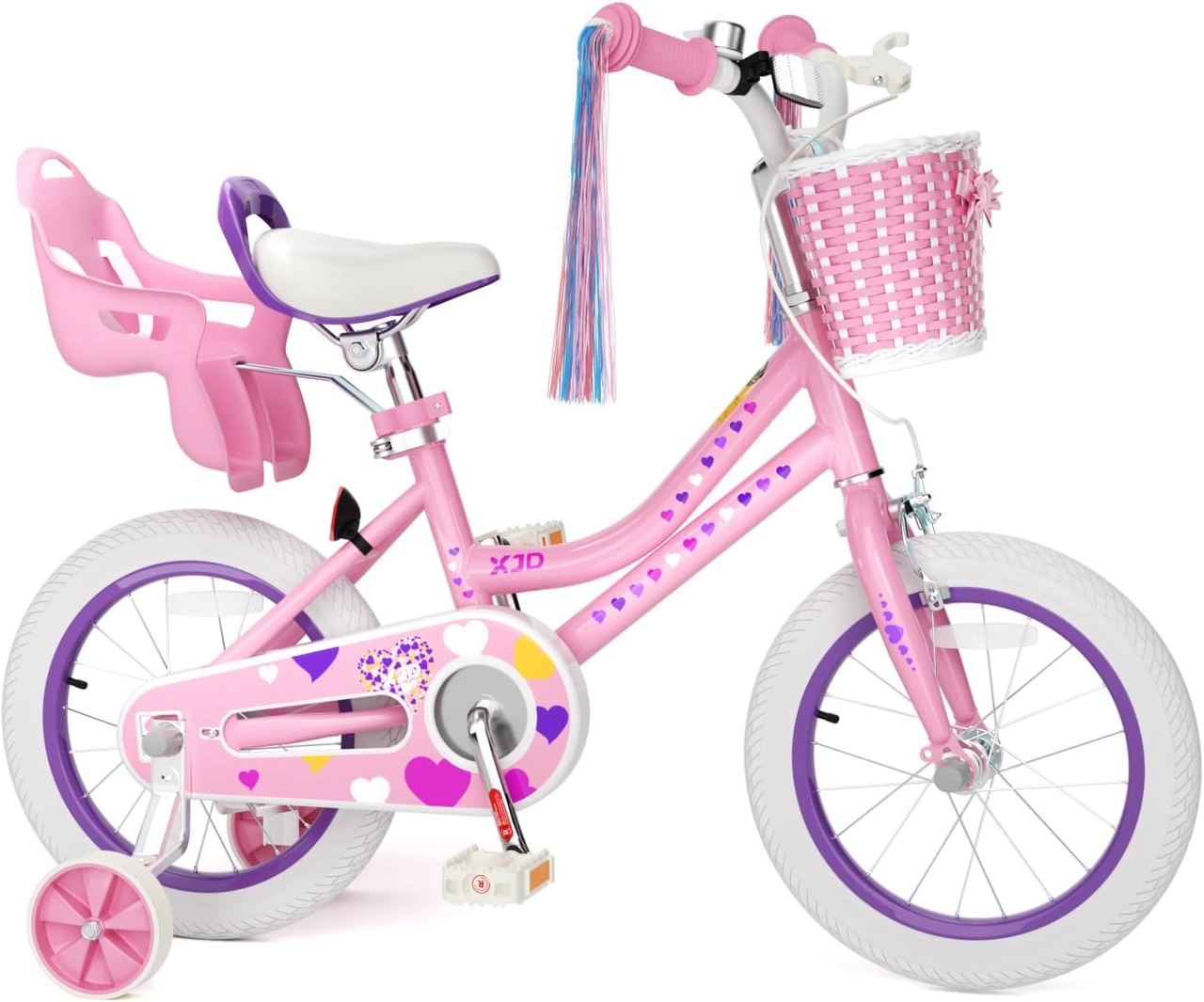 Pink Girls' 12/14/16" Bike by XJD – Basket & Doll Seat
Available in the same 12 Inch, 14 Inch and 16 Inch size labels, making it relevant for comparing training-wheel options when those sizes match an individual fit check.
Neither supplied listing includes an 18-, 20-, 24- or 26-inch option. If measurements indicate one of those sizes, these products are nearest-size comparison points only, not substitutes; a different wheel size is not equivalent.
Make the remove-or-wait decision
Remove the training wheels for a supervised trial when the bike fits now and the child can steer, balance, start, stop and reach every control with confidence. Wait and practise when fit is marginal, braking is inconsistent, balance collapses without support or the child is reluctant.
Measure height and inseam today, test stand-over, reach and braking on the actual bike, then choose a short two-wheel trial only if all five readiness skills are present.
Recommended products
-
Save 11%
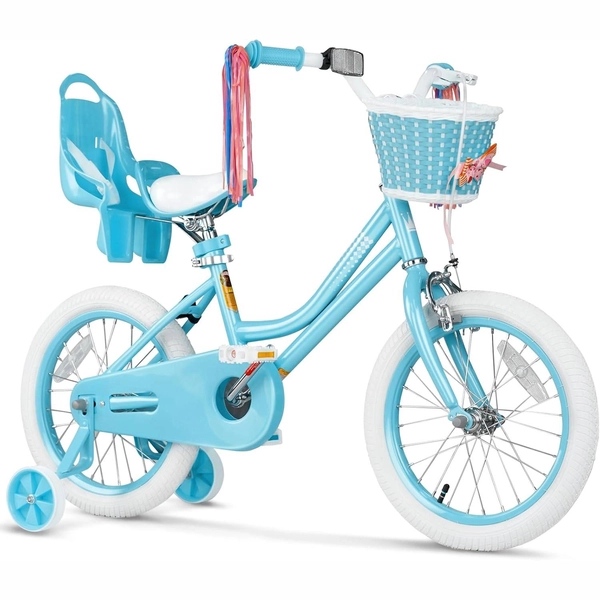
Blue XJD Girls Bike with Training Wheels – 12/14/16 Inch
If you're shopping for a first pedal bike for a daughter roughly 3 to 8 years ol…
Training Wheel Bikes Wheel Size 12 Inch / 14 Inch / 16 Inch Recommended Height 86–122 cm Training Wheels Yes 16 Inch -
Save 16%
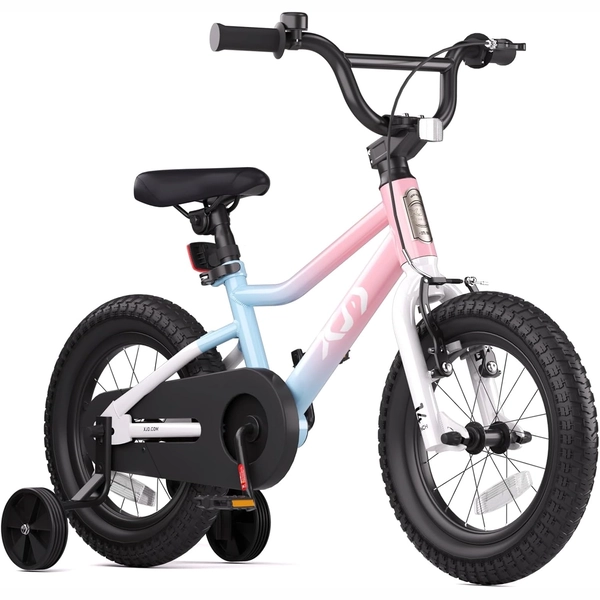
XJD Girls BMX Bike 12/14/16 Inch with Training Wheels – Pink Blue
The XJD Girls BMX Bike in Pink/Blue is built as a first pedal bike for kids roug…
Kids' BMX Bikes Wheel Size 12 Inch / 14 Inch / 16 Inch Recommended Height 86–122 cm Training Wheels Yes Single Speed 12 Inch -
Save 5%
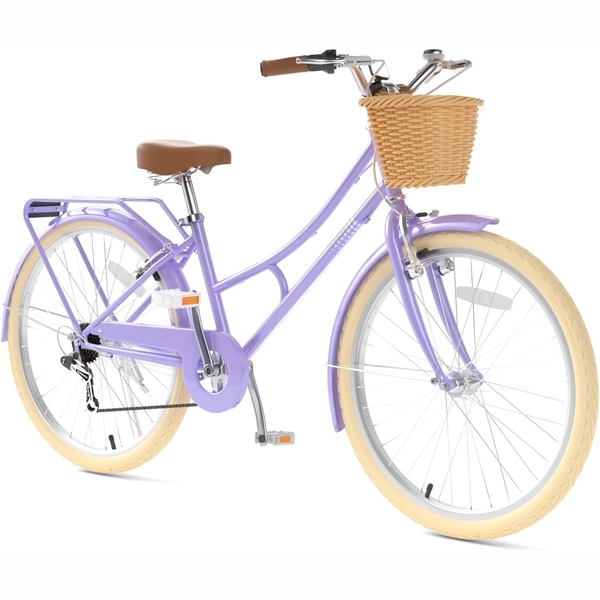
26-Inch XJD Beach Cruiser Bike for Girls – Purple, V-Brake
This XJD 26-inch purple beach cruiser is sized for big kids and teens — suggeste…
Beach Cruiser Bikes Wheel Size 20 Inch / 24 Inch / 26 Inch Recommended Height 122–200 cm Training Wheels No Geared Purple / 26 Inch -
Save 14%
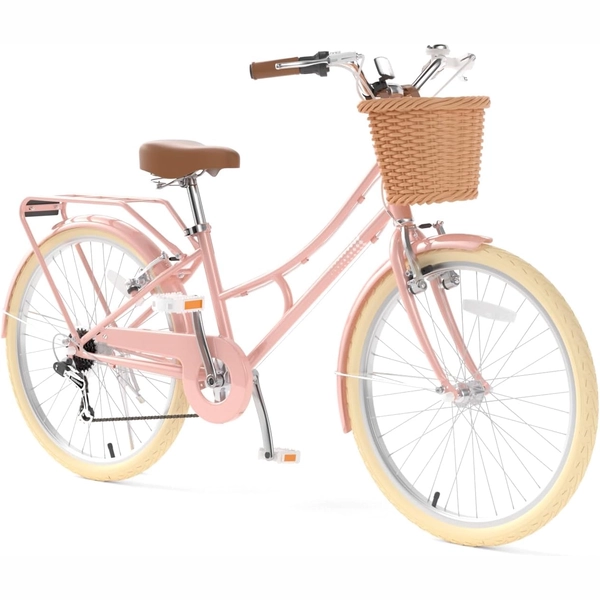
XJD Pink Beach Cruiser for Girls – Rear Rack & V-Brake
The XJD Pink Beach Cruiser for girls is the step-up bike for riders who've outgr…
Beach Cruiser Bikes Wheel Size 20 Inch / 24 Inch / 26 Inch Recommended Height 122–200 cm Training Wheels No Geared 20 Inch