When do most kids ride a bike without training wheels
Most kids ride without training wheels in the early elementary years, but there is no reliable birthday deadline. A child is ready when the bike fits, they can balance and steer, and they can start, brake and stop with control.
Readiness matters more than age
Training wheels support the bicycle but do not prove that a child is ready to balance independently. Look for repeatable control rather than one unusually good ride. A ready child can sit comfortably, look ahead, steer around a simple path and stop when asked without panicking.
Confidence matters too. Hesitation is normal, but a child who becomes distressed, refuses to move or cannot follow basic stopping directions needs more supported practice. Waiting is not falling behind; it gives balance, coordination and judgment time to develop.
Measure the rider before changing the setup
Measure the child’s standing height without shoes and their inseam from the floor to the crotch. Then have the child try the actual bicycle. Height narrows the wheel-size choices, while inseam, reach and control determine whether a particular bike fits.
- Stand-over: The child should be able to straddle the bicycle securely rather than being trapped above an oversized frame.
- Reach: They should hold the handlebars and turn them without stretching, twisting or losing a stable position.
- Brake control: They must be able to reach and operate the bicycle’s braking system reliably.
- Ground contact: Check whether they can get into a stable starting and stopping position with confidence.
Do not buy an oversized bicycle merely to allow room for growth. A larger wheel label does not compensate for poor reach, difficult stand-over or weak brake control.
Compare the relevant XBikes sizes
| Wheel size | Starting age | Rider height |
|---|---|---|
| 12 Inch | 3–4 | 34–40 in / 86–102 cm |
| 14 Inch | 3–6 | 37–45 in / 94–114 cm |
| 16 Inch | 4–7 | 40–48 in / 102–122 cm |
These ranges are starting points, not proof of readiness or fit. When ranges overlap, prioritize measured height, inseam, stand-over, reach, brake operation and current confidence. Age alone should never decide between two sizes.
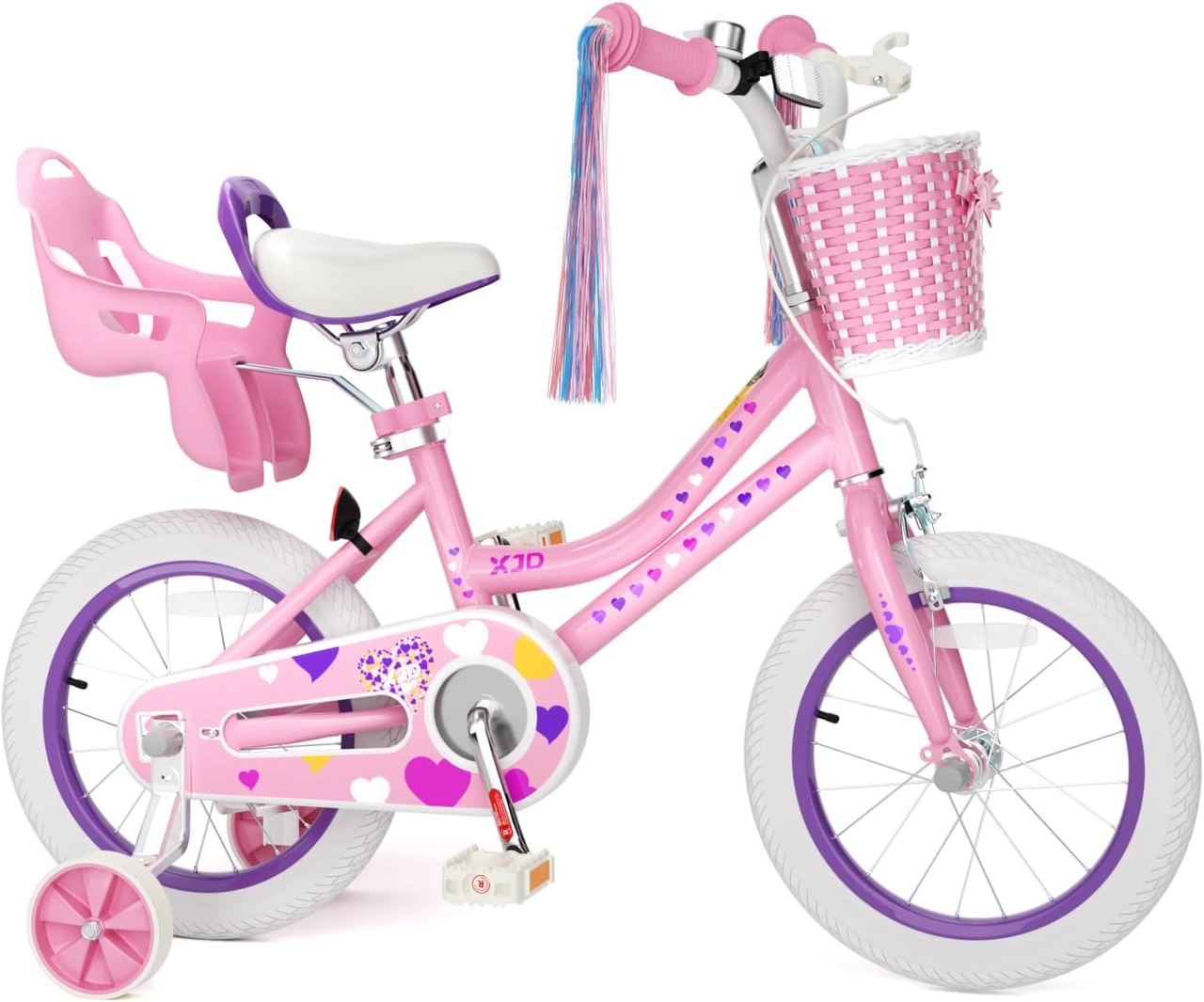
The Pink Girls' 12/14/16" Bike by XJD – Basket & Doll Seat is relevant because its supplied 12 Inch, 14 Inch and 16 Inch size labels let parents compare three XBikes starting ranges within one catalog option. Those labels do not establish that a particular child is ready to lose training wheels; the child still needs an individual fit and control check.
Use a short readiness check
Before removing or changing training wheels, watch the child during several ordinary rides. The transition is reasonable when most of the following are consistently true:
- The bicycle fits without excessive reaching or awkward stand-over.
- The child starts moving with minimal assistance.
- They steer toward a chosen line while looking ahead.
- They respond promptly to a request to slow or stop.
- They remain composed after a wobble and want to continue practicing.
If the child relies heavily on the supports, cannot brake predictably or is riding a poorly fitting bicycle, address that issue first. Do not treat removing training wheels as a test they must pass on a certain day.
Make the first unsupported practice manageable
Choose a flat, open area away from traffic, parked vehicles, obstacles and steep slopes. Keep sessions brief enough that fatigue does not replace good control. Give one instruction at a time—look ahead, steer smoothly or stop—so the child can concentrate on the skill that needs attention.
A properly fitting bicycle helmet is essential. It should sit level and be secured with its straps according to the helmet manufacturer’s instructions. Check the helmet fit each time rather than assuming a previous adjustment still works.
Training-wheel removal or adjustment can vary by bicycle. Follow the exact product manual for assembly, compatibility, maintenance and hardware procedures. If instructions are missing or the setup is uncertain, use a qualified bicycle mechanic rather than guessing at placement or torque.
Decide what to do next
If the child fits the bike and repeatedly demonstrates balance, steering, braking and calm stopping, plan a supervised attempt without training wheels. If one of those elements is missing, keep practicing that specific skill or reassess the fit. For the supplied XJD model, first compare the child’s measured height with its 12 Inch, 14 Inch or 16 Inch starting range, then verify the actual bike’s stand-over, reach and brake control before deciding whether today is the day to remove the supports.
Recommended products
-
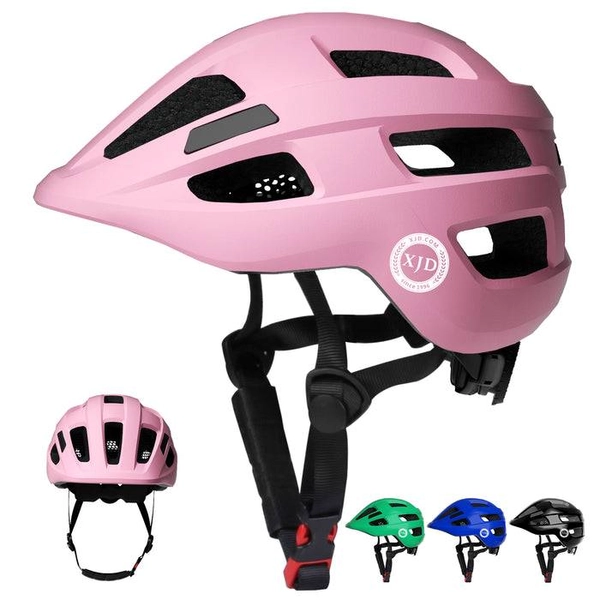
Kids Bike Helmet by XJD for Boys & Girls – Black, Blue, Green, Pink, Purple
The XJD Kids Bike Helmet covers a wide 2-to-8-year age range thanks to two head-…
Bike Helmets Pink / M:20.47"-22.05" / 52-56 cm -
Save 15%
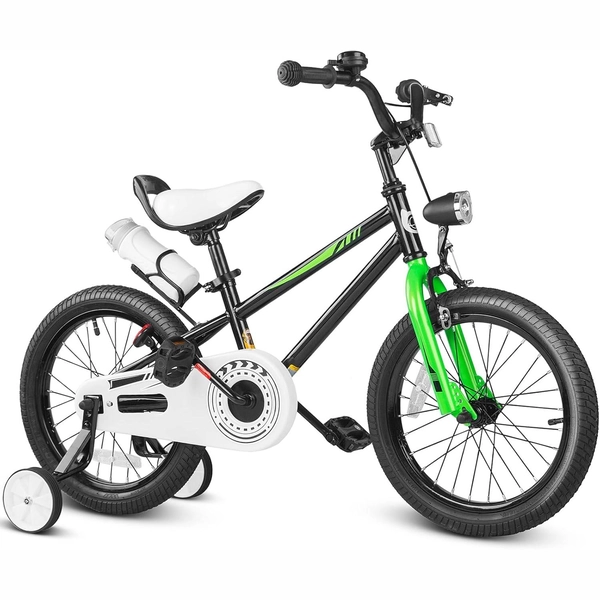
Black XJD Kids Bike for Boys – 12, 14 & 16 Inch Sizes
For a son between roughly 3 and 8 years old, the XJD Kids Bike in Black covers t…
Training Wheel Bikes Wheel Size 12 Inch / 14 Inch / 16 Inch Recommended Height 86–122 cm Training Wheels Yes 12 Inch -
Save 12%
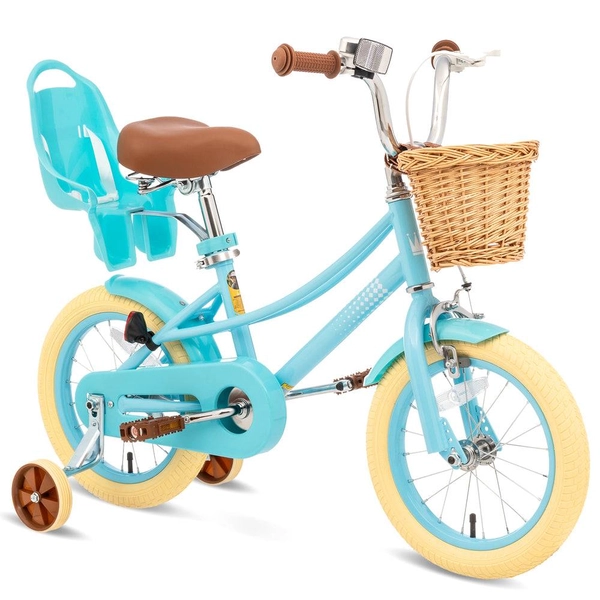
Girls' Training Wheel Bike by XJD, 12–20 Inch Wheels – Blue
This XJD girls' training wheel bike in Blue covers one of the widest fit ranges …
Training Wheel Bikes Wheel Size 12 Inch / 14 Inch / 16 Inch / 20 Inch Recommended Height 86–152 cm Training Wheels Yes 12 Inch -
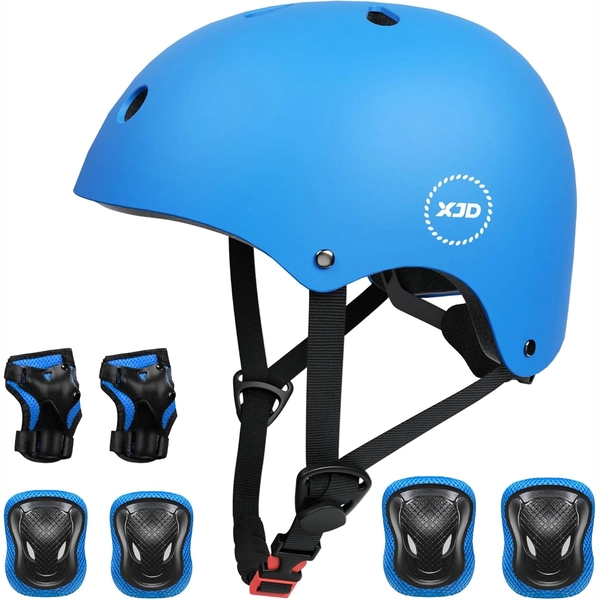
Blue XJD Helmet & Protective Gear Set for Kids, Sizes S/M
The Blue XJD Helmet & Protective Gear Set is made for kids roughly 3 to 8 years …
Bike Helmets S