When is child ready for bike with training wheels
A child is ready for a bike with training wheels when a correctly sized bicycle allows comfortable stand-over, easy reach, reliable brake control and calm pedaling. Measure height and inseam, then confirm the fit in person; age alone is not enough.
Check readiness before choosing a wheel size
Training wheels can help a child who is ready to pedal and steer but is not yet confident balancing independently. Before buying, check whether the child can follow simple stop-and-go directions, look ahead while steering and remain composed when the bicycle moves or leans slightly.
Do not use training wheels to compensate for a bicycle that is too large. American Academy of Pediatrics guidance recommends having the child try the bicycle rather than buying an oversized model for future growth. The rider needs usable stand-over space, comfortable control and access to the brakes.
Measure and compare the rider
Measure the child's standing height without shoes. Also measure inseam from the floor to the crotch, because two children of the same height can have different leg lengths. Use the height ranges below only to identify likely starting sizes.
| Wheel size | Age starting point | Rider height |
|---|---|---|
| 12 Inch | 3–4 | 34–40 in / 86–102 cm |
| 14 Inch | 3–6 | 37–45 in / 94–114 cm |
| 16 Inch | 4–7 | 40–48 in / 102–122 cm |
| 18 Inch | 5–9 | 43–52 in / 109–132 cm |
| 20 Inch | 7–12 | 48–60 in / 122–152 cm |
| 24 Inch | 10–14 | 54–64 in / 137–163 cm |
| 26 Inch | Youth and adults | Over 60 in / 153 cm |
Overlapping ranges are normal. When the measurement suggests two sizes, compare both on the actual child. Inseam, reach, brake operation and present confidence should settle the decision—not the older age in a range or the hope that the child will grow into the larger bicycle.
Perform an individual fit check
- Stand-over: Have the child straddle the bicycle while stationary. They should be able to support themselves securely rather than balancing on tiptoe or against the frame.
- Seated position: Confirm that starting, stopping and placing a foot down feel controlled. Do not infer this from wheel diameter alone.
- Reach: The child should hold the handlebars without stretching, locking the arms or leaning so far forward that steering becomes awkward.
- Brake control: Ask the child to operate the provided braking controls while maintaining a stable grip. If the controls cannot be reached or used reliably, the fit is not ready.
- Confidence: Let the rider begin in a flat, open area under close adult supervision. Fear, freezing or repeated loss of directional control means it is sensible to pause and reassess.
How the catalog options compare
These particular XBikes options make the size decision easier because all are cataloged as training-wheel bikes and together provide 12-, 14-, 16- and 20-inch comparison points. They are relevant only after the rider's measurements indicate one of those sizes; their titles and SKU labels do not replace an individual fit check.
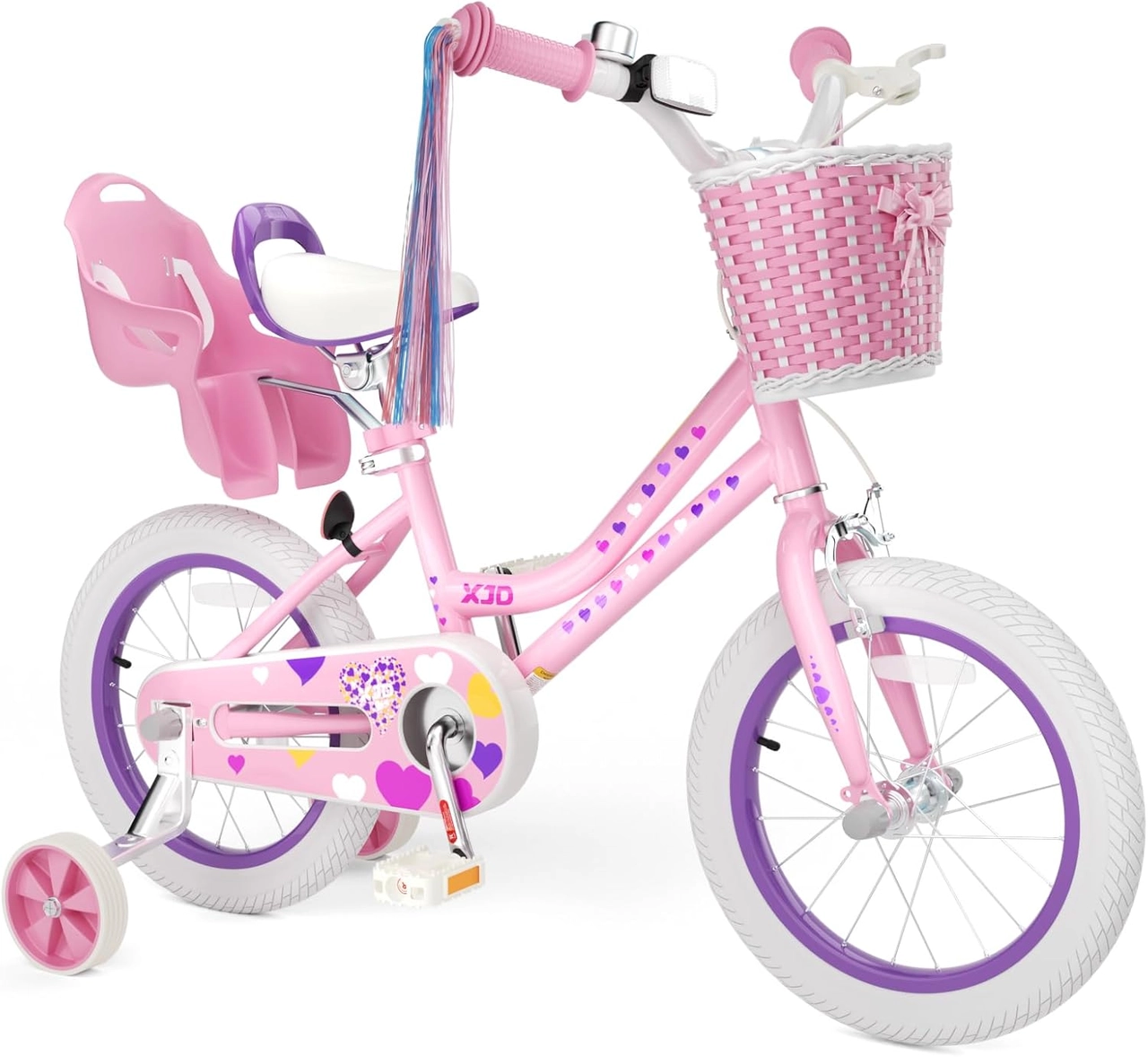 Light Pink XJD Girls' Bicycle with Basket & Training Wheels
Available in 12, 14, 16 and 20 Inch labels, this training-wheel bicycle offers the broadest supplied size range for comparison after measuring the rider and completing an individual fit check.
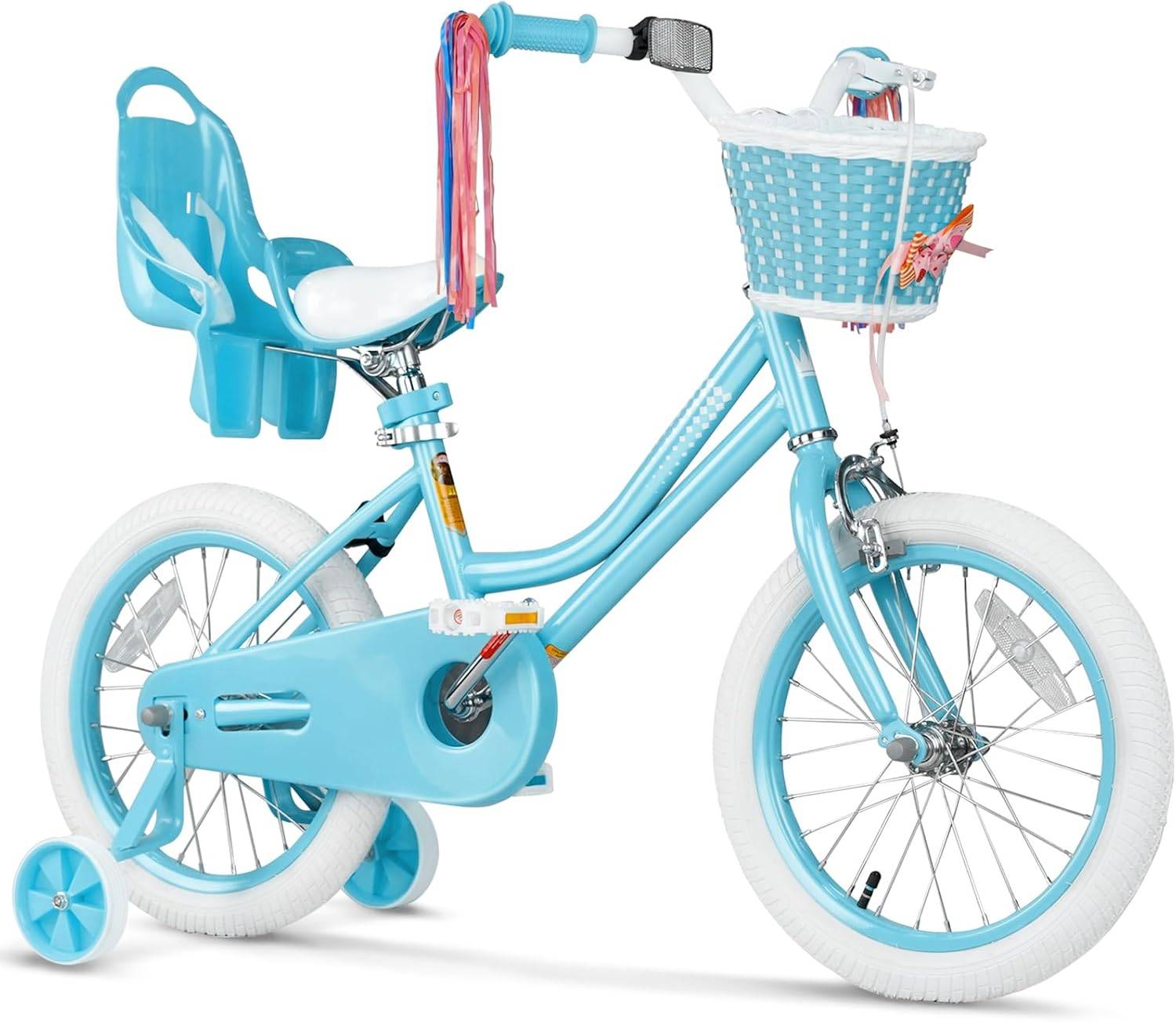 Blue XJD Girls Bike with Training Wheels – 12/14/16 Inch
This training-wheel bike is available in 12, 14 and 16 Inch labels, making it relevant when the rider's measured height points to one of those starting sizes and the bicycle passes an in-person fit check.
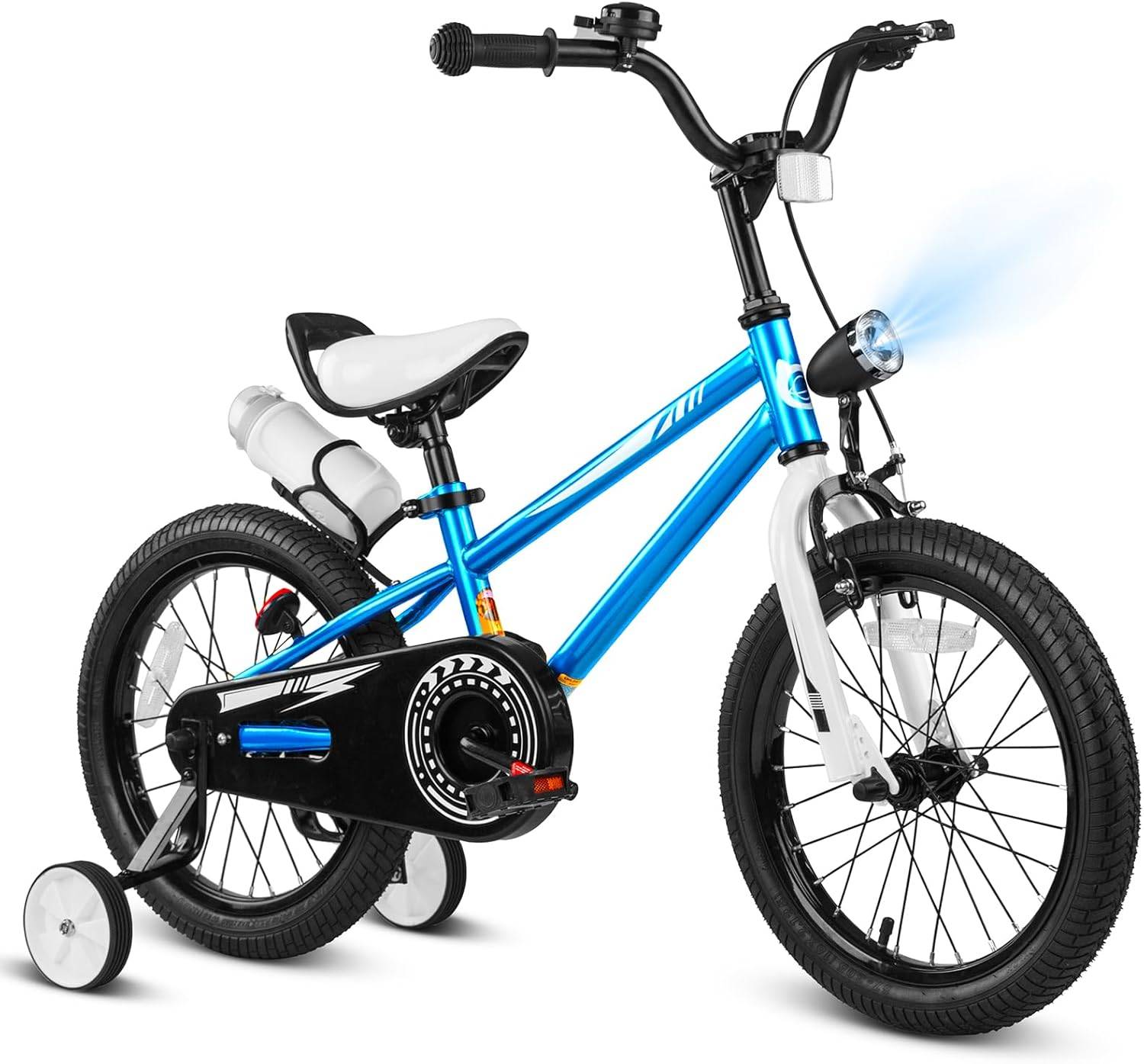 XJD Boys 12/14/16" Training Wheel Bike – Blue
Offered with 12, 14 and 16 Inch labels, this training-wheel bicycle is a comparison option for riders whose measurements indicate those sizes; its catalog title is not evidence of individual fit.
The Light Pink XJD Girls' Bicycle with Basket & Training Wheels is offered in 12 Inch, 14 Inch, 16 Inch and 20 Inch labels, so it covers the widest supplied size span. The Blue XJD Girls Bike with Training Wheels – 12/14/16 Inch offers 12 Inch, 14 Inch and 16 Inch labels. The XJD Boys 12/14/16" Training Wheel Bike – Blue provides the same three supplied wheel-size labels.
Compare only the SKU label that matches the fit-check starting point. No supplied catalog fact establishes differences in weight, materials, brakes, load limits or certifications, so those should not be assumed from the names or appearance.
Set up the bicycle without guessing
Correct assembly matters after selecting the size. Follow the manual for the exact product when fitting or adjusting training wheels, the seat, handlebars, brakes and other components. Use the specified limits and torque instructions from that manual. If instructions are missing, unclear or the bicycle does not operate smoothly, use a qualified bicycle mechanic rather than inventing a procedure.
A properly fitting bicycle helmet is also essential. Following U.S. Consumer Product Safety Commission guidance, place it level on the child's head and adjust its straps according to the helmet manufacturer's instructions. Replace or reject a helmet that cannot be made to fit properly.
Make the final readiness decision
Choose a training-wheel bike now only if the child's measured height points to the size, the actual bicycle passes stand-over and reach checks, the child can control its brakes and steering, and supervised practice feels manageable. If any check fails, do not size up for growth: try another indicated size, correct the setup using the manual, or wait until the child is ready.
Recommended products
-
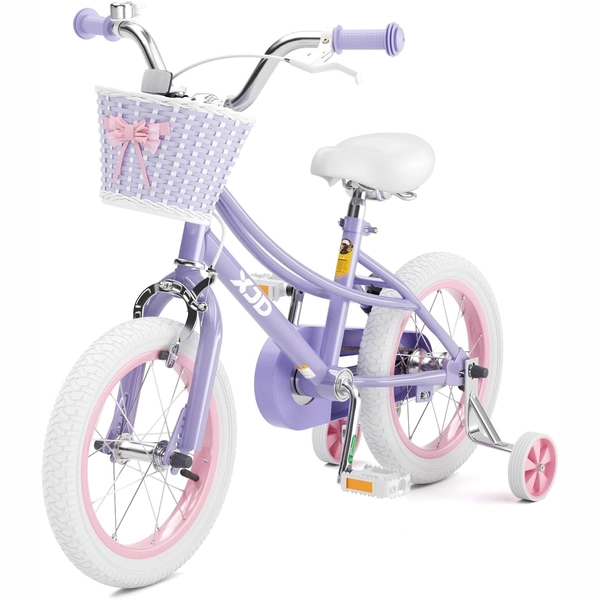
Girls' Training Wheel Bike by XJD with Basket – Purple
If you're shopping for a first bike for a girl roughly 3 to 12 years old (91–152…
Training Wheel Bikes Wheel Size 14 Inch / 16 Inch / 20 Inch Recommended Height 94–152 cm Training Wheels Yes Single Speed 14 Inch -
Save 11%
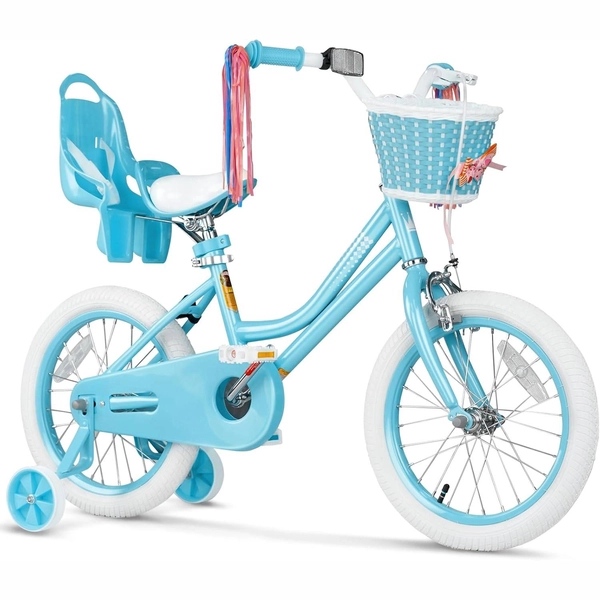
Blue XJD Girls Bike with Training Wheels – 12/14/16 Inch
If you're shopping for a first pedal bike for a daughter roughly 3 to 8 years ol…
Training Wheel Bikes Wheel Size 12 Inch / 14 Inch / 16 Inch Recommended Height 86–122 cm Training Wheels Yes 16 Inch -
Save 13%
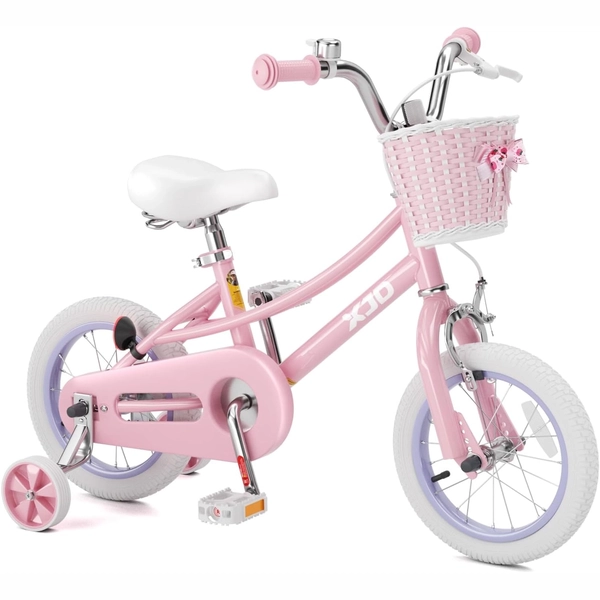
Pink 12/14/16/20" XJD Girls Bike with Training Wheels & Basket
The Pink XJD Girls Bike with Training Wheels & Basket is a first-bike pick f…
Training Wheel Bikes Wheel Size 12 Inch / 14 Inch / 16 Inch / 20 Inch Recommended Height 86–152 cm Training Wheels Yes Single Speed 12 Inch -
Save 12%
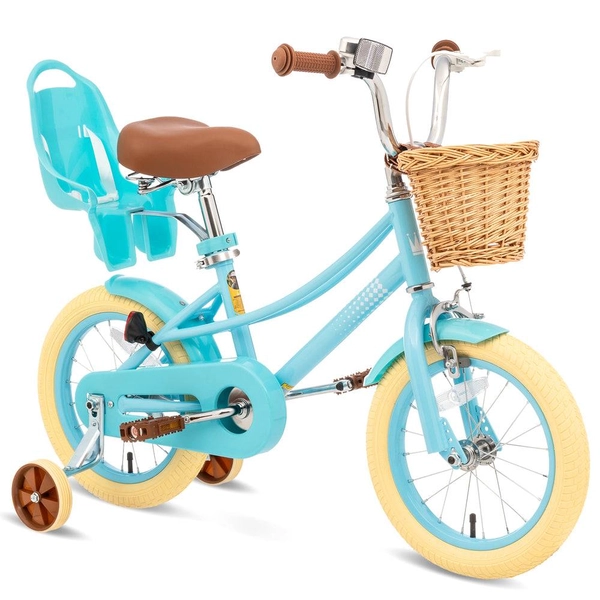
Girls' Training Wheel Bike by XJD, 12–20 Inch Wheels – Blue
This XJD girls' training wheel bike in Blue covers one of the widest fit ranges …
Training Wheel Bikes Wheel Size 12 Inch / 14 Inch / 16 Inch / 20 Inch Recommended Height 86–152 cm Training Wheels Yes 12 Inch