When should child ride bike without stabilisers
Most children should ride without stabilisers when they can balance, steer, stop and start with control—not when they reach a particular age.
Use readiness, not age, as the deciding test
Remove the stabilisers when your child can keep the bicycle upright through their own balance rather than leaning onto the extra wheels. They should also look ahead, steer a predictable line, respond to instructions and stop without panic.
Confidence matters, but it is not the same as control. An eager child who cannot yet brake or place a foot down promptly needs more supported practice. A cautious child who can already glide, steer and stop may be physically ready but benefit from short, pressure-free sessions.
Measure fit before changing the setup
Measure the rider’s standing height and inseam, then have them try the bicycle. Check that they can stand over it comfortably, reach the handlebars without stretching, turn them without losing posture, and operate the brakes reliably. Do not choose an oversized bicycle merely to allow room for growth.
The XBikes wheel-size ranges below are starting points only. Where ranges overlap, compare actual fit and control rather than selecting by age alone.
| Wheel size | Starting age | Rider height |
|---|---|---|
| 12 Inch | 3–4 | 34–40 in / 86–102 cm |
| 14 Inch | 3–6 | 37–45 in / 94–114 cm |
| 16 Inch | 4–7 | 40–48 in / 102–122 cm |
| 18 Inch | 5–9 | 43–52 in / 109–132 cm |
| 20 Inch | 7–12 | 48–60 in / 122–152 cm |
| 24 Inch | 10–14 | 54–64 in / 137–163 cm |
| 26 Inch | Youth and adults | Over 60 in / 153 cm |
Height still does not prove that a bike fits. Inseam, reach, brake control and current confidence can make two similarly sized children need different setups.
Run a simple readiness check
- Balance: On a flat, open practice area, check whether the child can move forward without repeatedly depending on the stabilisers.
- Steering: Ask them to follow a broad, gentle path while looking where they want to go.
- Stopping: Confirm that they can reach and use the bicycle’s brakes, stop on request and put a foot down under control.
- Starting: See whether they can begin moving with only light adult support rather than being pushed into speed.
- Composure: Watch for calm recovery from a wobble. Freezing, sharp turns or panicked braking mean more practice is sensible.
A properly fitting bicycle helmet is essential during every attempt. It should sit level and be secured with its straps according to the helmet manufacturer’s instructions.
How to make the transition
Choose a level area away from traffic, obstacles and steep slopes. Keep sessions brief enough that fatigue does not replace control. An adult can steady the child lightly while they begin, then reduce assistance as balance takes over. Avoid holding so firmly that the adult—not the rider—is keeping the bicycle upright.
If the stabilisers are removable, follow the exact bicycle manual for removal and adjustment. Requirements vary, so do not guess about compatibility, assembly steps or torque. Use a qualified bicycle mechanic if the instructions are missing, unclear or the bicycle does not operate correctly afterward.
When the supplied bikes are relevant
The two catalog options are relevant when a child still benefits from training wheels or when you are comparing suitable wheel sizes before practicing without them. Girls' Training Wheel Bike by XJD, 12–20 Inch Wheels – Blue and XJD Girls' Bike with Training Wheels, 12/14/16/20 Inch – Purple are each offered in 12 Inch, 14 Inch, 16 Inch and 20 Inch labels. Those options let you compare the rider’s measured height with several XBikes starting points, but they do not replace an individual stand-over, reach and brake-control check.
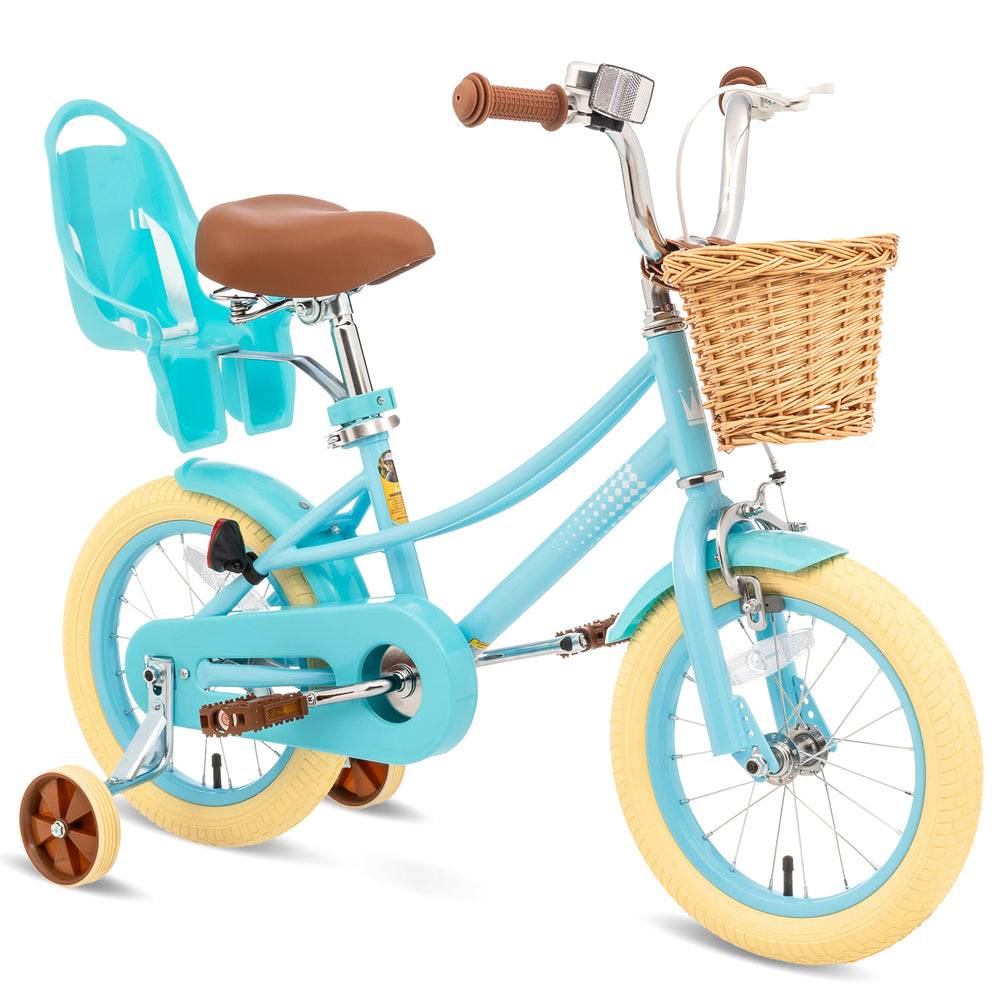 Girls' Training Wheel Bike by XJD, 12–20 Inch Wheels – Blue
Available in 12, 14, 16 and 20 Inch labels, this blue XJD training-wheel bike is relevant for comparing the rider’s measured height with XBikes size starting points before an individual fit check.
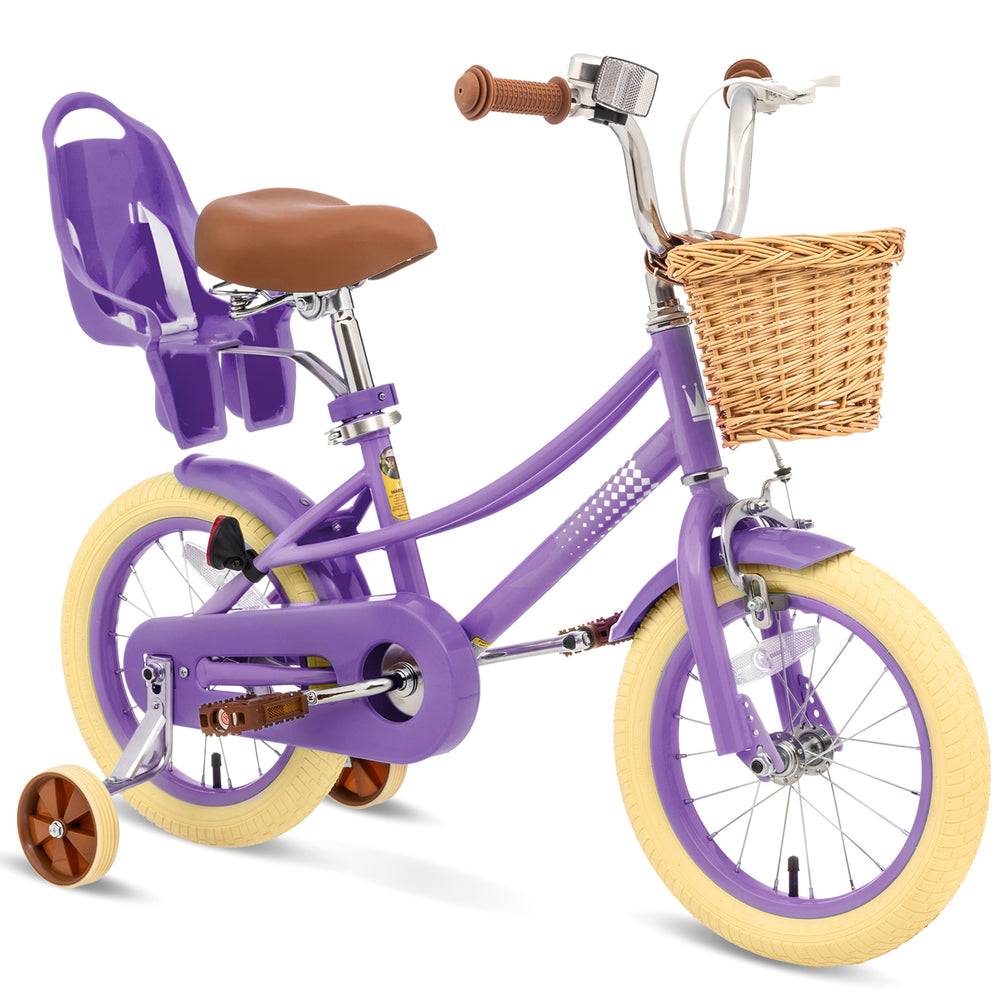 XJD Girls' Bike with Training Wheels, 12/14/16/20 Inch – Purple
This purple XJD training-wheel bike offers 12, 14, 16 and 20 Inch labels, making it relevant when a child still needs stabilisers or when comparing wheel-size starting points before checking fit and control.
Neither supplied bike has an 18 Inch, 24 Inch or 26 Inch option in the catalog facts. If the rider’s measurements indicate one of those sizes, these products are comparison points only—not equal-size substitutes. Their titles also provide no evidence about brake type, construction, weight, load limits or how their training wheels are removed; consult the exact manual or a qualified mechanic for those details.
Make the decision today
Keep the stabilisers for now if the child relies on them to stay upright, cannot stop promptly, struggles to reach the controls or becomes overwhelmed by wobbling. Begin supervised practice without them when the bike fits and the child can balance, steer, start and stop consistently. Measure height and inseam first, confirm reach and brake control on the actual bicycle, then make one short, level-ground trial your next step.
Recommended products
-
Save 12%
Girls' Training Wheel Bike by XJD, 12–20 Inch Wheels – Blue
This XJD girls' training wheel bike in Blue covers one of the widest fit ranges …
Training Wheel Bikes Wheel Size 12 Inch / 14 Inch / 16 Inch / 20 Inch Recommended Height 86–152 cm Training Wheels Yes 12 Inch -
Save 15%
XJD Boys 12/14/16" Training Wheel Bike – Blue
The XJD Boys Bike in Blue is a training wheel bike for riders 71–122 cm tall—rou…
Training Wheel Bikes Wheel Size 12 Inch / 14 Inch / 16 Inch Recommended Height 86–122 cm Training Wheels Yes 16 Inch -
Save 15%
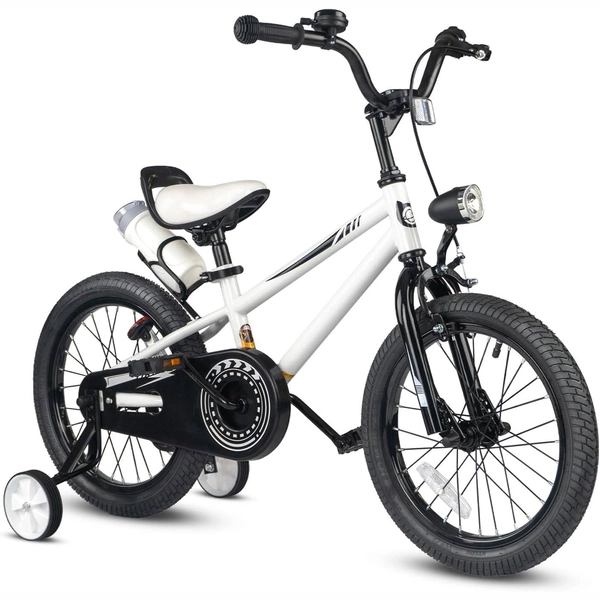
XJD Kids' Training Wheel Bike for Boys & Girls, 12/14/16 Inch – White
The XJD kids' training wheel bike in White is made for riders ages 3–8 (roughly …
Training Wheel Bikes Wheel Size 12 Inch / 14 Inch / 16 Inch Recommended Height 86–122 cm Training Wheels Yes 14 Inch -
Save 12%
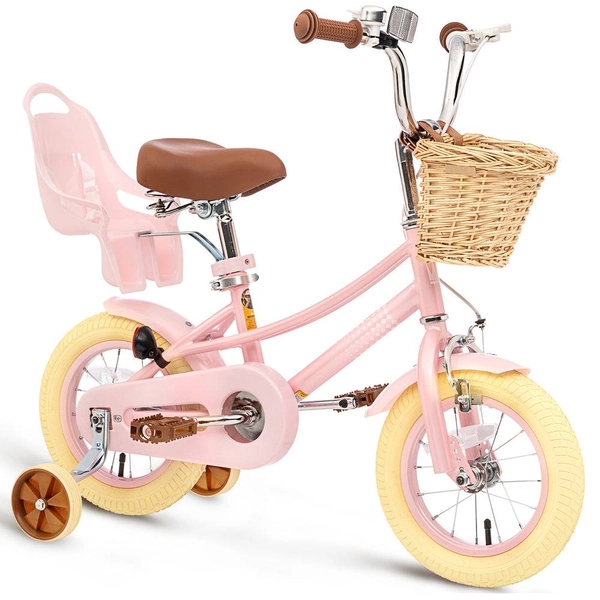
XJD Kids Bike for Girls – Pink, 12/14/16/20 Inch with Training Wheels
The XJD Kids Bike for Girls in Pink is a training-wheel bike built to carry your…
Training Wheel Bikes Wheel Size 12 Inch / 14 Inch / 16 Inch / 20 Inch Recommended Height 86–152 cm Training Wheels Yes 12 Inch