When to get a kid a bike with training wheels
Get a child a bike with training wheels when they can pedal, steer and operate the brakes on a correctly fitted bike but are not yet confident balancing alone. Readiness and fit matter more than a birthday.
Look for readiness, not a fixed age
Training wheels can be useful when a child wants to ride and can follow simple directions, yet still needs side-to-side support while learning to start, stop and steer. They are less relevant if the child already balances and coasts confidently on two wheels, or if fear prevents basic control even with support.
Before buying, let the child try the bicycle. Ask them to sit, hold the grips, turn the handlebar, reach the brake controls and place their feet where the bicycle’s instructions require. Do not choose an oversized bike merely to leave room for growth.
Measure height and check the individual fit
Measure the child’s current height without shoes. Use the XBikes ranges below only to identify sizes worth trying; overlapping ranges are normal, and age is only a starting point.
| Wheel size | Starting age | Rider height |
|---|---|---|
| 12 Inch | 3–4 | 34–40 in / 86–102 cm |
| 14 Inch | 3–6 | 37–45 in / 94–114 cm |
| 16 Inch | 4–7 | 40–48 in / 102–122 cm |
| 18 Inch | 5–9 | 43–52 in / 109–132 cm |
| 20 Inch | 7–12 | 48–60 in / 122–152 cm |
| 24 Inch | 10–14 | 54–64 in / 137–163 cm |
| 26 Inch | Youth and adults | Over 60 in / 153 cm |
Then check inseam, stand-over clearance, reach, brake control and confidence on the exact bicycle. The child should not be stretched toward the handlebar or unable to operate the brakes. If two wheel sizes match the height range, compare both in person and choose by actual control rather than the larger number.
Decide whether training wheels solve today’s problem
- They may be relevant: the child fits the bike, can steer and brake, and wants support while developing balance.
- Wait and reassess: the child cannot comfortably reach the controls, cannot manage starting and stopping, or does not want to ride.
- They may no longer be needed: the child can balance, coast, turn and stop with control without side support.
Training wheels do not correct poor fit. A too-large bicycle can make reaching the ground, handlebar or brakes harder, so adding supports is not a substitute for selecting the right frame and wheel size.
Compare the supplied XBikes options
These catalog options help because they let you compare training-wheel bicycles across 12, 14, 16 and 20 Inch labels after measuring the rider. The titles identify catalog models and color or audience labels; they do not prove that a particular child fits.
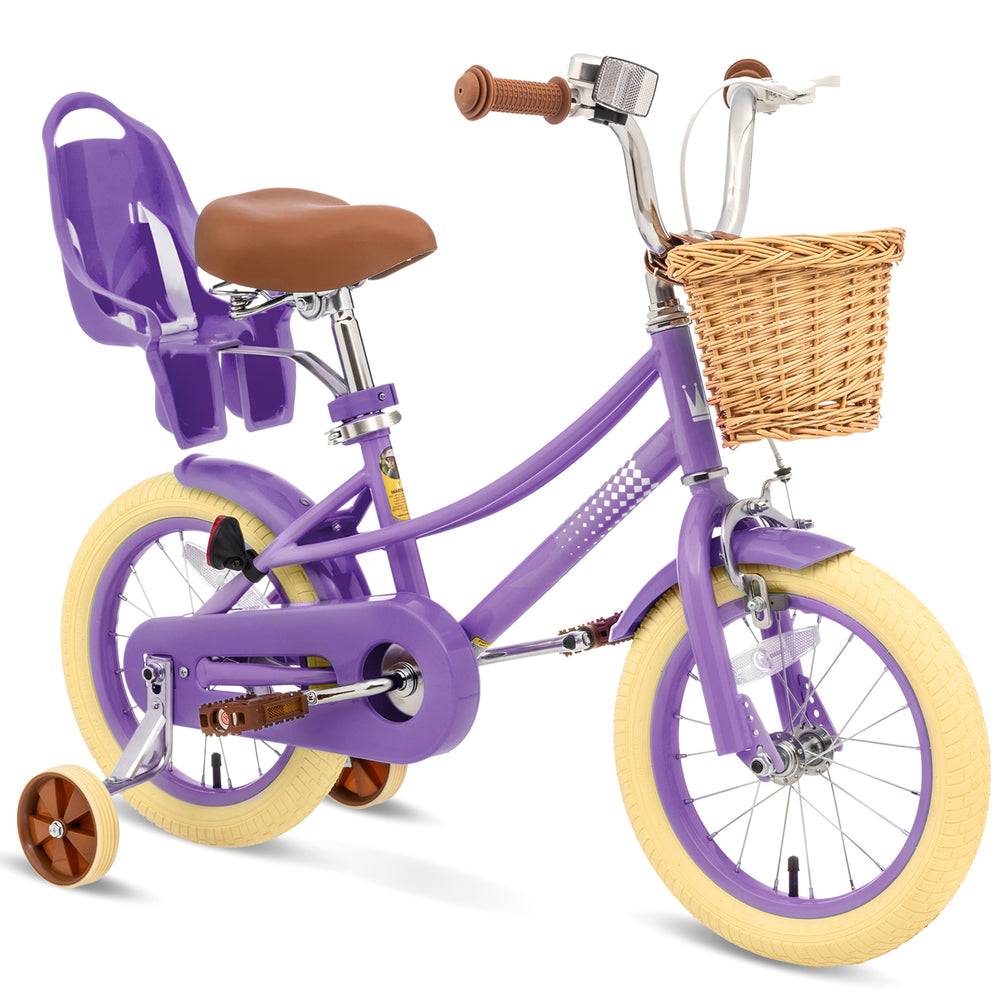 XJD Girls' Bike with Training Wheels, 12/14/16/20 Inch – Purple
Relevant for riders whose fit check points to a listed 12, 14, 16 or 20 Inch training-wheel bicycle; its purple color is supplied, but fit must be confirmed individually.
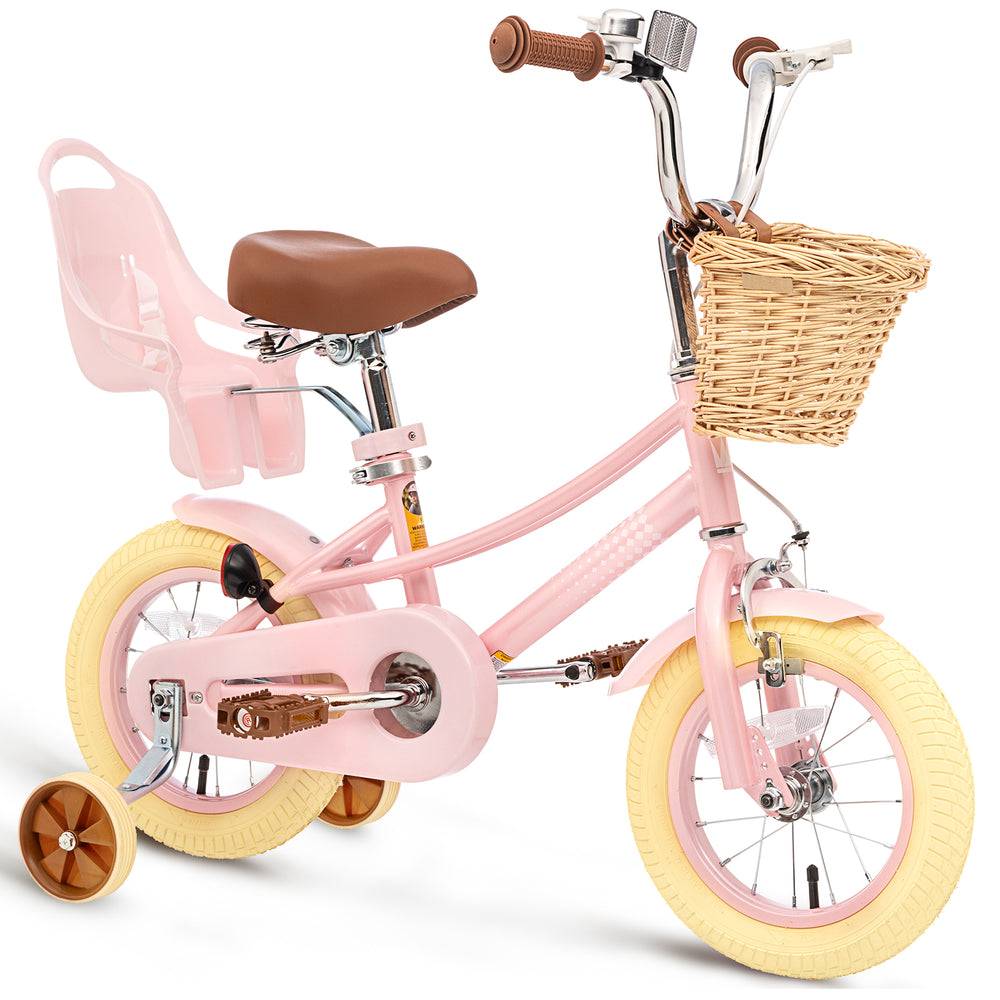 XJD Kids Bike for Girls – Pink, 12/14/16/20 Inch with Training Wheels
Provides listed 12, 14, 16 and 20 Inch training-wheel options in pink, making it relevant for comparing a measured candidate size after checking reach, control and confidence.
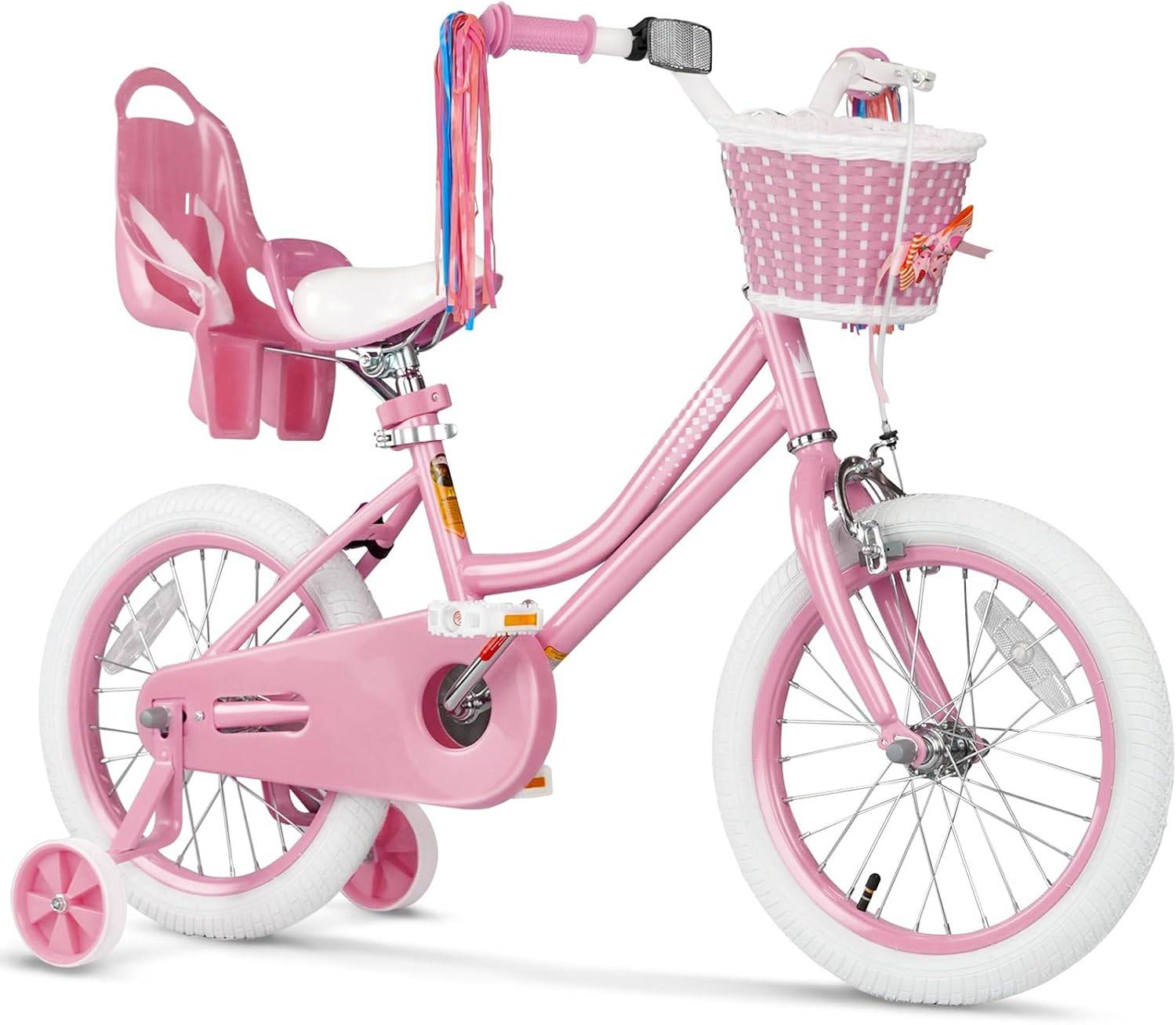 XJD Pink Girls' Bike – Kids 12/14/16 Inch Training Wheel Bicycle
Offers listed 12, 14 and 16 Inch training-wheel choices in pink. It is relevant within those measured size ranges, but has no supplied 20 Inch option.
XJD Girls' Bike with Training Wheels, 12/14/16/20 Inch – Purple and XJD Kids Bike for Girls – Pink, 12/14/16/20 Inch with Training Wheels each offer listed 12, 14, 16 and 20 Inch choices. Compare the same candidate size between them only after an individual fit check.
XJD Pink Girls' Bike – Kids 12/14/16 Inch Training Wheel Bicycle offers listed 12, 14 and 16 Inch choices, but no supplied 20 Inch option. None of these three products has a supplied 18, 24 or 26 Inch label. If your fit check points to one of those sizes, these products are nearest-size comparison points, not substitutes; another wheel size is not equivalent.
Set up the bicycle and helmet correctly
Use the exact product manual for assembly, training-wheel adjustment, maintenance, compatibility, load limits and torque requirements. Those details are not provided here. If any instruction is missing or the bicycle cannot be set up as specified, use a qualified bicycle mechanic.
A bicycle helmet must fit properly, sit level and have its straps used according to the helmet manufacturer’s instructions. Recheck bicycle fit and control as the child grows or gains confidence; do not rely on the original age or size choice indefinitely.
What to do next
- Measure the child’s current height and use the table to shortlist wheel sizes.
- Have the child try each candidate and compare stand-over clearance, inseam, reach, brake operation and confidence.
- Choose training wheels only if balance support is the remaining need—not as a remedy for an oversized or poorly controlled bike.
- Follow the bicycle manual, fit the helmet correctly and practise in an appropriate riding area.
Buy now if the child fits, controls the bicycle and wants temporary balance support; otherwise wait, try a different size or skip training wheels when independent balance is already established.
Recommended products
-
Save 12%
XJD Kids Bike for Girls – Pink, 12/14/16/20 Inch with Training Wheels
The XJD Kids Bike for Girls in Pink is a training-wheel bike built to carry your…
Training Wheel Bikes Wheel Size 12 Inch / 14 Inch / 16 Inch / 20 Inch Recommended Height 86–152 cm Training Wheels Yes 12 Inch -
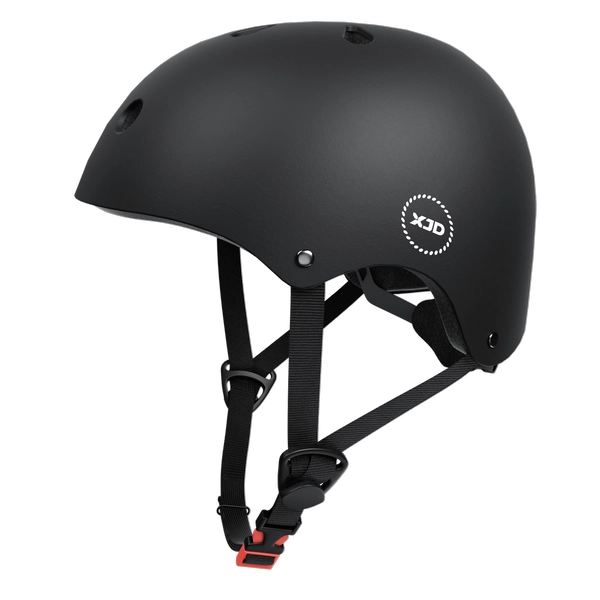
7-in-1 Kids Helmet & Protective Gear Set from XJD – Black or Blue
If you're outfitting one kid (or a couple of siblings) for biking, scootering, o…
Bike Helmets Black / L:21.65"-22.83" / 55-58 cm -
Save 11%
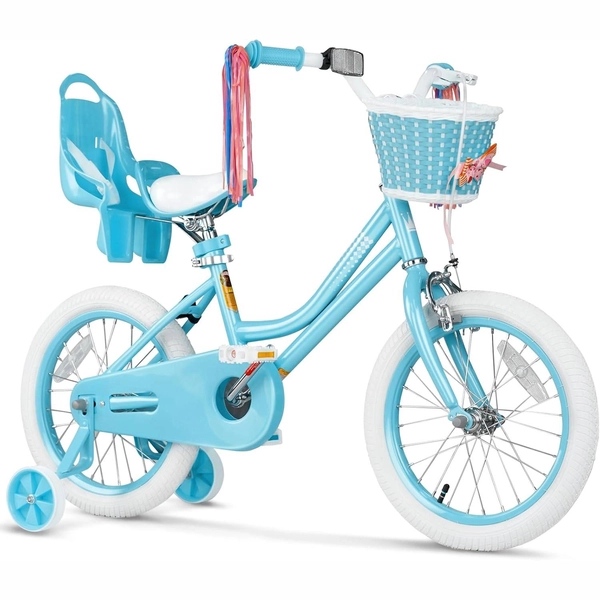
Blue XJD Girls Bike with Training Wheels – 12/14/16 Inch
If you're shopping for a first pedal bike for a daughter roughly 3 to 8 years ol…
Training Wheel Bikes Wheel Size 12 Inch / 14 Inch / 16 Inch Recommended Height 86–122 cm Training Wheels Yes 16 Inch -
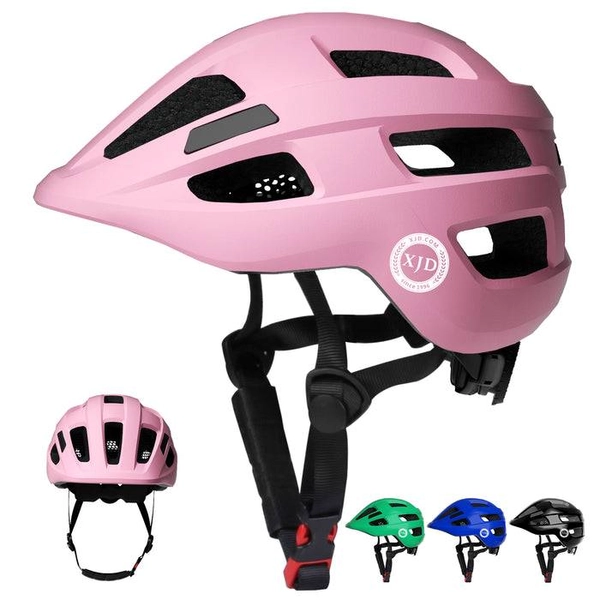
Kids Bike Helmet by XJD for Boys & Girls – Black, Blue, Green, Pink, Purple
The XJD Kids Bike Helmet covers a wide 2-to-8-year age range thanks to two head-…
Bike Helmets Pink / M:20.47"-22.05" / 52-56 cm