

How to choose a bike helmet for a toddler
Choose a toddler bike helmet by measuring head circumference, matching that measurement to the helmet’s stated range, and checking the fit on the child.
Measure before choosing a size
Use a flexible measuring tape around the widest part of the child’s head. Place it just above the eyebrows, pass it above the ears, and keep it level around the back of the head. Record the circumference in centimetres; if possible, repeat the measurement to catch a tilted or loose tape.
Compare the number with the exact range shown for the helmet, not merely with an S, M or L label. Letter sizes are not consistent enough to establish fit by themselves. Do not choose a larger helmet simply to leave growing room: excess movement can prevent it from staying in the correct position.
If the measurement falls between ranges, or close to a boundary, have the child try the relevant sizes. Follow the manufacturer’s instructions for pads, adjustment systems and straps rather than trying to make an unsuitable shell fit.
Check the helmet on the child
A matching circumference range is only the starting point. Put the helmet on the child and check these points:
- Position: It sits level rather than tipping back and exposing the forehead.
- Stability: It stays in place when the child gently moves their head, without painful pressure or obvious gaps.
- Side straps: They lie flat and are arranged according to the product instructions.
- Chin strap: It can be secured as directed without hanging loose or causing discomfort.
- Consistency: After fastening and adjusting it, recheck the level position and movement.
Hair styles, hats and added layers can change the fit. Test the helmet as it will actually be worn, without putting unapproved items beneath it. If it cannot remain level and stable after adjustment, choose another size or model.
Compare the supplied XBikes options
These catalog options are useful because they show the difference between a fully stated circumference range and a letter size alone. Only a child’s measurement and an on-head fit check can establish whether any of them is relevant.
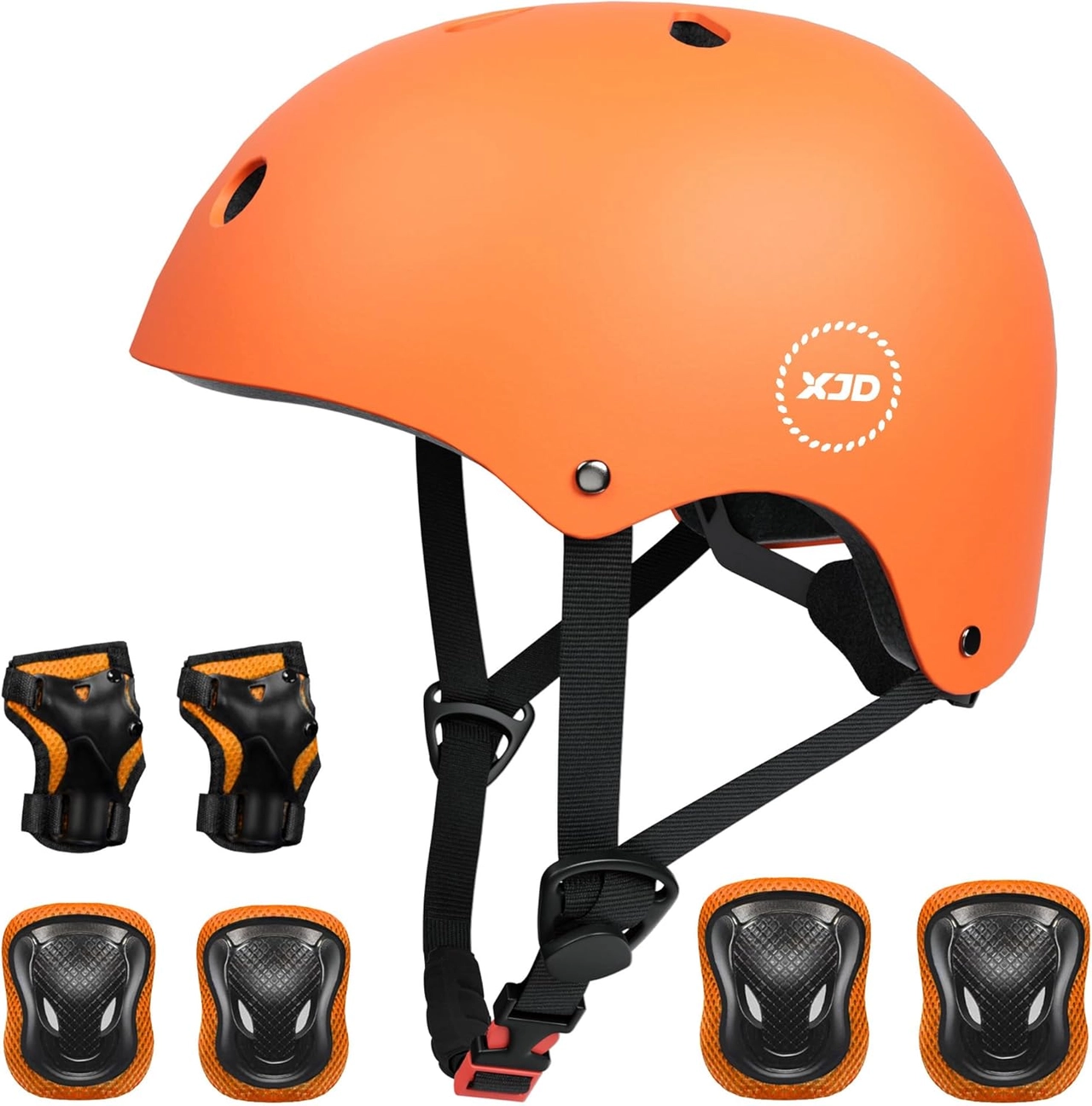 Orange Kids Helmet & Pad Set by XJD – Sizes S & M
Available in S and M, but no circumference ranges are supplied. Confirm the exact sizing information before considering either label, then check the helmet on the child.
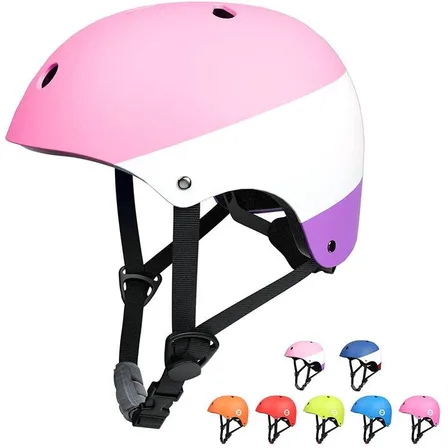
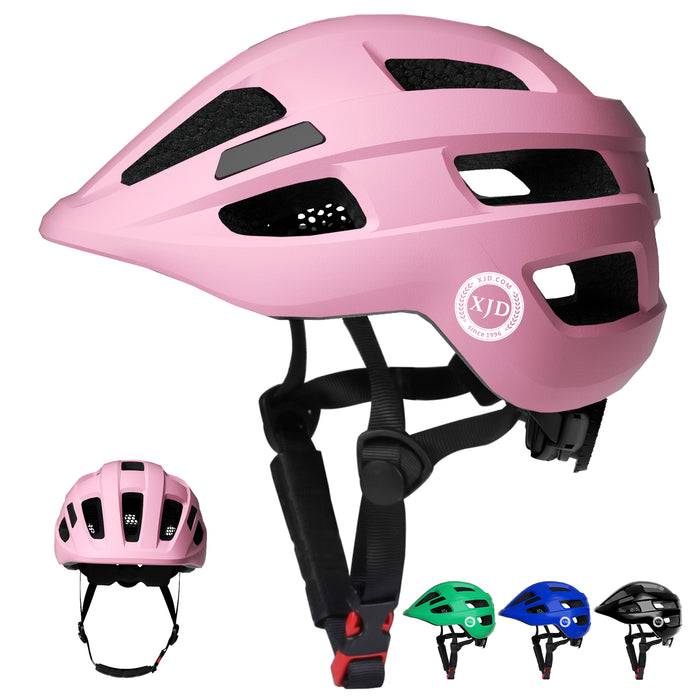 Kids Bike Helmet by XJD for Boys & Girls – Black, Blue, Green, Pink, Purple
The S options list 46–51 cm and the M options list 52–56 cm in five colors, enabling a direct comparison with the child’s measured head circumference.
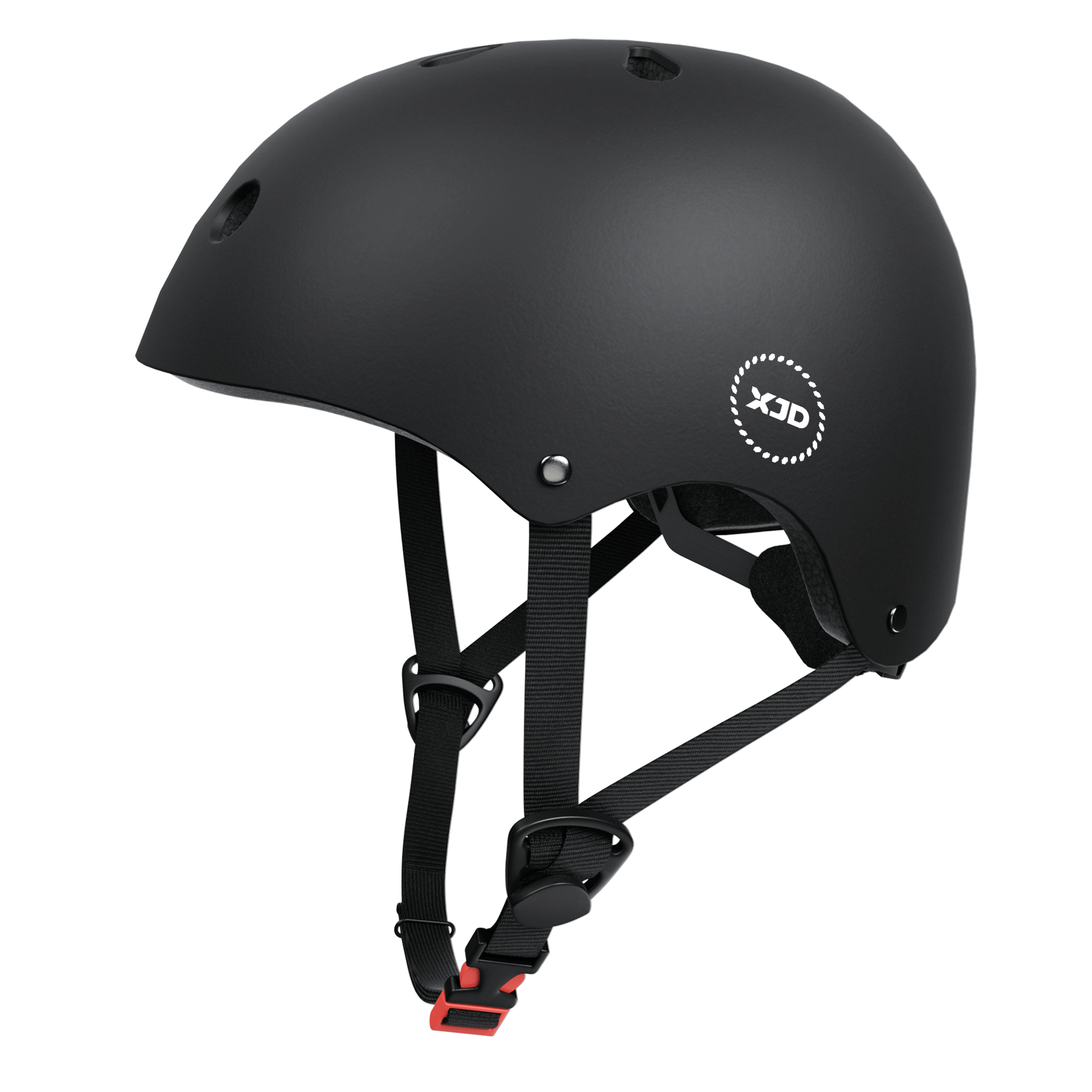 7-in-1 Kids Helmet & Protective Gear Set from XJD – Black or Blue
The M options list 52–56 cm and the L options list 55–58 cm in black or blue. Consider the set only when the measured range and on-head fit both match.
Kids Bike Helmet by XJD for Boys & Girls – Black, Blue, Green, Pink, Purple has S options labeled 18.11–20.08 inches / 46–51 cm and M options labeled 20.47–22.05 inches / 52–56 cm. Each range is listed in all five named colors. Compare the measured circumference directly with those figures, then verify the fit on the child.
Orange Kids Helmet & Pad Set by XJD – Sizes S & M is offered with S and M labels, but the supplied catalog facts do not provide their circumference ranges. The letters alone cannot show whether either size fits a toddler. Consult the exact product sizing information before considering it, then perform the same level-position and strap checks.
7-in-1 Kids Helmet & Protective Gear Set from XJD – Black or Blue lists M at 20.47–22.05 inches / 52–56 cm and L at 21.65–22.83 inches / 55–58 cm in both colors. It is relevant only if the child’s measured head falls within a stated range and the helmet fits correctly. The additional gear does not compensate for a helmet that is too large.
Do not select by age, color or set contents
“Toddler” does not determine a helmet size. Children of the same age can have different head measurements and head shapes. Likewise, a preferred color may make a child more willing to wear a helmet, but it cannot resolve poor fit. A pad set or protective-gear set is a separate comparison consideration, not evidence that the included helmet fits.
If the child is also being fitted for a bicycle, keep that decision separate. XBikes lists 12-inch bikes as a starting point for ages 3–4 and rider heights of 34–40 inches / 86–102 cm, but this does not predict helmet size. Prioritize measured height, inseam, reach, brake control and current confidence over age, and have the child try the bicycle. Do not buy an oversized bike for growth.
Know when to reject or replace a helmet
Reject a candidate if it falls outside the child’s measured range, cannot sit level, shifts despite correct adjustment, creates painful pressure, or cannot be secured using the manufacturer’s instructions. Do not improvise modifications or rely on undocumented compatibility between parts.
For inspection, maintenance, replacement criteria and any adjustment procedure not stated here, follow the exact helmet manual. If the instructions are missing or the fit remains uncertain, ask a qualified bicycle mechanic for an in-person check.
Make the final toddler-helmet decision
Measure the child now, shortlist only helmets with a compatible documented range, and try each candidate on. Choose one only when it sits level, remains stable and its straps work exactly as instructed; otherwise, keep looking rather than sizing up for future growth.
Bikes for your next adventure
-

Kids Bike Helmet by XJD for Boys & Girls – Black, Blue, Green, Pink, Purple
The XJD Kids Bike Helmet covers a wide 2-to-8-year age range thanks to two head-…$59.99
-
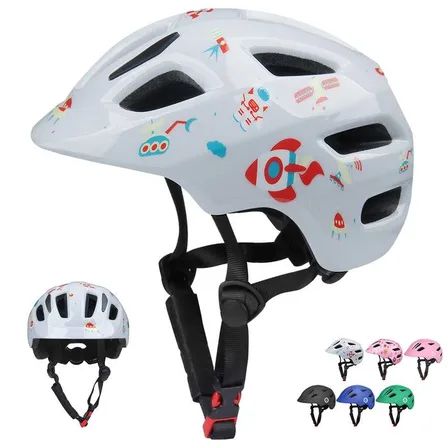
White Astronaut Bike Helmet for Kids by XJD – Toddler to Youth Sizes
4 reviews
The XJD White Astronaut kids' bike helmet is made for toddlers through younger e…$59.99
-
XJD Kids Bike Helmet for Boys & Girls, B White / Pink White
The XJD Kids Bike Helmet covers a wide age range — suggested for ages 2 through …$59.99